
 By admin
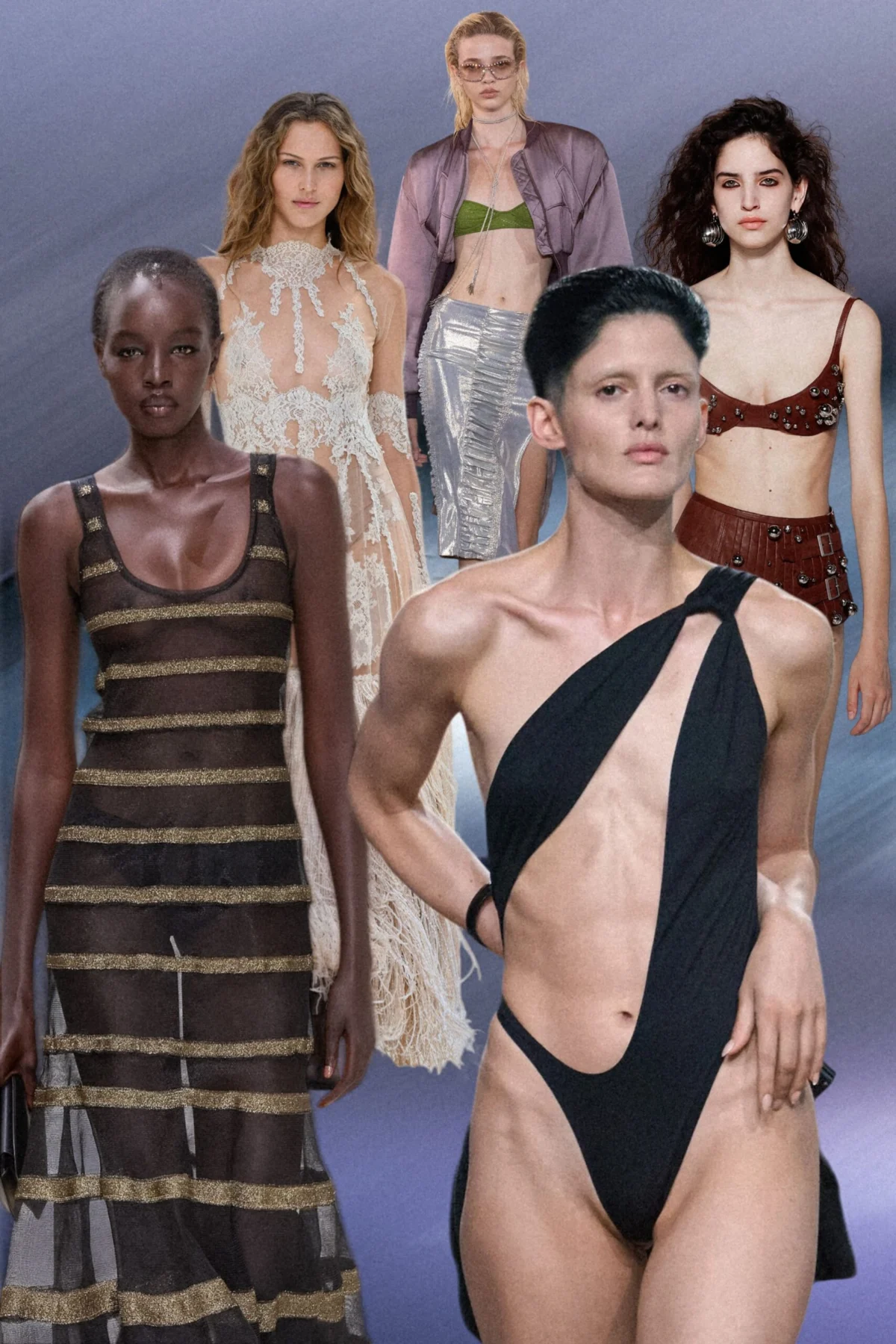
The Spring/Summer 2027 fashion season has unveiled a striking aesthetic across global runways, characterized by an unprecedented embrace of lingerie-inspired elements, transparent fabrics, and cinched silhouettes. From Tom Ford’s bullet bras and high-cut briefs to Balmain’s corsets and garter skirts, Ashlyn’s skirts-as-belts, and the pervasive use of sheer organza, designers appear to be collectively accentuating the body. This resurgence of skin-baring and form-fitting designs, while often cyclical in fashion’s perpetual engagement with sex appeal, arrives at a moment profoundly shaped by the widespread adoption of GLP-1 weight loss medications, raising pertinent questions about the interplay between pharmaceutical advancements and evolving body ideals on the runway.
The Ubiquity of GLP-1 Medications and Their Societal Impact
The conversation surrounding GLP-1s, a class of drugs including Ozempic and Wegovy, has transcended medical discourse to become a ubiquitous cultural phenomenon. These medications, originally developed for diabetes management, have gained significant traction for their efficacy in promoting substantial weight loss. The financial trajectory of GLP-1s underscores their monumental impact: sales soared to $79 billion in 2025, according to Morgan Stanley Research, with projections indicating a staggering global market value of $190 billion by 2035. Further highlighting their widespread adoption, a June 2026 report by the Consumer Goods Forum and Bain & Co. forecasts that GLP-1 use could encompass one in three Americans and one in eight Britons by 2030. This rapid integration into daily life for millions of individuals has sparked profound shifts in consumer behavior, health perceptions, and, inevitably, aesthetic aspirations.
Against this backdrop of a transforming populace, the fashion industry finds itself grappling with a complex dynamic. The visibility of skin, the "naked dressing" trend, the prevalence of bralettes, and the proliferation of contorting designs on the runway compel an examination into the relationship between these trends and the rise of weight loss medications. Are these sartorial statements a direct reflection of a luxury clientele eager to showcase newly contoured physiques, or are they merely coincidental stylistic evolutions amplified by the prevailing cultural climate? This question forms the crux of the contemporary fashion narrative, forcing industry observers to consider correlation versus causation in an era of shrinking bodies.
Runway Observations and Expert Perspectives

The tangible impact of GLP-1s on client demographics is becoming increasingly evident, particularly within the echelons of high fashion. Isabel Bazzani, a Paris-based fashion sourcer and luxury personal shopper, confirms this shift. "Couture houses have told me they’ve had to update client books they’ve held for years, because the body measurements on file no longer match," Bazzani reveals. She further notes a consequential adjustment in production strategies: "Production is following suit, with larger sizes from luxury houses becoming more limited and smaller sizes being made in higher quantities." This anecdotal evidence from the frontline of luxury retail offers a compelling, albeit indirect, link between the pharmaceutical trend and the physical realities of the fashion consumer.
Fashion, inherently a mirror of societal shifts, invariably reflects prevailing body ideals and attitudes. Frida Tordhag, a fashion analyst at trend analytics firm Heuritech, articulates this symbiotic relationship: "Fashion is always a reflection of everything from cultural shifts to what’s going on in society, body ideals, attitudes toward the body, and how people choose to dress." While acknowledging the historical cyclicality of body trends, Tordhag notes the current wave of GLP-1 usage and its potential influence on how women choose to dress. However, she cautions against definitive conclusions, stating, "From our perspective and from the data we have, we cannot see a straight correlation between [the rise of GLP-1s and runway trends]."
Krista Corrigan, a senior retail analyst at retail intelligence platform EDITED, echoes the sentiment of nuance and complexity. "We’re still [as a team] going through all the trends and trying to decode how this is playing out," she explains, highlighting the difficulty in confirming direct correlations. "What could be a result of GLP-1s? Some of [these trends], of course. But we’re making an insinuation, because it’s difficult to exactly tie it back." Despite this analytical challenge, Corrigan discerns suggestive patterns: "We definitely saw a couple of things that indicate to me the influence of GLP-1 and Ozempic showing up on the runway." These expert opinions collectively paint a picture of an industry grappling with a significant, yet not easily quantifiable, external force.
Functional Design: Adapting to the Changing Body
Beyond the overt display of skin, a more subtle yet profound revolution is unfolding in garment design, driven by the practical considerations of GLP-1 users. Laura Yiannakou, womenswear senior strategist at trend forecaster WGSN, posits that while the headline narrative often focuses on revealing, skin-baring fashion, "the real revolution is happening in how garments function." This is rooted in consumer needs; approximately 40% of consumers utilizing weight loss medications prioritize comfort, as they navigate drug-induced side effects such as temperature shifts, skin sensitivity, and extreme bloating.
This emphasis on comfort and adaptability translates into specific design details aimed at accommodating fluctuating body measurements. The Spring/Summer 2027 collections showcased numerous examples: crossed lacing at Miu Miu, zippers on skirts at Lemaire, and elastic hems at CFCL. Belts, too, have emerged as a pivotal accessory, transcending their stylistic role to become essential tools for customizable shaping. Yiannakou elaborates: "It’s why belts are having such a moment — not just as stylish accessories, but as essential tools for creating an instant, customizable shape." This was evident in Celine’s supersized belts, Valentino’s cinched peplum waists, and Acne Studios’ dramatically secured trench coats. Corrigan further identifies belts and cinched-waist outerwear as SS27 trends that simultaneously offer adaptability for size fluctuation and accentuation of smaller proportions. Retail data corroborates this functional demand: arrivals of bottoms with adjustable waistbands more than doubled month-on-month in May 2026, while belted bottoms saw a 50% year-on-year increase, according to EDITED. On the runway, self-tie fabric belts adorned wide-leg pants at Max Mara, and adjustable Velcro fastenings secured skirts at Prada, underscoring this functional design imperative.

The choice of fabrics is also evolving to support breathability and ease. Yiannakou highlights a movement toward "rebound textiles and fluid silhouettes." This includes the tempo pleats at Issey Miyake and the wave-inspired silhouettes at Stella McCartney. Practical knits and yarn blends, such as those seen at CFCL, are gaining prominence. Designers are increasingly favoring "high-recovery knits like Milano rib, bi-stretch wool blends, and heat-set pleats that offer structural integrity with reliable give and snap-back quality" to accommodate changing body proportions.
In terms of silhouettes, column dresses have demonstrated a significant resurgence, appearing fluidly at Alberta Ferretti, with strategic cutouts at Christopher Esber, and in elongated forms at Fendi. Ferragamo’s closing look, a high-necked column silhouette embellished with black and metallic paillettes, epitomized this trend. WGSN retail data confirms the column silhouette’s growing influence, nearly doubling its dress market share and signaling a strong demand for shapes that drape easily on the body. Tordhag also notes a robust demand for voluminous silhouettes, with "everything from sorrel pants to drape dresses, fringe dresses and feathers" seeing increased interest. The mini trapeze dress was a prominent feature across SS27 runways, from Loewe to Miu Miu and Ganni, with Heuritech data showing a 31% year-on-year increase in this silhouette in China and 15% in Europe.
A New Expression of the Body: Beyond Second-Skin
Despite the emphasis on functional design and adaptability, the shift in silhouette and fabrication does not necessarily imply a more concealed body. Instead, it signals an evolution in how the body is presented and celebrated. Tordhag’s data reveals an interesting paradox: "When we look at our data, what’s interesting is that we’re not seeing a straightforward shift towards tighter clothing. We would expect bodycon or slim silhouettes to rise, but both in the US and Europe, they’re actually falling." Bodycon dress arrivals are down 8% year-on-year in Europe and 6% in the US, while slim pants have decreased by 25% in Europe, 21% in China, and 20% in the US, according to Heuritech.
The Spring/Summer 2027 runways, therefore, were not solely about second-skin garments. The body was laid bare through dramatic cutouts, intricate lingerie details, and an abundance of transparent and translucent fabrics designed to accentuate the form. This expression ranged from the overt, as seen at Gucci and Tom Ford, to the nuanced, with romantic cutouts at Chloé and delicate sheer pastels at Dior and Chanel. Tordhag describes this as a "new form of sexiness," where "the female body is being almost soft-launched in the fabric or in the shape."
An intriguing manifestation of this trend is the convergence of volume and transparency. In-store arrivals of see-through loose tops are up 30% in the US, as per Heuritech. Tordhag highlights SS27 collections from Alberta Ferretti, Blumarine, and The Attico that skillfully explore this interplay between lace, lingerie features, and transparency within voluminous silhouettes.

More broadly, sheer and soft fabrics are experiencing a significant uptick. Fine lace has seen a 41% increase in China and 19% in Europe, with lace dresses specifically up 49% in China, 37% in Europe, and 19% in the US, according to Heuritech. The in-store visibility of chiffon and satin dresses is also rising, indicating a shift in "naked dressing" away from coarser materials like fishnet and mesh (both in decline) towards a softer, more ethereal expression. Personal shopper Bazzani confirms this demand, noting high client requests for Saint Laurent’s silicone-lace designs, sheer dresses, tops, and skirts from Chanel, and Hermès’s undergarment-revealing pieces.
Lingerie as Occasionwear and the Ubiquity of Bra Tops
Lingerie as occasionwear emerged as a headlining theme for the season, with Heuritech data underscoring its growing prevalence. Lace-trimmed camisoles are up 42% year-on-year in Europe and the US, and a striking 59% in China. Tops featuring lace details have increased by 56% in Europe, 43% in the US, and 59% in China, while lace shorts are up 50% in the US. This data strongly suggests a blurring of lines between intimate apparel and outerwear, positioning lingerie as a deliberate and stylish component of everyday and special occasion dressing.
Bra tops, in particular, were ubiquitous across the majority of SS27 runways. They were a consistent fixture at Prada, presented in cone shapes at Jean Paul Gaultier, and ingeniously fashioned from leather and silk scarves at Tod’s and Hermès, respectively. Bandeau styles appeared at Stella McCartney and Mugler, while Miu Miu and Marni styled them over dresses and tops, showcasing their versatility.
The widespread adoption of bra tops on the runway, often replacing traditional tops, undeniably increases the visibility of the body. It draws attention to the abdomen, waist, and arms, accentuating the wearer’s figure. One compelling insinuation is that individuals using weight loss medications may be motivated to display their newly streamlined frames, particularly within a cultural climate where thinness is increasingly prominent in public discourse. This aligns with a potential desire among luxury consumers to celebrate the results of their GLP-1 journey through fashion.
The Inclusivity Counter-Narrative

However, the suggestion that the rise of lingerie details and sheer fabrics is solely a direct response to GLP-1s risks oversimplification and overlooks a crucial counter-narrative within the fashion industry: the ongoing push for radical inclusivity. Belgium-based inclusive womenswear brand Ester Manas serves as a powerful example. For its SS27 collection, Manas, renowned for its commitment to size diversity, collaborated with Belgian underwear brand Primadonna to present a collection featuring sheer bodysuits and architectural bustiers. These designs, while body-revealing, were showcased on a diverse range of body types, consistent with the brand’s core philosophy.
Similarly, Di Petsa’s latest collection, unveiled at London Fashion Week, featured abundant skin display – transparent dresses, breasts subtly covered by jewelry or a model’s hand, and plunging necklines. Yet, the brand is deeply rooted in inclusivity, consistently featuring diversity as a central tenet of its runway presentations. Greek designer Dimitra Petsa emphasizes this approach: "For me, it’s about showing the garments in the best way possible. Through size diversity, you can show different designs. I think body conscious silhouettes look amazing on fuller bodies."
Beyond Ester Manas and Di Petsa, designers such as Rick Owens in Paris, Marco Rambaldi in Milan, and Collina Strada in New York continue to champion inclusivity on their runways. They consistently demonstrate that skin-baring designs and body-conscious silhouettes are not exclusive to any single body type. Hillary Taymour, creative director of Collina Strada, articulates this ethos: "I don’t think there should be one body type that represents fashion. The world is full of different people, and fashion is much more exciting when it reflects that." These designers collectively prove that the celebration of the body, in all its forms, can coexist with and even inform the trends of transparency and revelation.
Broader Implications and the Future Outlook
The intricate relationship between the rise of GLP-1s and the Spring/Summer 2027 fashion trends presents multifaceted implications for the industry, consumers, and the broader cultural discourse around body image. For retailers and manufacturers, the observed shift towards smaller sizes and the demand for adaptable designs necessitate strategic re-evaluation of inventory management, production scales, and product development. The data on adjustable waistbands and high-recovery fabrics points to a growing market segment prioritizing comfort and flexibility alongside aesthetic appeal.
Culturally, the convergence of pharmaceutical weight loss and fashion’s embrace of the body poses a complex challenge to existing body positivity movements. While GLP-1s offer significant health benefits for many, their widespread use and the concurrent emphasis on leaner physiques in fashion could inadvertently reinforce historical "thin ideals," potentially creating new pressures for individuals. The nuanced approach of designers championing inclusivity alongside body-revealing designs offers a critical counter-balance, suggesting that a celebration of the body does not inherently equate to a prescriptive ideal.

The Spring/Summer 2027 season, therefore, stands as a pivotal moment, reflecting a society undergoing rapid transformation. The fashion industry, ever sensitive to cultural currents, is navigating this shift by adapting its designs functionally and aesthetically. While direct causality remains difficult to prove definitively, the correlations are compelling, underscoring fashion’s role as a powerful, albeit often subtle, commentator on our evolving relationship with our bodies and the innovations that shape them. The coming seasons will reveal whether this intertwined narrative solidifies into a dominant paradigm or if the industry’s inherent dynamism will introduce new complexities and expressions of the human form.
