
 By Jia Lissa
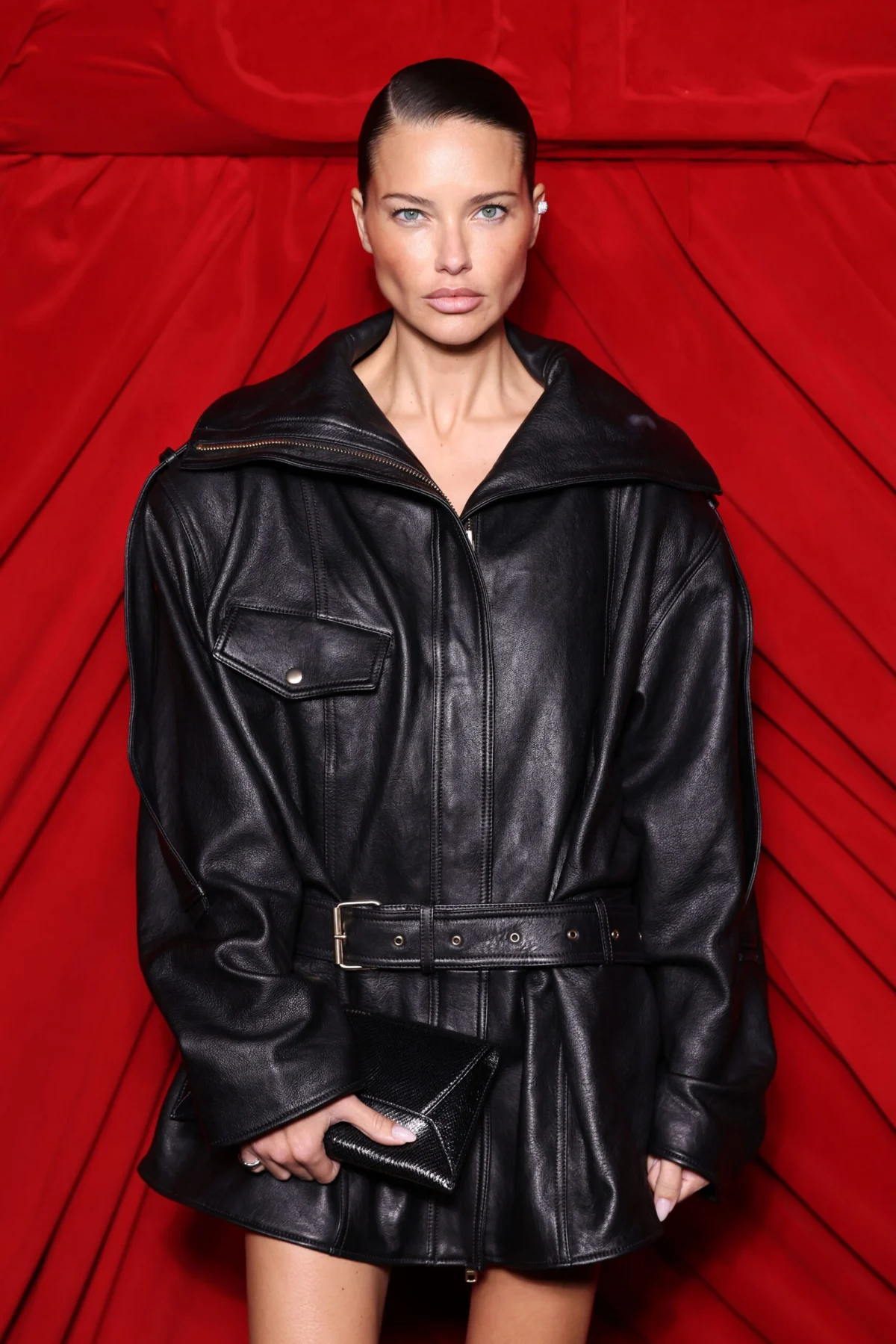
The turn of the millennium, a period marked by a burgeoning internet and a distinct fashion sensibility, is experiencing a significant cultural revival. From the resurgence of zig-zag headbands to the cyclical nature of fashion trends, the Y2K aesthetic is undeniably back in vogue. However, as society embraces this nostalgic wave, a critical examination of the beauty standards prevalent during that era, and their lingering impact, becomes increasingly pertinent. This article delves into the complexities surrounding the public perception and media portrayal of celebrity appearance, particularly focusing on the phenomenon of the "glow-up" and its implications for women, using the recent public discourse around supermodel Adriana Lima as a case study.
The Y2K Beauty Landscape: A Culture of Scrutiny
The late 1990s and early 2000s were characterized by a media environment that frequently scrutinized the bodies of public figures, often with harsh and unforgiving language. Even celebrities who adhered to conventionally thin body types were subjected to intense criticism for perceived weight fluctuations. Headlines frequently sensationalized minor changes in a celebrity’s physique, framing them as significant deviations from an unattainable ideal. This era established a potent narrative where a woman’s worth and professional viability were intrinsically linked to her adherence to a narrowly defined physical standard.
This period also saw the rise of global supermodels who became the embodiment of these prevailing beauty ideals. Among them, Adriana Lima, who joined the ranks of the Victoria’s Secret Angels in 2000, became an iconic figure. Her striking features and statuesque physique not only met but arguably elevated the existing standards of beauty, solidifying her position as a coveted model. Her career trajectory exemplifies the power of visual representation in shaping cultural perceptions of attractiveness during that time.
Adriana Lima’s Public Evolution and the Social Media Reaction
Fast forward to 2023, and the public discourse surrounding Adriana Lima’s appearance has taken a notably different, yet still problematic, turn. Following life events such as childbirth and the natural process of aging, Lima’s physical appearance evolved, as it does for any individual experiencing these common human milestones. However, instead of a media landscape that largely abstained from overt criticism, the commentary shifted to social media platforms. Here, a segment of users engaged in what can only be described as disparaging remarks, labeling her changes with terms like "overweight" and criticizing her "new face," despite her continued embodiment of conventional beauty standards.
This phenomenon highlights a concerning trend: while overt media condemnation may have lessened, the underlying judgment and expectation for women to maintain a specific, often unrealistic, appearance persist. The shift to online forums has democratized criticism, allowing for a broader and often more vitriolic public dissection of celebrity bodies.
The "Glow-Up" Narrative: A Double-Edged Sword
In response to Lima’s perceived return to a more familiar aesthetic, major media outlets adopted a celebratory tone, framing her transformation as a "glow-up" or a "stunning makeover." Articles in publications like women.com and Vogue Arabia lauded her appearance, with headlines emphasizing her "fresh start" and "new era." This narrative, while seemingly positive, carries significant underlying implications.
The consistent framing of Lima’s altered appearance as a "glow-up" implicitly suggests that her previous state was somehow less desirable or in need of correction. This perpetuates the notion that deviations from a specific beauty ideal, even those resulting from natural life processes, are grounds for censure. The very concept of a "glow-up" implies a prior deficiency, thereby reinforcing the very beauty standards that the Y2K era so rigidly enforced.
Analysis of the "Glow-Up" Phenomenon
The media’s embrace of the "glow-up" narrative, while appearing more progressive than the outright criticism of the Y2K era, is arguably just as problematic. It creates a binary where women are either in a state of needing improvement or have achieved a desirable state. This overlooks the fact that individuals, including celebrities, are constantly evolving.

The underlying message is that a woman’s value is tied to her appearance and that any perceived decline necessitates a "correction." In Lima’s case, her "before" state, even with natural changes, was still that of a supermodel. To label her subsequent appearance as requiring a "glow-up" devalues her inherent attractiveness and suggests a societal obsession with a static, unattainable ideal. This is particularly concerning given the broader societal pressure on women to maintain a youthful and flawless appearance.
The Evolution of Media and Celebrity Body Image
Historically, publications have played a role in shaping beauty standards. While Allure, as mentioned in an editorial note, acknowledges a past promotion of skinniness and diet culture, the broader media landscape has often been complicit in perpetuating unrealistic body image expectations. The shift from direct criticism to the more insidious "glow-up" narrative represents a subtle but significant evolution in how these standards are communicated.
The implication that Adriana Lima, a woman who has consistently embodied conventional beauty, "needed" a transformation to be celebrated is deeply concerning. It suggests that even at the zenith of conventional attractiveness, women are implicitly under pressure to conform to evolving, often arbitrary, aesthetic trends.
The Victoria’s Secret Paradigm Shift: A Complex Reflection
Interestingly, the Victoria’s Secret brand itself has undergone a transformation. In recent years, the brand has made efforts to diversify its roster of models, inviting individuals with a wider range of body types to walk its runway. This represents a conscious attempt to move away from the singular, hyper-thin ideal that defined its past image.
However, the continued discourse around Lima’s appearance, even within this evolving brand context, reveals a lingering societal tendency to judge women based on their physical presentation. The idea that a celebrated model like Lima might need a "software update" to remain relevant underscores the enduring power of these deeply ingrained beauty norms, even when masked by ostensibly positive language.
Broader Implications: The Filter-Rotten Mindset
The pervasive emphasis on "glow-ups" and makeovers reflects a broader cultural phenomenon where the lines between natural aging, personal choices, and societal expectations have become blurred. The author’s personal experience of being told they’ve had a "glow-up" due to weight loss and subtle cosmetic interventions highlights how common this celebratory, yet judgmental, framing has become. This narrative implicitly suggests that any departure from a previous physical state that results in a more conventionally attractive appearance is inherently praiseworthy, thereby reinforcing the idea that women are perpetually in a state of needing improvement.
This phenomenon can be termed a "filter-rotted" mindset, where constant exposure to digitally altered images and curated online personas has distorted our perception of reality and beauty. When a woman who is already conventionally attractive is celebrated for a "glow-up" after minor changes, it indicates a disconnect from authentic self-acceptance and a continued reliance on external validation based on a narrow definition of beauty.
Conclusion: Towards a More Nuanced Appreciation of Beauty
Adriana Lima has been a paragon of beauty for decades, consistently embodying an aspirational aesthetic. The current discourse, while perhaps less overtly critical than in the Y2K era, still falls prey to problematic beauty standards. It is entirely acceptable for individuals to notice changes in a public figure’s appearance and to discuss them, but the framing of these changes as a "glow-up" or a "makeover" implies a prior flaw that needed rectifying.
The evolution of beauty standards, while ongoing, has not entirely eradicated the deeply ingrained biases that plague the perception of women’s appearances. The continued reliance on the "glow-up" narrative, even when couched in congratulatory language, suggests that the absurd beauty criteria of the late 90s and early 2000s, though perhaps less overtly expressed, remain embedded in our cultural consciousness. Moving forward, a more nuanced appreciation of beauty requires recognizing that aging, life experiences, and personal choices all contribute to an individual’s evolving appearance, and that these changes should be met with acceptance rather than a perpetual call for a "glow-up." The true measure of beauty lies not in conformity to fleeting trends, but in the enduring grace and resilience of the individual.
