
 By Nila Kartika Wati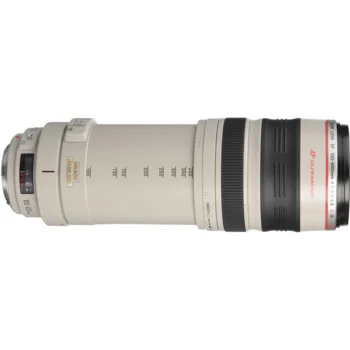
When Canon announced the replacement for the EF 100-400mm f/4.5-5.6L IS USM in November 2014, the most debated change among photographers was not its optical advancements or improved image stabilization, but rather the controversial disappearance of its distinctive sliding zoom collar. The prevailing explanation at the time, frequently cited at launch events and in product reviews, posited that a rotating zoom ring offered superior sealing, preventing dust ingress into the lens barrel. This decision effectively retired what many photographers still consider the fastest and most intuitive zoom control ever integrated into a camera lens.
The Swift Ergonomics of the One-Touch Zoom
The term "push-pull" zoom encompasses two distinct design philosophies. In its narrowest and most celebrated form, it refers to a "one-touch" zoom, where a single collar serves a dual function: sliding it along the barrel adjusts the focal length, while rotating the same collar controls the lens’s focus. The broader definition, often referenced in manufacturers’ specifications as a "linear extension" or "linear zoom system," simply describes a mechanism where focal length changes by sliding a part of the lens assembly along its optical axis. Lenses conforming to this broader definition could, and often did in the autofocus era, feature a separate, conventional focus ring elsewhere on the barrel. The directionality of the zoom – whether pushing away from the camera body resulted in a wider or longer focal length – varied between brands, meaning muscle memory wasn’t always transferable across different manufacturers’ systems.
The industry’s prevailing alternative, now universally recognized as a "two-ring" or "two-touch" design, fundamentally separates these operations. Zooming and focusing are assigned to distinct rings positioned at different points on the lens barrel, necessitating a deliberate shift in hand position to switch between functions. This required hand movement lies at the heart of the speed argument that proponents of the one-touch system championed. With a single, integrated collar, a photographer’s left hand could maintain a consistent grip on the lens, allowing for a seamless, continuous motion to pull the zoom to a desired focal length (e.g., 200mm) and then instantly rotate the same collar for precise focus. This eliminates the fractional but critical pause where fingers must "walk" forward or back to locate and engage a separate ring. For dynamic scenarios like tracking an athlete breaking downfield or a bird abruptly changing flight direction, this "regrip" moment was deemed an expensive interruption, and the sliding collar ingeniously bypassed it.
A Legacy Defined: Pioneering One-Touch Designs
The concept of integrating zoom and focus into a single control was not a Canon invention but rather a feature refined over decades. The Voigtländer Zoomar 36-82mm f/2.8, designed by Frank Back and publicly exhibited in 1959, is widely acknowledged as the first production zoom lens for 35mm still cameras, setting a precedent for innovative optical engineering.
Nikon introduced its own groundbreaking one-touch design with the Zoom-Nikkor Auto 43-86mm f/3.5 in 1963. This compact lens, featuring nine elements in seven groups, measured approximately three inches in length and weighed around 14 ounces. While its exact debut month remains somewhat debated by historians, Nikon’s internal records highlight its significance as the arrival of a standard zoom small enough for practical everyday carry, a narrower claim than being the absolute first, but nonetheless impactful.
A decade later, Vivitar made a significant splash with its Series 1 70-210mm f/3.5 Macro Focusing Zoom, manufactured by Kino Precision. Launched in mid-1973 (though some modern sources mistakenly date it to 1974, reflecting a staggered rollout across various camera mounts), this lens was a marvel of its time. Encased in a robust, all-metal barrel, it weighed 940 grams and offered impressive close-focusing capabilities, achieving roughly 1:2.2 reproduction. Its zooming action was controlled by pulling a sleeve back and forth, emblematic of the one-touch philosophy.
Canon’s manual focus FD line also embraced the one-touch concept, though not without variation. The FD 80-200mm f/4 L, released in November 1985, featured a one-touch collar and remains highly regarded for its robust construction, weighing 675 grams with 14 elements in 12 groups. Interestingly, an earlier iteration, the FD 80-200mm f/4 S.S.C. from October 1976, opted for a two-ring design, acknowledging that some photographers found a single integrated ring too imprecise for their focusing needs. This early divergence underscores the ongoing debate about optimal control schemes.
Nikon’s commitment to the push-pull design was particularly evident in its professional telephoto line, a testament to its perceived efficiency for photojournalists and sports photographers. The AI-S Zoom-Nikkor ED 80-200mm f/2.8 (1982), the AF Zoom-Nikkor 80-200mm f/2.8 ED (1988), and the AF Zoom-Nikkor 80-200mm f/2.8D ED (1992) all retained the push-pull mechanism. Even beyond the 43-86mm, other lenses like the Zoom-Nikkor 50-135mm f/3.5 AI-S of 1982 also featured a single, non-slip collar, though it saw a shorter production run of about two years.
The 1988 autofocus 80-200mm f/2.8, launched as Nikon’s flagship photojournalism lens, was frequently paired with the legendary Nikon F4 camera, which debuted in September 1988 and shipped in December. This powerful combination placed a sliding zoom collar directly into the hands of countless wire photographers covering major news and sporting events throughout the late 1980s and early 1990s, solidifying the one-touch barrel’s association with high-stakes, fast-paced professional work.
Autofocus and the Shifting Paradigm
Canon’s early autofocus (AF) system also incorporated sliding zooms, albeit in the broader "linear extension" sense rather than the integrated focus-zoom "one-touch" design popularized by Nikon. The EF 100-300mm f/5.6 (March 1987) and the EF 100-300mm f/5.6L (June 1987) – the latter being among the inaugural L-series EF lenses – both changed focal length via a sliding barrel. However, their focus function was relegated to its own narrow ring, engaging only in manual mode, as autofocus technology had already begun to assume the collar’s secondary job. The subsequent EF 100-300mm f/4.5-5.6 USM, introduced in June 1990, completely abandoned the sliding collar in favor of a rotating zoom ring. Further innovation came with the EF 70-200mm f/2.8L USM in 1995, which boasted internal zooming, meaning the lens barrel maintained a constant length, a significant leap in design stability.
Nikon, known for its steadfastness, maintained its push-pull telephoto designs until 1997. It was then that the AF Zoom-Nikkor 80-200mm f/2.8D ED (N) transitioned to a two-ring system and, notably, incorporated a much-requested tripod collar. Nikon repair specialist Richard Haw publicly attributed this redesign directly to overwhelming demand from professional photographers for both features. This was quickly followed by the AF-S 80-200mm f/2.8D IF-ED in December 1998, and later, the AF-S VR 70-200mm f/2.8G IF-ED in 2003, which ultimately superseded it in the professional lineup.
Despite these shifts, Canon continued to produce sliding zooms for certain segments. The EF 35-350mm f/3.5-5.6L USM (January 1993) combined a "linear zoom system" with a wide manual focus ring. The iconic EF 100-400mm f/4.5-5.6L IS USM (November 1998) utilized a linear extension zoom with rear focusing, quickly becoming a favorite for its versatility and speed. Even later, the EF 28-300mm f/3.5-5.6L IS USM (June 2004) shipped with a barrel specifically designated as a "push-pull type" and featured an adjustable friction damper, showcasing Canon’s continued belief in the design’s utility, even six years after the 100-400mm. The 100-400mm, in particular, resonated deeply with photographers, enduring for 16 years. It extended from approximately 189mm retracted to roughly 260mm at 400mm, and its unique friction ring, located behind the focus ring, allowed users to customize the stiffness of the slide. This lens cultivated a fiercely loyal user base, many of whom expressed genuine disappointment when its successor abandoned the beloved design.
Technical Debates and Engineering Challenges: The Dust Myth and the Sealing Reality
The primary narrative surrounding the demise of the push-pull zoom often centers on dust ingress. The fundamental mechanical action of an extending and retracting lens barrel inherently changes its internal air volume with every zoom adjustment. This necessitates air movement – expulsion when the barrel collapses and intake when it extends. Unfiltered air, of course, carries particulate matter like dust and moisture, leading to the common perception that push-pull lenses act like "pumps," drawing contaminants inside.
Lens manufacturers have long grappled with this challenge through sophisticated engineering solutions. A Canon patent, titled "Lens apparatus having vapor-resistant ventilation," filed in December 2002 and granted in May 2004, illustrates this commitment. It describes precisely cut vents within the lens-holding frame, designed to equalize internal and external air pressure during zooming. Crucially, these vents are covered with a water-repellent microporous membrane (with Gore-Tex cited as an example), allowing air to pass freely while blocking liquid water. The patent also sagely warns about scenarios where this membrane becomes saturated with water droplets, potentially hindering airflow and leading to moisture ingress via a "vacuum pumping action."
However, the empirical evidence that push-pull lenses are inherently more prone to dust accumulation than other designs is often thinner than popular belief suggests. Roger Cicala of Lensrentals, whose company conducts extensive teardowns of photographic equipment, published findings on internal dust accumulation in lenses. His research indicated that virtually all lenses contain some degree of internal dust, that lens barrels are rarely hermetically sealed, and that air ingress and egress is a common phenomenon across all designs. Interestingly, his inventory’s dustiest examples were often certain prime lenses and short-range zooms, rather than the long, extending telephotos frequently criticized. Crucially, Cicala also concluded that internal dust, in the vast majority of cases, is optically invisible in actual photographs, having no discernible impact on image quality.
The more robust engineering argument against the traditional sliding collar pertains to sealing integrity, rather than simply particle counts. On a conventional rotating-ring telephoto, the external surface manipulated by the user remains in a fixed axial position. The seal typically comprises a gasket seated in a groove, against which the ring rotates with a single degree of freedom. This relatively simple arrangement allows for highly effective, durable sealing. In contrast, on a traditional push-pull lens like the original 100-400mm, the grip surface is an integral part of the translating barrel. This means the seal must maintain integrity across the entire length of the barrel’s travel, precisely at the interface where the user’s hand – potentially wet or gritty – is constantly in contact. For a true one-touch design, where the same surface also rotates for focusing, the sealing challenge is compounded, requiring a tight seal through both rotation and linear travel at every point along the barrel’s extension. While modern telephoto lenses still feature extending internal barrels (meaning internal volume changes), the critical difference is that the primary control interface no longer moves with it.
Canon’s rationale for the Mark II of the 100-400mm aligned with this understanding. The new lens, while still featuring an extending barrel, paired a rotating zoom ring with a robust magnesium housing, L-series weather resistance, and fluorine coatings on the front and rear elements. Canon’s official product history for the Mark II carefully articulated the switch to a rotational system primarily as a means to maintain better camera balance during zooming, rather than explicitly as a "dust fix." The lens still "breathes" internally, but the critical point where a hand meets the barrel ceased to be a moving joint, allowing for significantly improved sealing.
Autofocus: The Undermining Force
The one-touch design’s elegance was born in the era of manual focus, where constant, tactile interaction with focus was paramount. Its efficiency hinged on the seamless integration of focus and zoom under one hand. However, the advent of autofocus (AF), followed by internal focusing groups and ring-type ultrasonic motors, fundamentally altered this dynamic. Focus transitioned from a primary, continuous manual operation to an often automatic function, making manual rotation a secondary or fallback control. The combined collar, in essence, was solving a problem that the camera itself had largely taken over.
Early screw-drive autofocus lenses initially exacerbated this issue. In body-driven AF designs, the camera’s internal motor drives the lens’s focus mechanism. If the focus ring was integral to the zoom collar, the camera’s motor would attempt to move the same ring the photographer was holding. Separating controls onto two rings provided manufacturers with a dedicated space for a focus ring that could be decoupled, clutched, or simply ignored during AF operation, allowing the photographer’s grip hand to remain firmly on a zoom ring that wasn’t being driven by the camera. The subsequent development of internal focusing and ring-type ultrasonic motors then made "full-time manual override" (FTM) a standard feature, enabling manual focus adjustment even with AF engaged. At this point, the one-touch collar’s core promise—that focus and zoom resided under the same fingers—began to lose its practical value in the face of evolving technology.
Gravity, Balance, and the Rise of Video
Beyond the technicalities of dust and autofocus, practical considerations like gravity played a significant role in the push-pull’s decline. "Zoom creep," the tendency of a lens to change focal length under its own weight when pointed steeply upwards or downwards, is an annoyance on a two-ring lens but a structural vulnerability on a push-pull design. The very lubricated slide that enabled its speed also allowed the barrel to extend or retract unintentionally. Nikon’s push-pull 80-200mm f/2.8 was notorious for creeping when aimed downwards, and addressing this creep was a key driver behind the two-ring redesign. Canon’s friction ring on the 100-400mm was an attempt to mitigate this, but reviewers often found it finicky to set, either too stiff for quick zooming or still prone to creep, and easily nudged out of position while adjusting the adjacent focus ring.
An extending barrel also inherently shifts the center of mass forward as the lens zooms, an effect particularly noticeable when mounted on a monopod or gimbal head. A push-pull lens without an integrated tripod foot further compounded this issue, as the camera’s mount bore a load that constantly shifted its leverage point. It was no coincidence that Nikon added a tripod collar to its 80-200mm in 1997, precisely when it transitioned to a two-ring design.
The increasing importance of video production in modern photography workflows further solidified the two-ring design’s advantages. A rotating ring can be precisely geared and driven by external accessories like follow focus systems or motors, enabling smooth, controlled, and repeatable zoom transitions—a critical requirement for cinematic aesthetics. Standardized clamps and gearing systems for video rigs do not readily accommodate sliding barrels, making straight zooms largely a manual, hand-operated affair. Hand-pushed zooms, however skilled the operator, invariably introduce subtle accelerations and hesitations, making them less suitable for professional video production. For photographers who now regularly shoot both stills and motion on the same body, the two-ring lens integrates far more seamlessly into a comprehensive video rig. Educational resources like "a photographer’s guide to filmmaking" offer a much faster entry point for these hybrid shooters than relying on trial and error during paid assignments.
Furthermore, a rotating ring allows for more repeatable focal length settings. Marked positions on a ring mean that 200mm is consistently 200mm, achievable by feel without needing to look. A sliding collar, while often having index marks, offers no inherent tactile feedback to precisely land on a specific focal length, and grip pressure can easily nudge it off position.
Manufacturers have also addressed the speed complaint of two-ring designs by introducing zoom torque controls. These allow users to adjust the resistance of the zoom ring, making it loose enough for a rapid sweep across the entire range or tight enough to hold a specific position firmly. Canon’s RF 100-500mm f/4.5-7.1L IS USM, for example, features a torque adjustment ring, alongside advanced weather-sealing and fluorine coatings—a combination of features that the older sliding design simply could not deliver effectively.
The Slide Is Not Quite Dead: Sigma’s Dual Action Zoom
While largely superseded, the straight-zoom action has not entirely vanished. Sigma has innovated by refusing to choose between design philosophies, offering a compelling hybrid solution. Their 150-600mm f/5-6.3 DG DN OS Sports, announced in August 2021 at $1,499, and the 60-600mm f/4.5-6.3 DG DN OS Sports, launched on January 12, 2023, at $1,999, both incorporate what Sigma terms a "Dual Action Zoom." This innovative feature allows users to change the angle of view either by turning the traditional zoom ring or by grabbing the lens hood and pushing/pulling it—offering intuitive control based on the immediate demands of the shooting situation. Crucially, however, Sigma has not reverted to the combined collar; focus remains on its own dedicated ring, acknowledging the paradigm shift brought about by autofocus.
Sigma has also proactively tackled the two primary failure modes that contributed to the original design’s decline. The 150-600mm includes a zoom torque switch with "lock," "tight," and "smooth" settings, directly addressing zoom creep. The 60-600mm employs a conventional zoom lock for the same purpose. Both lenses feature dust and splash-resistant structures with water and oil-repellent front coatings, with seals strategically placed at the mount, focus and zoom rings, and other control points. The key to their successful implementation of straight zoom lies in its execution: the push-pull motion occurs primarily at the lens hood, ensuring that the critical, sealed control surfaces remain stationary. This represents a modern, re-engineered "trombone with gaskets," mitigating the traditional design’s weaknesses while retaining its inherent speed advantage.
For those who have never experienced it, the speed of a one-touch zoom is not merely a nostalgic claim. Borrowing a Nikon 80-200mm f/2.8 push-pull lens for an afternoon of photographing unpredictable subjects quickly reveals its unique advantage. One would likely count dozens of instances where a left hand must leave the barrel on a two-ring lens to switch between focus and zoom. On the sliding collar, that number remains a compelling zero, a testament to an ergonomic design principle that, while largely relegated to history, still holds a powerful appeal for its unparalleled directness and fluidity of control.
