
 By Jia Lissa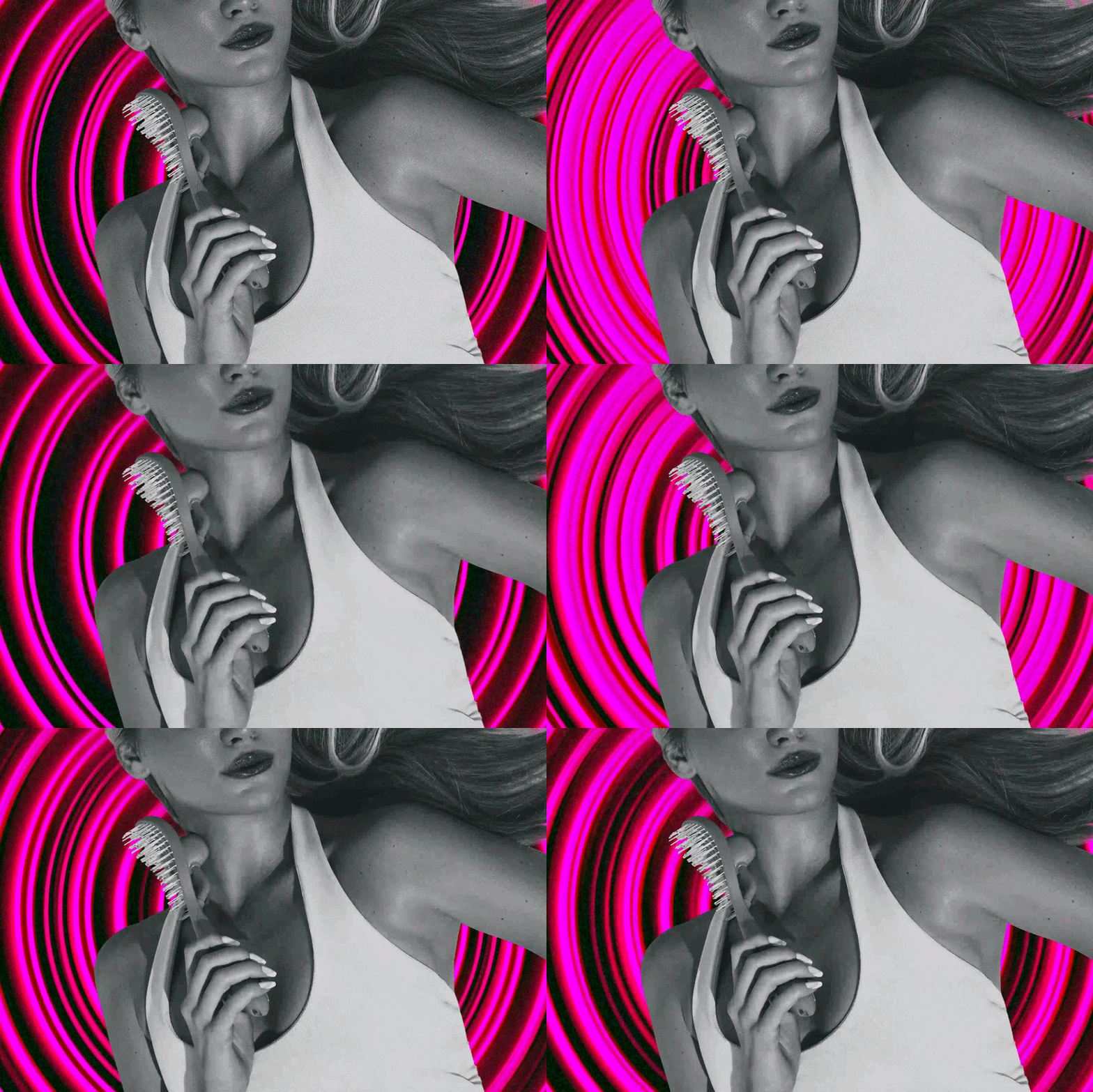
The beauty industry is a cyclical landscape, with trends from bygone eras frequently resurfacing with renewed vigor. Much like the enduring appeal of the French manicure, the glittery allure of body shimmer, or the practical chic of claw clips, another fad from the early 2000s is making an unexpected comeback: vibrating tools. However, these are not the devices that might be immediately conjured from popular culture; rather, they are specifically engineered for hair care, promising a revolutionary approach to detangling and scalp health. The recent emergence of two distinct products in this niche has generated considerable intrigue and discussion within the beauty sector.
A Sonic Shift in Hair Care: The Rise of Vibrating Tools
The current wave of innovation centers on the application of supersonic vibrations to hair and scalp, a departure from their more intimate associations. Two notable product launches exemplify this burgeoning trend. The first, Pattern Beauty’s vibrating flatiron, which debuted on August 14th, is meticulously designed for individuals with curly, coily, and tight hair textures. According to the brand’s press materials, this advanced styling tool delivers an impressive 12,000 vibrations per minute. This intensity significantly surpasses that of historical vibrating tools, with the original Magic Wand, a well-known device in a different context, pulsing at a maximum of 6,000 times per minute.
The purported benefit of these rapid oscillations lies in their ability to reduce tension and minimize hair snagging during the straightening process. The theory suggests that the high-frequency movements facilitate a smoother, more "lubricated" glide through the hair, effectively easing out tangles and knots. The manufacturers also claim that these vibrations contribute to achieving "silky results," a desirable outcome for many seeking enhanced hair texture and appearance.
Following closely behind is the OO!brush, a motorized hair tool conceived by Dave Richmond, the innovator also credited with the early 2000s gadget, the InStyler. The InStyler featured a stationary round brush combined with a rotating barrel iron for hair smoothing. Richmond’s latest creation, the OO!brush, reinterprets the concept of vibration for hair hygiene, rather than the purely pleasurable stimulation often associated with such devices. This innovative brush reportedly generates over 6,000 "micro-strokes" per second, aimed at providing a "deeper, more effective scalp massage experience." The juxtaposition of these advanced technological claims with the inherent associations of vibrating devices has undoubtedly fueled the curiosity surrounding these new hair care tools.
The Science Behind the Shakes: Detangling and Scalp Health
The claims made by both Pattern Beauty and OO!brush extend beyond mere novelty. The OO!brush, for instance, asserts that its vibrational technology can lead to a 65% reduction in damage to hair follicles and facilitate a smoother detangling process, mirroring the benefits claimed by Pattern’s flatiron. The brush features an elongated, ergonomic handle designed for comfortable grip, and incorporates a built-in scalp massager located in the bulbous rear of the paddle. This massager can be rotated for targeted application on various areas of the scalp, or even the body, for those seeking additional therapeutic benefits. The brand even suggests using the brush on a partner, highlighting the potential for shared wellness experiences.
Dave Richmond elaborated on the underlying engineering principles of the OO!brush in an interview with Allure. He explained that traditional brushes rely on friction, which can lead to cuticle damage and snagging. "You drag stiff bristles through hair, they catch the cuticle, they snag a knot, and you pull harder until something gives," Richmond stated. In contrast, he described the bristles of the OO!brush as moving "with purpose." "Once we decided the goal was less friction, the engineering got specific… Our motion is intentional. It moves the hair itself, so the hair begins to untangle on its own, and it reduces the contact between bristle and strand that creates the damage." This approach aims to minimize the mechanical stress placed on individual hair strands during brushing.
A Historical Perspective: Vibrations in Beauty and Wellness
The integration of vibrating technology into beauty and wellness routines is not entirely unprecedented. In the skincare realm, vibrating facial cleansing devices have been commonplace for years, and even manual tools like gua sha and facial rollers have incorporated pulsating features. More recently, brands have continued to innovate. Medicube, for example, introduced the Booster Pro X2, which includes a novel pulsing feature designed to enhance the penetration of skincare ingredients.

Historically, vibrating flatirons have also seen brief periods of popularity. Brands like Conair and José Eber previously offered such products, although they were eventually discontinued. Currently, brands such as Bio Ionic and Drybar continue to sell vibrating irons, indicating an ongoing, albeit niche, market presence for this technology. The resurgence of these tools suggests a renewed interest in harnessing vibrational energy for aesthetic and therapeutic purposes.
Expert Opinions: Efficacy and Caution
The efficacy of vibrating hair tools has garnered attention from dermatologists and trichologists. Dr. Toral Vaidya, a board-certified dermatologist based in New York City, offered a scientific perspective on the phenomenon. "The theory here is that through the vibration, the tools are creating less friction and thus less trauma to the strands," she explained. "I see these both as an innovation to potentially reduce physical trauma to the hair strand." However, Dr. Vaidya also cautioned against viewing these devices as a panacea for hair health, noting, "There are no robust studies to my knowledge studying the impact of vibrational hair tools on hair health." This highlights the need for further scientific investigation into the long-term effects and benefits of these technologies.
Regarding scalp health, Shab Caspara, a board-certified trichologist also based in New York City, suggested that vibrations from tools like the OO!brush might stimulate hair growth. "What we’ve seen in research is that mechanical stimulation can affect signaling in dermal cells, so that controls the hair growth cycle," Caspara stated. "It can potentially extend the hair growth cycle when that kind of stimulation reaches all the way down to the dermal papilla, which is like the very beginning of the hair follicle." This potential for stimulating the dermal papilla, a crucial component of the hair follicle responsible for hair growth, is a promising avenue for future research.
However, Caspara also advised a degree of caution. "Scalp vibration is nice for someone with a healthy scalp who likes scalp massage and stimulation, perhaps for more of a sensory, relaxing feeling," she remarked. "I think that could feel really nice, but I would avoid it on an irritated or inflamed scalp, or a scalp with any pain or open sores. You don’t want to further irritate the scalp." This advice underscores the importance of individual scalp conditions and the need for responsible usage.
The Allure of the Novelty: A Cultural Context
The Allure office itself experienced a tangible buzz when samples of the OO!brushes arrived. The unboxing was met with a mixture of excitement and playful contemplation about incorporating these "toys" into daily routines, perhaps even outside of a professional setting. This reaction points to the inherent novelty and intriguing nature of vibrating beauty tools, tapping into a desire for new and stimulating experiences within personal care.
The trend’s re-emergence can be viewed through the lens of cyclical beauty fads and the constant pursuit of innovative solutions. The early 2000s, a period rich with experimental beauty gadgets, provides a historical precedent for such innovations. The current iteration, however, seems to be grounded in a more sophisticated understanding of hair mechanics and scalp physiology, albeit one that still awaits extensive scientific validation.
Looking Ahead: The Future of Vibrational Beauty
While the ultimate impact of these vibrating hair tools on long-term hair and scalp health remains to be definitively proven, their current popularity signals a growing interest in integrating advanced technology into beauty routines. The journey of the Magic Wand, which transitioned from a muscle massager to a widely recognized device, serves as an interesting parallel, suggesting that innovative applications can emerge from unexpected origins.
Ultimately, whether these vibrating hair tools will fundamentally "save" hair or revolutionize beauty routines is uncertain. However, their intriguing design, novel approach, and the promise of enhanced detangling and scalp stimulation make them compelling additions to the ever-evolving landscape of beauty and wellness. As consumers continue to seek out cutting-edge solutions, the buzz around vibrating hair tools suggests they are poised to capture attention, if not achieve widespread transformative results, in the near future. The convergence of technology and personal care continues to offer surprising and, at times, delightfully stimulating avenues for exploration.
