
 By Nila Kartika Wati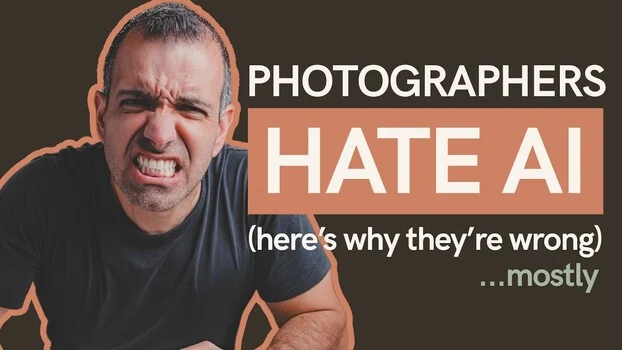
In an era increasingly shaped by artificial intelligence, the creative industries, particularly photography, find themselves at a critical crossroads. Pye Jirsa, a prominent voice within the photographic community, has directly addressed the burgeoning anxieties and accusations surrounding AI’s role, often encountering the sentiment that "AI is for talentless cheats. Real photographers don’t use it. You’re helping drain the reservoirs. You’re making billionaires rich while the rest of us scrape by." Rather than engaging in piecemeal rebuttals, Jirsa recently unveiled a comprehensive video analysis designed to systematically deconstruct these objections. His approach is distinguished by its reliance on independent data, specifically referencing insights from Stanford HAI’s 2026 AI Index, steering clear of marketing rhetoric to offer a stark, data-driven perspective on AI’s present and future impact on photography.
The Authenticity Imperative: Where Human Touch Remains Irreplaceable
One of the most striking aspects of Jirsa’s discourse is an immediate concession that might surprise his most ardent critics: he explicitly states he has never, nor will he ever, teach photographers to sell generative imagery. This stance is not rooted in ethical opposition but in commercial pragmatism. Jirsa underscores a fundamental truth about certain photographic genres: their intrinsic value lies in documenting authentic, unrepeatable moments. "Nobody wants an invented picture of their newborn or a fabricated version of their wedding day," he asserts, "because the entire product is the fact that the moment happened." This principle highlights a critical distinction between photography as art or commercial illustration, where AI might find utility, and photography as a record of personal history, where its intrusion is antithetical to the product’s core offering.
This segment of the industry—encompassing wedding, newborn, family, and event photography—is inherently protected by the human need for genuine memory. The emotional weight and irreplaceable nature of these life milestones mean that an AI-generated substitute, no matter how technically flawless, can never replicate the value of a photograph capturing a real, lived experience. This perspective aligns with broader consumer psychology studies indicating a strong preference for authenticity in personal and significant life events. While AI excels at creating visually compelling narratives or product shots, it fundamentally lacks the ability to bear witness, a cornerstone of documentary photography.
The Credibility Conundrum: When Polish Becomes Suspicion
Attached to the discussion of authenticity is a potent warning for photographers who rely on highly polished aesthetics. Jirsa highlights a concerning trend: audiences are increasingly accusing real photographs of being AI-generated simply because they appear "too polished." This phenomenon transforms what was once a stylistic choice—meticulous editing, flawless retouching, and pristine compositions—into a significant credibility problem. In an age saturated with synthetic media, the visual cues that once signified professional excellence can now trigger suspicion.
This shift reflects a growing public awareness, albeit sometimes misinformed, of AI’s capabilities in image manipulation and generation. As AI tools become more sophisticated in rendering hyper-realistic textures, lighting, and detail, the line between an impeccably edited photograph and an AI-fabricated image blurs. For photographers, this necessitates a re-evaluation of their post-processing workflows and perhaps even their stylistic approach. The pursuit of "perfection" might inadvertently undermine the perceived authenticity of their work. This challenge extends beyond photography, impacting journalism and media literacy, where the provenance of images is increasingly questioned. The implications are profound: photographers might need to adopt more visibly "human" elements in their work, or transparently disclose their editing processes, to maintain audience trust in a post-AI landscape. The very definition of photographic "truth" is undergoing a profound re-examination in the public consciousness.
Historical Echoes and Industry Vulnerabilities: Analyzing Job Displacement
Jirsa does not shy away from the uncomfortable truths regarding genuine industry exposure. He draws a direct line from current AI anxieties back through 25 years of similar technological disruptions that had nothing to do with AI. This historical context is crucial for understanding the present moment. The photography industry has repeatedly faced transformative shifts: the advent of digital cameras, the rise of smartphones, the proliferation of stock photography sites, and the democratization of editing software. Each wave brought predictions of doom, reconfigurations of the market, and shifts in demand.
Jirsa is blunt about which corners of the industry are genuinely exposed, backing his analysis with employment data that extends beyond photography, indicating broader patterns of automation’s impact. The bleakest stretch of his video, he suggests, points not to the work disappearing entirely, but to where the damage lands first. Historically, technological advancements tend to automate repetitive, low-skill, or easily standardized tasks. In photography, this could manifest in areas like basic product photography, real estate photography (where standardized angles and lighting are common), or certain forms of corporate headshots that follow strict templates. AI’s ability to generate variations, adjust lighting, and even compose shots with minimal human input poses a direct threat to these segments.
To provide context, studies from institutions like the World Economic Forum and various economic think tanks have consistently shown that while automation and AI can displace jobs in specific sectors, they also create new ones, often requiring different skill sets. However, the transition is rarely seamless, leading to periods of significant disruption and requiring workers to adapt or retrain. For photography, this means a likely shift towards roles demanding unique creative vision, complex problem-solving, deep understanding of human emotion, and the ability to manage intricate client relationships—skills that are currently difficult for AI to replicate. The employment data Jirsa references likely illustrates how entry-level or highly commoditized photographic roles are the first to feel the pressure, a pattern observed across industries from manufacturing to administrative services.
Economic Realities: Deconstructing Wealth Concentration in AI
Another pervasive argument Jirsa tackles is the notion that AI’s rise exclusively enriches a handful of billionaires. Drawing on his early career as a Certified Public Accountant (CPA) running financial statement audits, he offers an informed counter-narrative on who is truly capturing the money and who is actually carrying the risk. His analysis runs counter to common assumptions, suggesting a more nuanced economic landscape than a simple transfer of wealth to tech magnates.
While it is undeniable that major technology companies investing heavily in AI development—such as Google, Microsoft, Amazon, and Meta—have seen their market capitalizations soar, Jirsa’s perspective likely delves deeper into the flow of capital and the distribution of economic value. His background in financial audits suggests an understanding of the complex ecosystems that support these tech giants, including vast networks of suppliers, service providers, researchers, and developers. Moreover, the "risk" he alludes to could encompass the enormous capital expenditure required for AI research and development, the significant operational costs of maintaining AI infrastructure (e.g., data centers, energy), and the inherent volatility of rapidly evolving technological markets.
Furthermore, Jirsa might argue that while the initial beneficiaries are often large corporations, the accessibility of AI tools is also democratizing advanced capabilities, enabling smaller businesses and individual creators to achieve results previously requiring large teams or significant investment. This "long tail" of beneficiaries, while not "billionaires," represents a broader economic impact. The economic narrative around AI is complex, involving discussions of intellectual property, data ownership, labor market shifts, and the potential for new forms of economic value creation that extend beyond the immediate profits of tech giants. His CPA insights would emphasize that while certain entities certainly accrue immense wealth, the underlying economic dynamics are more intricate than a simplistic "rich getting richer" narrative, involving a vast ecosystem of innovation, investment, and risk.
The Environmental Footprint: AI’s Hidden Costs
The environmental impact of AI is another critical area Jirsa addresses without softening the numbers. He reads out the environmental statistics related to AI’s operation and then sets them beside comparisons that are "hard to unhear." This segment highlights a growing concern within the tech industry and environmental advocacy groups: the substantial energy consumption and carbon footprint associated with training and running large AI models.
The computational demands of modern AI, particularly deep learning models, are immense. Training a single large language model, for instance, can consume as much energy as several homes over a year, emitting hundreds of thousands of pounds of carbon dioxide. Data centers, which house the servers necessary for AI operations, are significant consumers of electricity, often relying on fossil fuels for power. As AI deployment expands across industries, the aggregate energy demand and corresponding environmental impact are projected to rise dramatically.
Jirsa’s comparisons likely contextualize these figures, perhaps by contrasting them with other high-energy consumption activities or industries, or by demonstrating the rapid increase in AI’s energy needs relative to its capabilities. For example, the energy cost of running a sophisticated AI model for image generation could be compared to the energy used in traditional photography workflows, or to the carbon footprint of manufacturing photographic equipment. This discussion serves as a crucial reminder that technological progress, while offering immense benefits, often comes with hidden costs that society must acknowledge and address. It pushes the conversation beyond mere utility and economic gain to encompass ethical responsibility towards the planet, underscoring the need for sustainable AI development and deployment practices.
Navigating the Ethical Minefield: Data Privacy and Consent
The final objection Jirsa considers the strongest argument against his own position, and notably, he does not claim a full victory here. This acknowledges the profound ethical challenges AI presents, particularly concerning data privacy, consent, and the potential for misuse. Instead of a definitive rebuttal, he offers a short, practical checklist for photographers who regularly handle sensitive client information, including contracts, addresses, and photographs of minors.
This practical guidance is crucial because AI systems are trained on vast datasets, often scraped from the internet without explicit consent from the individuals whose data is included. The implications for privacy are enormous. For photographers, who are custodians of intensely personal imagery and information, the rise of AI necessitates a heightened vigilance regarding data security and ethical practices. Jirsa’s checklist likely emphasizes:
- Robust Contracts: Ensuring client contracts explicitly address the use (or non-use) of images for AI training or processing, and securing clear, informed consent for any such applications.
- Data Segregation and Security: Implementing stringent measures to protect client data (addresses, personal details) from unauthorized access or use by AI tools, particularly those that might be cloud-based or involve third-party processing.
- Image Licensing and Usage Rights: Clarifying who owns the rights to the images, especially when considering the potential for AI to learn from and generate new content based on proprietary work.
- Special Considerations for Minors: Adhering to strict legal and ethical guidelines regarding photographs of children, ensuring parental consent covers all potential uses, including any interaction with AI technologies.
The legal landscape surrounding AI and data privacy is still nascent and rapidly evolving. Regulations like GDPR in Europe and various state-level privacy laws in the U.S. provide a framework, but AI introduces new complexities. The ability of AI to identify individuals, infer personal characteristics, or even generate "deepfakes" from existing imagery presents significant risks of identity theft, reputational damage, and exploitation. Jirsa’s emphasis on practical safeguards acknowledges that while the broader ethical debate rages, photographers must immediately adopt proactive measures to protect their clients and their own professional integrity. This is not merely about compliance but about upholding the fundamental trust placed in them by their subjects.
Conclusion: An Informed Path Forward
Pye Jirsa’s comprehensive address serves as a vital intervention in the often-heated discourse surrounding AI in photography. By grounding his arguments in data, historical context, and practical considerations, he moves beyond emotional rhetoric to offer a more nuanced and actionable understanding of the challenges and opportunities. His analysis highlights that while some aspects of photography remain inherently human-centric, other segments face genuine disruption. The economic and environmental footprints of AI are real and demand attention, as do the profound ethical implications concerning data privacy and consent.
The message is clear: AI is not simply a passing fad or a distant threat; it is a transformative force already reshaping industries. For photographers, passive resistance or blanket rejection may be less effective than informed engagement. Jirsa advocates for a strategic adaptation, where practitioners understand AI’s capabilities and limitations, safeguard their unique human value proposition, navigate the ethical complexities with diligence, and contribute to the ongoing conversation about responsible technological integration. His video, by confronting uncomfortable truths with data-backed insights, aims to equip photographers not with answers to every question, but with a framework for critical thinking and proactive adaptation in an increasingly AI-driven world. The ultimate goal is not to stop the tide of innovation, but to learn how to sail its currents responsibly and effectively.
