
 By admin
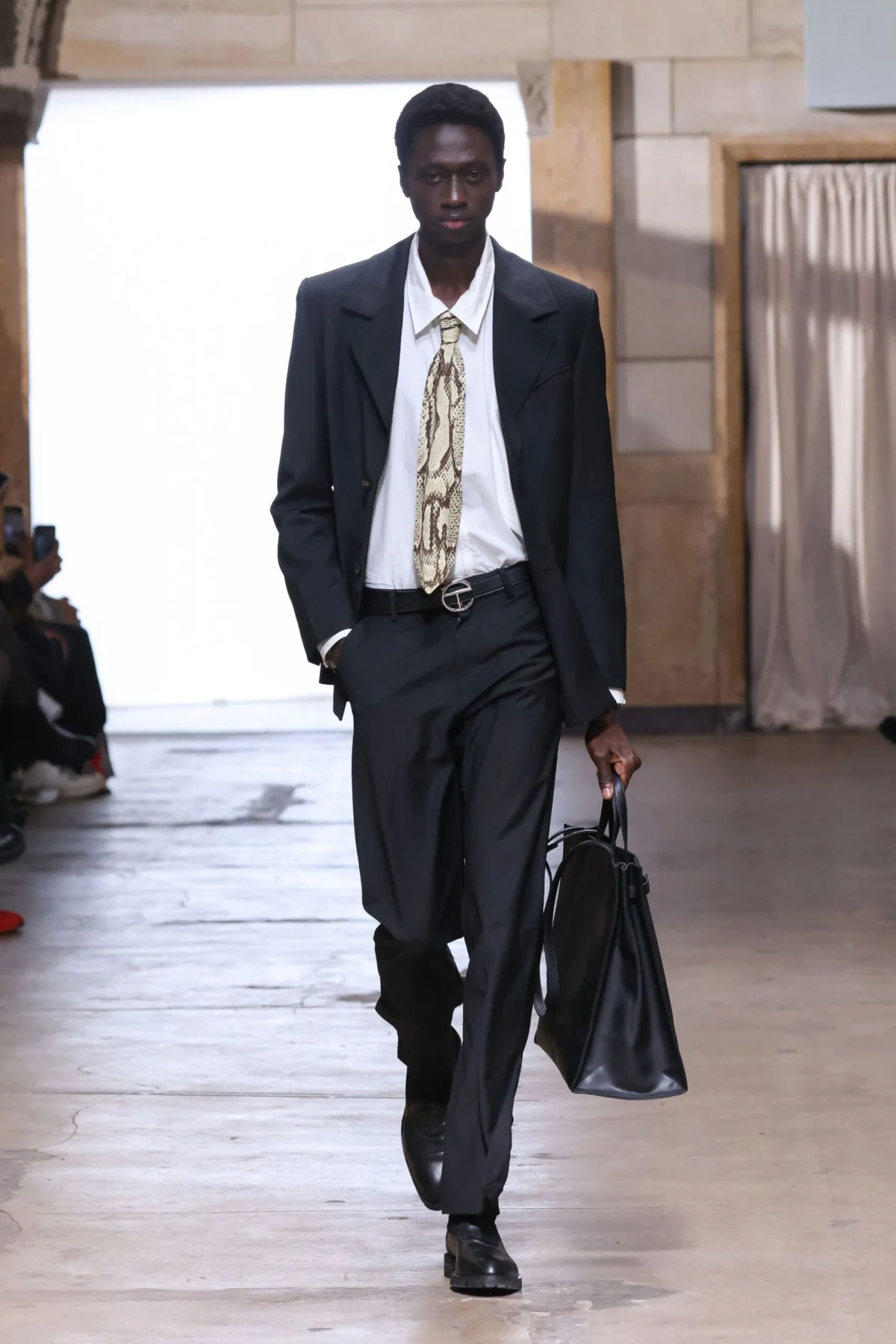
In a remarkable display of strategic subversion and meta-commentary on the global fashion industry, designer Telfar Clemens orchestrated his Spring 2027 collection presentation in a manner that defied conventional expectations, ultimately executing a conceptual reversal that placed New York at the epicenter of a spectacle initially purported to be Paris-bound. The event, held on the final day of the fashion week calendar, was originally pitched as a live runway show taking place in Paris, simultaneously livestreamed to a discerning audience in New York, where Clemens himself would host a highly anticipated sample sale. However, the reality unveiled on the day proved to be an ingenious inversion, with the live runway show and integrated sample sale unfolding within the grand, ornate lobby of a former bank building in New York City, while a remote crowd in Paris received the livestream. This unexpected pivot underscored Telfar’s long-standing commitment to challenging established hierarchies and democratizing access within the often-exclusive world of high fashion.
The Orchestrated Deception: A Chronology of Anticipation and Revelation
The genesis of this elaborate presentation began weeks prior, with industry buzz circulating around Telfar’s supposed return to the Parisian stage. This narrative was meticulously cultivated, reaching its peak the night before the show, when Clemens and his long-time creative partner, Babak Radboy, engaged with media, playfully asserting they were "Zooming in late from Paris, exhausted from a long day." This pre-show charade effectively set the stage for the dramatic reveal, heightening anticipation and ensuring the impact of the eventual twist.
On the day of the event in New York, the atmosphere outside the designated venue—a monumental architectural marvel, a former bank building emblematic of classic American grandeur—was already charged with palpable excitement. Lines of devoted shoppers, renowned for their unwavering loyalty to the Telfar brand, had formed hours in advance, a testament to the label’s cult following. Inside, the juxtaposition was immediate and striking: a meticulously arranged catwalk snaked through the opulent space, directly adjacent to rows of racks brimming with Clemens’s distinctive sportswear and the brand’s iconic, "riot-inducing" bags. Guests were directed to take their seats, and after the customary wait, the show commenced. The true nature of the event became unequivocally clear at its conclusion, when Telfar Clemens himself emerged for his bow, not on a Parisian stage, but in front of a DJ booth in New York, surrounded by friends whose real-time, quippy commentary further cemented the local, intimate, yet globally broadcasted setting. This moment served as the definitive confirmation of the concept’s flip, a powerful statement on authenticity and location in a digitally interconnected world.
The Collection: A Mature Vision with Unmistakable Telfar Edge
Beyond the conceptual ingenuity of the presentation, the Spring 2027 collection itself marked a significant evolution for the Telfar brand. Clemens articulated a desire to present a more "mature" vision, emphasizing his ready-to-wear offerings, a strategic move to broaden the brand’s perception beyond its wildly successful, ubiquitous shopper bag, often dubbed the "Bushwick Birkin." This focus on ready-to-wear was evident from the collection’s opening, which featured a series of straightforward, slim-cut tailored suits. This initial foray into classic tailoring, however, was merely a prelude to the brand’s signature subversion.
As the show progressed, the collection gracefully transitioned into the pleasantly stranger, alternative funk that defines Telfar’s aesthetic. Garments were deconstructed and re-worked, embracing a looser, longer, and more relaxed silhouette. The designer played with perception, presenting pieces that appeared to be worn inside out, such as long shorts with their silk jacquard linings deliberately exposed, or expertly chopped into entirely new forms, exemplified by a column skirt crafted from gray wool. A notable historical reference emerged in jackets paired with draped shorts, subtly evoking the voluminous, structured breeches of the Tudor era, seamlessly blending historical sartorial elements with a contemporary, urban sensibility.
Prints served as another organizing principle, with snakeskin and cheetah spots manipulated through scanning processes to create unique textures and patterns. These were then fashioned into saucy, skimpy dresses—one striking red iteration with a hood exuded a distinct mid-century glamour—and elegantly draped tops. Clemens also indulged in his signature jersey fabric, here reimagined through quilting in designs that subtly echoed classic motorcycle jackets. In a further exploration of texture and form, jersey pieces were turned inside out, with the interior fleece meticulously combed out, adding an unexpected tactile dimension. The collection culminated in a series of streamlined black dresses and tank tops, their curvy hems adorned with delicate chains, a clever and subtle nod to the hardware of the brand’s iconic bags. As for the bags themselves, Clemens presented a diverse array, including demure shoulder bags, large shoppers that bore a vague resemblance to the coveted Birkin, and even whimsical fox tails that zipped open to reveal their true nature as furry pouches, blending utility with playful deception.
Telfar’s Enduring Legacy: Independence, Resilience, and Disruption
Clemens’s defiant stance during the pre-show conversation, emphasizing his brand’s longevity and breadth beyond the celebrated shopper bag, provided crucial context for the collection and the show’s concept. Having been in business for 21 years, Telfar has navigated numerous economic downturns, including a global financial crisis and a pandemic, all while maintaining its fiercely independent status. This remarkable resilience, coupled with Clemens’s steadfast leadership at the helm, distinguishes Telfar in an industry increasingly dominated by large conglomerates and rapid turnover. The brand’s refusal to strictly adhere to the traditional fashion calendar and its recent establishment of a flagship store on the far edge of Chinatown further cement its position as a true outlier and innovator. This sustained independence and commitment to its unique vision represent a significant accomplishment for any designer operating in today’s highly competitive landscape.
The "Bushwick Birkin," a term affectionately coined for Telfar’s vegan leather shopping bag, has transcended mere accessory status to become a cultural phenomenon. Its democratic pricing (ranging from $150-$257) and accessible aesthetic have made it a symbol of inclusive luxury, worn by everyone from celebrities to everyday commuters. The bag’s immense success, however, has inadvertently overshadowed the brand’s extensive ready-to-wear offerings, a perception Clemens is clearly determined to shift with collections like Spring 2027. By foregrounding sophisticated tailoring and intricate fabric manipulations, Telfar aims to re-assert its identity as a comprehensive fashion house, capable of delivering a full wardrobe that embodies its distinct ethos.
Meta-Commentary and Industry Implications: A Critique of the Fashion System
The decision by Clemens and Radboy to directly integrate a sample sale with the runway show, coming just weeks after Gucci’s "Store Show," represents a profound meta-commentary on the contemporary fashion system. It dissects the inherent paradoxes of an industry that simultaneously strives for artistic expression and commercial viability. This approach baldly exposes what many perceive as the "broken nature" of traditional fashion cycles, where collections are presented months in advance, only to become available much later, often at exorbitant prices. By offering immediate access to the collection post-show, Telfar bridges the gap between aspiration and acquisition, catering directly to its community’s desire for instant gratification and tangible connection.
Telfar shows have consistently been conceptual, carrying an arch message that extends beyond mere garment presentation. Clemens has deliberately operated outside the traditional fashion establishment, and in doing so, he appears to have bent its rules to his will. This latest show concept vividly demonstrated the direct and fervent connection people have to his work. The sight of increasingly frenzied swarms of shoppers pawing through racks, accumulating armfuls of denim and jersey sportswear, was a visceral testament to this bond. It served as a stark reminder that while Paris may traditionally hold the esteemed title of fashion capital, in the United States, and particularly within Telfar’s domain, capitalism, coupled with community-driven demand, frequently reigns supreme. This direct-to-consumer, immediate-gratification model challenges the antiquated notions of exclusivity and delayed gratification that have long characterized luxury fashion.
The Evolving Fashion Landscape: A Glimpse into the Future
Telfar’s Spring 2027 presentation is more than just a fashion show; it is a significant cultural statement with far-reaching implications for the future of the industry. It highlights several key trends:
- The Blurring of Lines: The distinction between a high-fashion runway event and a commercial sample sale was deliberately obliterated, signaling a future where brand experiences are holistic, merging artistic vision with immediate consumer interaction.
- The Power of Digital and Hybrid Models: The simultaneous livestream to Paris underscores the importance of digital reach, allowing brands to transcend geographical boundaries and engage a global audience, even as they create intimate, localized experiences.
- Challenging Fashion Hierarchies: By staging a major show in New York that effectively "tricked" the Parisian audience, Telfar playfully yet pointedly questioned the long-held supremacy of European fashion capitals, asserting New York’s vibrant, commercially dynamic fashion identity.
- Community-Centric Approach: Telfar’s success is deeply rooted in its community. The integrated sample sale and the palpable excitement of the shoppers demonstrate the power of direct engagement and a brand that truly understands and serves its audience.
- Authenticity and Disruption: In an era saturated with carefully curated brand images, Telfar’s playful deception and consistent disruption of norms resonate deeply with consumers seeking authenticity and brands that challenge the status quo.
In conclusion, Telfar Clemens’s Spring 2027 show was a masterclass in conceptual design, strategic communication, and market engagement. It was a defiant declaration of independence, a mature evolution of a beloved brand, and a sharp, witty critique of the fashion industry’s conventional mechanisms. By flipping the script and bringing the spectacle and sale directly to his New York base, Clemens not only presented a compelling collection but also reinforced his position as a visionary who continues to redefine what a fashion brand can be, seamlessly blending art, commerce, and community in a manner that truly resonates with the contemporary zeitgeist. This event will undoubtedly be remembered as a pivotal moment, shaping conversations around accessibility, authenticity, and the evolving dynamics of global fashion.
