
 By admin
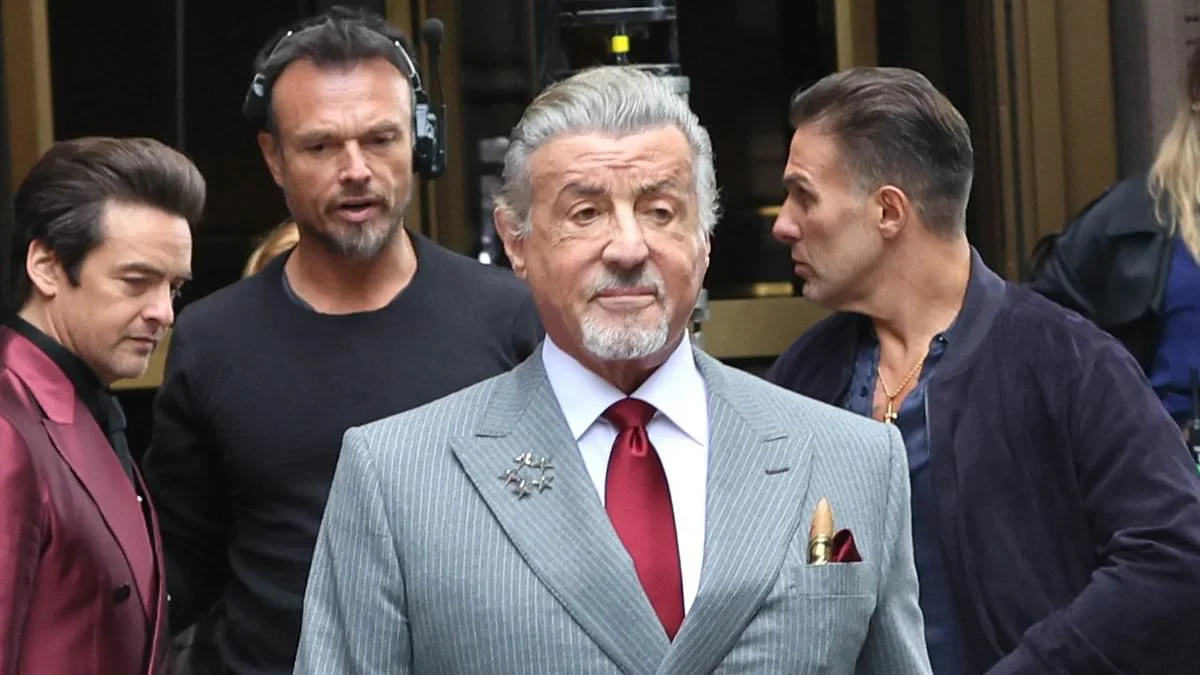
The cinematic landscape of New York City served as the backdrop this week for the continued production of the Paramount+ hit series Tulsa King, where lead actor and executive producer Sylvester Stallone was observed in a stylistic departure from his traditional action-oriented persona. On Wednesday, the 80-year-old film legend was photographed on set transitioning into the refined, albeit imposing, wardrobe of his character, Dwight "The General" Manfredi. Trading the rugged, tactical attire that defined his decades-long career in the Rocky and Rambo franchises, Stallone appeared in a structured gray pinstripe suit, signaling a continuation of the high-stakes narrative that has defined the series since its 2022 debut.
The double-breasted ensemble featured an angular cut that provided a boxy profile, an intentional choice by the production’s costume department to emphasize the character’s old-school mobster roots within a modern setting. Stallone’s appearance was further elevated by a burgundy tie and a matching gold-and-burgundy pocket square. Notably, the actor wore a five-star lapel pin, a piece of iconography typically reserved for the highest military rank, which serves as a visual metaphor for his character’s self-appointed "General" status within his burgeoning criminal empire. The look was completed with slicked-back salt-and-pepper hair, a groomed goatee, and distinctive gray reptile leather shoes featuring green accents—a choice described by observers as character-appropriate for a man of Manfredi’s background and tastes.
Ensemble Dynamics and the New York Production
While Tulsa King is narratively centered in Oklahoma, significant portions of the production have utilized New York City locations to capture the gritty, urban contrast of Manfredi’s origins. On Wednesday, Stallone was joined by several key cast members, including Garrett Hedlund, 42, who portrays Mitch Keller. Hedlund’s costume offered a sharp visual contrast to Stallone’s formal attire, consisting of a classic "double denim" look with a blue denim jacket and slightly darker jeans. Complemented by a large decorative belt buckle, brown leather cowboy boots, and a white T-shirt, Hedlund’s aesthetic evoked a mid-century Americana style reminiscent of James Dean or Marlon Brando.
Also present on set was Martin Starr, known for his previous work on Silicon Valley. Starr, who plays the character Bodhi, maintained his character’s eclectic style, wearing a pink graphic T-shirt under a gray shirt jacket, paired with mauve jeans and brown shoes. The interaction between these diverse characters underscores the central premise of the Taylor Sheridan-created series: the collision of traditional East Coast organized crime culture with the contemporary, rural realities of the American Midwest.
Adding a personal dimension to the production was the presence of Scarlet Stallone, the 24-year-old daughter of the lead actor. Scarlet, who plays the character Spencer in the series, was seen in a Western-themed outfit featuring a brown suede jacket with fringe detailing, dark-brown boots, and denim jeans accented with a turquoise belt buckle. Her involvement in the show has recently become a focal point of public discourse regarding industry hiring practices.
The Ethics of Casting: Stallone Addresses Nepotism Claims
The production of Tulsa King has not been without its share of public scrutiny. Recently, Sylvester Stallone addressed growing accusations of nepotism following the casting of his daughter in a recurring role. In a candid interview with USA Today, the actor chose to confront the criticism directly rather than deflect it, offering a defense rooted in parental duty and the competitive nature of the entertainment industry.
"Of course it’s nepotism, you idiot," Stallone stated during the interview, acknowledging the inherent advantage his daughter received. He argued that providing opportunities for one’s children is a fundamental aspect of parenting, suggesting that any parent in a position of influence would seek to grant their children every possible advantage. Stallone elaborated that while he can "open the door," the ultimate survival of a performer in the industry depends on their own merit. "To maintain that, to be in front of millions of people, you either got it or you don’t," he noted, emphasizing that the public and the camera are the final arbiters of talent.
Scarlet is one of three daughters Stallone shares with his wife, Jennifer Flavin. The actor also has two sons from his previous marriage to Sasha Czack: Seargeoh, 47, and Sage, who tragically passed away in 2012. The conversation surrounding "nepo babies" has become a prevalent theme in Hollywood reporting, and Stallone’s unapologetic stance represents a notable data point in the ongoing debate over equity versus legacy in casting.
Workplace Conduct and the Extras Controversy
Beyond the casting of principal roles, the Tulsa King production has faced allegations regarding the treatment of background actors. In April 2024, reports emerged suggesting a "toxic environment" on set, specifically citing alleged disparaging remarks made by Stallone and director Craig Zisk toward extras. The claims gained traction after a social media post by TV writer Julie Benson, who alleged that Stallone and Zisk referred to background performers as "ugly" and "fat."
The fallout from these allegations included the resignation of Rose Locke, a veteran casting director for the series. Locke reportedly quit the production after expressing disgust with the alleged environment. However, the production team has offered a different account of the events. Craig Zisk, who also serves as an Executive Producer, denied the claims in a statement to TMZ. Zisk clarified that the friction arose from a disagreement over casting requirements rather than personal insults.
According to Zisk, a specific scene set in a "hip, young bar" required background actors in the 25-to-35-year-old demographic. He alleged that Locke provided extras who were significantly older than the requested age range. Zisk maintained that while he used the actors provided and treated them with professional courtesy, he insisted that future casting submissions include headshots to ensure they met the creative needs of the series. Zisk claimed that Locke’s refusal to adhere to this standard led to her immediate resignation. Stallone’s representatives have not issued a formal comment on the specific verbal allegations, though the production has continued its filming schedule as planned.
Narrative Trajectory and Character Evolution
In Tulsa King, Stallone’s character, Dwight Manfredi, represents a subversion of the traditional mob boss trope. After serving 25 years in prison to protect his "family," Manfredi is released only to find himself exiled to Tulsa, Oklahoma, by the son of the boss he protected. The series follows his efforts to establish a new criminal network in a territory where his traditional methods are often met with confusion or cultural resistance.
The wardrobe choices seen this week in New York suggest that Season 2 will continue to explore Manfredi’s refusal to blend in. The "boxy" pinstripe suit is a visual anchor to his past in the New York underworld, serving as a suit of armor as he navigates new alliances and rivalries. The series, which has been a significant driver of subscriptions for Paramount+, benefits from the "Sheridan effect"—a term used to describe the massive commercial success of projects led by showrunner Taylor Sheridan, including the Yellowstone universe and Mayor of Kingstown.
Industry Implications and Future Outlook
The continued production of Tulsa King highlights several broader trends in the current television era. First, it demonstrates the enduring bankability of legacy film stars in the streaming landscape. Stallone’s transition to a leading television role mirrors similar moves by contemporaries such as Arnold Schwarzenegger and Harrison Ford, who have found success in long-form serialized storytelling.
Second, the production’s ability to navigate controversies—ranging from nepotism debates to workplace conduct allegations—reflects the complex pressures of modern television production. The speed with which internal set dynamics can become national news necessitates a high level of transparency and crisis management from studios.
As filming continues in New York and Oklahoma, the focus remains on the creative output of the ensemble cast. With the narrative stakes rising for Dwight Manfredi, the series is poised to remain a cornerstone of the Paramount+ lineup. For Sylvester Stallone, the role offers a rare opportunity to deconstruct the "tough guy" archetype he helped build, replacing the physical combat of his youth with the psychological and political maneuvering of a veteran mobster. Despite the 80-year-old actor’s long history in the spotlight, his presence on the streets of New York this Wednesday proved that his ability to command a scene—and generate headlines—remains undiminished.
