
 By admin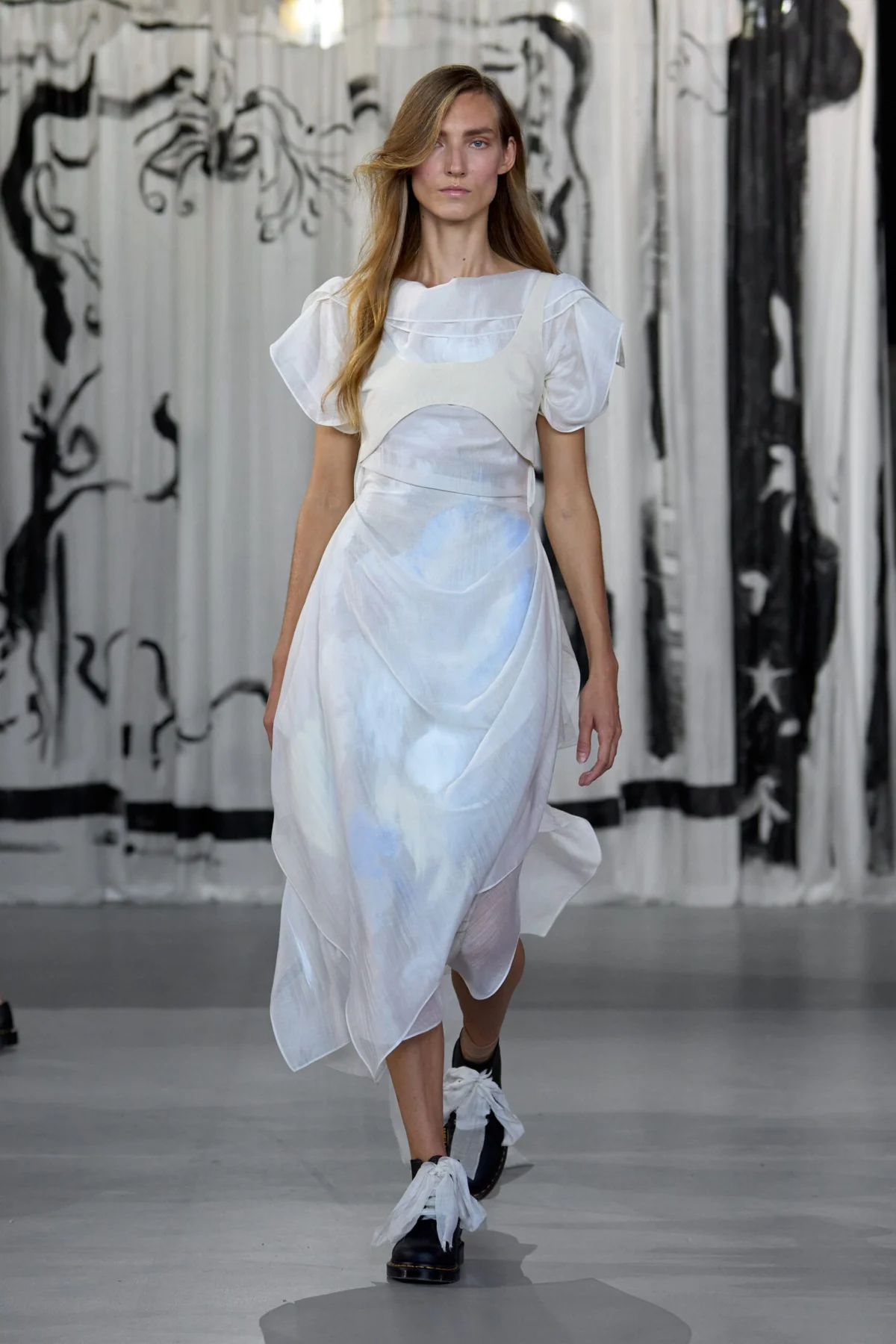
Copenhagen, Denmark – In a highly anticipated return to the runway after a two-year hiatus, Stine Goya presented its Spring 2027 collection, marking a significant strategic pivot and a vibrant reassertion of its creative vision. The collection, unveiled with an innovative staging concept, draws profound inspiration from Florian Illies’ acclaimed book, 1913: The Year Before the Storm, creating a compelling dialogue between the pre-World War I artistic ferment and the current era of technological disruption, notably the rise of Artificial Intelligence. This presentation is widely seen as a pivotal "breakout moment" for a brand that, according to CEO Thomas Herz, had been perceived as "treading water."
A New Chapter for Stine Goya: The ‘Breakout Moment’
The Copenhagen-based fashion house, known for its distinctive use of color and print, has undergone a period of introspection and strategic realignment. For two years, the brand opted out of the traditional runway show format, a decision that prompted industry speculation regarding its creative trajectory. Thomas Herz, the company’s CEO and partner to designer Stine Goya, acknowledged this period, noting that the brand had perhaps been "treading water" in the fast-paced fashion landscape. The Spring 2027 show, therefore, was not merely a seasonal unveiling but a deliberate statement of renewed intent and vigor.
The physical staging of the show itself served as a potent metaphor for this reawakening. Guests were seated in concentric circles, an architectural decision ensuring that "every guest had a front row seat," as Herz explained. Models navigated this unique layout by walking in continuous circles, a choreographic choice described as "somewhat like a clock." This "spiraling choreography" was not merely aesthetic; it symbolized a conscious effort by Stine Goya to break free from repetitive cycles and embrace forward momentum. This intentional departure from conventional linear runways underscored the brand’s commitment to innovation in presentation, reflecting the broader creative and conceptual shifts within the collection itself. Industry analysts suggest that this strategic return, coupled with the collection’s bold new direction, positions Stine Goya for renewed market engagement and an enhanced global profile, particularly within the competitive Scandinavian fashion scene.
Inspiration from the Brink: Illies’ 1913 and the Pre-War Avant-Garde
At the heart of Stine Goya’s Spring 2027 narrative lies Florian Illies’ 1913: The Year Before the Storm. The book meticulously chronicles the intellectual, artistic, and social landscape of Europe on the eve of World War I, portraying a continent brimming with extraordinary creativity and a palpable sense of impending change. Illies details the lives and interactions of iconic figures such as Franz Kafka, Marcel Duchamp, Igor Stravinsky, Sigmund Freud, and Coco Chanel, all living with an intensity that suggested "as if there was no tomorrow." This period, characterized by radical experimentation across disciplines, resonated deeply with Stine Goya.
"It was about how all the European artists and thinkers and scientists at that moment were living their life as if there was no tomorrow," Goya explained, reflecting on the book’s profound influence. "There was really this sense of creativity and how they were working together that was really inspiring to me; there was something that felt so parallel to the time that we live in today." The designer drew a direct parallel between the intellectual and artistic ferment of 1913 and the contemporary challenges and transformations spurred by technological advancements, particularly Artificial Intelligence. Just as the early 20th century grappled with paradigm shifts in art, science, and philosophy, the early 21st century navigates the profound societal disruption caused by AI, prompting a similar introspection about human creativity, collaboration, and the future. This historical lens provided a rich conceptual framework for a collection designed to be both reflective and forward-looking.
Echoes of Disruption: From Cubism to Ballets Russes
To further underscore the parallels between historical and contemporary disruption, Goya explicitly referenced pivotal cultural events from a century ago that irrevocably altered artistic perceptions. A key touchstone was the International Exhibition of Modern Art, famously known as the Armory Show, held in New York in 1913. This groundbreaking exhibition introduced the American public to European avant-garde art, including Cubism, Fauvism, and Futurism, eliciting a mixture of outrage and fascination. Marcel Duchamp’s Nude Descending a Staircase, No. 2, a fragmented and kinetic depiction of movement, became a lightning rod for critics, who found its radical departure from traditional representation deeply unsettling. It symbolized the shock of the new, challenging established artistic norms and forcing a re-evaluation of what art could be.
Concurrently, in Paris, the Ballets Russes, under the visionary leadership of Serge Diaghilev, was staging equally provocative performances. Vaslav Nijinsky’s choreography and performance in Afternoon of a Faun (1912), set to Claude Debussy’s Prélude à l’après-midi d’un faune, famously caused a scandal with its overtly erotic movements and suggestive symbolism. While the article specifically mentions Igor Stravinsky’s music, it’s worth noting that Stravinsky’s The Rite of Spring, also premiered by the Ballets Russes in 1913, caused an even greater riot, cementing the company’s reputation for pushing boundaries and defying societal conventions. Goya deliberately played Stravinsky’s evocative music at the beginning of her show, immediately setting a tone of historical homage and rebellious creativity. The inclusion of an inline skater performing on the circular runway further modernized this historical reference, blending the dynamism of early 20th-century performance art with contemporary urban movement, suggesting a continuous cycle of artistic evolution and boundary-breaking. These historical allusions are not merely decorative; they form the intellectual bedrock of the collection, anchoring its contemporary relevance in a rich tapestry of artistic defiance and innovation.
Aesthetic Evolution: A Cooler Edge Emerges
The Spring 2027 collection marks a discernible aesthetic evolution for Stine Goya. The brand, which had cultivated a reputation for its "cutesiness" – often characterized by playful prints, voluminous silhouettes, and a generally softer, more feminine appeal – has consciously introduced a "somewhat cooler edge." This shift is immediately apparent in the styling and specific design elements. The choice of ribbon-laced Dr. Martens boots, known for their utilitarian yet rebellious aesthetic, provided a grounded, edgier counterpoint to the collection’s more whimsical elements, signaling a departure from previous saccharine associations.
While florals, a Stine Goya signature, remained abundant, their interpretation was strikingly different. The standout prints featured a bolder, more opulent color palette, reminiscent of the maximalist glamour championed by Gianni Versace in his heyday. These prints were further enriched with intricate rococo cartouches, a baroque flourish that added a layer of historical grandeur and ornate sophistication, a stark contrast to the brand’s previous, often simpler, graphic motifs. This infusion of historical artistry, specifically referencing a period of flamboyant design, aligns perfectly with the collection’s overall inspiration from the early 20th century’s artistic awakening.
Beyond prints, the collection showcased a brilliant use of color and texture in densely all-over beaded pieces. Bright hues, another Goya hallmark, were applied to garments like the cardigan jacket the designer herself wore for her bow, demonstrating a luxurious craftsmanship that elevates the brand’s offerings. Perhaps one of the most striking new additions was the introduction of strass bras with loose back-laces. These sparkling, jewel-encrusted pieces, designed to be worn alone, layered over, or under other garments, offered a versatile and overtly glamorous element. Their fluttering back-laces, like streamers, conveyed a sense of celebratory movement and playful sensuality. While these pieces might not be "shocking" in the contemporary fashion landscape, they represent a significant step in a "forward-moving direction" for the brand, demonstrating that glamour and a sophisticated edge can coexist harmoniously with the softer prettiness that initially established Stine Goya’s reputation. This carefully orchestrated aesthetic shift suggests a strategic broadening of the brand’s appeal, aiming to capture a more diverse and discerning clientele while retaining its core identity.
The Choreography of Inclusivity and Innovation
The distinctive runway choreography and seating arrangement were central to the Spring 2027 presentation’s success and its conceptual depth. By arranging seats in concentric circles, Stine Goya made a deliberate statement about inclusivity and the democratization of the fashion experience. In an industry often criticized for its hierarchical seating arrangements, where only a select few occupy the coveted front row, this layout ensured that every single guest enjoyed an unobstructed view, creating a more intimate and engaging atmosphere. This innovative approach to show production not only enhanced the guest experience but also subtly reinforced the collection’s theme of collaboration and collective creativity, mirroring the "working together" ethos Goya admired in the artists of 1913.
The models’ movement, circling the runway "somewhat like a clock," was more than just a logistical solution; it was a potent symbolic gesture. As Thomas Herz noted, the "spiraling choreography" visually represented the brand’s journey—a continuous, evolving motion that nonetheless breaks free from stagnation. The clock metaphor subtly invoked themes of time, cyclical patterns, and the perpetual march forward, perfectly aligning with the collection’s core message of evolution and breaking free from repetitive cycles. This circularity can also be interpreted as a nod to sustainability, a growing concern within the fashion industry, where circularity in design and production is increasingly advocated. The seamless flow of models, combined with the dynamic inline skater performance, transformed the static runway into a living, breathing art installation, blurring the lines between fashion presentation and performance art, much like the Ballets Russes did a century ago. This meticulous attention to the show’s physical and conceptual design showcased Stine Goya’s commitment not only to fashion but also to an immersive and meaningful artistic experience.
Broader Implications and Industry Resonance
The Stine Goya Spring 2027 collection and its innovative presentation carry significant implications for the brand and resonate within the broader fashion industry. For Stine Goya, this "breakout moment" is poised to redefine its brand identity, shedding the perception of being "cutesy" in favor of a more sophisticated, edgy, and glamorous aesthetic. This strategic evolution could attract a new demographic of consumers seeking bold, art-infused fashion that balances wearability with avant-garde inspiration. Industry analysts project that this collection will solidify Stine Goya’s position as a leading voice in Scandinavian fashion, demonstrating its capacity for creative evolution and market responsiveness. The shift towards richer palettes, rococo motifs, and luxurious embellishments suggests a move into a higher-tier market segment, potentially increasing its global reach and commercial appeal.
Beyond the brand itself, the collection serves as a poignant commentary on the fashion industry’s ongoing dialogue with technological disruption, particularly AI. By drawing parallels to historical periods of radical change, Stine Goya positions fashion as a crucial interpreter and reflector of societal shifts. In an era where AI promises to revolutionize design, production, and consumer interaction, Goya’s collection implicitly argues for the enduring power of human creativity, historical consciousness, and the necessity of embracing the "shock of the new" while remaining grounded in artistic heritage. Copenhagen Fashion Week, known for its emphasis on sustainability and innovation, provides an ideal platform for such a nuanced conversation. Stine Goya’s show reinforces the week’s reputation as a hub for progressive design, challenging designers to think beyond mere seasonal trends and engage with deeper cultural and historical narratives. The positive reception and critical analysis surrounding this collection are likely to inspire other brands to explore similar conceptual depths and innovative presentation formats, contributing to a richer, more thought-provoking fashion landscape.
In conclusion, Stine Goya’s Spring 2027 collection represents a triumphant return and a bold new direction. By skillfully weaving together the intellectual tapestry of Florian Illies’ 1913 with echoes of early 20th-century artistic disruption and the contemporary challenges posed by AI, the brand has created a collection that is both historically resonant and utterly modern. The innovative staging, combined with a sophisticated aesthetic evolution, signals a confident stride forward for Stine Goya, solidifying its place as a dynamic and evolving force in the global fashion arena, capable of merging glamour with thoughtful artistic inquiry.
