
 By Nila Kartika Wati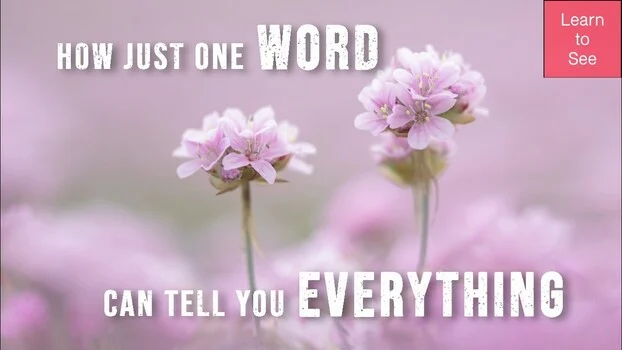
In an era saturated with digital imagery, the challenge for photographers has shifted from the constraints of film to the overwhelming volume of data generated by modern cameras. Amidst this deluge, a novel approach to image selection, championed by photographer Simon Booth, is gaining traction. Booth’s method leverages the almost instantaneous, subconscious reaction an individual has to a photograph, proposing that this initial gut feeling—expressed as a simple positive or negative word—serves as a potent and efficient filter for determining an image’s worth, long before technical analysis begins. This intuitive process, he argues, can profoundly sharpen a photographer’s ability to discern compelling shots from the merely competent, thereby optimizing workflow and fostering artistic growth.
The Intuitive Core: Harnessing First Impressions
The premise of Booth’s technique is rooted in the psychology of perception. When viewing a photograph, the human brain processes visual information with remarkable speed, forming an initial judgment within milliseconds. This pre-cognitive assessment often precedes any deliberate evaluation of composition, lighting, or camera settings. Booth suggests that this rapid, instinctual response is not merely subjective whimsy but a sophisticated synthesis of aesthetic principles, emotional resonance, and personal connection. By consciously acknowledging and naming this immediate reaction, photographers can transform an ephemeral feeling into a concrete, actionable decision-making tool.
Booth, known for his thoughtful explorations of photographic practice, demonstrates this method through a series of woodland photographs, primarily focusing on sycamore leaves. His core question, posed for every scene through the viewfinder, is strikingly simple: "Does a positive word come to mind?" This query bypasses the often-paralyzing internal debate over technical perfection or adherence to compositional rules, instead tapping directly into an emotional or aesthetic resonance.
Defining the Lexicon of Culling
For Booth, the vocabulary of positive affirmation includes words such as "beautiful," "atmospheric," "peaceful," and "elegant." These terms are not just descriptors; they are indicators of an image’s inherent success in conveying a mood, evoking an emotion, or showcasing intrinsic appeal. If an image elicits one of these positive labels on the camera’s LCD screen, it signals a strong likelihood that the shot possesses artistic merit and warrants further consideration. This immediate validation acts as an efficient green light in the often-arduous culling process.
Conversely, Booth identifies a set of negative words that serve as immediate red flags. "Cluttered," "messy," "awkward," or "confusing" are direct signals that an image fails to achieve clarity, balance, or aesthetic coherence. Such reactions, he posits, indicate fundamental flaws that are unlikely to be rectified through post-processing. Applying this test at the point of capture, after technical decisions like exposure and focus have been made, isolates the purely aesthetic judgment, preventing wasted effort on images that are fundamentally flawed in their visual impact.
The Insidious Threat of "Ordinary"
While the contrast between "beautiful" and "messy" is stark and often easily identifiable, Booth introduces a third, more insidious category that represents a significant challenge for photographers: "ordinary." This term describes images that are technically competent—correctly exposed, cleanly composed, and free of obvious flaws—yet completely devoid of impact or originality. An "ordinary" shot is forgettable, failing to capture attention or evoke a lasting impression.
The danger of "ordinary" lies precisely in its lack of overt failure. Unlike a "cluttered" shot that immediately signals its inadequacy, an "ordinary" image often slips past a photographer’s internal filter because it doesn’t present any immediate technical reason for rejection. It occupies a comfortable middle ground, leading many photographers to keep it in their digital archives out of a sense of obligation or a lack of a clear criterion for dismissal. Booth’s word test forces a verdict that "technically fine" never delivers, compelling the photographer to actively seek out and reject the mundane in favor of the truly compelling. The natural world, particularly a woodland scene, is inherently chaotic. The forest floor is a tapestry of competing textures, tangled branches, and varying light. The photographer’s role is to extract moments of beauty and order from this inherent disorder, rather than simply documenting its overwhelming nature. The "ordinary" shot often results from a failure to distill this chaos into a meaningful visual statement.
The Evolution of Photographic Culling in the Digital Age
The emergence of such a culling methodology is deeply intertwined with the transformative shift from film to digital photography. Historically, film photography imposed significant economic and logistical constraints. Each frame cost money, required careful processing, and storage was physical. This inherent cost encouraged meticulous planning, careful composition, and a highly selective approach to pressing the shutter button. Photographers learned to visualize the final image before capture, effectively culling in their minds.
The advent of digital photography, however, democratized image capture by rendering the cost per shot virtually zero. This liberation, while empowering, also introduced a new set of challenges. Modern digital cameras can capture hundreds, if not thousands, of high-resolution images within minutes. This capacity has led to a common practice often termed "spray and pray"—capturing a vast number of frames in the hope that a few will be successful.
According to industry statistics, over a trillion digital photos are now stored globally, with billions more uploaded daily to social media platforms and cloud services. This explosion in volume has shifted the primary bottleneck in the photographic workflow from capture to post-capture management. Photographers now spend a significant portion of their time not behind the lens, but in front of a computer screen, sifting through vast quantities of images. This "culling" or "selection" stage has become one of the most critical, yet often most tedious, aspects of modern photography. Booth’s method directly addresses this bottleneck, providing a robust, repeatable filter that can be applied in the field, thereby reducing the sheer volume of "near-misses" that require subsequent processing and storage.
Implications for Skill Development and Artistic Growth
The "word test" offers profound implications for a photographer’s skill development. By forcing an immediate aesthetic judgment at the moment of capture, it cultivates a more deliberate and discerning approach to photography.
- Faster Eye Training: The continuous application of this immediate feedback loop acts as an accelerated training regimen for the photographer’s eye. Instead of waiting until post-processing to evaluate images, the real-time assessment hones an intuitive understanding of what "works" and why. This immediate mental response is far more effective in solidifying learning than delayed analysis.
- Shooting Less, Choosing Better: The method inherently encourages patience over volume. By requiring a positive affirmation before committing to a shot, photographers are less likely to "fire away" indiscriminately. This leads to a more considered, thoughtful approach, aligning with the principles of "intimate landscape" photography, where finding beauty in subtle details often rewards careful observation and deliberate composition over rapid-fire shooting.
- Beyond Technical Competence: It pushes photographers beyond merely achieving technical correctness (correct exposure, sharp focus) to striving for genuine artistic merit. It shifts the focus from "how to operate the camera" to "how to see photographically."
- Workflow Efficiency: By drastically reducing the number of mediocre images brought back from a shoot, the method streamlines the entire post-processing workflow. Less time spent culling means more time for editing truly strong images or, crucially, more time for shooting. The economic implications are also tangible, as storing vast libraries of "ordinary" images consumes significant digital storage space, which incurs ongoing costs for cloud services or physical drives.
Broader Context and Expert Perspectives
While Booth’s method is presented simply, its underlying principles resonate with established theories in art and psychology. Art educators often emphasize the development of an "inner eye" or "aesthetic sensibility" that transcends mere technical proficiency. The ability to discern beauty, balance, and impact quickly is a hallmark of experienced artists across various mediums. Dr. Anna Petrova, a cognitive psychologist specializing in visual perception (hypothetical expert), might suggest that "Booth’s method effectively externalizes an internal heuristic that experienced photographers often develop unconsciously. By giving a name to that gut feeling, he provides a structured way for less experienced individuals to accelerate their development of photographic intuition."
Furthermore, the emphasis on immediate decision-making aligns with contemporary productivity methodologies that advocate for minimizing decision debt and front-loading critical choices. In a field like photography, where creative block and decision fatigue are common, a streamlined selection process can liberate mental energy for actual creative work.
The universality of this technique is another significant advantage. It is not confined to any specific genre of photography. Whether capturing intricate macro details, fleeting moments on the street, emotive portraits, or expansive landscapes, the core question of "does a positive word come to mind?" remains equally applicable. The emotional or aesthetic resonance that Booth encourages applies across diverse photographic contexts, making it a versatile tool for any visual artist.
A Call to Conscious Photography
In conclusion, Simon Booth’s "word test" offers a pragmatic, yet profound, solution to one of the most pressing challenges facing contemporary photographers: the effective selection of images in the digital age. By elevating the intuitive, almost subconscious, first reaction to a photograph into a structured decision-making tool, he empowers photographers to become more discerning, more efficient, and ultimately, more artistic. The method’s ability to filter out the "ordinary"—that insidious category of technically competent but uninspired work—is particularly impactful. It encourages a shift from passive capture to active creation, fostering a habit of shooting less and choosing better. This approach not only streamlines the photographic workflow but also accelerates the development of a photographer’s aesthetic sensibility, proving that sometimes, the simplest questions yield the most profound answers in the pursuit of visual excellence. The full walkthrough video provides a compelling demonstration, inviting viewers to engage directly with the process and witness the power of naming one’s immediate visual judgment.
