
 By admin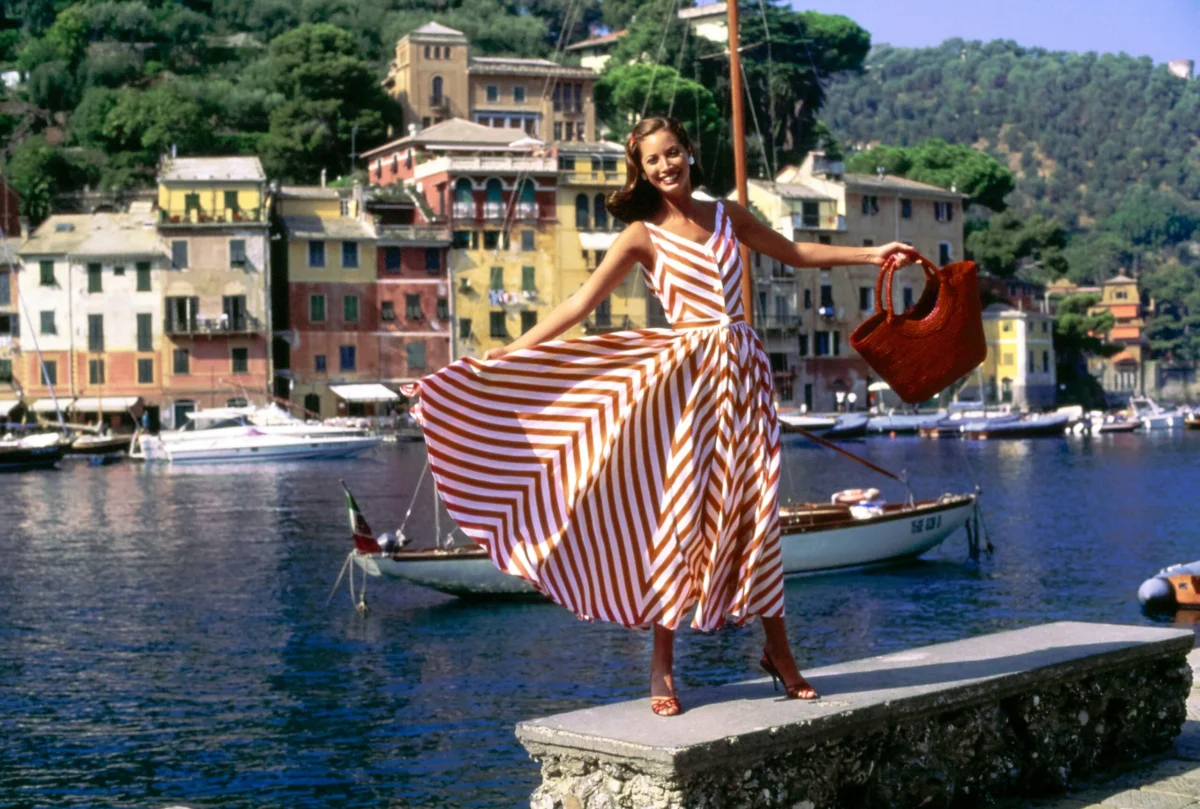
The December 1992 issue of Vogue magazine presented readers with a captivating visual narrative titled "Postcard from Portofino," a photographic essay meticulously crafted by the renowned lens of Arthur Elgort. This editorial served as a vivid exploration of resort dressing, set against the picturesque and intrinsically charming backdrop of Portofino, a secluded yet globally recognized Italian port nestled on the Ligurian Riviera. The feature underscored a particular sensibility in fashion, advocating for a getaway wardrobe characterized by crisp, clean capris, stylish midriff-tied tops, and simple sundresses that gracefully extended to the ankle. This curated selection of garments signaled a distinct shift, or perhaps a reinforcement, of resort attire adopting a "prettier, more romantic feeling," aligning with the idyllic and unhurried atmosphere of its chosen locale.
The Visionary Lens of Arthur Elgort
Arthur Elgort, celebrated for his dynamic and spontaneous approach to fashion photography, brought a refreshing authenticity to the pages of Vogue. Emerging in the 1970s, Elgort challenged the static, highly stylized studio photography prevalent at the time, preferring natural light, outdoor settings, and models in motion. His signature style, characterized by a sense of liberation and joy, often captured models in candid, unposed moments, infusing fashion imagery with an unprecedented vitality. This departure from conventional portraiture revolutionized fashion editorials, making the clothes appear more wearable and the narratives more relatable. For "Postcard from Portofino," Elgort’s aesthetic was ideally suited to convey the easygoing elegance and natural beauty of the Italian Riviera. Instead of rigid poses, one can infer his intention to capture the effortless chic of resort wear as it might be genuinely experienced – strolling along the harbor, enjoying an al fresco lunch, or simply soaking in the Mediterranean sun. His work often transcended mere fashion display, imbuing images with a narrative depth that invited viewers into a lifestyle, a quality particularly potent for a travel-themed editorial. By 1992, Elgort was a seasoned veteran, his distinct vision having already shaped much of Vogue‘s visual identity, making him a natural choice for an editorial aiming to evoke a sense of aspirational leisure and understated glamour. His contributions to Vogue, under various editorships including Anna Wintour’s, consistently championed a more modern, active, and accessible form of beauty.
Portofino: A Jewel of the Italian Riviera
The choice of Portofino as the setting for such a significant editorial was far from arbitrary. This small fishing village, nestled in a sheltered cove, began its transformation into a luxury destination in the early 20th century, attracting artists, writers, and eventually, the international jet set. Its vibrant, pastel-colored houses clinging to the hillside, reflected in the emerald waters of its natural harbor, create an instantly recognizable and highly coveted aesthetic. By the early 1990s, Portofino had firmly established itself as an epitome of Mediterranean charm and exclusivity, rivaling even its more expansive French Riviera counterparts. Its allure lies not just in its undeniable beauty but also in its perceived seclusion and intimacy, offering a sense of escape that resonates deeply with the concept of a luxurious getaway.
Economically, tourism is the lifeblood of Portofino and the broader Ligurian coast. The influx of high-net-worth individuals and discerning travelers supports a thriving ecosystem of boutique hotels, high-end restaurants, and luxury retail. Features in prestigious publications like Vogue serve as invaluable marketing tools, reinforcing Portofino’s image as a premier destination. Such media exposure translates into tangible economic benefits, driving visitor numbers and contributing to the preservation of its unique character while adapting to the demands of luxury tourism. The village’s intrinsic charm, coupled with its strategic branding as a haven for the sophisticated traveler, has ensured its enduring appeal.
Fashion’s Shifting Sands: Resort Wear in the Early 1990s
The "Postcard from Portofino" editorial arrived at a pivotal moment in fashion history. The opulence and excess that largely defined the 1980s were giving way to a more pared-down aesthetic in the early 1990s, often characterized by minimalism and grunge influences. However, parallel to these dominant trends, there remained a strong current of romanticism and refined femininity, particularly evident in categories like resort wear. The editorial’s emphasis on "crisp clean capris, midriff-tied tops, and simple sundresses that float right down to the ankle" perfectly encapsulated this evolving sensibility.
Capris, a fashion staple popularized in the 1950s by style icons like Audrey Hepburn and Grace Kelly, enjoyed a resurgence, offering a chic yet comfortable alternative to shorts or full-length trousers. Their tailored cut and versatility made them ideal for daytime exploration and casual elegance. Midriff-tied tops, while revealing, were presented with an air of sophisticated playfulness rather than overt sexuality, often paired with high-waisted bottoms to balance the silhouette. These pieces hinted at a subtle sensuality without compromising on class. The ankle-length sundress, a timeless garment, was reinterpreted with lighter fabrics and simpler lines, emphasizing movement and ease. This particular style choice moved away from the more structured, figure-hugging dresses of previous decades, embracing a fluid silhouette that was both comfortable and elegant, perfectly suited for warm climates.
The phrase "resort dressing takes on a prettier, more romantic feeling" signifies a departure from strictly utilitarian or overtly glamorous vacation wear. It suggested a wardrobe that blended practicality with an ethereal beauty, allowing for effortless transition from beachside relaxation to an evening aperitivo. This concept of "destination dressing"—curating a wardrobe specifically tailored to the mood and environment of a travel destination—was gaining significant traction, fueled by a growing appetite for aspirational travel and lifestyle content.
The Vogue Influence: Crafting Aspiration and Trend
In December 1992, Vogue magazine, under the formidable editorship of Anna Wintour, stood as an undisputed arbiter of fashion and culture. The magazine’s influence extended far beyond seasonal trends, shaping public perceptions of beauty, lifestyle, and aspiration. With a circulation estimated to be around 1.2 million at the time, each issue held immense power to dictate tastes and ignite desires. "Postcard from Portofino" exemplified Vogue‘s strategy of intertwining high fashion with aspirational travel and lifestyle narratives. It wasn’t just about the clothes; it was about the dream—the dream of escaping to an idyllic Italian paradise, dressed impeccably yet effortlessly.
The editorial team, by commissioning Elgort and selecting Portofino, likely aimed to present a vision of sophisticated leisure that resonated with their affluent and trend-conscious readership. It communicated that true style wasn’t just about haute couture but also about how one lived, traveled, and embraced different environments. A fashion historian, reflecting on such features, might suggest that Vogue effectively democratized the idea of luxury by showing how accessible (albeit aspirational) a certain lifestyle could be, inspiring readers to integrate elements of this "romantic feeling" into their own wardrobes, regardless of their immediate destination. The feature subtly encouraged readers to think beyond seasonal trends and invest in versatile pieces that could transport them, if only in spirit, to such glamorous locales.
A Chronology of Style and Scenery
The narrative arc of "Postcard from Portofino" is underscored by a rich chronology. Portofino’s journey from a humble Roman settlement, "Portus Delphini," to a prominent fishing village, and finally to an internationally celebrated luxury haven, spans centuries. Its transformation accelerated in the late 19th and early 20th centuries as European aristocrats and artists discovered its charm. Arthur Elgort’s career trajectory, beginning in the late 1960s, saw him rise to prominence through the 1970s and 80s, consistently pushing boundaries in fashion photography, establishing his signature style long before the 1992 Vogue feature. Vogue itself, founded in 1892, celebrated its centennial year just as this editorial was published, having evolved from a social gazette into the preeminent global fashion authority.
The concept of resort wear, while formalized in the 20th century, has roots in the late 19th-century practice of wealthy Europeans migrating to warmer climates for winter, necessitating specific attire. By the mid-20th century, designers like Emilio Pucci and Lilly Pulitzer had firmly established resort wear as a distinct and vibrant category. The 1992 editorial thus stood on a legacy of both destination glamour and evolving fashion, updating the genre with a specific early-90s sensibility of understated elegance and romanticism. It showcased how classic elements like capris and sundresses could be reinterpreted to feel fresh and contemporary within the prevailing fashion climate.
Expert Perspectives and Enduring Legacy
While direct statements from parties involved in the 1992 production are not readily available, their inferred perspectives offer valuable insight. A Vogue editor from that era might have expressed the desire to capture a sense of achievable luxury and escapism, reflecting the magazine’s commitment to presenting aspirational lifestyles. Arthur Elgort himself, known for his love of spontaneity, would likely have emphasized his aim to portray the clothing as part of an authentic, joyful experience, rather than a mere static display. He often spoke about wanting to photograph "women living," a philosophy perfectly embodied by the Portofino setting.
From a fashion historian’s standpoint, "Postcard from Portofino" is significant for illustrating the enduring power of classic resort wear silhouettes and the timeless appeal of Mediterranean aesthetics. It provided a counter-narrative to the grunge and minimalist trends of the early 90s, affirming that femininity and romance still held a vital place in the fashion lexicon. For Portofino, such an editorial was undoubtedly a boon for its tourism industry. A local tourism official could plausibly state that features in publications of Vogue‘s caliber not only elevate the destination’s profile but also attract a specific demographic of high-spending visitors, reinforcing its status as a luxury brand. The visual narrative effectively intertwined Portofino’s picturesque charm with a sophisticated fashion sensibility, creating an aspirational image that has resonated for decades. The broader implications extend to how fashion magazines influence travel and lifestyle choices, demonstrating the symbiotic relationship between destination marketing and editorial content.
The Resonance of Nostalgia and the Future of Resort Dressing
The enduring appeal of features like "Postcard from Portofino" is evident in Vogue‘s own initiatives, such as its "Nostalgia newsletter." This platform specifically curates content from the magazine’s extensive archive, catering to a readership that cherishes the historical context and aesthetic evolution of fashion. The continued interest in these past editorials underscores their lasting cultural significance and their ability to evoke a sense of timeless style.
Today’s resort collections frequently draw inspiration from the very aesthetic championed in 1992—light fabrics, effortless silhouettes, and a blend of comfort with understated elegance. Contemporary designers often revisit the charm of the Mediterranean, the ease of capris, and the grace of flowing sundresses, adapting them to modern sensibilities while retaining that "prettier, more romantic feeling." The vision captured by Arthur Elgort in Portofino nearly three decades ago continues to influence how resort wear is conceived and consumed, proving that certain images and styles transcend fleeting trends. The "Postcard from Portofino" remains a testament to the power of a well-executed fashion editorial to not only showcase garments but also to transport, inspire, and ultimately, shape our understanding of aspirational living and enduring style.
