
 By admin
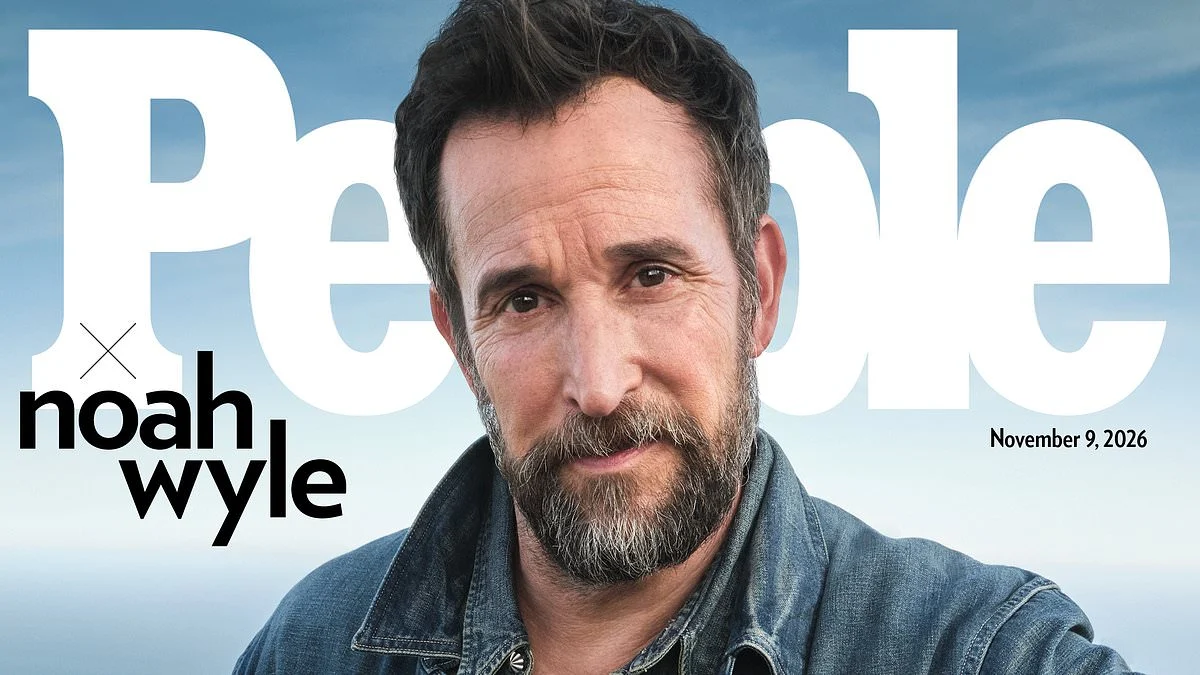
Noah Wyle, the veteran actor best known for his long-standing role on the medical drama ER and his current lead performance in The Pitt, was officially announced as People magazine’s Sexiest Man Alive for 2026 on Tuesday. At 55, Wyle joins an elite fraternity of Hollywood leading men, marking a significant moment in the publication’s history as it continues its fifth decade of the annual tradition. Wyle succeeds the 2025 titleholder, Jonathan Bailey, the 38-year-old star of Wicked and Bridgerton, who received the honor during the magazine’s 40th-anniversary milestone.
Upon receiving the news of his selection, Wyle reacted with characteristic humility and humor. "I thought that sounded like a prank—just not in a million years did I think that this would be an honor bestowed on me," the actor remarked during his cover interview. The selection of Wyle highlights a recurring trend in the magazine’s editorial strategy: honoring established television icons who have maintained a consistent presence in the cultural zeitgeist. Wyle, who spent fifteen seasons portraying Dr. John Carter on ER, is currently experiencing a career renaissance with the launch of The Pitt, a new medical drama on Max that reunites him with former ER showrunner R. Scott Gemmill.
The Evolution of a Cultural Phenomenon
The Sexiest Man Alive franchise began in 1985 as a somewhat spontaneous editorial decision. Over the last 41 years, it has transformed into a major commercial event for People magazine and the entertainment industry at large. The title is often strategically timed to coincide with a recipient’s major project launch, serving as a powerful marketing tool for films, television series, and music albums.
The list of past winners serves as a historical record of shifting standards in masculinity and celebrity. From the rugged action stars of the 1980s to the more diverse and multi-hyphenate talents of the 2020s, the award has reflected broader societal changes. The roster includes Academy Award winners, legendary musicians, professional athletes, and even political figures, creating a unique cross-section of American popular culture.
A Chronological Retrospective: The Early Years (1985–1989)
The inaugural title was awarded to Mel Gibson in 1985. At 29, Gibson was at the pinnacle of his early career success, fueled by the global popularity of the Mad Max and Lethal Weapon franchises. While his later years were marked by significant personal and professional controversies, his 1985 selection established the "blueprint" for the a combination of box-office dominance and undeniable physical appeal.
In 1986, Mark Harmon, then 35, took the mantle. Known for his roles in St. Elsewhere and later the long-running NCIS, Harmon represented the clean-cut, television-fronted heartthrob. He was followed by Harry Hamlin in 1987, whose work on the legal drama L.A. Law made him a household name.
The year 1988 marked a historic departure from the Hollywood norm when John F. Kennedy Jr. was named Sexiest Man Alive. At age 27, he remains the youngest recipient of the award and the only non-entertainer to hold the title. His selection emphasized the "celebrity" aspect of the honor over traditional acting credentials. Conversely, 1989 saw the title go to Sean Connery, who at 59 remains the oldest man to be named Sexiest Man Alive during his initial win. Connery’s victory was seen as a tribute to his enduring legacy as the definitive James Bond and his "silver fox" status.
The 1990s: The Rise of the A-List Megastar
The 1990s cemented the award’s status as a career-defining accolade. Tom Cruise kicked off the decade in 1990 following the success of Days of Thunder. This was followed by Patrick Swayze in 1991, whose performance in Ghost and Dirty Dancing had made him a romantic icon.
In 1992, Nick Nolte was selected, representing a more rugged, weathered aesthetic. Notably, the years 1993 and 1994 are remembered for a break in tradition. In 1993, People named Richard Gere and Cindy Crawford the "Sexiest Couple Alive" instead of a solo male winner. In 1994, the magazine did not award the title at all, making it the only year since the franchise’s inception without a designated winner.
The mid-to-late 90s saw the emergence of repeat winners and historical milestones. Brad Pitt won his first title in 1995, followed by Denzel Washington in 1996. Washington’s win was particularly significant as he was the first Black man to receive the honor, a milestone that highlighted the slow but eventual diversification of the list. George Clooney (1997), Harrison Ford (1998), and a second win for Richard Gere (1999) closed out the century, solidifying the "movie star" era of the award.
The 2000s and 2010s: Diversification and Repeat Honors
The turn of the millennium saw Brad Pitt become the first person to win the title twice (2000). The 2000s continued to favor established A-listers, including Pierce Brosnan (2001), Ben Affleck (2002), and Johnny Depp (2003). Jude Law’s 2004 win was so influential that the British media coined the term "The Jude Law Effect" to describe the surge in popularity of his specific style of grooming and fashion.
The decade also saw the inclusion of Matthew McConaughey (2005), a second win for George Clooney (2006), and Matt Damon (2007). Hugh Jackman (2008) and Johnny Depp’s second win (2009) rounded out the era.
In the 2010s, the magazine began to broaden its scope beyond traditional film actors. While stars like Ryan Reynolds (2010), Bradley Cooper (2011), and Channing Tatum (2012) fit the classic mold, 2013 saw Adam Levine become the first musician to win. This was followed by Chris Hemsworth (2014) and David Beckham (2015), the latter being the first professional athlete to be honored. The late 2010s saw a strong focus on charisma and cultural impact, with Dwayne "The Rock" Johnson (2016), Blake Shelton (2017), Idris Elba (2018), and John Legend (2019) all taking the title.
The 2020s: Contemporary Sensibilities
The current decade has been defined by a mix of superhero stars and beloved character actors. Michael B. Jordan (2020) and Paul Rudd (2021) represented this balance. Rudd’s win, in particular, was celebrated for his "everyman" charm and perceived agelessness. Chris Evans (2022) and Patrick Dempsey (2023) followed, with Dempsey’s win coming nearly two decades after his ER-era contemporary, Noah Wyle, was first considered a heartthrob.
In 2024, John Krasinski was honored, reflecting the popularity of multi-talented actor-directors. Most recently, Jonathan Bailey’s 2025 win was a major moment for LGBTQ+ representation, as he became the first openly gay man to be featured on the Sexiest Man Alive cover during the main annual announcement.
Statistical Analysis and Industry Impact
The Sexiest Man Alive title is more than a vanity prize; it is a significant driver of circulation. Historically, the "Sexiest Man Alive" issue is one of People magazine’s highest-selling editions of the year. According to industry analysts, the announcement generates billions of social media impressions and serves as a major revenue driver for both print and digital platforms.
From a career perspective, the "SMA bump" is a recognized phenomenon. Publicists often lobby the magazine for years to secure the cover for their clients. The title often precedes major awards campaigns or the release of high-budget blockbusters. For Noah Wyle, the 2026 title serves as a powerful endorsement of his return to leading-man status on television.
Key Records in Sexiest Man Alive History:
- Youngest Winner: John F. Kennedy Jr. (27 years old in 1988).
- Oldest Winner: Sean Connery (59 years old in 1989).
- Two-Time Winners: Richard Gere (once as couple, once solo), Brad Pitt, George Clooney, and Johnny Depp.
- First Non-White Winner: Denzel Washington (1996).
Broader Cultural Implications
The selection of Noah Wyle in 2026 reflects a nostalgic turn in the cultural landscape. As streaming platforms look to revive the "golden age" of broadcast procedurals, Wyle’s return to the medical drama genre with The Pitt has tapped into a demographic that grew up watching him on ER. His selection suggests that the editorial board at People is placing a high value on longevity, reliability, and the "gentlemanly" archetype of masculinity.
The Sexiest Man Alive franchise continues to be a subject of both celebration and lighthearted critique. While some argue the title is an outdated relic of celebrity worship, its enduring popularity suggests it remains a vital part of the American entertainment ecosystem. By honoring Noah Wyle, People magazine bridges the gap between the classic Hollywood era of the 1990s and the modern multi-platform landscape of 2026, ensuring the tradition remains relevant for a new generation of readers.
