
 By admin
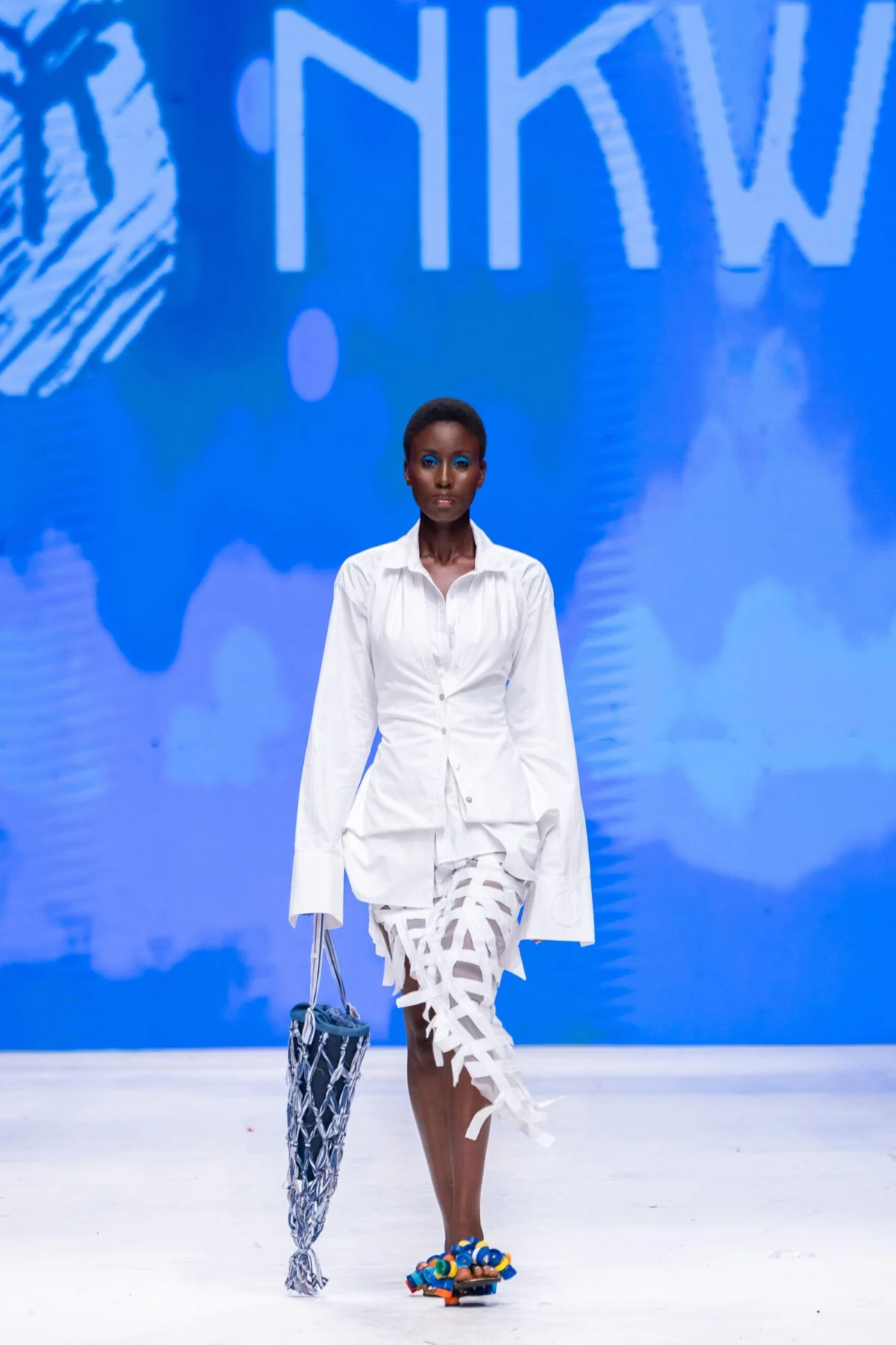
Nkwo Onwuka’s Spring 2027 collection, titled "Journey to Less," premiered as a profound statement on sustainable fashion, drawing inspiration from a deeply personal narrative: her nephew’s transformative 40-day road trip spanning 13 countries from Amsterdam to her ancestral village in Southeastern Nigeria. More than just a collection of garments, Onwuka presented a revolutionary vision for the industry, centered on systemic change, waste reduction, and a pioneering concept she terms "Reverse Retail." This unveiling marks a significant moment for the global fashion landscape, underscoring the urgent need for innovative solutions to textile waste and overconsumption.
Inspiration and the Genesis of "Journey to Less"
The conceptual backbone of the Spring 2027 collection is rooted in a journey both literal and philosophical. The arduous, cross-continental expedition undertaken by Onwuka’s nephew served as a powerful metaphor for the broader path humanity must embark upon—a journey towards less waste, less consumption, and ultimately, a more harmonious relationship with our planet. This epic voyage, traversing diverse cultures and landscapes, instilled in Onwuka a renewed appreciation for interconnectedness and the necessity of finding resourceful solutions within existing frameworks.
"The collection, titled Journey to Less, is all about systems," Onwuka stated, articulating the core ethos driving her latest endeavor. This systemic approach is not merely about producing eco-friendly garments but about re-engineering the entire lifecycle of fashion. Her ambition extends beyond design to establish sustainable solutions that drastically reduce waste and fundamentally alter our engagement with upcycled fashion. This includes developing frameworks that empower individuals to transform their unwanted clothing into new designs and silhouettes, alongside fostering institutions that drive material innovations, such as reengineering denim to mimic the texture and drape of knitwear.
Introducing "Reverse Retail": A Paradigm Shift
At the heart of Nkwo’s groundbreaking initiative is the "Reverse Retail" model, a direct challenge to the linear "take-make-dispose" paradigm that has long dominated the fashion industry. Onwuka eloquently describes it: "You send your old things to us and we make it into something new. We’re just trying to get people to use what’s in their wardrobes instead of throwing it away and it goes to landfill." This concept is not merely a service; it represents a comprehensive shift towards a circular economy in fashion, where garments are seen as valuable resources rather than disposable commodities.
The implications of "Reverse Retail" are far-reaching. Globally, the fashion industry is one of the largest polluters, with textile waste reaching staggering levels. According to the Environmental Protection Agency (EPA), landfills in the United States received 11.3 million tons of municipal solid waste textiles in 2018 alone. Less than 15% of discarded clothing is recycled, with the vast majority ending up in landfills or incinerated. This contributes significantly to greenhouse gas emissions, water pollution, and land degradation. "Reverse Retail" directly confronts this crisis by offering a tangible, user-friendly alternative. It incentivizes consumers to participate actively in the recycling and upcycling process, fostering a sense of co-creation and responsibility.
For consumers, the appeal lies in the opportunity to refresh their wardrobes sustainably, transforming sentimental but unused items into contemporary pieces. This model cultivates a deeper appreciation for craftsmanship and the longevity of clothing, moving away from fast fashion’s disposability. For the brand, it creates a closed-loop system, reducing reliance on virgin materials and establishing a unique, interactive relationship with its clientele. The logistical challenges of such a system—collection, sorting, design consultation, and production—are significant, yet Onwuka’s commitment to establishing viable systems suggests a robust framework is being developed to support this ambitious undertaking.
Collection Highlights: Craftsmanship, Innovation, and Cultural Resonance
The "Journey to Less" collection itself is a testament to Nkwo’s innovative spirit and her dedication to artisanal excellence. Upcycled denim, a ubiquitous material often contributing to textile waste, was masterfully transformed into elegant dresses and versatile skirts, showcasing its potential for high fashion. This reengineering of denim to resemble knitwear, a particular innovation highlighted by Onwuka, demonstrates a commitment to material science and sustainable textile development. By altering the texture and hand-feel of denim, she expands its aesthetic possibilities and challenges preconceived notions about the fabric’s utility.
A significant portion of the collection featured indigo looks, produced locally in Nigeria’s traditional dyeing pits. This decision not only supports local artisans and preserves indigenous craft techniques but also grounds the collection in cultural authenticity and ethical production. The use of natural indigo dyes, often employing traditional fermentation methods, minimizes the environmental impact associated with synthetic dyes, which are known polluters in the textile industry. This commitment to local sourcing and traditional methods is a hallmark of Nkwo’s brand, emphasizing a holistic approach to sustainability that encompasses environmental, social, and economic dimensions.
Repurposed blazers were given new life, demonstrating the transformative power of creative deconstruction and reconstruction. Shirts adorned with intricate lattice details were directly inspired by the mapping systems used during her nephew’s extensive travels, subtly weaving the collection’s core inspiration into its aesthetic fabric. These details serve as a visual metaphor for navigation, discovery, and the interconnected pathways that define both the journey and the circularity of the collection.
Balancing Artisanal Craft with Commercial Viability
Onwuka also articulated a strategic pivot towards introducing more commercially viable pieces within the collection. "We need to take it in a direction that makes sense to everyone, not just [feature] pieces that are so artisanal that you’re too scared to wear them," she explained. This pragmatic approach acknowledges the necessity of broader appeal for sustainable fashion to truly scale and achieve its intended impact. While avant-garde, highly artisanal pieces are crucial for showcasing creative vision and pushing boundaries, accessibility through commercial offerings ensures that the sustainable message reaches a wider audience and encourages mainstream adoption.
This move is critical for the long-term success of sustainable brands. While consumer awareness about ethical fashion is growing, the perception of sustainable garments often includes high price points or niche aesthetics. By offering a range of pieces that are both sustainable and wearable for everyday life, Nkwo aims to bridge this gap, demonstrating that ethical fashion can be stylish, practical, and broadly appealing. This strategy can help democratize sustainable consumption, making it an attainable choice for more individuals.
The Desert Bug: A Symbol of Resilience and Resourcefulness
A new brand emblem, prominently featured on several pieces, encapsulates the very essence of Nkwo’s philosophy: a desert bug. This remarkable creature is renowned for its ability to extract moisture directly from the air, converting it into water for hydration, thereby surviving in the harshest of environments. Onwuka’s choice of this symbol is deeply resonant. "It’s living in the harshest environment, but finds a way to survive from nothing. And I feel like this is also our story," she reflected.
The desert bug symbolizes resilience, resourcefulness, and adaptability – qualities that are central to the sustainable fashion movement and indeed, to the challenges faced by many African communities. It speaks to the brand’s ability to innovate and create value from what others might deem waste, mirroring the very premise of upcycling and "Reverse Retail." This emblem serves as a constant reminder of the brand’s core values and its commitment to finding ingenious solutions in the face of environmental adversity.
Nkwo Onwuka: A Pioneer in African Sustainable Fashion
Nkwo Onwuka has long been recognized as a trailblazer in the African fashion scene, particularly for her unwavering commitment to sustainability and the elevation of indigenous craftsmanship. Her eponymous brand, Nkwo, established years prior, has consistently championed ethical production, local sourcing, and the innovative use of waste materials. Before "Journey to Less," Onwuka had already garnered acclaim for her "Dakala" fabric, a handwoven textile made from waste denim, and her efforts to revive and modernize traditional Nigerian textile arts.
Her work often involves collaborating with local artisans, providing fair wages and empowering communities, particularly women, through economic opportunities. This integrated approach to sustainability, which considers environmental impact alongside social equity, positions Nkwo as a holistic leader in the global ethical fashion movement. Her collections are frequently showcased at prestigious events like Lagos Fashion Week, where she consistently pushes the boundaries of what sustainable African fashion can achieve.
Broader Implications and the Future of Circular Fashion
The launch of "Journey to Less" and the "Reverse Retail" model by Nkwo Onwuka carries significant implications for the global fashion industry. It offers a tangible, innovative blueprint for addressing the pervasive issue of textile waste and promoting a truly circular economy. While other brands have explored take-back programs or recycling initiatives, Nkwo’s "Reverse Retail" distinguishes itself by promising a personalized transformation of the consumer’s own garments, thereby fostering a deeper emotional connection and reducing the likelihood of future discard.
Industry analysts suggest that such models are crucial for the future viability of fashion. The European Union, for example, is increasingly implementing policies aimed at extended producer responsibility and circularity in textiles. Nkwo’s proactive approach positions her brand at the forefront of this global shift. Moreover, her emphasis on local production in Nigeria highlights the potential for developing economies to lead in sustainable innovation, leveraging traditional knowledge and local resources to create environmentally and socially responsible supply chains. This also challenges the often-exploitative dynamics of global fashion production, advocating for a more equitable distribution of value.
The success of "Reverse Retail" will depend on consumer adoption, logistical efficiency, and scalability. However, the compelling narrative, coupled with Nkwo’s established reputation for quality and innovation, gives this model a strong foundation. Should it prove scalable, it could inspire a wave of similar initiatives, fundamentally altering consumer behavior and the operational strategies of fashion brands worldwide. It signals a future where fashion is not just about aesthetics, but about impact, responsibility, and the creative transformation of what already exists.
In conclusion, Nkwo Onwuka’s Spring 2027 collection is more than a seasonal offering; it is a manifesto for a sustainable future in fashion. "Journey to Less" is a call to action, an invitation to rethink our relationship with clothing, and a powerful demonstration of how innovation, cultural heritage, and a deep commitment to environmental stewardship can converge to create truly revolutionary change. With "Reverse Retail" and a collection steeped in meaningful inspiration and artisanal craft, Onwuka continues to solidify her position as a visionary leader, guiding the industry towards a more responsible and regenerative path.
