
 By admin
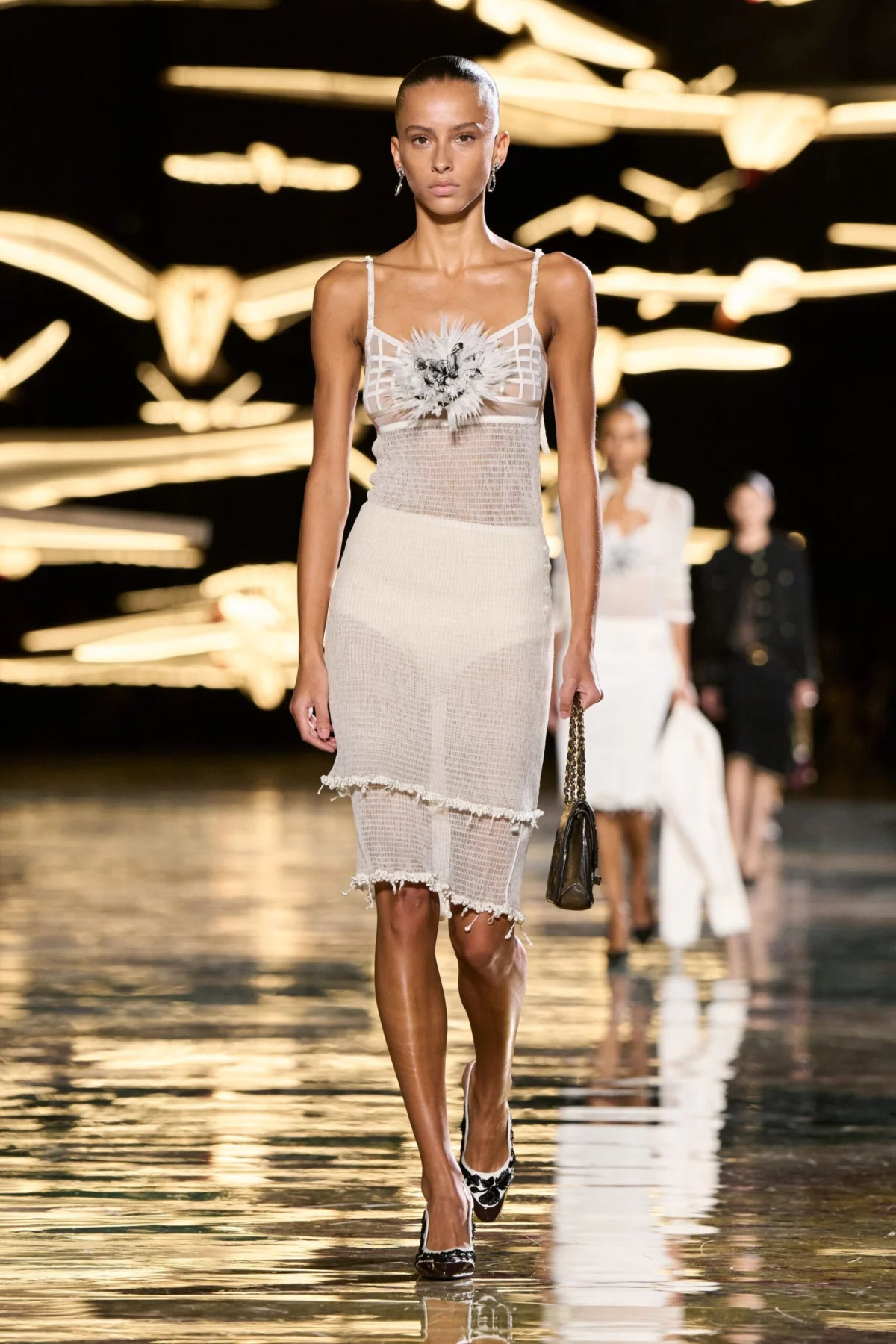
Matthieu Blazy’s Chanel debut was a mere year ago, and in that remarkably short span, he has profoundly captivated the global fashion landscape, earning the fervent admiration of discerning women worldwide. While the initial frenzy outside the house’s iconic boutiques may have subtly moderated this season, the pervasive evidence of collective affection for Blazy’s artistic direction remains undeniable, manifesting everywhere from the esteemed front rows of his shows to the bustling, stylish thoroughfares of major cities. A striking testament to this widespread appeal was observed just last night, with a young woman effortlessly navigating the Place de la Concorde on a bicycle, her silhouette punctuated by unmistakable cap-toed Chanel heels, their distinct design visible even in the encroaching twilight. This anecdote, seemingly minor, encapsulates the brand’s enduring allure and Blazy’s success in making high fashion not only aspirational but also intrinsically woven into the fabric of everyday life for its devotees.
A Year of Transformative Leadership at Chanel
For any designer, assuming the helm of Chanel represents the pinnacle of achievement within the fashion industry. It is a house of unparalleled prestige, an independent, privately owned company boasting a rich, century-plus history that traces back to its visionary founder, Gabrielle "Coco" Chanel. Blazy’s position inherently carries immense privilege, undoubtedly coupled with immense pressure to uphold and evolve such a formidable legacy. Yet, what observers predominantly discern in his work is an overwhelming sense of pleasure and purpose. As Blazy himself articulated, eschewing overly philosophical rhetoric, "I think there is a space for poetry, beauty, joy, and it’s a good remedy to the dark time. I think fashion should give this to women." This statement profoundly underscores his design philosophy, positioning fashion not merely as an aesthetic pursuit but as a powerful source of solace and upliftment in a complex world. In an era where many designers might lean into an aesthetic of aloofness or detached cool, Blazy stands apart, seemingly committed to re-injecting a tangible sense of soul and emotional resonance back into the heart of high fashion. This approach resonates deeply with a consumer base increasingly seeking authenticity and meaning beyond superficial trends.
Chanel’s unique market position further amplifies the significance of Blazy’s impact. As one of the last major luxury houses to remain privately owned, it operates outside the dictates of major conglomerates like LVMH or Kering. This independence grants Chanel unparalleled creative freedom and the ability to pursue long-term strategic visions without quarterly shareholder pressures. Its estimated valuation often places it among the top luxury brands globally, underscoring its immense financial power and cultural influence. Navigating this confluence of heritage, independence, and market expectation requires a delicate balance, one that Blazy appears to be mastering with remarkable grace and vision.
Echoes of Gabrielle: A Chronological Homage to Coco Chanel
Central to Blazy’s narrative this season, as it has been in previous collections, was the indelible figure of Coco Chanel herself. He revealed a poignant source of inspiration: a conversation between Coco and Louise de Vilmorin, who would later collaborate on the designer’s memoir. In this dialogue, Chanel uttered a profound reflection: "The child I once was is with me today… No one is closer to me than she is. She owes me everything, and I owe her what I was able to contribute to my era." This deeply introspective comment served as Blazy’s conceptual springboard, inspiring him to construct a collection that chronologically addressed the multifaceted periods of Coco’s extraordinary life and her revolutionary contributions to fashion.
-
Act I: Breaking Edwardian Confines – The Genesis of Rebellion
Blazy’s journey begins by evoking Chanel’s youth, a period marked by the restrictive confines of Edwardian formality. The early 20th century was characterized by elaborate, corseted silhouettes, voluminous skirts, and intricate ornamentation that often restricted women’s movement and expression. Chanel, having experienced the austerity of an orphanage and a longing for freedom, instinctively rebelled against these sartorial constraints. Her early designs, though still nascent, hinted at a desire for comfort, simplicity, and a liberation from the corseted ideal, laying the groundwork for her future innovations. This initial act of the collection, therefore, subtly hints at the struggle against restriction and the burgeoning desire for a new feminine aesthetic. -
Act II: Embracing Masculinity and Playfulness – A New Feminine Expression
The collection then transitions into Chanel’s audacious experiments with men’s clothing and her playful engagement with costumes. This phase of her life saw Chanel fearlessly adopting elements from menswear – trousers, simple jersey fabrics, sailor blouses – long before they became commonplace in women’s wardrobes. She recognized the inherent comfort and practicality in men’s attire and boldly adapted it for women, challenging societal norms and redefining femininity. This era was also marked by her adventurous spirit, her enjoyment of theatrical costumes, and her willingness to subvert traditional gendered dressing. This segment of Blazy’s show pays tribute to this pivotal period of experimentation and boundary-pushing, highlighting Chanel’s role as a pioneer in modern dressing. -
Act III: Post-War Pragmatism and the Birth of the Iconic Suit
The final, and perhaps most impactful, chapter of Coco’s life explored by Blazy centers on her fashion-shifting innovations, most notably the easy-wearing suit, conceived after the Second World War. By the mid-20th century, women’s roles had significantly expanded, requiring practical yet elegant clothing suitable for an increasingly active and professional life. Chanel, observing this societal shift, returned from her post-war hiatus to offer an antidote to the restrictive "New Look" that dominated post-war fashion. Her response was the iconic tweed suit – a relaxed, collarless jacket paired with a simple skirt, often adorned with braid and gold buttons. It offered unparalleled freedom of movement, timeless elegance, and a sophisticated functionality that empowered women. Blazy’s collection, in this final act, celebrates this enduring symbol of female emancipation and practical luxury, demonstrating its continuous relevance.
The Collection Unveiled: A Narrative Through Design
Blazy meticulously clarified that this was "not a historical show, it’s a show about the histories of Chanel." This distinction is crucial, as it emphasizes interpretation and contemporary relevance over mere archival recreation. Nonetheless, the collection’s progression unfolded chronologically, mirroring Coco Chanel’s personal trajectory through her design evolution.
-
Opening Chapters: Ornamentation and Early Experimentation
The show commenced with a segment rich in ornament, subtly referencing the early Edwardian influences and Chanel’s initial forays into design. This included delicate, bitty flower embroidery, perhaps hinting at a softer, more traditional femininity before her radical shifts, and a corsage gracefully decorating a bustline, a classic detail often associated with earlier fashion eras. These initial looks set a refined, almost nostalgic tone, serving as a delicate prelude to the sartorial revolution that would follow. -
The Evolution of Masculine Codes and the Charvet Shirt Reinvention
The narrative then seamlessly transitioned into more masculine propositions, directly reflecting Coco’s groundbreaking adoption of menswear elements. Some pieces were notably deconstructed, featuring raw edges that conveyed a sense of purposeful imperfection and a breaking away from rigid structures. A standout element in this section was the introduction of new iterations of the "runaway hit Charvet shirt." The Charvet shirt, traditionally a luxurious men’s dress shirt, holds historical significance as a symbol of classic elegance and fine tailoring. By reinterpreting this menswear staple, Blazy not only paid homage to Chanel’s pioneering spirit in borrowing from men’s wardrobes but also demonstrated the brand’s continuous ability to adapt and refine classic codes for a contemporary feminine context. These shirts, perhaps reimagined with softer fabrics or more relaxed silhouettes, underscored the enduring appeal of borrowed-from-the-boys chic. -
The Iconic Silhouette: Redefining the Chanel Suit for Today
The collection culminated with a plethora of examples showcasing Coco’s most iconic creation: the rounded shoulder jacket. This quintessential piece was presented in various modern interpretations, frequently worn sans a traditional shirt, emphasizing a more relaxed and sensual approach. These jackets were often paired with knee-length skirts slung low on the hips, or even fringy mini-skirts, injecting a youthful and contemporary edge while retaining the inherent elegance of the original design. The deliberate styling choices — the absence of a shirt, the lower waistline — signaled a departure from strict formality, making the suit feel fresh, adaptable, and relevant for a new generation of women. -
Symbolism of the 2.55 Bag and Dyanira Hurbuscher’s Role
A powerful symbolic gesture that underscored the collection’s full-circle narrative was the choice of newcomer model Dyanira Hurbuscher. She both opened and closed the show, carrying Chanel’s own original 2.55 bag, meticulously borrowed from the Patrimoine archives. The 2.55 bag, named after its creation date (February 1955), was revolutionary for its time, featuring a shoulder strap that freed women’s hands – a significant functional innovation. Its quilted leather, chain strap, and signature Mademoiselle lock have made it one of the most recognizable and coveted handbags in history. Hurbuscher’s dual role, carrying this legendary piece, served as a potent visual metaphor for the collection itself: a journey through Chanel’s past, culminating in its continuous presence and evolution in the present, embodying the timeless essence of the brand and its unbroken connection to its founder.
Pioneering Modernity: Technical Innovation and Inclusivity
Blazy’s explorations, while deeply rooted in history, ultimately served a crucial contemporary purpose: to visibly articulate his unwavering commitment to making Chanel a brand for a diverse spectrum of women across multiple generations, moving beyond any singular, narrow vision. This dedication to modernization echoes Coco Chanel herself, who was a relentless innovator throughout her career.
-
Beyond Aesthetics: Blazy’s Commitment to Functional Luxury
A significant portion of the collection, particularly towards its conclusion, was the direct result of a year’s intensive research and development efforts aimed at creating a new tweed. This was no ordinary fabric; Blazy envisioned something stretchy, crafted from re-embroidered organza and silk. His objective was clear: to develop a material that could definitively be "the answer to what sportif means at Chanel." This endeavor highlights a broader trend in luxury fashion: the increasing demand for comfort, versatility, and performance without compromising on opulence or craftsmanship. Modern luxury consumers seek clothing that moves with them, adapts to various contexts, and embodies a dynamic lifestyle. -
Advanced Textile Engineering: Weaving Innovation into Heritage
Achieving this "sportif" tweed required a profound collaboration across different teams within the Chanel ateliers. Blazy instigated the development of entirely new yarns, pushing the boundaries of material science. Simultaneously, machines used in textile production were recalibrated, allowing for embroideries to be integrated directly into the knitting process. This technical ingenuity represents a significant leap forward in luxury textile manufacturing, blurring the lines between traditional craftsmanship and cutting-edge technology. It enables the creation of fabrics that are not only aesthetically rich but also possess inherent elasticity, drape, and durability, all while bearing the intricate embellishments synonymous with Chanel. This fusion of innovation and heritage is a hallmark of Blazy’s approach, demonstrating that reverence for the past can coexist with a relentless pursuit of the future. -
The Zesty Yellow Ensemble: A Showcase of Craft and Future Vision
The culmination of this year-long technical endeavor was vividly showcased in a striking zesty yellow two-piece top and skirt set. This particular ensemble served as a vibrant and tangible testament to the freshly developed know-how, embodying the new tweed’s stretch, texture, and integrated embroidery. Its bright hue and modern silhouette underscored the successful integration of advanced textile engineering with Chanel’s signature aesthetic, proving that the brand can evolve its core materials to meet contemporary demands without sacrificing its distinct identity. Industry analysts suggest that such material innovations are not merely aesthetic but strategic, positioning Chanel at the forefront of sustainable and high-performance luxury, appealing to a younger, more environmentally conscious, and functionality-driven clientele.
The Allure of Detail: The Unrivaled Focus on Accessories
While the technical advancements and historical narratives are compelling, the true brilliance of Blazy’s Chanel often distills down to its undeniable "heart aflutter got-to-have-it-ness." And on this subject, one detail stood out with particular resonance, sending ripples of anticipation through the fashion community: prepare yourselves, ladies, for there were an astonishing 83 distinct looks in the show, and each and every one of them was accessorized by a different, unique pair of heels.
-
The Strategic Significance of 83 Unique Heel Designs
This extraordinary commitment to shoe design is not merely an indulgence; it is a strategic masterstroke. In the luxury market, accessories, particularly shoes and handbags, often serve as crucial entry points for consumers who aspire to own a piece of a high-fashion brand. They represent attainable luxury for many, and their distinctiveness can drive significant sales. The creation of 83 individual heel designs speaks volumes about the meticulous attention to detail and the sheer creative output under Blazy’s direction. It suggests a vast array of styles, heel heights, materials, and embellishments, ensuring that there is a perfect pair for every look, every occasion, and every individual preference within the Chanel universe. -
Accessories as Anchors of Desire and Brand Accessibility
The extensive offering of footwear also reinforces Chanel’s position as a comprehensive luxury lifestyle brand. It elevates the importance of accessories from mere complements to standalone statements, each imbued with the brand’s signature elegance and craftsmanship. This focus on variety and uniqueness in accessories can significantly boost consumer engagement, fostering a sense of discovery and exclusivity. It also directly addresses the consumer’s desire for personalization and distinctiveness in their luxury purchases, allowing them to express their individual style while remaining within the esteemed Chanel aesthetic. Furthermore, the sheer volume of new designs hints at robust future retail offerings, ensuring a steady stream of covetable items that maintain the brand’s desirability and market relevance.
Broader Implications: Chanel’s Trajectory in the Evolving Luxury Market
Matthieu Blazy’s latest collection is more than just a seasonal offering; it is a strategic declaration that holds significant implications for Chanel and the wider luxury industry.
-
Reinforcing Market Leadership and Brand Value
By expertly weaving together historical reverence with groundbreaking innovation, Blazy reinforces Chanel’s standing as a perpetual leader in the luxury market. The collection demonstrates the brand’s capacity to evolve its core identity without diluting its heritage, a critical factor in maintaining its immense brand value and desirability among discerning consumers globally. This delicate balance ensures that Chanel remains relevant for long-standing clientele while captivating new audiences. -
Cultivating Cross-Generational Appeal
Blazy’s explicit commitment to creating a Chanel for "many women across generations" is a smart move in an increasingly competitive market. By addressing the needs and aspirations of diverse age groups – from the younger consumer seeking "sportif" luxury to the established client appreciating timeless elegance – he broadens the brand’s demographic reach. This inclusivity, rooted in Coco Chanel’s original vision of empowering women through fashion, ensures the brand’s longevity and prevents it from becoming solely associated with a singular, perhaps aging, demographic. -
Setting New Benchmarks for Heritage Brand Evolution
The technical innovations, particularly in textile development and integrated embroideries, set new benchmarks for how heritage brands can embrace modernity. Blazy demonstrates that innovation is not about abandoning tradition but about pushing its boundaries through advanced craftsmanship and material science. This approach positions Chanel as a pioneer in sustainable and high-performance luxury, influencing the broader industry to invest in similar research and development. It signals that the future of luxury lies in a harmonious blend of artisanal skill and technological advancement. -
The Enduring Resonance of Blazy’s Poetic Approach
Finally, Blazy’s unwavering belief in injecting "poetry, beauty, joy" into fashion offers a compelling counter-narrative in an often-cynical world. His vision, interpreted through collections that are both intellectually stimulating and viscerally appealing, resonates deeply with consumers seeking emotional connection and genuine upliftment from their luxury purchases. This human-centric approach ensures that Chanel, under Blazy, continues to be more than just a fashion house; it remains a purveyor of dreams, a source of inspiration, and a celebration of enduring feminine spirit. His tenure, though brief, has already cemented a profound connection with the brand’s past, present, and future, promising an exciting trajectory for one of fashion’s most iconic institutions.
