
 By admin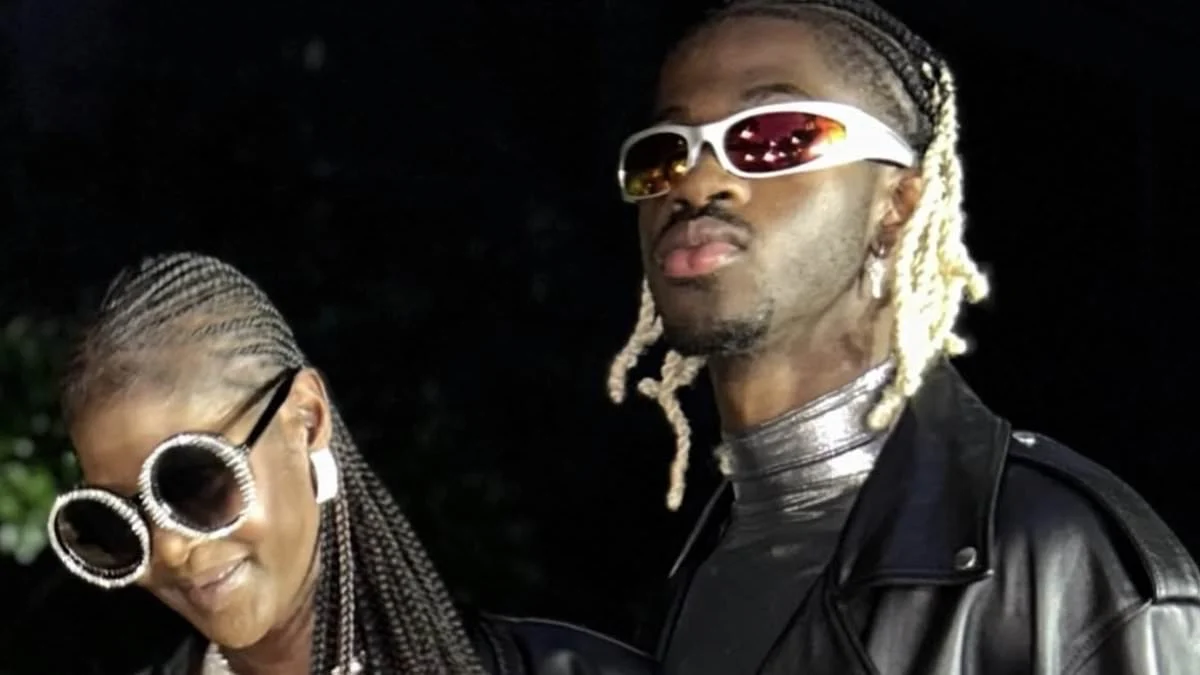
The internationally acclaimed rapper and pop artist Lil Nas X, born Montero Lamar Hill, announced the passing of his mother, Tameka Hill, on Saturday, marking a somber chapter in the 27-year-old’s life as he navigates his own intensive journey through mental health treatment and rehabilitation. Taking to Instagram to share the news with his millions of followers, the two-time Grammy Award winner posted a poignant tribute consisting of three photographs that spanned his family’s history. The images included a throwback of Tameka Hill in her youth, a more recent photograph of the mother and son wearing matching sunglasses, and a childhood portrait featuring the artist alongside his mother and one of his siblings.
“RIP TO THE BADDEST EVER! LOVE U FOREVER MOMMY,” the artist wrote in the caption, adding, “This one’s gonna hurt.” While the specific cause of Tameka Hill’s death has not been publicly disclosed by the family or official representatives, her passing follows years of public and private struggles with substance abuse, a topic the rapper has addressed with rare candor during his meteoric rise to stardom. The news of her death comes at a particularly vulnerable time for the artist, who only days prior had confirmed his return from a multi-month stay in a residential rehabilitation facility following a highly publicized mental health crisis in 2025.
A Complex Relationship Defined by Love and Loss
The relationship between Lil Nas X and his mother was famously strained, primarily due to her long-term battle with addiction. In a 2020 interview with Variety, shortly after the record-breaking success of his breakout hit "Old Town Road," the artist opened up about the emotional distance between them. He revealed that despite his financial success and attempts to intervene, including efforts to enroll her in specialized recovery programs, the situation remained largely unchanged. "I never really talk about my mom. She’s an addict, so we don’t have the closest relationship," he stated at the time. However, he emphasized that the lack of proximity did not equate to a lack of affection, noting, "Even trying to get her better—things didn’t quite work out. But there’s still love."
The struggle of a family member dealing with substance use disorder is a narrative common to many American households, yet it takes on a different dimension when played out in the global spotlight. According to data from the Substance Abuse and Mental Health Services Administration (SAMHSA), millions of Americans live with a parent who has a substance use disorder, a factor that significantly increases the risk of mental health challenges for the children involved. For Lil Nas X, the intersection of his mother’s health struggles and his own burgeoning career created a complex emotional landscape that he is only now beginning to navigate through professional therapy.
The 2025 Crisis and the Path to Rehabilitation
The artist’s recent stint in rehab was the culmination of a tumultuous period that began in August 2025. During that time, Lil Nas X was arrested in Los Angeles following a public episode that was later identified as a mental health crisis. Witnesses and police reports described the rapper wandering down Ventura Boulevard wearing only underwear and cowboy boots—a visual that initially sparked social media memes but quickly turned serious when the details of the arrest emerged.
According to the Los Angeles County District Attorney’s office, the encounter with law enforcement was volatile. The rapper was accused of using "force and violence" against three responding officers, leading to charges of battery on a peace officer and resisting arrest. At the height of the incident, there were grave concerns regarding a potential overdose, leading to an emergency hospital admission before he was cleared for booking.
For months, the artist faced the prospect of a five-year prison sentence. However, the legal proceedings took a turn toward restorative justice in April 2026. Judge Alan Schneider, presiding over the case, reviewed the artist’s medical evaluations and determined that his actions during the August 2025 incident were "aberrant from his normal conduct" and directly linked to an undiagnosed mental health condition. Instead of incarceration, the court mandated a supervised treatment plan, allowing the artist to seek the help he required in a clinical setting.
Navigating Bipolar Disorder on "Extreme Hard Mode"
In his first major update since completing the initial phase of his court-ordered treatment, Lil Nas X revealed that he had been diagnosed with bipolar disorder. The diagnosis, he admitted, was something he had suspected for several years but was hesitant to confirm due to the stigma surrounding psychiatric medication and the public’s perception of mental illness.
"I have a therapist now and a psychiatrist, which has been really helpful," he shared in a recent social media video. He spoke candidly about the intersectionality of his identity and his health, remarking with his signature wit on the difficulty of his situation. "I’m already Black and gay. Like, damn, God, gimme like… come on, Black, gay, bipolar? I’m living life on extreme hard mode."
The artist’s transparency regarding his diagnosis has been praised by mental health advocates. Bipolar disorder, characterized by significant mood swings including manic highs and depressive lows, affects approximately 2.8% of the U.S. population, according to the National Institute of Mental Health (NIMH). For individuals in high-pressure industries like music and entertainment, the lack of routine and constant public scrutiny can exacerbate symptoms. Lil Nas X’s decision to prioritize his "grounding" and spend time with family in Atlanta and Los Angeles signals a shift toward long-term stability over the frantic pace of the "attention economy."
The "Montourage" and the 10,000-Day Milestone
Despite the legal and personal hurdles, the artist’s fanbase—affectionately known as the "Montourage"—has remained steadfast. Lil Nas X acknowledged their support in a video celebrating his "10,000th day alive," a milestone that occurs around the age of 27 years and four months. In the video, he held a cake commemorating the event and reflected on his survival. "Tomorrow is my 10,000th day alive and I made it. A lot of you won’t make it, but I made it," he said, a statement that resonated deeply given the "27 Club" phenomenon—a cultural trope regarding the high number of influential musicians who died at that age.
He also joked about the newfound "delicacy" with which the public now treats him. "Ever since I got out of rehab, everyone’s like ‘OD’ [overly] nice to me," he laughed. "I could be like ‘hey’ and everyone’s like ‘oh he’s so brave.’ I can try to post a thirst trap on my Instagram story and everyone’s going to be like ‘keep fighting king.’"
This humor masks the reality of a rigorous recovery process. The artist confirmed he is working on new music, using his experiences as a creative catalyst. His previous work has often dealt with themes of identity, religion, and fame; industry analysts expect his upcoming projects to delve into the more profound territories of grief, mental health, and the American legal system.
Broader Implications for Mental Health in the Music Industry
The case of Lil Nas X reflects a broader shift in how the entertainment industry and the legal system handle high-profile mental health crises. In decades past, similar incidents often resulted in career-ending scandals or lengthy incarcerations. The ruling by Judge Schneider to prioritize treatment over punishment aligns with modern psychological perspectives on "behavioral health interventions" within the justice system.
Furthermore, Lil Nas X’s openness about his bipolar diagnosis contributes to the ongoing de-stigmatization of mental health issues within the Black community, where historical systemic barriers have often led to lower rates of diagnosis and treatment. By framing his journey as "extreme hard mode," he highlights the unique pressures faced by minority artists who navigate multiple layers of marginalization while battling internal health crises.
As Lil Nas X enters a period of mourning for Tameka Hill, he does so with a support system that was notably absent during his previous years of rapid fame. With a court-supervised treatment plan in place and a newfound commitment to his psychiatric health, the artist appears focused on a sustainable path forward. The death of his mother is a profound loss, yet it occurs at a time when the rapper is arguably at his most resilient, having confronted his own mortality and mental health head-on.
Representatives for the artist have not released further details regarding funeral arrangements or the family’s privacy requests. For now, the "Montourage" and the music industry at large continue to watch as one of pop culture’s most influential figures navigates the delicate balance of public life and private healing.
