
 By admin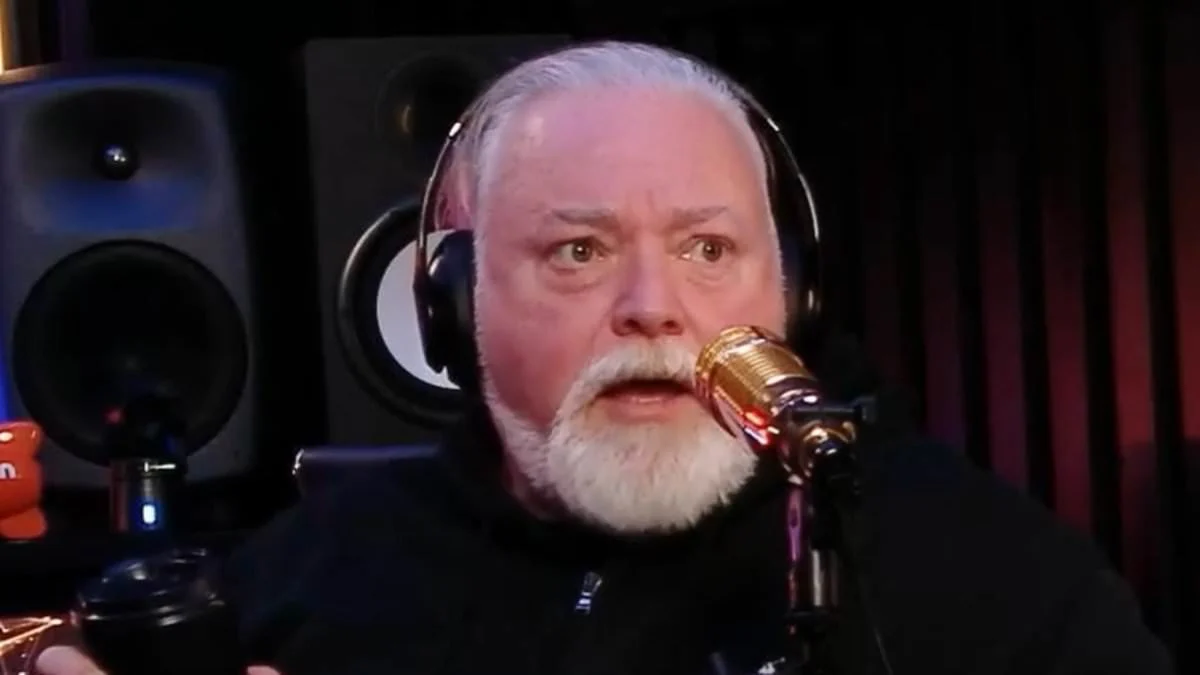
The landscape of Australian digital media has been punctuated by a significant controversy following a technical malfunction during the Monday morning broadcast of Kyle Sandilands Live, the latest subscription-based venture from the veteran radio broadcaster. During the episode, Sandilands, 55, engaged in a protracted verbal confrontation with his production team that lasted approximately 15 minutes, raising fresh concerns regarding workplace conduct and the volatile nature of uncensored subscription-based content. The incident occurred when a video component failed to integrate correctly with Sandilands’ broadcasting system, resulting in a delay that triggered an aggressive response from the host.
The primary target of the outburst was executive producer Jaimee Blazquez, known professionally as "Mayo." Blazquez, a long-term collaborator who previously served on the production team for the high-profile Kyle and Jackie O Show, bore the brunt of Sandilands’ dissatisfaction. The confrontation escalated from technical troubleshooting into a personal inquisition, during which Sandilands scrutinized the professionalism and physical appearance of his subordinates. The incident has drawn immediate parallels to the professional collapses that defined the earlier part of the broadcaster’s year, suggesting a recurring pattern of behavior that continues to influence his career trajectory.
Detailed Chronology of the Confrontation
The technical failure emerged early in the Monday session when a scheduled video failed to play on the host’s interface. Sandilands immediately halted the flow of the program to address the error, demanding an explanation from the control room. As Blazquez attempted to rectify the situation and maintain the broadcast’s momentum, Sandilands redirected the focus of the show toward an internal investigation. He characterized Blazquez as "wishy-washy" and claimed she lacked a fundamental understanding of the production’s operational requirements.
For nearly a quarter of an hour, the broadcast remained stalled as Sandilands demanded to know the specific identity of the staff member responsible for the technical glitch. Blazquez, attempting to protect her team, repeatedly took personal responsibility for the oversight. However, this gesture of leadership was rejected by Sandilands, who insisted that "taking accountability" was a form of deception if it shielded the individual who committed the error. He argued that as the employer and "superior," he was entitled to direct answers and that withholding a name constituted a lack of loyalty and honesty.
The tension intensified when Mary Madigan, the show’s news reader, attempted to intervene in support of Blazquez. Sandilands summarily dismissed Madigan’s input, stating he did not value her perspective on the matter. While he briefly described her as "kind" and "smart," he immediately transitioned into a critique of her physical appearance, specifically targeting her hairstyle, which he described as a "shocking fringe." He then returned his focus to Blazquez, making derogatory remarks about moles on her face and head, demanding she "cut it out." Throughout the exchange, Blazquez appeared visibly distressed, noting that she was "processing" the interaction while struggling to maintain her composure under the weight of the personal insults.
Historical Context and Pattern of Behavior
This latest incident is not an isolated event in Sandilands’ career but rather follows a documented history of on-air volatility. The rhetoric used during Monday’s broadcast—specifically the label "wishy-washy"—closely mirrors the language Sandilands employed during his final weeks at KIIS FM. In February of the current year, a similar blow-up occurred between Sandilands and his long-time co-host, Jackie "O" Henderson. That conflict was sparked by Henderson’s interest in astrology, which Sandilands claimed was "affecting everything" and making her "unworkable."
The February 20 incident resulted in Henderson leaving the studio in tears and served as the catalyst for the eventual termination of their landmark $100 million contracts with the Australian Radio Network (ARN). The parallels between the two events are striking: in both instances, a technical or topical disagreement devolved into a personal attack on a female colleague’s mental state or professionalism. In the current instance, Sandilands explicitly compared the disorganization of his new independent set to the environment he claimed existed at KIIS FM, suggesting that he views these technical failures as a systemic personal slight rather than routine operational hurdles.
Financial and Legal Ramifications of Previous Outbursts
The economic impact of Sandilands’ broadcasting style has been substantial. The cancellation of the Kyle and Jackie O Show in March represented one of the largest financial shifts in the history of Australian commercial radio. At the time of the cancellation, the duo was arguably the most successful radio pairing in the country, commanding record-breaking salaries and dominant market shares in the breakfast slot.
Following the termination of the $100 million deal, legal proceedings were initiated to resolve the remaining obligations of the contract. Sandilands recently concluded a wrongful termination lawsuit against his former employer, resulting in a settlement of $12.09 million. While this figure is significant, it represents a fraction of the potential earnings lost due to the premature end of the contract.
In contrast, Jackie "O" Henderson’s legal battle remains active. She is currently seeking $82.25 million in the Federal Court, a case that continues to draw significant media attention and underscores the high stakes involved in high-profile media fallout. The current behavior exhibited on Kyle Sandilands Live may potentially influence public perception and legal standing regarding workplace culture arguments often central to such litigation.
The Transition to Subscription-Based Media
The launch of Kyle Sandilands Live on a subscription-only platform was intended to provide the broadcaster with a space free from the regulatory oversight of the Australian Communications and Media Authority (ACMA) and the commercial pressures of traditional terrestrial radio. By moving behind a paywall, Sandilands sought to leverage his dedicated fan base to create a self-sustaining ecosystem where "uncensored" content could flourish.
However, industry analysts suggest that the absence of corporate guardrails may be exacerbating the host’s tendency toward confrontational management. In a traditional radio environment, executive producers and station managers act as a buffer between talent and the broader staff, often intervening to de-escalate tensions. In the independent subscription model, these checks and balances are often diminished, placing staff in a more vulnerable position when conflicts arise.
The subscription model also relies heavily on subscriber retention. While some listeners are drawn to the "raw" and "unfiltered" nature of the show, others may find the prolonged berating of staff to be a deterrent. The long-term viability of kslive.com.au depends on whether the audience views these outbursts as "authentic entertainment" or as an uncomfortable glimpse into a dysfunctional workplace.
Workplace Culture and Industry Standards
The incident has reignited a broader conversation within the Australian media industry regarding the "talent-first" culture that has historically protected high-earning broadcasters from the consequences of their behavior. For decades, "shock jocks" have been granted significant leeway under the guise of entertainment and ratings. However, evolving societal standards and stricter workplace health and safety regulations are beginning to challenge this status quo.
Legal experts note that even in independent or subscription-based ventures, employers have a duty of care to provide a safe working environment free from harassment and bullying. The public nature of this tirade—recorded and broadcast to a paying audience—provides a unique set of evidence should any staff member choose to pursue a formal grievance. The targeting of physical appearance and the use of derogatory personal insults are generally considered outside the bounds of professional performance management, even in the high-pressure environment of live broadcasting.
Broader Implications for the Media Landscape
As Sandilands continues to navigate his post-KIIS FM career, his actions on Monday serve as a litmus test for the future of independent celebrity-driven platforms in Australia. The shift away from traditional media allows for greater creative freedom but also removes the institutional stability that once defined Sandilands’ career.
The reaction from the production staff, particularly the visible frustration of Jaimee Blazquez, suggests a growing rift between the host’s expectations and the operational realities of his new venture. Whether the team can reconcile these differences or if this marks the beginning of another professional separation remains to be seen. For now, the episode stands as a stark reminder of the volatility that has defined Sandilands’ brand for over two decades, demonstrating that despite the change in medium, the core dynamics of his broadcasting style remain unchanged.
As the legal proceedings involving Jackie "O" Henderson continue to unfold in the Federal Court, the industry will be watching closely to see if the patterns of behavior exhibited on the new subscription show will have any bearing on the outcomes of past disputes. The intersection of high-stakes finance, workplace ethics, and personality-driven media continues to make the saga of Kyle Sandilands a central point of interest in the Australian cultural narrative.
