
 By admin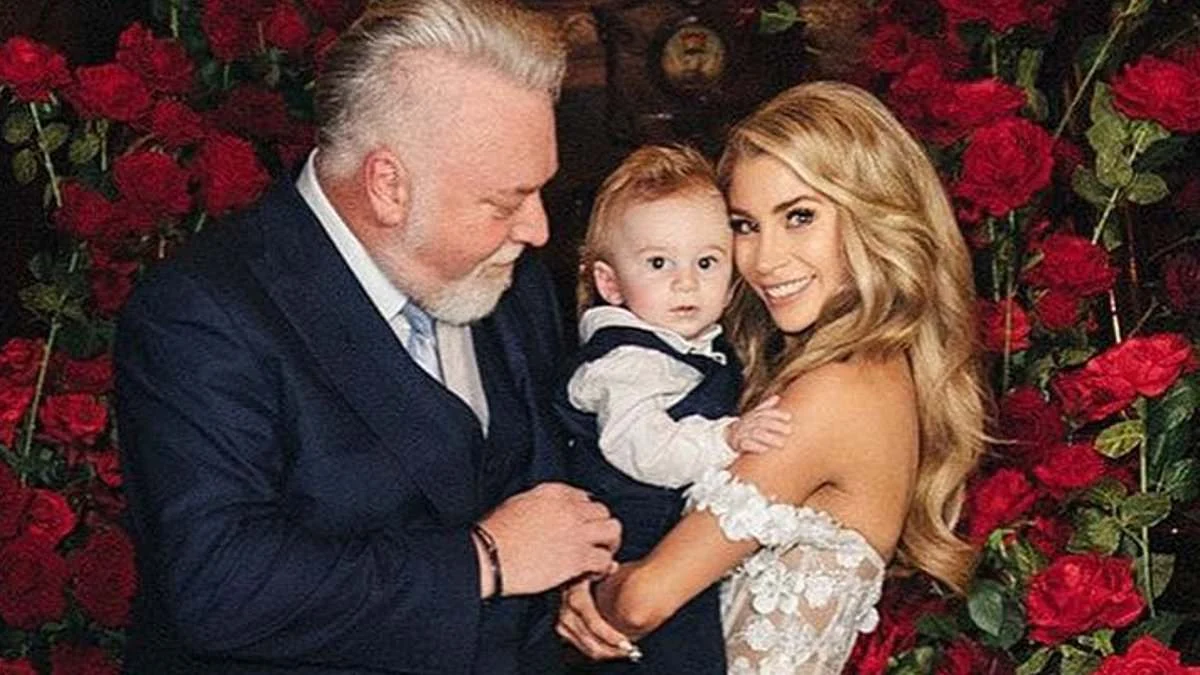
Australian radio personality Kyle Sandilands has offered a detailed look into his ongoing medical challenges and the future of his family life during an extensive interview on the Daily Mail podcast, The Debrief with Savanna Young. The 55-year-old broadcaster, known for his long-standing presence in the Australian media landscape, addressed the complexities of managing dual aneurysms—one located in his brain and another in his chest—while explaining why he and his wife, Tegan Kynaston, 40, have decided not to have more children. The revelation marks a significant shift in the public persona of Sandilands, who has recently transitioned toward a more domestic and health-conscious lifestyle following decades of high-profile media work and a self-admitted history of substance use.
Clinical Status and the Complexity of Dual Aneurysms
The core of Sandilands’ current health concerns revolves around two distinct aneurysms that require constant medical surveillance. An aneurysm is a localized, balloon-like bulge in the wall of a blood vessel, caused by a weakening of the vessel wall. During the interview, Sandilands clarified that his condition involves both a cerebral aneurysm and a thoracic (chest) aneurysm. The cerebral aneurysm is situated in a particularly sensitive location behind his right eye.
According to Sandilands, medical professionals have informed him that the brain aneurysm is currently inoperable via standard minimally invasive techniques. While many brain aneurysms can be treated through endovascular coiling—a keyhole procedure where a catheter is used to insert platinum coils into the aneurysm to encourage clotting and prevent rupture—Sandilands’ case is complicated by the involvement of multiple blood vessels. "They can’t really operate on the one on the head because it’s attached to multiple blood vessels," he stated. He further noted that the alternative would be a highly invasive craniotomy, involving the removal of a portion of the skull to reach the site, a prospect he is currently avoiding in favor of "watchful waiting."
Simultaneously, Sandilands is under the care of a cardiovascular surgeon for an aneurysm located in his chest. This second condition requires regular imaging to monitor the size and stability of the vessel wall. In medical practice, the risk of an aneurysm rupture is often weighed against the risks of surgery. For thoracic aneurysms, surgeons typically monitor the diameter of the bulge; if it reaches a certain threshold (often 5.0 to 5.5 centimeters, depending on the patient’s overall health), the risk of a catastrophic rupture begins to outweigh the risks of surgical intervention. Sandilands confirmed he is scheduled for follow-up scans in the coming months to determine if either aneurysm has grown.
Chronology of Diagnosis and Lifestyle Factors
The timeline of Sandilands’ health crisis began in early 2025. In February of that year, he used his platform on the then-active KIIS FM breakfast show to announce the shock diagnosis to his audience. He revealed that his medical team had identified the brain aneurysm during routine checks, warning him that the condition was life-threatening. At the time, Sandilands was candid about the potential causes, attributing the vascular damage to a history of "cocaine abuse and partying."
Medical research consistently links long-term stimulant use, such as cocaine, to significant cardiovascular and cerebrovascular damage. Cocaine causes acute spikes in blood pressure and heart rate, which can weaken arterial walls over time, leading to the formation of aneurysms or increasing the likelihood of a rupture (hemorrhagic stroke). Sandilands’ physician reportedly told him that had the condition remained undetected, the outcome would likely have been fatal.
Since the diagnosis, Sandilands has been forced to adhere to a strict medical regimen. This includes the cessation of illicit substance use, the management of blood pressure through medication and stress reduction, and the avoidance of heavy physical exertion. He described the condition using a "garden hose" analogy to help his audience understand the mechanical nature of the risk: "Imagine your blood vessel is the garden hose, and the hose is weak and it blisters out like a big bubble… if it bursts, I will become either a vegetable, in a wheelchair, or dead."
Family Dynamics and the Decision Against Expansion
The health update coincides with a definitive statement regarding the future of the Sandilands-Kynaston household. The couple, who married in a high-profile ceremony in 2023, are parents to a three-year-old son, Otto, born in August 2022. While there had been previous public speculation about the couple "expanding their brood," Sandilands confirmed that they have decided their family is complete.
The decision is rooted in two primary factors: Sandilands’ age and the physical toll of his medical conditions. At 55, Sandilands noted that the energy required to raise a toddler is substantial. "I was like, ‘Oh, now I know why everyone has their kids in their 20s because I’m 55 and I’m exhausted,’" he admitted. He expressed concern that having a second child would eliminate the "peace" the couple has managed to find in their current routine.
Furthermore, the domestic life of the couple has undergone a radical transformation. Sandilands described a lifestyle that stands in stark contrast to his former reputation as a late-night "shock jock." The family now frequently dines as early as 4:30 PM and is often in bed by 7:30 PM. This shift is partly a necessity for Sandilands to manage the fatigue associated with his health issues and the demands of early-morning broadcasting, but it also reflects a conscious move toward stability for the sake of his son and wife.
Psychological Impact and Official Responses
The psychological burden of the diagnosis has extended to Sandilands’ immediate family. He noted that his wife, Tegan, was profoundly affected by the news of the aneurysms, describing her as being in a state of frequent distress during the initial period following the diagnosis. The uncertainty of a condition that could result in sudden death or permanent disability creates a unique form of "medical trauma" for family members.
While there have been no official statements from Sandilands’ medical team due to patient confidentiality, the advice he has shared aligns with standard clinical protocols for the management of unruptured intracranial and thoracic aneurysms. Specialists in neurology and cardiology emphasize that for patients in Sandilands’ age bracket with a history of hypertension or substance-related vascular stress, the priority is "risk factor modification." This includes strict blood pressure control, which is the single most important factor in preventing an aneurysm from growing or bursting.
Broader Implications and Career Transition
The disclosure of Sandilands’ health struggles comes at a pivotal moment in his professional career. Having recently departed from the long-running "Kyle and Jackie O" show on KIIS FM—a program that dominated Australian radio ratings for two decades—Sandilands is preparing to launch an independent show next month. The move to an independent platform is seen by industry analysts as a strategic effort to maintain his media influence while exercising greater control over his schedule and stress levels.
From a public health perspective, Sandilands’ openness about the consequences of his past lifestyle choices serves as a cautionary tale. By discussing the link between substance abuse and vascular health, he has brought mainstream attention to a medical issue that is often asymptomatic until it becomes a crisis. According to the Brain Aneurysm Foundation, approximately 6.7 million people in the United States alone have an unruptured brain aneurysm, and the statistics in Australia are comparable per capita.
The "watchful waiting" approach Sandilands is currently undergoing is a common but stressful path for patients. It requires a high degree of health literacy and the emotional resilience to live with a "ticking time bomb" scenario. For Sandilands, the focus has shifted from the pursuit of ratings and controversy to a more measured existence centered on longevity and fatherhood. As he prepares for his next career chapter, his health will remain a primary variable, necessitating ongoing medical surveillance and a permanent departure from the high-octane lifestyle that defined his earlier years.
