
 By admin
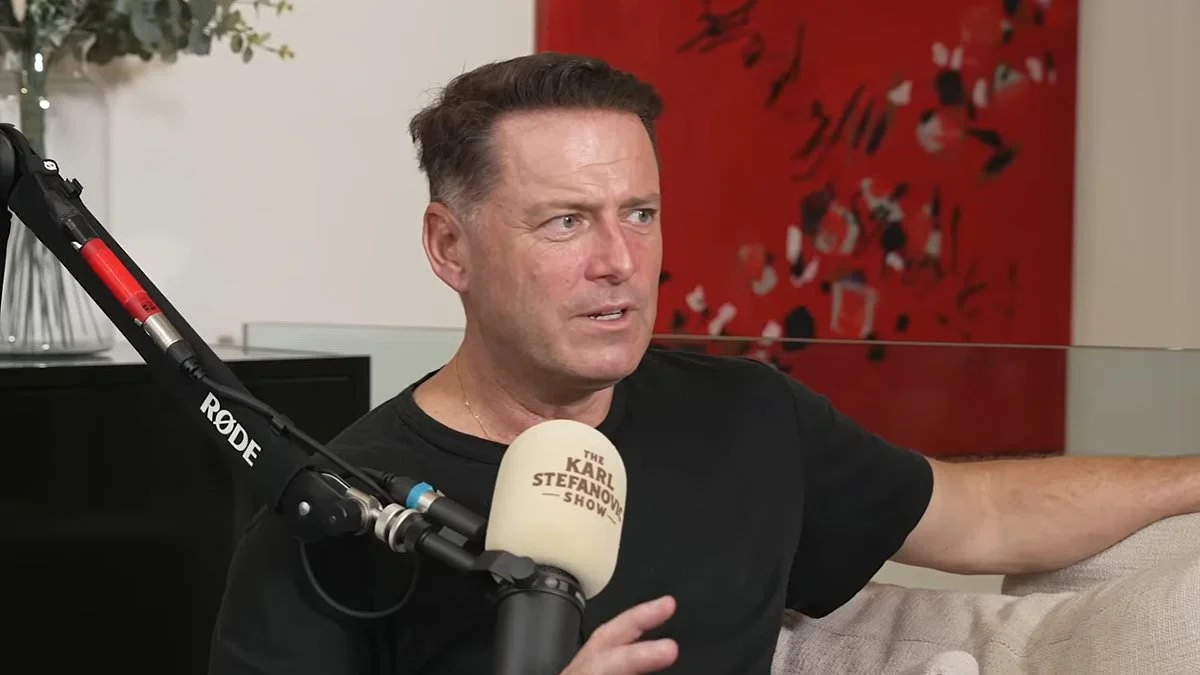
In the New South Wales Supreme Court, the high-stakes legal battle between television veteran Karl Stefanovic and his former business partner, media executive Keshnee Ibrahim, has reached a critical juncture, prompting a stern rebuke from the bench. Justice David Hammerschlag has expressed significant frustration over the slow pace of proceedings regarding the valuation of their joint venture, 123 Podcast, the production entity behind the commercially successful program, The Karl Stefanovic Show. The dispute, which has transitioned from a battle over corporate control to a complex financial negotiation, centers on the exit of Ms. Ibrahim from the company and the fair market value of her substantial equity stake.
The confrontation in court highlights the escalating tensions between the two media figures, whose professional relationship has deteriorated to the point of total breakdown. Stefanovic, the long-time host of Nine Network’s Today show, and Ibrahim, a seasoned media strategist and former head of content at Woolworths, each hold a 45 per cent stake in 123 Podcast. The remaining 10 per cent is held by celebrity accountant Anthony Bell, who has often served as a financial advisor to Stefanovic. While both primary parties have agreed in principle that Stefanovic will buy out Ibrahim’s interest, the mechanism for determining the price of that buyout has become the latest flashpoint in the litigation.
Judicial Impatience and the Valuation Crisis
The recent hearing was intended to finalize the timeline for a joint valuation report, a document essential for the buyout to proceed. However, a joint valuation expert informed the court that they required additional time to complete their assessment of the company’s worth. The expert requested that the deadline be moved from October 7 to mid-October, citing the complexities of the business model. Justice Hammerschlag, known for his no-nonsense approach to commercial litigation, was visibly unimpressed by the request for further delays.
"I’m not putting up with this," Justice Hammerschlag told the court, questioning why a valuation for what he described as a relatively straightforward business entity was taking so long. The judge’s remarks underscored a growing judicial trend in Australia toward streamlining commercial disputes to prevent them from clogging the legal system. He suggested that if the current expert could not meet the court’s requirements, the parties should "get a better expert."
In a move to force a resolution, Justice Hammerschlag ordered both legal teams to prepare their own independent, one-page assessments. These documents must outline what each party believes the business is worth and the specific methodology used to reach that figure. "Experts are there for the court, the court is not there for them," the judge remarked, signaling that the court’s schedule would no longer be dictated by the pace of external consultants. This order effectively forces Stefanovic and Ibrahim to put their cards on the table regarding the monetary value they assign to the podcasting brand.
The Genesis of 123 Podcast and the Breakdown of Relations
To understand the current legal impasse, one must look at the origins of 123 Podcast. The company was founded on the premise of leveraging Stefanovic’s high-profile media persona within the rapidly expanding digital audio market. While Stefanovic provided the "talent" and the public-facing brand, legal submissions made by Monica Allen, representing Ms. Ibrahim, suggest that the operational heavy lifting was handled by Ibrahim.
Ibrahim’s professional background is extensive; she has previously edited major titles for Pacific Magazines and Bauer Media and held a senior executive role at Woolworths. Her counsel argued that the podcast originated when Stefanovic approached her to build and operate the business from the ground up. During the period when Stefanovic was heavily committed to his daily duties at the Today show, Ibrahim was reportedly responsible for building the show’s audience, securing lucrative sponsorship deals, and managing the commercial infrastructure of the company.
The relationship began to fracture earlier this year, leading Ibrahim to seek legal intervention in September. At that time, she raised serious concerns regarding her position as a director of the company. She sought an injunction to prevent a board meeting where she feared Stefanovic and Bell might use their combined 55 per cent majority to remove her from her directorship. While the immediate threat of removal was mitigated by the subsequent agreement for a buyout, the underlying resentment and disagreement over the company’s trajectory remain evident in the ongoing valuation dispute.
Chronology of the Dispute
The timeline of the Stefanovic-Ibrahim fallout reflects a rapid decline from partnership to litigation:
- Late 2023 – Early 2024: 123 Podcast is established with a 45/45/10 ownership split between Stefanovic, Ibrahim, and Bell. The Karl Stefanovic Show is launched, gaining traction in the Australian podcast charts.
- Mid-2024: Internal tensions arise regarding the management and strategic direction of the company. Disagreements over commercial opportunities and operational control begin to surface.
- September 2024: Keshnee Ibrahim initiates legal proceedings in the NSW Supreme Court. She expresses fear of being ousted as a director and seeks to protect her interests in the business she helped build.
- Late September 2024: The parties agree to a "divorce" settlement in principle. Karl Stefanovic agrees to purchase Ibrahim’s 45 per cent stake, effectively taking majority control of the entity, pending a fair valuation.
- October 2, 2024: The court hears applications for an extension of time for the valuation report. Justice Hammerschlag denies the extension and demands immediate one-page valuation summaries from both sides.
The Valuation Challenge in the Podcast Industry
Valuing a podcasting company like 123 Podcast is a complex endeavor that goes beyond simple profit-and-loss statements. In the modern media landscape, the value of such a company is often tied to "goodwill," intellectual property, and "key man" risk.
The Karl Stefanovic Show relies heavily on the personal brand of its namesake. If Stefanovic were to leave the project, the value of the company would likely plummet—a factor known as "key man" risk. However, Ibrahim’s side argues that the commercial framework—the sponsorships, the distribution networks, and the production quality—has a value independent of the host’s daily presence.
Australia’s podcasting market has seen exponential growth, with the Infinite Dial Australia 2024 report indicating that nearly half of the population listens to podcasts monthly. For advertisers, podcasts offer a highly engaged audience, making successful shows like Stefanovic’s prime real estate for "host-read" advertisements and integrated content. Determining whether the value of the company lies in the talent (Stefanovic) or the architect (Ibrahim) is the central question that the valuation experts—and now the parties themselves—must answer.
The Role of Anthony Bell
The position of Anthony Bell in this dispute is also of significant interest. As the holder of the remaining 10 per cent of the company, Bell occupies a "kingmaker" position. In a 45/45 split, his 10 per cent can shift the balance of power in any board vote. Bell, a high-profile accountant and founder of Bell Partners, has a long history of managing the affairs of Australia’s elite. His involvement in the company was likely intended to provide financial oversight and stability, but the current litigation suggests that even his presence could not bridge the gap between the two primary shareholders.
Broader Implications for Celebrity-Backed Ventures
The legal battle serves as a cautionary tale for the growing number of media personalities entering into equity-based partnerships. The "talent-plus-operator" model is increasingly common in the digital age, where celebrities provide the reach and executives provide the infrastructure. However, without robust "shotgun" clauses or clear exit strategies in shareholder agreements, these partnerships can end in expensive and public litigation.
The NSW Supreme Court’s insistence on "getting on with it" reflects a broader judicial impatience with commercial parties who use the court as a negotiating tool. By demanding one-page valuations, Justice Hammerschlag is attempting to strip away the legal posturing and force the parties to find a middle ground.
Conclusion and Next Steps
The matter is scheduled to return to the New South Wales Supreme Court next week. At that time, both Stefanovic and Ibrahim will be required to present their simplified valuation figures. If the gap between their respective assessments is too wide, the court may be forced to appoint an independent referee or proceed to a full hearing to determine the price of the buyout.
For Karl Stefanovic, the goal is to secure full control of his namesake show and move past a distracting legal chapter that has cast a shadow over his digital ventures. For Keshnee Ibrahim, the objective remains a financial settlement that reflects her contribution to the brand’s rapid ascent in the Australian media market. As the judge made clear, the time for delays has passed; the focus now is entirely on the final number that will end the partnership once and for all.
