
 By admin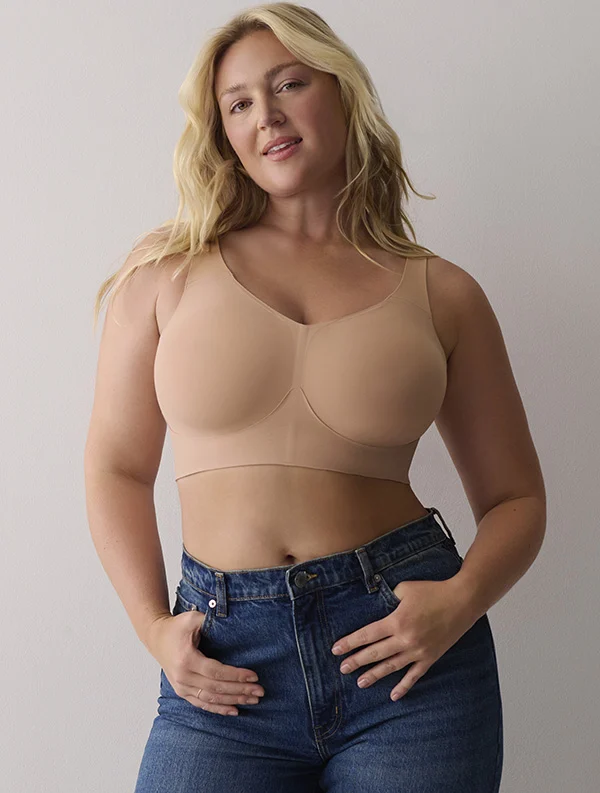
The Busty Bra, which officially entered the consumer market this week, represents the culmination of nearly three years of intensive research and development aimed at solving one of the most persistent challenges in the intimate apparel industry: providing high-level wireless support for women with small frames and large busts. Specifically engineered for individuals with 27–36 band sizes and DDD–L cups, this new product launch marks a significant shift in ergonomic design for the Portland-based company. For decades, the lingerie industry has operated under the assumption that "fuller" cup sizes, particularly those paired with smaller ribcage measurements, required the structural rigidity of metal underwires to maintain lift and shape. Evelyn & Bobbie’s latest release seeks to dismantle this narrative by introducing two newly patented technologies—EB FlexTech® and EB Core+®—which were developed over a 33-month period to address the specific biomechanical needs of this demographic.
Engineering a New Standard in Intimate Apparel
The central innovation of the Busty Bra lies in its departure from traditional textile engineering. While standard wireless bras often rely on compression—essentially flattening the breast tissue against the chest wall to minimize movement—Evelyn & Bobbie has focused on suspension and weight redistribution. This approach is necessitated by the unique physical demands placed on women in the 27–36 band and DDD–L cup range. In this size category, the weight of the breast tissue is often disproportionate to the surface area of the band, leading to excessive pressure on the shoulder straps, which can result in chronic neck pain, bra-strap grooves, and tension headaches.
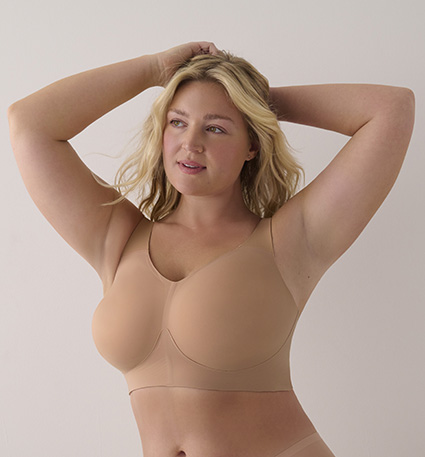
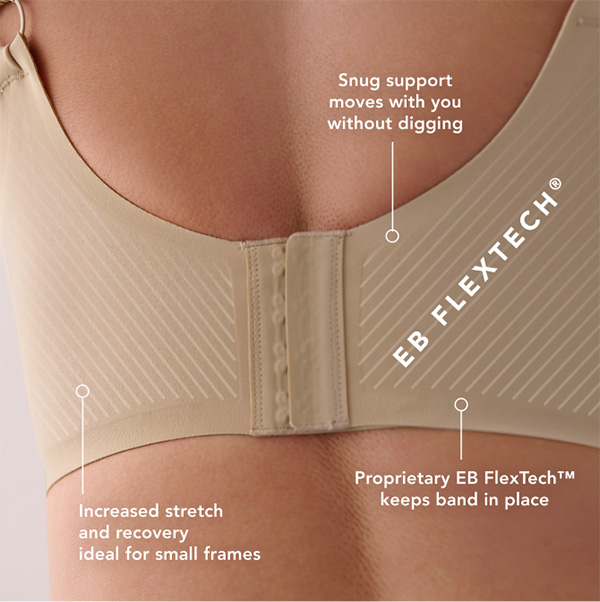
To mitigate these issues, the brand’s EB FlexTech® technology was developed to provide a high degree of "stretch and recovery." Unlike standard elastics that may lose their integrity over time, FlexTech is designed to maintain a secure hold while flexing with the wearer’s natural movements. This technology focuses on the stability of the band, ensuring that the bra remains anchored to the ribcage without pinching or digging into the skin. By creating a more stable foundation, the design allows for the redistribution of weight from the delicate muscles of the shoulders and neck down to the body’s core—a more structurally sound area for load-bearing.
The Evolution of EB Core Plus Technology
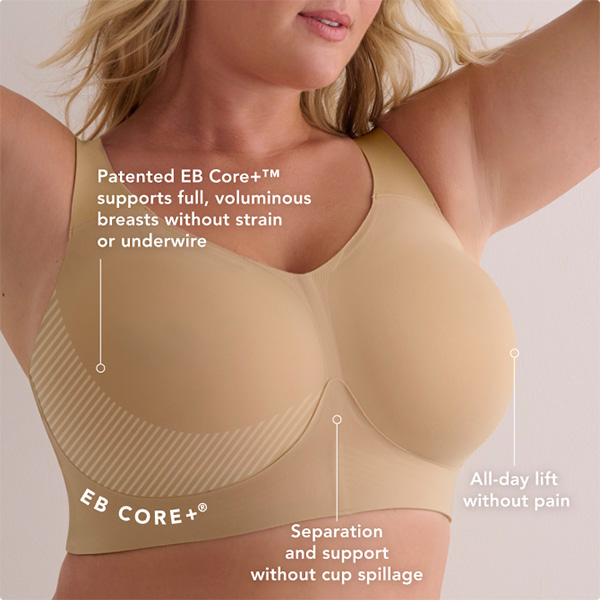
Working in conjunction with the FlexTech band is the EB Core+® platform. This is an upgraded iteration of the brand’s original patented EB Core® technology, which has been a staple of their product line for several years. The "Plus" designation refers to the increased surface area and enhanced structural integrity required to support voluminous busts without the use of metal.
Traditional underwires work by creating a rigid semi-circle that anchors the breast. However, for many women, these wires can poke, prod, or even cause skin irritation and bruising. The EB Core+® utilizes a 3D-molded internal structure that mimics the lift of an underwire through material science rather than hardware. It provides a "natural lift," which the company defines as lifting the tissue upward and forward without the restrictive "squeezing" sensation associated with sports bras or traditional wireless "leisure" bras. This technology ensures that the cups maintain their shape even under the weight of larger volumes, preventing the "sagging" or "uniboob" effect that often plagues wireless options in the DDD–L range.
Addressing the "Small Band, Large Cup" Market Gap
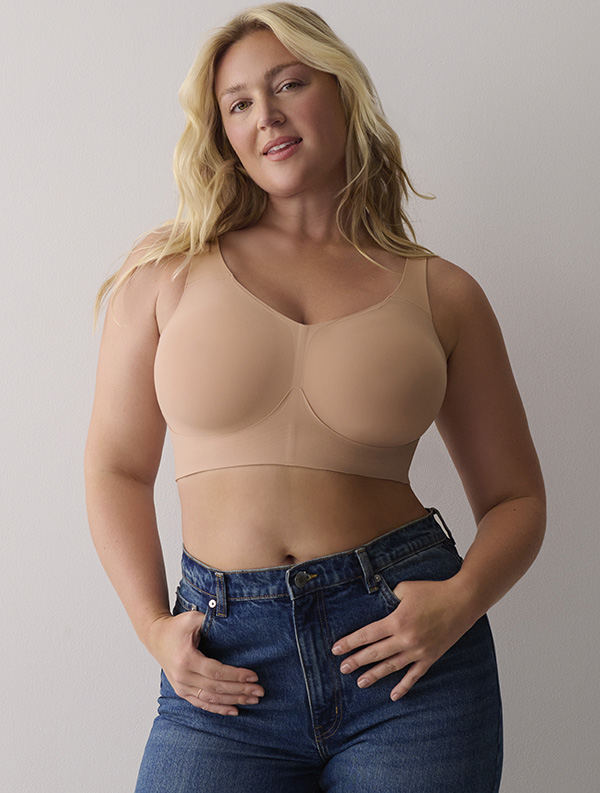
The launch of the Busty Bra addresses a significant gap in the global lingerie market. Market data suggests that while the average bra size has increased over the last two decades, many manufacturers still prioritize "matrix sizing"—the standard range of 32A to 38DD. Women who fall outside this range, particularly those with bands smaller than 32 but cups larger than DD, frequently find themselves in a "sizing desert."
Historically, these consumers have had to choose between two undesirable options: wearing a band that is too large (which compromises support and forces the straps to do all the work) or wearing a cup that is too small (leading to "spillage" and discomfort). By focusing on the 27–36 band range, Evelyn & Bobbie is targeting a demographic that is often forced into custom-made or high-priced European imports. The inclusion of L cups in a 27-inch band is a rarity in the mass market, representing a commitment to inclusive sizing that is rooted in technical precision rather than just marketing.
A 33-Month Chronology of Research and Development
The 33-month development cycle for the Busty Bra is notably longer than the industry standard for intimate apparel, which typically sees new styles brought to market in 12 to 18 months. This extended timeline was required due to the complexity of the engineering involved. According to sources close to the development process, the timeline included several key phases:
- Initial Biometric Analysis: The first six months were dedicated to studying the movement of breast tissue in the target size range. This involved analyzing how weight shifts during daily activities such as walking, sitting, and reaching.
- Prototyping and Material Testing: The subsequent year involved testing hundreds of fabric blends to find a material that offered the necessary tensile strength while remaining soft against the skin. This phase led to the creation of the EB FlexTech® patent.
- Extensive Wear Testing: Unlike brands that test on a single "fit model" and then grade the pattern up or down, Evelyn & Bobbie conducted multiple rounds of wear testing on women across the entire 27–36 band and DDD–L cup spectrum. This ensured that the bra performed consistently regardless of whether the wearer was a 28H or a 34L.
- Hardware Refinement: The final months were spent perfecting the "toothed" strap sliders and the soft-touch hook-and-eye closures. These components are critical for the "Busty" demographic, as strap slippage and back closure irritation are common complaints in larger cup sizes.
Ergonomic Design and Physical Health Implications
From a physiological perspective, the Busty Bra’s focus on weight redistribution has broader implications for women’s health. Physical therapists and ergonomic experts have long noted the link between ill-fitting bras and musculoskeletal issues. When a bra fails to provide adequate support from the band, the weight of the breasts pulls the shoulders forward, leading to a "hunched" posture and strain on the trapezius muscles.
By utilizing EB FlexTech® to anchor the weight to the core, the Busty Bra encourages a more upright posture. The full-coverage neckline also serves a functional purpose beyond modesty; it helps to contain the tissue and prevent "quadra-boob" (spillage over the top of the cup), which can cause uneven weight distribution and discomfort during movement. The use of toothed sliders on the straps ensures that once the fit is adjusted, it remains static, preventing the gradual loosening that often occurs throughout the day as a result of the weight of the bust.
Comparative Analysis of the Evelyn & Bobbie Portfolio
It is important to distinguish the new Busty Bra from the brand’s existing Core Collection. While the Core Collection remains a flagship offering, catering to 28–50 band sizes and C–G cups, it utilizes the original EB Core® technology. The Busty Bra is a specialized tool within the brand’s arsenal, specifically tuned for the high-density support needs of the DDD–L cup range on smaller frames.
Industry analysts suggest that this segmentation is a savvy move. By creating a product specifically for the "Busty" demographic, Evelyn & Bobbie avoids the pitfalls of "one-size-fits-all" engineering. A bra designed for a 44C has vastly different structural requirements than one designed for a 30J. The Busty Bra acknowledges these differences, offering a tailored solution that does not compromise on the brand’s core promise of wireless comfort.
Industry Impact and Future Outlook
The release of the Busty Bra comes at a time when the "bra-burning" or "no-wire" movement has transitioned from a trend into a permanent market shift. Since the onset of the COVID-19 pandemic, consumer preference has swung heavily toward comfort-oriented apparel. However, for women with larger busts, the transition to wireless has been difficult due to a lack of high-performance options.
Evelyn & Bobbie’s investment in 33 months of R&D suggests that the company is betting on a future where "comfort" and "support" are no longer mutually exclusive. The success of the Busty Bra could signal to the rest of the industry that the "small band, large cup" demographic is a viable and underserved market that rewards technical innovation.
As the product begins to reach consumers, the true measure of its success will be in its ability to change the daily lived experience of its wearers. If the Busty Bra can indeed provide the stability of an underwire with the comfort of a wireless design, it may set a new benchmark for the industry. For now, the launch stands as a testament to the power of ergonomic engineering and the importance of listening to the specific needs of women whose bodies have long been ignored by mainstream fashion.
