
 By admin
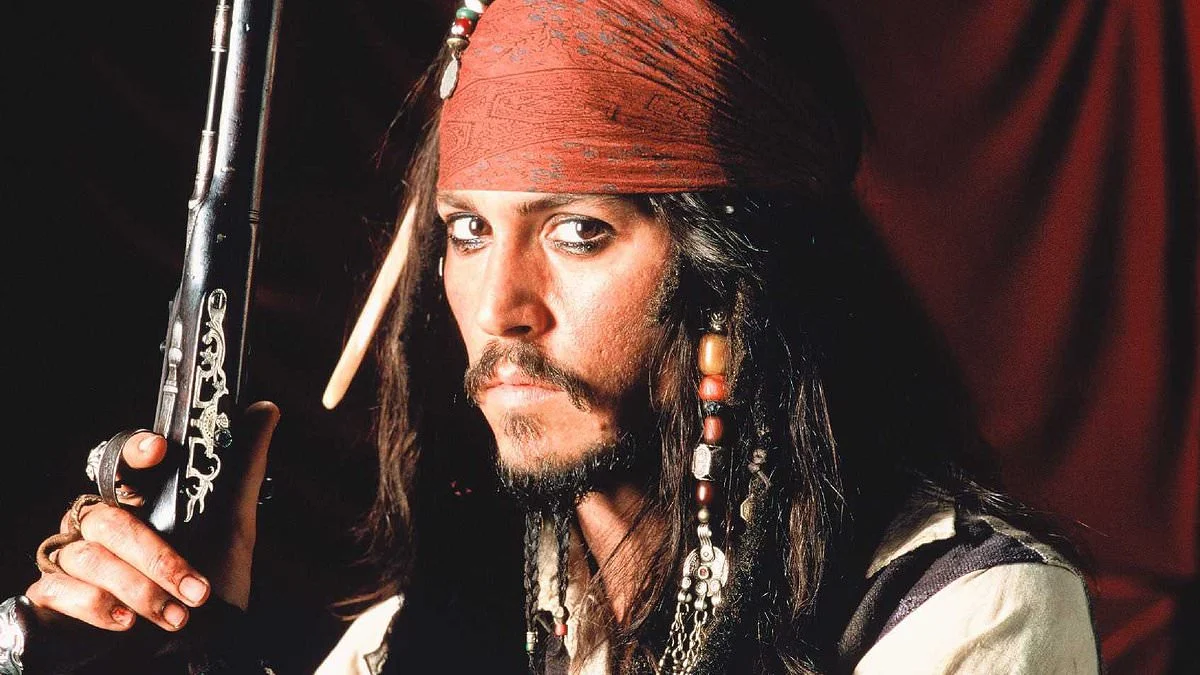
The trajectory of Johnny Depp’s career over the last decade has transitioned from a period of absolute professional exile to what appears to be a historic industry comeback. Once a pariah in the eyes of major studios following a series of highly publicized legal battles and allegations of domestic abuse, the 63-year-old actor is now finding himself at the center of a bidding war for his return to the silver screen. Most notably, the Walt Disney Company, which famously severed ties with the actor in 2018, has signaled a definitive interest in reinstating him as the face of the multi-billion-dollar Pirates of the Caribbean franchise. This shift represents a significant pivot from Depp’s previous stance, where he famously testified that he would not return to the role of Captain Jack Sparrow for "$300 million and a million alpacas."
The Return of Captain Jack Sparrow and Studio Re-engagement
The most significant indicator of Depp’s rehabilitation within the Hollywood ecosystem is the renewed dialogue between the actor and Disney. Jerry Bruckheimer, the veteran producer behind the Pirates of the Caribbean series, has publicly confirmed that the studio is actively seeking Depp’s involvement in the next installment. Bruckheimer stated that the production team is currently working on a screenplay with the intent of bringing Depp back into the fold. While the script remains in the development phase and a formal "green light" has not yet been issued, industry insiders suggest that production could begin as early as 2027.
The proposed role is expected to be more contained than his previous lead turns, potentially serving as a bridge to a new generation of characters. This strategic move allows the studio to capitalize on Depp’s star power while mitigating the risks associated with a massive, high-budget production centered entirely on a single, once-controversial figure.
Beyond the Caribbean, Depp has secured leading roles in two other major studio projects. He is set to star in Paramount Pictures’ upcoming holiday release, Ebenezer, a reimagining of Charles Dickens’ A Christmas Carol, where he will portray the titular Scrooge. Additionally, he has signed on for Day Drinker, a thriller produced by Lionsgate, scheduled for release in early 2025. These roles mark a departure from the smaller, European-financed "art house" projects he gravitated toward during his period of Hollywood estrangement, such as the 2023 French-language film Jeanne du Barry.
A Chronology of Conflict and Legal Vindications
The decline of Depp’s relationship with major studios began in 2016, following his tumultuous divorce from actress Amber Heard. The fallout escalated in 2018 when Disney executives moved to drop Depp from the Pirates franchise just days after Heard published an op-ed in The Washington Post identifying herself as a "public figure representing domestic abuse." At the time, Depp was reportedly in the middle of negotiations for a $22.5 million payday for the sixth film in the series.
The ensuing years were defined by two major legal battles that captivated global audiences:
- The 2020 London Libel Trial: Depp sued News Group Newspapers (NGN) over an article in The Sun that labeled him a "wife-beater." The High Court of Justice ruled against Depp, concluding that the allegations were "substantially true." This verdict led to his immediate forced resignation from the Fantastic Beasts franchise by Warner Bros.
- The 2022 Virginia Defamation Trial: In a reversal of public and legal fortune, a jury in Fairfax County, Virginia, found that Heard had defamed Depp in her op-ed. While the jury also found Depp liable for one instance of defamation via his lawyer, the verdict was widely seen as a total vindication for the actor.
The Virginia trial, in particular, served as a catalyst for a massive shift in public perception. Despite the revelation of disturbing text messages and testimony regarding substance abuse and volatile behavior, the "court of public opinion" largely sided with Depp, viewing him as a victim of false accusations rather than a perpetrator of abuse.
Analyzing the Data: The Man the World Could Not Cancel
The primary driver behind Hollywood’s willingness to re-embrace Depp is his undeniable and resilient marketability. Data provided by the National Research Group (NRG), a leading film industry consultancy, illustrates that Depp remains one of the most powerful draws in global cinema. In a comprehensive survey conducted in April 2024, moviegoers ranked Depp seventh on the list of stars who would most likely influence them to see a new film in a theater. He placed just behind industry titans like Tom Cruise, Brad Pitt, and Leonardo DiCaprio, but ahead of respected actors such as Tom Hanks, Keanu Reeves, and Scarlett Johansson.
Further supporting this is the "Q Score," a metric used by the industry to measure a celebrity’s familiarity and appeal. While Depp’s positive rating dipped from 36% in 2015 to 24% during the height of his legal troubles in 2023, it has since rebounded to 27%. Perhaps more telling are the test screenings for his upcoming film, Ebenezer. Reports indicate that 80% of test audiences rated the film as "excellent" or "very good," with Depp receiving an 86% approval rating for his performance—significantly higher than the industry average of 67% for a lead character.
Notably, the demographic most supportive of his return appears to be women over the age of 35. This is a crucial finding for studios, as this group was previously thought to be the most likely to alienate an actor accused of domestic violence. Instead, this demographic has remained fiercely loyal, a sentiment echoed at industry events like CinemaCon, where Depp’s appearances have been met with overwhelming enthusiasm.
Financial Imperatives and the Cost of a "Quixotic" Lifestyle
While Depp has often expressed a desire to be viewed as an artist first and an actor last, the financial realities of his life have likely influenced his return to studio blockbusters. During his 2020 legal proceedings, it was revealed that Depp had "lost" a fortune estimated at $750 million. Much of this loss was attributed to a combination of alleged mismanagement by his former business managers, TMG, and his own extravagant spending habits.
Depp’s lifestyle has long been a subject of industry lore. He has previously admitted to spending more than $30,000 a month on wine and reportedly spent over $5 million to launch the ashes of his friend, author Hunter S. Thompson, from a custom-made cannon. At one point, his legal team stated he was "$100 million in the hole" due to unpaid taxes spanning nearly two decades.
His real estate portfolio, though downsized, remains extensive. He maintains a rented manor house in Wadhurst, Sussex, which he calls his "castle," as well as a large estate in Los Angeles, a private village in France, and a private island in the Bahamas. The legal fees associated with his various trials are estimated to have exceeded £50 million. Consequently, the multi-million-dollar salaries offered by major studios provide the necessary liquidity to maintain his diverse global holdings and staff.
Divergent Paths: The Contrast with Amber Heard
As Depp’s career experiences a renaissance, his former spouse, Amber Heard, has largely retreated from the public eye. Following the 2022 trial, Heard’s reputation on social media was severely impacted, and she has since relocated to Spain. Reports indicate that the 40-year-old actress is living a quiet life in Madrid and Mallorca with her three children, often using an assumed name to maintain privacy. While she appeared in the 2023 sequel Aquaman and the Lost Kingdom, her role was significantly reduced, and she has not signed on for any major Hollywood productions since. This divergence highlights the uneven nature of post-scandal recovery in the entertainment industry, where established male stars often find a path back to prominence that remains elusive for their female counterparts.
The Broader Implications for the Film Industry
Johnny Depp’s return signifies more than just the comeback of a single actor; it reflects a broader trend in the entertainment industry’s approach to "cancel culture." Analysts suggest that Hollywood is currently facing a shortage of bankable, global A-list stars capable of opening a film on name recognition alone. In an era dominated by intellectual property and franchises, the "star power" that Depp wields is a rare and valuable commodity that studios are increasingly unwilling to ignore.
Miranda Banks, a professor of film and media studies at Loyola Marymount University, notes that the industry’s need for compelling leads who can draw international audiences often outweighs the potential for PR backlash. Furthermore, Depp’s success in non-cinematic ventures—such as his Dior Sauvage partnership (where sales reportedly increased by 50% during his trial), his Three Hearts rum brand, and his high-priced art exhibitions at London’s Halcyon Gallery—proves that his brand transcends the screen.
Ultimately, the reintegration of Johnny Depp into the studio system suggests that for a certain tier of celebrity, commercial viability can effectively override personal controversy. As he prepares to step back into the boots of Captain Jack Sparrow and take on the mantle of Ebenezer Scrooge, the industry will be watching closely to see if this "un-cancellable" star can once again dominate the global box office. For now, the "old watch" that refuses to be set to the right time appears to be ticking perfectly in sync with the needs of a risk-averse Hollywood.
