
 By admin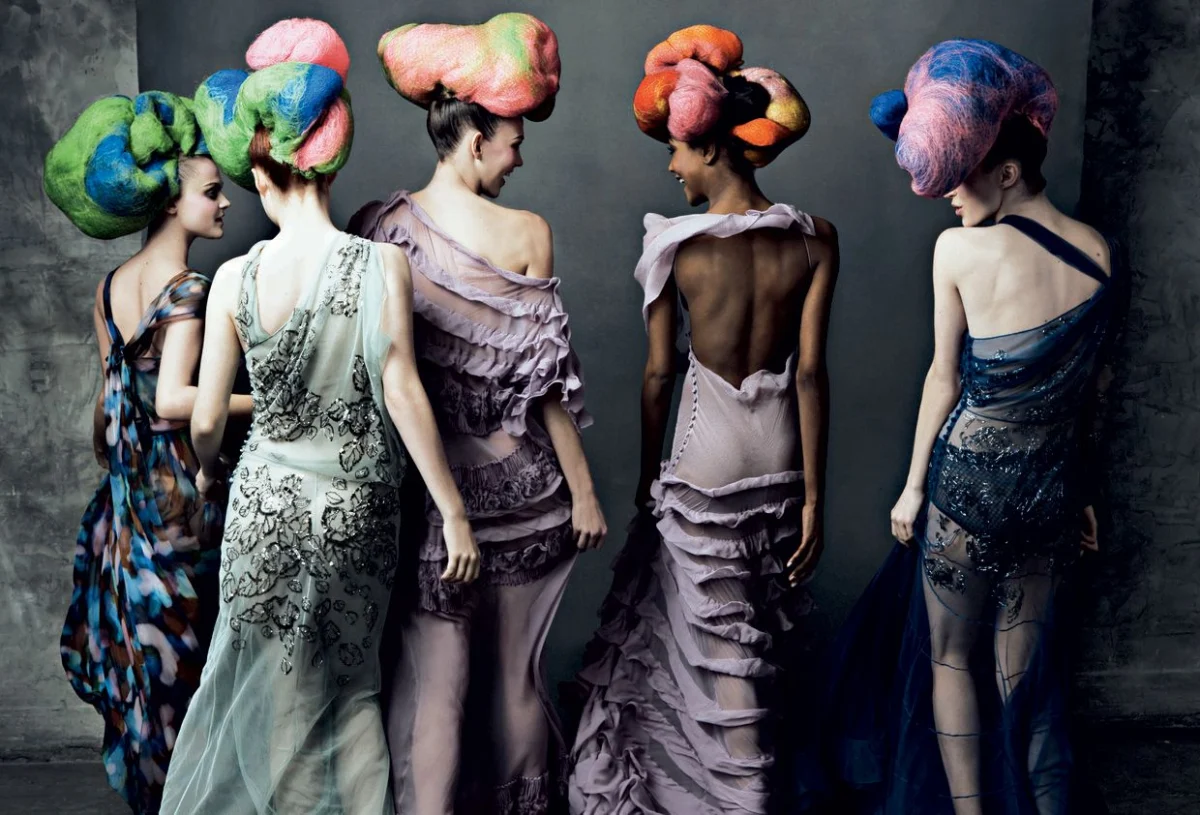
The Metropolitan Museum of Art’s Costume Institute today announced "John Galliano: Horizons," a landmark exhibition scheduled to open in Spring 2027. This momentous retrospective will meticulously examine and exalt the prolific work of John Galliano, placing him in an exceptionally rare pantheon of designers. In the 153-year history of The Met, only two other living designers have been the sole subjects of monographic exhibitions: Yves Saint Laurent in 1983, a groundbreaking show organized by the legendary Diana Vreeland, and Rei Kawakubo of Comme des Garçons in 2017, curated by Andrew Bolton, who is also organizing the upcoming Galliano exhibition. This prestigious honor underscores Galliano’s undeniable, if complex, impact on four decades of fashion, signaling a critical re-evaluation of his entire career, including its dramatic highs and profound lows.
A Legacy Etched in Fabric: Galliano’s Ascent
John Galliano’s journey to becoming one of fashion’s most influential figures began with a spectacular debut. Born in Gibraltar and raised in South London, his innate theatricality and profound understanding of historical dress were evident from his early days at Central Saint Martins. His 1984 graduation collection, "Les Incroyables," inspired by the exuberant, often outlandish, styles of the French Revolution’s post-Thermidorian youth, immediately captivated the fashion world. This collection, a vibrant pastiche of late 18th-century historical dress infused with his own New Romantic sensibilities, featured exaggerated silhouettes, deconstructed tailoring, and a dramatic narrative rarely seen in student work. It was an instant sensation, famously purchased in its entirety by the influential British department store Browns, catapulting the young designer into the spotlight.
Following this initial triumph, Galliano navigated the notoriously challenging London fashion scene as a scrappy upstart and self-proclaimed "enfant terrible." Despite often working with meager resources, he consistently divined sartorial magic from the merest scraps of fabric, pushing the boundaries of construction and presentation. His early independent collections, known for their raw emotion, historical depth, and often dark romanticism, earned him a cult following and critical acclaim, showcasing a visionary talent that could transform the everyday into the extraordinary.
His ascent continued with a pivotal, albeit brief, appointment as creative director at Givenchy in 1995. This marked him as the first British designer to head a major French haute couture house, a testament to his burgeoning reputation. Though his tenure lasted less than two years, his collections for Givenchy, characterized by their opulent theatricality and meticulous craftsmanship, served as a powerful prelude to his most impactful role.
The Dior Decades: Apex of Influence and Theatrical Grandeur
In 1996, Galliano was appointed creative director of Christian Dior, a role that would define an era for both the designer and the iconic French house. His 15-year tenure at Dior was nothing short of revolutionary. He breathed new life into the sleeping giant, blending Dior’s heritage of feminine elegance with his own extravagant vision, resulting in collections that were celebrated for their unparalleled theatricality, historical depth, and sheer imaginative power.
Galliano’s Dior shows were legendary spectacles, transcending mere runway presentations to become immersive experiences. Each collection told a vivid story, drawing inspiration from diverse cultural and historical epochs: the opulent court of Versailles, the exoticism of ancient Egypt, the vibrant colors of Maasai tribes, the delicate artistry of Japanese geishas, and the dramatic narratives of Russian ballet. He reinterpreted iconic Dior silhouettes like the New Look with audacious flair, transforming corsetry, volume, and embellishment into breathtaking works of art. His garments, often requiring thousands of hours of handwork, were characterized by their intricate detailing, bias cuts that clung to the body, and a dramatic sense of movement.
Under Galliano, Christian Dior experienced a commercial and critical renaissance, regaining its position at the forefront of global luxury fashion. He was not just a designer; he was a showman, a storyteller, and a master couturier who redefined the parameters of haute couture for the 21st century. His flamboyant personal style, often appearing on the runway in elaborate costumes to take his bow, further cemented his status as a fashion superstar, an artist whose persona was as captivating as his creations.
The Precipice and Fall: A Defining Scandal
However, Galliano’s glittering career at Dior came to an abrupt and catastrophic halt in February 2011. He was arrested in Paris following allegations of making antisemitic remarks in a public bar, an incident that quickly escalated into a global scandal. A video subsequently emerged showing him making further offensive statements, leading to widespread condemnation. Within days, Christian Dior, citing the "odious nature" of his comments, swiftly fired him, a move followed by the termination of his eponymous label.
The fallout was immediate and severe. Galliano faced legal proceedings, public disgrace, and a precipitous fall from grace, casting him into creative exile. The incident sparked a profound debate within the fashion industry and wider society about accountability, the boundaries of artistic freedom, and the consequences of hate speech. It forced a reckoning with the complexities of separating an artist’s genius from their personal conduct and moral failings. This period marked a dark chapter, forcing Galliano into a period of introspection, rehabilitation, and education to confront the gravity of his actions.
The Phoenix Rises: Reinvention at Maison Margiela
After several years out of the public eye, marked by a conscious effort towards rehabilitation and recovery, John Galliano made a surprising return to the fashion world in October 2014, appointed as the creative director of Maison Margiela. This move was met with a mix of anticipation, skepticism, and hope. Margiela, known for its avant-garde, deconstructive, and often anonymous aesthetic, seemed a stark contrast to Galliano’s theatrical maximalism. Yet, it proved to be an inspired pairing.
Galliano embraced the challenge of respecting Margiela’s foundational codes while injecting his own narrative brilliance. He embarked on a meticulous "re-coding" of the house, blending Margiela’s deconstruction with his signature historical references, bias cuts, and unparalleled storytelling. His "Artisanal" (haute couture) collections, in particular, became a vehicle for profound artistic expression, pushing experimental boundaries while maintaining an undeniable sense of beauty and craftsmanship. Glenn Martens, Galliano’s successor at Diesel and a designer who deeply respects his work, aptly described this transformation, noting that Galliano "really turned a designer’s brand into a house." He gave Margiela a new voice, making it relevant to a new generation while honoring its radical past.

His resurgence culminated in recent years with critically acclaimed collections that have resonated globally. His final Artisanal collection for Maison Margiela, unveiled in January 2024, became a viral phenomenon, universally lauded for its raw emotion, technical mastery, and profound narrative. Drawing inspiration from classic literature and infused with a darkly romantic, almost cinematic quality, the collection cemented his renewed status as a master couturier, demonstrating an artist reborn, capable of captivating audiences with both beauty and depth.
Curatorial Vision: Mapping "Horizons" at The Met
The "John Galliano: Horizons" exhibition, organized by Andrew Bolton, the Curator in Charge of the Costume Institute, promises a comprehensive and nuanced exploration of the designer’s career. Bolton’s curatorial philosophy, as articulated in a release, views fashion as a form of cartography, "mapping not territories but affinities, tensions, and transformations." He explains that "every Galliano collection begins as a journey among things separated by time, place, or medium: portrait and posture, silhouette and story, memory and material." The exhibition will trace "how images become ideas, ideas become material, and material becomes emotion."
Crucially, Bolton emphasizes that "a horizon reveals not only what lies before us, but also where we stand." This profound statement indicates that the exhibition will not shy away from the complexities of Galliano’s biography. It will consider "both how Galliano has remapped the world through fashion and how his conduct, its consequences, and changing cultural values have reshaped our understanding of his work." This signals a mature and critical approach, acknowledging the full arc of his career, including the controversial elements that led to his downfall and subsequent rehabilitation. The exhibition will draw extensively from The Met’s own considerable holdings, including pieces from his breakout Central Saint Martins show, alongside other garments, accessories, sketches, toiles, research books, and archival materials spanning his entire career.
Official Endorsements and Industry Perspectives
The announcement of "John Galliano: Horizons" has been met with strong endorsements from key figures within the fashion and cultural spheres, highlighting a broader industry consensus regarding his artistic merit and the necessity of a comprehensive retrospective.
Anna Wintour, Chief Content Officer, Condé Nast, and Global Editorial Director, Vogue, unequivocally stated, "There is no one more deserving of an exhibition of this scale than John Galliano." She lauded his body of work across his tenures at Dior, Givenchy, Margiela, and his namesake label, describing it as a brilliant fusion of "erudition and creativity, darkness and light, the past, the present, the future all smashing together." Wintour further emphasized the exhibition’s commitment to portraying Galliano’s complete narrative: "He’s a great designer and his career isn’t defined by a moment—something that he will live with for the rest of his life. The exhibition won’t shy away from any of the darkness in John’s past. It’s part of what has shaped him. The show will take in the full arc of his career and grapple with all of it." Her powerful statement underscores the institution’s intent to present an unvarnished, holistic view of Galliano’s legacy.
Max Hollein, The Met’s Marina Kellen French Director and CEO, echoed these sentiments, affirming that "John Galliano has exerted a profound influence on fashion over the past four decades." Such institutional backing from the highest levels of The Met signifies the immense cultural and historical weight attributed to Galliano’s contributions, despite the controversies that have marked his path.
A Year of Resurgence: Recent Triumphs and Broader Impact
The announcement of the Met exhibition crowns what has been a truly remarkable year for John Galliano, cementing his return to the forefront of fashion. In January, an auction of "Dior Masterpieces" owned by Mouna Al Ayoub broke records for a couture sale. A painted silk evening gown from Galliano’s Spring/Summer 2000 "Clochards" (or "Homeless") collection fetched an astounding €510,000. This collection, controversial at the time for its perceived romanticization of poverty, was nonetheless lauded for its artistic depth and technical ingenuity. It was closely followed by a black taffeta evening gown from the same season, which sold for €420,000. These record-breaking figures underscore the enduring value and artistic significance of his work from the Dior era.
Looking ahead, Galliano is poised to embrace the role of the "people’s designer" in September with the highly anticipated first release from his two-year creative partnership with the Spanish mass retailer Zara. Described by Galliano as a "reauthoring" of the mega-brand’s archives, this collaboration marks a significant strategic move. It not only brings his distinctive design sensibility to a global, accessible audience but also signifies a broader trend of high fashion intersecting with fast fashion, democratizing design in an unprecedented way. This partnership extends his influence beyond the exclusive realm of haute couture, potentially introducing his artistry to millions worldwide.
Broader Implications and Enduring Legacy
The "John Galliano: Horizons" exhibition at The Met carries significant implications for the fashion industry, cultural institutions, and the ongoing dialogue surrounding art, morality, and redemption. By dedicating a monographic exhibition to a living designer with such a complex and controversial past, The Met is engaging directly with the challenge of how to assess and present the legacy of figures whose artistic genius is undeniable but whose personal conduct has been deeply problematic.
The exhibition’s commitment to grappling with "all of it" – the brilliance and the darkness – sets a precedent for how cultural institutions can navigate the complexities of public figures in an era of heightened social consciousness. It encourages a nuanced understanding that acknowledges both extraordinary talent and profound failings, inviting visitors to reflect on changing cultural values and how they shape our perception of art and artists.
Galliano’s journey, from enfant terrible to global icon, through public disgrace and subsequent artistic rebirth, offers a compelling narrative of resilience and the enduring power of creative vision. His influence on theatricality, storytelling in fashion, historical reinterpretation, and the very concept of a fashion show as a grand spectacle is immeasurable. The "Horizons" metaphor, as articulated by Bolton, serves as a powerful reminder that while we look forward, we must also critically examine where we stand in our collective judgment and understanding. This exhibition is not merely a retrospective; it is an invitation to engage with the full, multifaceted legacy of one of fashion’s most compelling and controversial figures, prompting a deeper conversation about genius, accountability, and the possibility of artistic redemption.
