
 By Nana Wu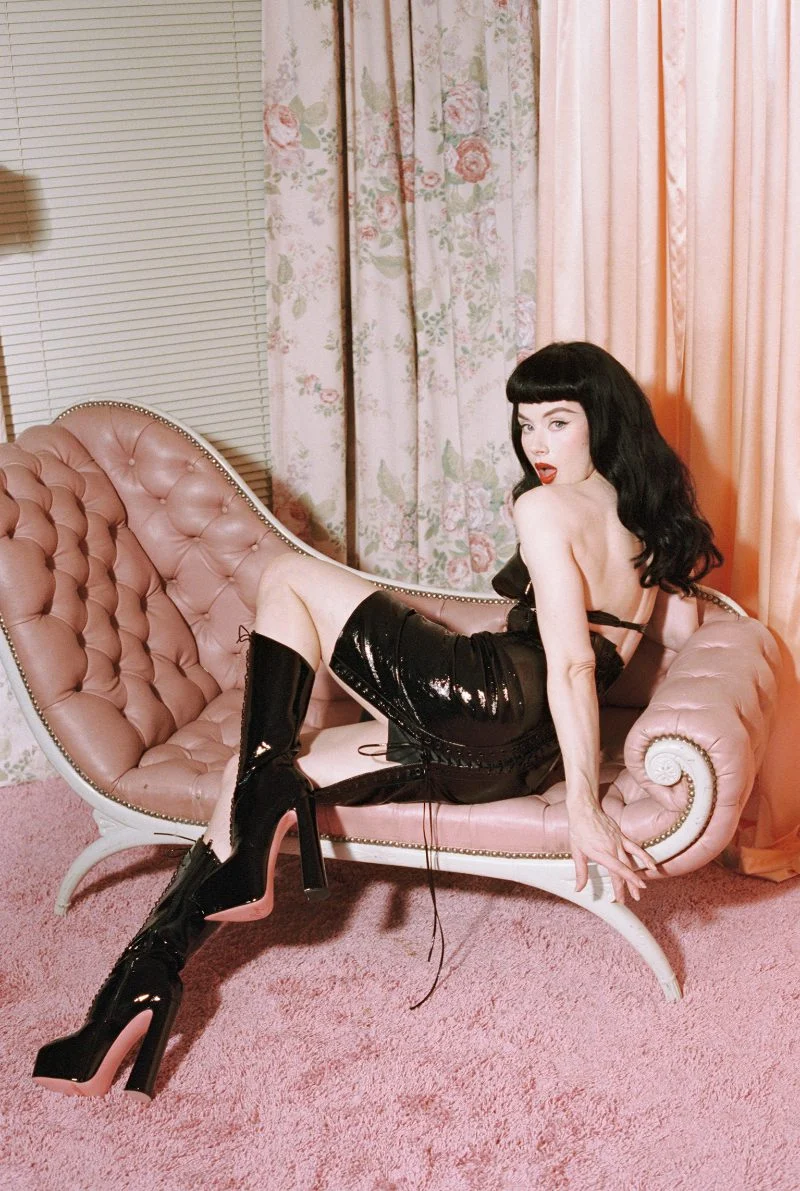
Los Angeles-based footwear powerhouse Jeffrey Campbell has announced a landmark collaboration with the estate of Bettie Page, debuting a limited-edition capsule collection that bridges the gap between mid-century pin-up aesthetics and contemporary high-fashion construction. Scheduled for a global release on March 12, the collection represents a significant departure for the brand, which historically avoids frequent collaborative projects. This partnership, brokered by Page’s longtime agent Mark Roesler, serves as both a sartorial tribute and a technical recreation of the "Queen of Pin-ups" most recognizable visual signatures. The collection includes not only the avant-garde footwear for which Jeffrey Campbell is known but also a curated selection of handmade apparel designed to evoke the spirit of Page’s self-made stardom.
The Architect of an Icon: Page’s Sartorial Autonomy
Central to the narrative of this collaboration is the recognition of Bettie Page as a pioneer of creative direction. During the height of her career in the 1950s, Page was noted for her unprecedented level of control over her public image. Unlike many models of her era who were directed by studios or photographers, Page frequently styled herself, designed her own lingerie and swimwear, and commissioned custom footwear to suit her specific aesthetic needs.
The Jeffrey Campbell capsule specifically honors this autonomy. Page was known to commission custom black leather heels with specific architectural requirements to enhance her poses—a detail that became an inseparable part of her visual legacy. By focusing on her role as a designer and director, the collaboration moves beyond mere licensing and into the realm of historical recreation. The collection highlights the fact that Page’s "fetish" aesthetic was not merely a costume, but a deliberate construction of a persona that challenged the conservative norms of the 1950s.
Archival Fidelity and the Design Process
To ensure the authenticity of the collection, the Jeffrey Campbell design team was granted exclusive access to the Bettie Page archives. This included private vintage photographs, personal correspondence, and, most crucially, original pieces of footwear and apparel owned by Page. Brigitte Campbell, the creative director of Jeffrey Campbell, described the process as a transformative experience for the brand.
According to the design team, the development of the footwear began with Page’s actual physical measurements. The pumps, platforms, and "sky-high" heels featured in the collection were engineered to mirror the exact proportions of the shoes Page wore during her most iconic shoots. Brigitte Campbell noted that handling the original "fetish heels" revealed nuanced details—such as specific stitching patterns and structural reinforcements—that were often lost in the grainy photography of the mid-20th century.
A signature element of the new collection is the inclusion of pink soles on every shoe. This design choice is intended to symbolize what the brand calls "soft feminine power," providing a visual contrast to the often-dramatic, sharp silhouettes of the footwear. This juxtaposition reflects the duality of Page’s image: the "girl next door" charm combined with the bold, subversive nature of her pin-up and fetish photography.
Technical Specifications and Limited Production Data
In an era of mass-produced fast fashion, the Jeffrey Campbell x Bettie Page collection adopts a strictly artisanal approach. The production data reveals a strategy of extreme scarcity, designed to appeal to serious collectors and fashion historians rather than the mass market.
- Production Runs: Each footwear style is produced in highly limited quantities, ranging from only 30 to 60 pieces per design.
- Authentication: Every individual item in the collection is hand-numbered, emphasizing its status as a collector’s piece.
- Branding: The logo utilized throughout the collection is a direct reproduction of Bettie Page’s personal signature, further cementing the link to her estate.
- Manufacturing: The apparel components of the capsule, including the lace-up leather dresses and bullet bras, are described as handmade, utilizing construction techniques that mirror the garment industry standards of the 1950s.
The apparel line focuses on two specific silhouettes that defined the Page era. The lace-up leather dress is a direct reference to her pioneering work in fetish-wear shoots, which have since become a cornerstone of high-fashion inspirations for brands like Thierry Mugler and Jean Paul Gaultier. Additionally, the collection features the "bullet bra," a structured undergarment that provided the distinctive pointed silhouette prevalent in 1950s fashion. By staying true to these historical silhouettes, Jeffrey Campbell avoids the modernization that often dilutes heritage collaborations.
Strategic Partnership and Estate Management
The collaboration was initiated by Mark Roesler, the chairman and CEO of CMG Worldwide, who has represented the Bettie Page estate for decades. Roesler’s approach to the Page legacy has consistently focused on maintaining her status as a cultural icon while protecting the integrity of her image.
"She took great pride in designing everything; it was part of the modeling and really important to her," Roesler stated in a press release regarding the collection. He emphasized that the partnership with Jeffrey Campbell was a natural fit due to the brand’s history of bold, unconventional footwear. According to Roesler, the collection is something Page would have personally endorsed, given her history of designing her own garments when the retail market failed to provide what she envisioned.
For Jeffrey Campbell, a brand that operates with a lean team of fewer than 20 people in Los Angeles, this collaboration is a deeply personal endeavor. Brigitte Campbell highlighted that the company’s identity as a predominantly women-led business is rooted in the freedoms and liberties pioneered by women like Page. The brand’s philosophy—to be "loved by few than liked by many"—aligns with the cult-status Page maintained for decades before her mainstream rediscovery.
Historical Timeline: From 1950s Icon to 2026 Capsule
The trajectory of Bettie Page’s influence provides essential context for the timing of this release:
- 1950–1957: Page rises to fame as the "Queen of Pin-ups," appearing in hundreds of magazines and becoming one of the first Playmates of the Month for Playboy.
- 1959: Page abruptly retires from the public eye, leading to decades of "mystery" regarding her whereabouts.
- 1980s–1990s: A massive resurgence in interest occurs as fashion designers and pop culture historians rediscover her work. Her signature bangs and aesthetic become a staple of the "rockabilly" and "neo-burlesque" movements.
- 2008: Bettie Page passes away, leaving her estate to be managed with a focus on her historical and feminist significance.
- 2020–2025: High fashion sees a return to structured, vintage silhouettes (the "coquette" and "femme fatale" trends), setting the stage for a Page-inspired revival.
- March 12, 2026: The official launch of the Jeffrey Campbell x Bettie Page collection.
Market Analysis and Cultural Implications
The decision to launch a collection with such limited production numbers (30–60 pieces) reflects a broader trend in the luxury and boutique footwear markets. "Drop culture," popularized by streetwear brands, is now being utilized by heritage-focused labels to create a sense of urgency and exclusivity. By limiting the run, Jeffrey Campbell ensures that the collection remains a niche tribute rather than a commercialized commodity.
Furthermore, the collaboration speaks to the ongoing "archival turn" in fashion. Consumers, particularly Gen Z and Millennials, have shown an increasing interest in the history behind their garments. By utilizing Page’s actual measurements and vintage references, Jeffrey Campbell is tapping into a desire for authenticity that goes beyond mere "vintage-inspired" aesthetics.
The inclusion of fetish-inspired elements like the lace-up leather dress also marks a continued normalization of subcultural styles in the mainstream fashion market. What was considered scandalous in Page’s era is now celebrated as a form of "feminine power" and self-expression. The collection serves as a reminder of the social barriers Page broke during her career, often at great personal and professional cost.
Conclusion and Availability
The Bettie Page x Jeffrey Campbell capsule collection is set to be a landmark event for fans of vintage fashion and avant-garde footwear alike. By combining the technical expertise of a modern footwear leader with the archival depth of one of the 20th century’s most enduring icons, the collection offers a rare glimpse into the personal style of a woman who was her own greatest creation.
The collection will be available exclusively on the official Jeffrey Campbell website starting March 12. Given the extremely limited production numbers and the hand-numbered nature of the items, industry analysts expect the collection to sell out within hours of its release. As fashion continues to look backward to move forward, the Bettie Page x Jeffrey Campbell collaboration stands as a testament to the enduring power of a singular, self-directed vision.
