
 By admin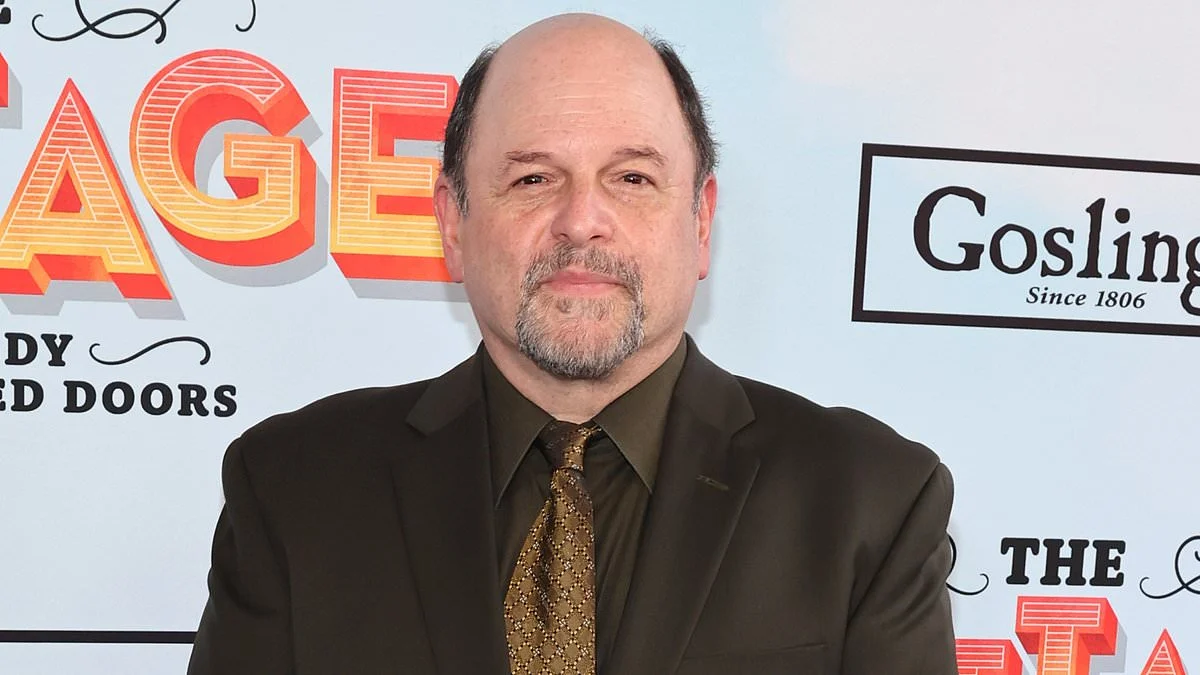
Jason Alexander, the veteran actor best known for his iconic role as George Costanza on Seinfeld, has donated $15,000 to the nonprofit organization Unchained At Last as a tangible extension of his recent apology to Courtney Stodden. The donation follows a public discourse regarding a 2012 comedy sketch in which Alexander, then 52, appeared alongside a 17-year-old Stodden in a segment that has since been condemned as an inappropriate sexualization of a minor. The contribution to Unchained At Last, an organization dedicated to ending forced and child marriage in the United States, aligns with Stodden’s recent calls for the actor to back his words with actionable support for advocacy groups working to protect vulnerable minors.
The controversy resurfaced earlier this week when Stodden, now 31, utilized social media to reflect on the trauma and exploitation she experienced during her adolescence. In an Instagram post, Stodden shared a screenshot of the 2012 "Funny Or Die" sketch, questioning how the adults involved in the production deemed the content acceptable. Alexander, who not only starred in the segment but was also credited as a writer, responded with a formal statement of regret, acknowledging the harm caused by the sketch. The subsequent financial contribution to Unchained At Last marks a significant moment of accountability in a career that has spanned decades, highlighting a shift in how Hollywood figures address past lapses in judgment regarding the treatment of minors in the industry.
The Origins of the Controversy: The 2012 Funny Or Die Sketch
To understand the weight of the apology and the subsequent donation, it is necessary to examine the context of the 2012 production. At the time, Courtney Stodden was a frequent fixture in tabloid media, having gained international notoriety a year prior for her marriage to then-50-year-old actor Doug Hutchison when she was just 16. The marriage was a subject of intense public shaming and mockery, with media outlets often focusing on Stodden’s hyper-sexualized image rather than her status as a legal minor.
The "Funny Or Die" sketch featured Alexander in a coat and shirt acting alongside Stodden, who was dressed in a red bikini. According to Stodden’s account, the scene involved Alexander repeatedly rubbing his mobile phone across her breasts while delivering lines suggesting there was "no signal" in her head but "plenty of signal" in her chest. Furthermore, the script included a joke in which Alexander’s character expressed a desire to "have his way" with Stodden once she reached the age of 18.
In her recent reflections, Stodden pointed out the inherent power imbalance of the situation. As a minor, she did not have the legal authority to sign her own contracts; those decisions were made by the adults in her life, including her then-husband, Hutchison. Stodden revealed that she was not informed of the specific nature of the scene until she arrived on set, having only been told to bring a swimsuit. This lack of informed consent, coupled with the sexualized nature of the dialogue, has become a focal point of Stodden’s advocacy for better protections for children in entertainment.
A Timeline of Accountability and Public Reaction
The path to Alexander’s donation began on Monday, when Stodden’s Instagram post went viral, sparking a renewed debate about the ethics of the 2012 production. Stodden’s post was not merely a critique of Alexander, but a broader indictment of a culture that allowed a minor to be treated as a sexual prop for comedic purposes. "How did so many adults look at a minor and decide this was acceptable?" she asked her followers, noting that as she grows older, the gravity of the situation becomes increasingly difficult to process.
By Tuesday, Jason Alexander issued a formal statement to the press. "Looking back at the comedy sketch in which Ms. Stodden and I participated in 2012, I completely agree that it was inappropriate and I truly regret it," Alexander stated. He emphasized his "sincerest apologies" for any "harm or distress" the segment caused Stodden. This admission was notable not only for its directness but also because Alexander acknowledged his role as a writer on the project, accepting responsibility for the creative choices that led to the sketch’s production.
On Wednesday, Stodden spoke with Variety, expressing that while she was "taken aback" by the actor’s accountability, she hoped to see that sentiment translated into "action." She specifically suggested that Alexander support California’s AB 1267—a bill aimed at ending child marriage—or donate to Unchained At Last. TMZ reported on Thursday that Alexander had followed through on this suggestion, confirming the $15,000 gift to the nonprofit.
The Role of Unchained At Last and the Fight Against Child Marriage
The choice of Unchained At Last as the recipient of the donation is deeply symbolic of Stodden’s personal history. Founded by Fraidy Reiss, Unchained At Last is the only organization in the United States dedicated to providing pro-bono legal and social services to help individuals escape forced and child marriages. The organization also leads advocacy efforts to change state laws that still allow minors to wed under various loopholes, such as parental consent or judicial approval.
Despite the common perception that child marriage is an issue confined to the past or to developing nations, data provided by Unchained At Last reveals a startling reality in the United States. Between 2000 and 2018, nearly 300,000 minors were legally married in the U.S. The vast majority of these marriages involved minor girls wed to adult men. Advocacy groups argue that child marriage is a form of "legalized child abuse," as it often traps minors in situations where they lack the legal standing to file for divorce, enter a domestic violence shelter, or sign contracts for housing.
Stodden’s marriage to Doug Hutchison in 2011 served as a high-profile example of these legal vulnerabilities. Because she was a minor, the legal and financial control of her career remained in the hands of adults. Stodden recently claimed that the payments for her work, including the 2012 sketch with Alexander and an appearance on a show hosted by Dr. Drew Pinsky, were directed to Hutchison rather than being placed in a protected account. This highlights the "Coogan Law" gaps that still exist in various facets of the entertainment industry, particularly for minors involved in reality television or internet-based content.
Broader Implications for Hollywood and Media Ethics
The interaction between Stodden and Alexander serves as a case study for the evolving standards of Hollywood accountability. During the early 2010s, "edgy" comedy often relied on shock value and the blurring of boundaries. Stodden’s public persona at the time—which was heavily curated by the adults around her—was used by media outlets and comedians as a justification for treatment that would today be classified as predatory or exploitative.
Stodden noted that her realization of the sketch’s inappropriateness was triggered recently when she watched the 1990 film Pretty Woman for the first time. In the film, Alexander plays Philip Stuckey, a villainous lawyer who attempts to assault the protagonist. Stodden described being "in shock" while watching the performance, as it mirrored the discomfort she felt during her own professional encounter with the actor. "I really just trusted the adults around me, and this is the effect of that," she told Variety.
The response from Alexander has been viewed by some industry analysts as a model for how veteran performers can address past mistakes. Rather than dismissing the event as a product of a different era or "cancel culture," Alexander’s decision to apologize and contribute financially to a relevant cause suggests a recognition of the lasting impact such incidents have on victims.
Unresolved Issues and Other Involved Parties
While Alexander has taken steps toward restitution, Stodden’s representatives have pointed out that other figures involved in her teenage years have yet to show similar accountability. Specifically, Stodden’s team highlighted Dr. Drew Pinsky, who featured a 16-year-old Stodden on his program. During that televised appearance, Pinsky had Stodden undergo an ultrasound to prove her breasts were natural, an incident Stodden now describes as deeply violating.
"It’s a surprise that an actor has shown more accountability than Dr. Drew, who inserted himself into my story," a representative for Stodden stated. Stodden has alleged that she was a "minor trapped in a situation" and that the media professionals who engaged with her at the time failed in their duty to protect a child. Representatives for Dr. Drew Pinsky and Doug Hutchison have not yet responded to requests for comment regarding these recent statements.
Conclusion and Future Advocacy
The $15,000 donation to Unchained At Last marks a closing chapter in the specific dispute between Courtney Stodden and Jason Alexander, but it opens a wider conversation about the legislative changes necessary to protect minors. Stodden remains a vocal supporter of AB 1267 in California, which seeks to eliminate the remaining legal pathways for child marriage in the state.
"Children deserve laws that protect them," Stodden said in her concluding remarks on the matter. "They shouldn’t have to become adults before realizing the law should have protected them all along." As Hollywood continues to navigate the complexities of its past, the actions taken by Alexander and the advocacy of Stodden underscore a growing demand for a media environment where the safety and dignity of minors are prioritized over comedic or commercial interests. The donation to Unchained At Last provides critical funding for the ongoing effort to ensure that the experiences Stodden faced as a "teen bride" and an underage performer are not repeated for future generations.
