
 By admin
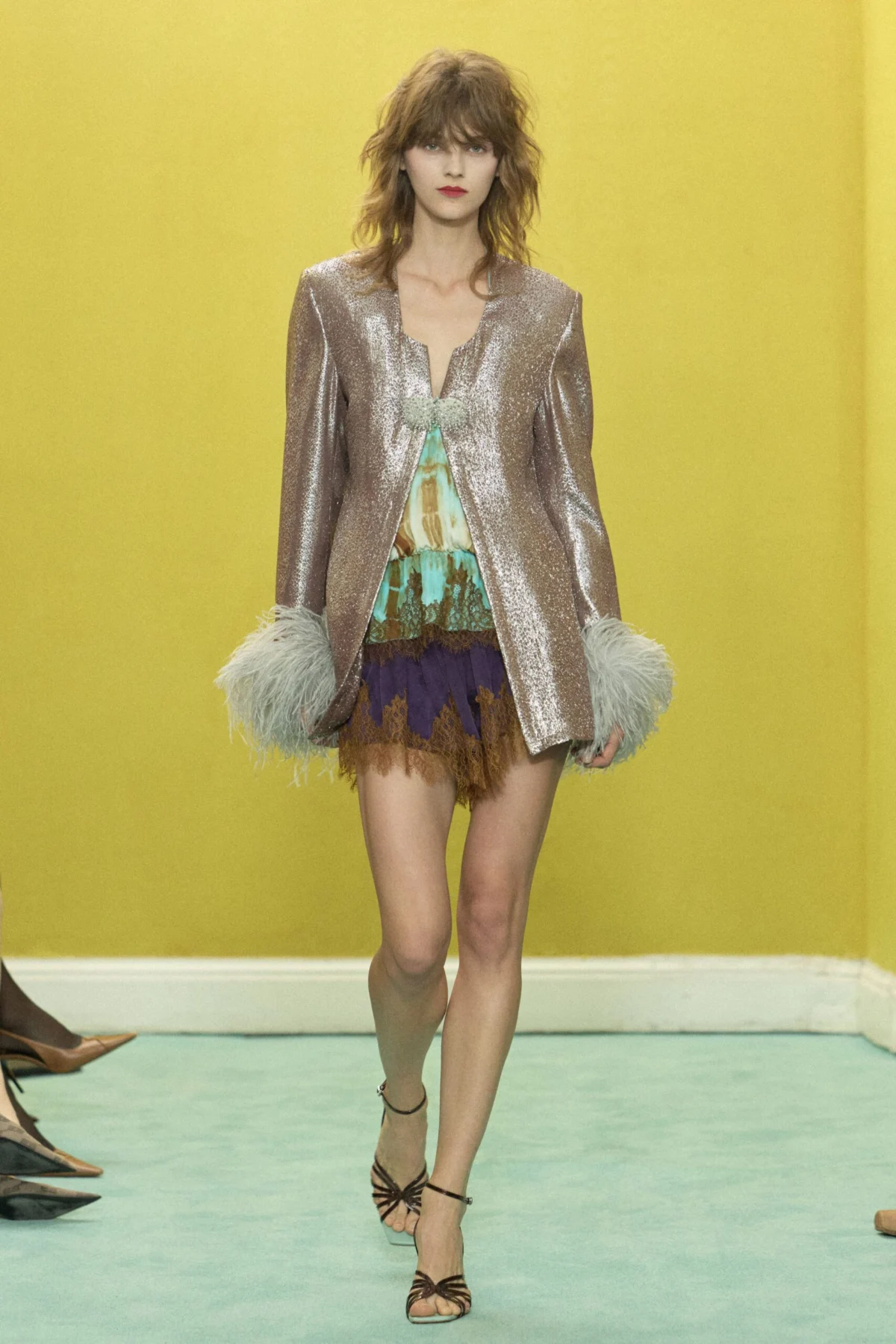
In a significant cultural and sartorial event, designer Jacques Wei presented his latest collection, "Oriental Forest," within the hallowed, historically resonant walls of a 1928 villa designed by László Hudec, the eminent Hungarian-Slovak architect whose visionary work shaped much of modern Shanghai’s distinctive skyline. The neoclassical masterpiece, understood to be one of Hudec’s final contributions to the city’s architectural tapestry before his departure, had long stood in a state of romantic disuse, its faded grandeur a poignant testament to bygone eras. Wei, with a keen eye for both history and future potential, recognized in this abandoned edifice not merely a backdrop, but an intrinsic character for his latest artistic endeavor, demonstrating a profound belief that delving into the past can, paradoxically, illuminate the path forward. This immersive presentation transcended a conventional runway show, evolving into an experiential journey that fused fashion, architecture, art, and heritage.
The Architectural Canvas: László Hudec’s Enduring Legacy in Shanghai
The chosen venue, a magnificent 1928 neoclassical villa, stands as a prime example of László Hudec’s architectural prowess and his profound impact on Shanghai’s urban landscape during the city’s "Paris of the East" golden age. Born in Banská Bystrica, Austro-Hungary (now Slovakia) in 1893, Hudec arrived in Shanghai in 1918, initially as a prisoner of war during World War I, but quickly established himself as one of the city’s most prolific and influential architects. Over two decades, he designed more than 60 buildings, ranging from grand public edifices to private residences, churches, and hospitals, leaving an indelible mark on Shanghai’s architectural identity. His diverse portfolio showcased a remarkable adaptability, moving effortlessly between Beaux-Arts, Art Deco, and neoclassical styles, often incorporating modernist elements.
Among his most celebrated works are the iconic Grand Theatre (1933), the Park Hotel (1934) – which remained the tallest building in Asia for decades – the Shanghai Christian Community Church (1925), and the Green House (1938). The 1928 villa, while perhaps less publicly renowned than some of his larger projects, embodies Hudec’s commitment to elegant proportions, classical symmetry, and meticulous detail. Its neoclassical design, characterized by imposing columns, balanced facades, and a sense of timeless dignity, was typical of the luxurious residences commissioned by Shanghai’s elite during that period. For years, the villa had been largely dormant, its once vibrant interiors muted by time, offering a canvas ripe for reinterpretation. Wei’s decision to revitalize this specific property for his presentation underscored a broader trend in Shanghai and other historic cities: the creative repurposing of heritage buildings, breathing new life into structures that narrate the city’s complex past. This strategic choice not only provided a visually stunning environment but also infused the fashion narrative with a palpable sense of history and gravitas, connecting contemporary design with a rich cultural lineage.
Jacques Wei’s Design Evolution: From Chaoshan Roots to "Sinic Fauvism"
Jacques Wei, a designer known for his introspective approach to fashion, has consistently explored the intricate relationship between personal identity, cultural heritage, and modern expression. His previous collections have often delved into themes of introspection and the search for a distinctive design voice. The "Oriental Forest" collection, however, marks a confident and decisive pivot, signaling a mature synthesis of his artistic explorations. This collection is deeply rooted in the ancient crafts and rich cultural tapestry of Chaoshan, a distinctive region in Guangdong province, China, renowned for its intricate embroidery, ceramics, woodcarving, and opera. Wei meticulously integrated symbols and motifs drawn from these age-old traditions, not merely as superficial adornments, but as structural and conceptual pillars of his designs. For instance, the elaborate patterns found in Chaoshan embroidery, often depicting auspicious flora, fauna, and mythical creatures, were deconstructed and recontextualized into contemporary silhouettes, sometimes through intricate jacquards, other times as subtle embossed textures, or even as abstract prints that hinted at their traditional origins without being overtly literal.
Wei himself characterized the collection as an "Oriental forest," a metaphor that evoked both natural exuberance and a sense of controlled wildness. This "forest" was then filtered through what he termed "Sinic Fauvism." To understand this, one must first recall Fauvism, an early 20th-century art movement primarily led by Henri Matisse and André Derain, characterized by its radical use of vibrant, often non-naturalistic colors and bold brushwork, prioritizing expressive intensity over realistic representation. Wei’s "Sinic Fauvism" reinterprets this Western avant-garde concept through a distinctly Chinese lens. It’s not just about bright colors; it’s about employing a heightened, almost visceral color palette – saturated emeralds, fiery magentas, deep indigos, and electric yellows – in a way that feels both exuberant and deeply connected to traditional Chinese aesthetics, which often employ symbolic and vivid hues. The foliage in his designs grew exuberantly, depicted through rich jacquards and intricate appliques; the colors ran riot in bold, clashing combinations that were nonetheless harmonious; and traditional brocades, often associated with formal, rigid garments, were expertly played off against sharp, modern tailoring. This spirited exercise in contrasts – ancient and modern, rigid and fluid, muted and vibrant – defined the collection’s core identity, speaking to a contemporary woman who embraces complexity and contradiction.
An Immersive Experience: The Villa Transformed into an Inner World
The presentation was more than just a display of garments; it was an immersive, multi-sensory experience meticulously curated to transport attendees into the "Oriental forest" and, more profoundly, into the "woman’s inner life" that Wei envisioned. Collaborating with artist Tang Haiqing, Wei transformed the Hudec villa’s various rooms into distinct narrative spaces, each representing a different facet of a woman’s emotional and psychological landscape. Tang Haiqing, known for her evocative and often dreamlike visual narratives, utilized a combination of large-scale paintings, bespoke installations, and vivid color blocking to set these scenes. For example, one room might have been drenched in deep blues and greens, adorned with Tang’s abstract botanical paintings, creating a sense of tranquil introspection, while another exploded with fiery reds and oranges, perhaps representing passion or rebellion.
This artistic synergy blurred the lines between fashion show, art exhibition, and theatrical performance. It was part historic house, with the villa’s original architectural details peeking through the modern interventions; part imaginary boudoir, intimate and alluring; and part deluxe botanical fantasy, where lush, exaggerated flora seemed to spill from every corner. The juxtaposition of the villa’s faded grandeur with the vibrant, almost hallucinatory aesthetic of the "Oriental forest" was particularly striking. Even the seemingly mundane act of gardening was elevated to an art form, with models navigating the verdant, fantastical spaces in sky-high stilettos, underscoring the collection’s blend of practicality and aspirational glamour. This experiential approach aligns with a growing trend in the luxury fashion industry, where brands are increasingly moving beyond traditional runway formats to create memorable, shareable moments that resonate deeply with audiences, particularly the digitally native generation.
The Collection’s Details: A Full Arsenal of Glamour and Seduction
The garments themselves were a testament to Wei’s evolving mastery of design, presenting a "full arsenal of glamour and seduction" that was refreshingly devoid of the heaviness often associated with elaborate formalwear. This collection aimed to empower, not constrain. The silhouettes were designed to be sexy yet easy, embodying a fluid sensuality. Slender evening slip dresses, crafted from luxurious silks and satins, were lavishly fringed with feathers, creating an ethereal movement with every step. Jackets featured undulating hems that mimicked natural forms and were adorned with exquisitely bejeweled buttons, adding a touch of opulent sparkle. Vinyl miniskirts, a bold contemporary choice, were softened and rendered sophisticated with delicate lace edging, demonstrating Wei’s ability to juxtapose unexpected materials.
The overall aesthetic was characterized by an artsy eccentricity that ensured the "Wei woman" – confident, alluring, and self-possessed – would never descend into a caricature of herself. There was a sense of playful subversion, a rejection of conventional notions of "good taste" in favor of something more authentic and expressive. Fabrics ranged from the aforementioned traditional brocades and luxurious silks to more modern materials like vinyl and engineered knits, all chosen for their tactile qualities and ability to contribute to the overall narrative. The color palette, as dictated by "Sinic Fauvism," was a riot of rich, saturated hues – jade greens, imperial purples, vermillion reds, and sapphire blues – often combined in unexpected but harmonious ways. Accessories, though not explicitly detailed, would likely have complemented the collection’s maximalist yet refined aesthetic, perhaps featuring embellished footwear and statement jewelry that echoed the botanical and Chaoshan motifs.
The Wei Woman: Ownership and Theatricality
A recurring theme articulated by Wei is his desire for his woman to feel as though she "owns the place." In the context of the Hudec villa presentation, this fantasy seemed not only reasonable but entirely embodied by the models who moved through the spaces with an air of undeniable command. This sentiment speaks to a broader shift in contemporary femininity, where self-possession and agency are paramount. The Wei woman is not merely adorned; she inhabits her clothes and her environment with a profound sense of self. The villa’s faded grandeur, rather than diminishing the collection, actually enlivened the designer’s appetite for color, ornament, and life, providing a rich counterpoint to the vibrant newness of the fashion.
This collection marks a pivotal moment in Wei’s career trajectory. Having spent previous seasons meticulously searching for the clearest expression of his design identity, he appears to have found a more confident and assured groove. This newfound conviction allowed him to seamlessly weave his profound Chinese heritage into today’s prevailing taste for theatrical dressing – a trend that emphasizes storytelling, spectacle, and a heightened sense of drama in personal style. This is not theatricality for its own sake, but a deliberate choice to express identity and emotion through clothing, a form of sartorial self-declaration.
Broader Implications: Chinese Fashion on the Global Stage
Jacques Wei’s "Oriental Forest" presentation at the Hudec villa serves as a microcosm of larger trends within the global fashion industry, particularly the ascendance of Chinese designers and the increasing fusion of heritage and modernity. In recent years, a new wave of Chinese designers has garnered international acclaim, challenging preconceived notions and carving out unique spaces in the luxury market. These designers, like Wei, often draw deeply from their cultural roots while simultaneously engaging with global aesthetic sensibilities and contemporary trends. This "heritage chic" movement, as it’s sometimes called, is particularly potent in a market like China, where consumers are increasingly sophisticated and seek designs that resonate with their cultural identity while offering international appeal.
The decision to utilize a historic Shanghai villa not only elevated the presentation but also highlighted the growing appreciation for architectural preservation and adaptive reuse in China’s rapidly developing cities. It underscored the idea that history can be a powerful source of inspiration and a vital component of contemporary cultural narratives. For Wei’s brand, this collection solidifies his position as a designer capable of crafting compelling narratives through fashion, blending traditional craftsmanship with avant-garde aesthetics. It also positions him as a significant voice in the ongoing dialogue about what constitutes "modern Chinese luxury" – a concept that is fluid, dynamic, and deeply rooted in a rich historical context. The successful execution of such an ambitious, multi-faceted event speaks to the burgeoning maturity of the Chinese fashion industry, its growing capacity for innovative experiential marketing, and its readiness to contribute unique perspectives to the global fashion discourse. This collection is not merely about clothing; it is about identity, history, and the vibrant future of design.
