
 By admin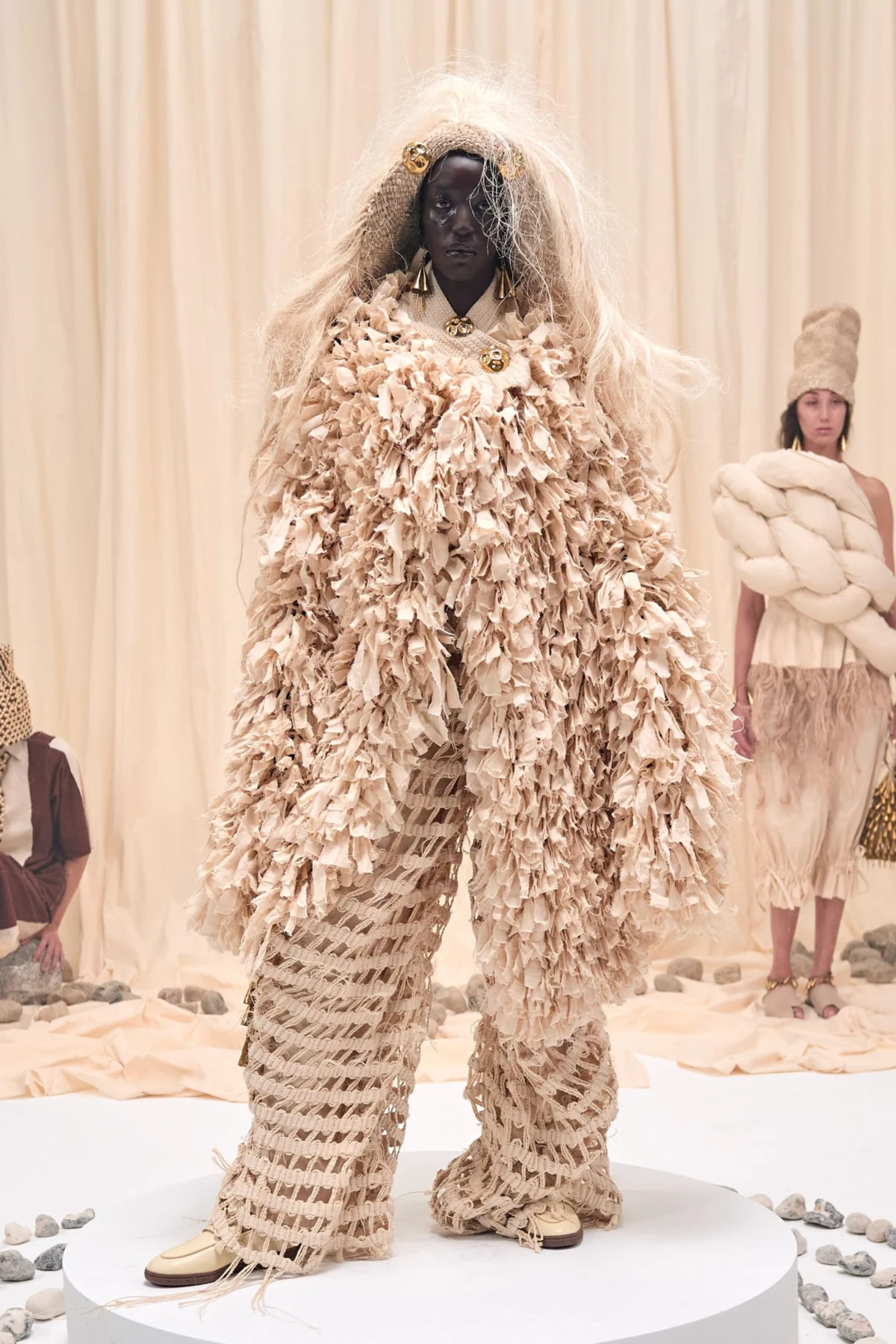
Copenhagen Fashion Week, a global vanguard for sustainable fashion, recently hosted a profound showcase by IAMISIGO, the visionary brand founded by Bubu Ogisi. The latest collection, presented in a hazy industrial setting, was a masterful exploration of memory, heritage, and the future of responsible design, drawing deeply from 19th-century Luba ‘lukasa’ memory boards and the ornate headdresses of Asante ‘nseneefo’ royal heralds. Ogisi’s work not only pushes aesthetic boundaries but also redefines the very essence of sustainability, expanding its purview beyond environmental metrics to encompass cultural preservation, ethical craftsmanship, and innovative material science rooted in indigenous African traditions. This presentation marked a significant moment for both the brand, fresh off its Zalando Visionary Award win, and Copenhagen Fashion Week’s commitment to fostering a truly holistic and diverse understanding of sustainable fashion.
Cultural Tapestry: Weaving Ancient Wisdom into Modern Design
At the heart of IAMISIGO’s latest offering lies a meticulous research into ancient African mnemonic devices and symbols of knowledge. Bubu Ogisi’s primary inspirations—the Luba ‘lukasa’ memory boards and the Asante ‘nseneefo’ headdresses—serve as powerful metaphors for the collection’s overarching theme: the enduring power of memory and its role in shaping identity and knowledge.
The ‘lukasa’, or "memory board," is an extraordinary artifact developed by the Luba people of the Democratic Republic of Congo in the 19th century. These carved wooden boards, often studded with beads, shells, and metal tacks, served as sophisticated mnemonic devices used by the Mbudye society, a council of oral historians and record keepers. Each configuration of beads and carvings represented complex historical narratives, genealogies, myths, and ritual knowledge. Far from being mere decorative objects, lukasa boards were conceptual maps that allowed trained Mbudye experts to recount vast amounts of information, guiding their narratives through tactile and visual cues. Their intricate patterns and symbolic arrangements acted as a library of collective memory, ensuring the transmission of vital cultural and historical data across generations in a society that primarily relied on oral traditions. The preservation of these boards, many of which are now held in museums worldwide, speaks to their profound importance in safeguarding the Luba identity.
Equally compelling are the headdresses worn by the ‘nseneefo’, the royal heralds of the Asante Kingdom, located in present-day Ghana. These heralds played a crucial role in the Asante court, acting as intermediaries between the Asantehene (the king) and his people, relaying messages, proclamations, and diplomatic communications. Their regalia was designed to reflect their esteemed status and the authority of the king they represented. The headdresses, often crafted from the striking black and white hide of the colobus monkey, were further embellished with beaten gold repoussé plaques and intricate silver chains. Gold, revered in Asante culture as a symbol of royalty, spiritual purity, and wealth, was meticulously worked into detailed patterns, reflecting the kingdom’s rich artistic heritage and its vast resources. These headdresses were not just ceremonial attire; they were potent symbols of communication, power, and the living history embodied by the heralds themselves.
Ogisi articulated the profound connection she saw between these two distinct but related forms of knowledge preservation: "The first is an object that holds knowledge. The second is a human who carries it." This statement encapsulates her design philosophy, where garments transcend mere apparel to become vessels—both tangible and metaphorical—for history, culture, and collective memory. By drawing on these ancient systems, IAMISIGO imbues its contemporary fashion with a deep sense of purpose and a narrative richness that challenges the ephemeral nature often associated with modern trends.
The Collection Unveiled: A Visual Chronicle of Memory
The presentation in a "hazy industrial space" in Copenhagen set a contemplative, almost ethereal mood, inviting attendees to step into a realm where the past subtly informs the present. This environment, stark yet atmospheric, provided a perfect canvas for IAMISIGO’s collection, allowing the intricate details and powerful silhouettes to command attention.
The collection’s aesthetic was immediately striking, characterized by its "high hats and exaggerated shapes" that deliberately alluded to African royalty. These forms were not merely stylistic choices but symbolic references to the spiritual authority and close connection to the metaphysical realm often attributed to traditional African monarchs and leaders. The elevated headwear, in particular, conveyed a sense of dignity, wisdom, and a lineage extending beyond the earthly, suggesting a dialogue with ancestral spirits and cosmic forces. The exaggerated silhouettes, voluminous and sculptural, created a powerful presence on the runway, evoking the grandeur and ceremonial weight of traditional African attire while reinterpreting it for a modern context.
A central theme was the idea of the environment as a repository of memory, beautifully translated through "heavily embroidered trousers." The color palette for these pieces was deliberately chosen to mirror natural landscapes: the lush greens of mountain ranges, the warm ochres and tans of sandy dunes, and the serene blues of water bodies. These topographical elements were not just inspirations for color; their patterns and textures were integrated into the embroidery, creating tactile maps that visually represented the Earth’s long history and the memories it holds. The intricate stitching became a narrative device, each thread a testament to the enduring imprints left by natural forces and human interaction with the land.
Perhaps the most compelling element, and a signature of IAMISIGO, was the integration of "elongated ties made from the brand’s signature beaded textile," adorned with striking "3D snakes." These serpentine motifs are deeply significant within Ogisi’s lexicon. As she explained, "Snakes are one of the oldest animals. They have seen what the earth has seen." This perspective elevates the snake from a creature of fear to a living chronicle, a witness to millennia of planetary history. In many African mythologies, the snake is indeed revered, often symbolizing rebirth, transformation, wisdom, healing, and the cyclical nature of life. The patterns on a snake’s skin are often seen as unique identifiers, much like fingerprints or, as Ogisi beautifully put it, "function like memory boards." The 3D rendering of these snakes on the beaded ties added a visceral, almost ancient, energy to the garments, creating a powerful visual link between the wearer and the deep, primordial wisdom the snake represents. This meticulous incorporation of symbolism underscores IAMISIGO’s commitment to design that is not only visually arresting but also intellectually and culturally resonant.
Copenhagen’s Sustainability Mandate and IAMISIGO’s Expansive Vision
Copenhagen Fashion Week (CPHFW) has solidified its reputation as a global leader in sustainable fashion, notably through its ambitious 2020-2022 Sustainability Action Plan, which includes a comprehensive set of 18 minimum standards that brands must meet to participate. These standards cover critical areas such as supply chain traceability, material choices, working conditions, and waste management, aiming to accelerate the industry’s transition towards a more responsible future. By mandating these standards, CPHFW has set a clear benchmark, fostering a collective responsibility among designers and brands.
Bubu Ogisi’s IAMISIGO, having already made a significant impact by winning the prestigious Zalando Visionary Award at CPHFW last summer, is now instrumental in expanding this established vision of sustainability. For Ogisi, sustainability transcends the conventional focus on recycled materials or carbon footprints, though these are certainly part of her framework. Instead, IAMISIGO’s approach is deeply rooted in "preserving indigenous African traditions, bringing heritage crafts to contemporary consumers, and exploring innovative natural materials." This multi-faceted definition champions a form of sustainability that is inherently cultural and socio-economic.
Ogisi’s work highlights that true sustainability must be contextual. In many African contexts, traditional practices are inherently sustainable, passed down through generations with an intrinsic understanding of ecological balance and resourcefulness. By centering these practices, IAMISIGO advocates for a global fashion discourse that values and integrates diverse knowledge systems. This includes not only the environmental impact of materials but also the social impact on artisan communities, the economic viability of traditional crafts, and the cultural continuity they represent. For fashion critics and industry observers, IAMISIGO’s presence at CPHFW serves as a potent reminder that sustainability is not a monolithic concept but a dynamic, culturally responsive imperative that requires varied approaches and solutions from around the globe.
Innovating with Indigenous Materials and Craftsmanship
IAMISIGO’s commitment to expanding the definition of sustainable fashion is vividly demonstrated through its innovative material choices and its collaborative approach with artisans. The brand actively seeks out and develops natural, locally sourced materials, often involving complex and time-consuming processes that underscore the value of handcrafted excellence.
One notable endeavor involves the harvesting of Ugandan bark cloth, a material with deep historical and cultural significance in East Africa. Bark cloth, specifically from the Mutuba fig tree (Ficus natalensis), has been produced for centuries and holds UNESCO Intangible Cultural Heritage status, recognized for its unique traditional manufacturing process. The bark is carefully stripped from the tree, then repeatedly beaten with specialized wooden mallets until it expands into a soft, supple fabric. This process, traditionally done by hand, is labor-intensive but results in a durable, breathable, and entirely biodegradable textile. IAMISIGO began harvesting Ugandan bark cloth in November, engaging in extensive experimentation, particularly with natural dyeing techniques. Ogisi and her team have been exploring how long the bark cloth should be left underground to achieve "the perfect shade of clay dye." This unique "underground" dyeing method likely refers to a process of burying the cloth with natural mordants and dyes, allowing the earth’s natural properties and microorganisms to facilitate a deep, earthy coloration. This method is not only environmentally benign but also connects the textile literally and symbolically to the land from which it originates, imbuing it with a unique character that industrial dyes cannot replicate.
Beyond bark cloth, IAMISIGO is at the forefront of exploring other innovative natural fibers, notably banana and pineapple fibers. Banana fiber, extracted from the pseudo-stems of banana plants after fruit harvesting, is known for its strength, durability, and natural sheen. Pineapple leaf fiber (Piña), derived from the leaves of the pineapple plant, is similarly robust and offers a delicate, linen-like texture. Both are byproducts of existing agricultural waste, making them exceptionally sustainable choices that divert waste from landfills and offer new revenue streams for farming communities. However, working with these relatively new textile fibers presents significant challenges, particularly for artisans accustomed to more traditional materials. Ogisi acknowledged that "the artisans it works with needed time to wrap their heads around working with banana and pineapple fibers." This highlights the extensive training, adaptation, and collaborative spirit required to integrate such innovative materials into established craft practices. It speaks to IAMISIGO’s commitment to patience, education, and mutual growth, ensuring that artisans are not just labor providers but active participants in the creative and sustainable journey. This dedication to material innovation and artisan empowerment is a testament to IAMISIGO’s holistic vision of sustainability, where environmental responsibility, cultural heritage, and socio-economic development are inextricably linked.
Bubu Ogisi and IAMISIGO’s Journey to Global Recognition
Bubu Ogisi, the creative force behind IAMISIGO, has rapidly emerged as one of Africa’s most compelling and influential designers. Her brand, established with a clear vision to bridge ancient African traditions with contemporary aesthetics and sustainable practices, has garnered international acclaim for its distinctive approach. Ogisi’s design philosophy is deeply rooted in storytelling, cultural research, and a commitment to preserving and reinterpreting indigenous African artistry for a global audience. Her work consistently challenges conventional notions of fashion, pushing boundaries through her use of unconventional materials, sculptural silhouettes, and profound conceptual narratives.
IAMISIGO’s trajectory saw a significant acceleration last summer when it first showcased at Copenhagen Fashion Week and subsequently won the prestigious Zalando Visionary Award. This award, presented by one of Europe’s leading online fashion platforms, recognizes designers who demonstrate outstanding creativity, innovation, and a strong commitment to sustainability. Winning the Zalando Visionary Award provided IAMISIGO with not only significant financial support but also unparalleled mentorship, marketing exposure, and a direct pathway to reaching a broader European consumer base. This accolade underscored the fashion industry’s growing recognition of African talent and the increasing demand for brands that offer both aesthetic innovation and a robust ethical framework.
The award amplified IAMISIGO’s visibility on the international stage, solidifying its position as a brand to watch in the sustainable fashion landscape. It validated Ogisi’s unique approach, proving that her commitment to cultural preservation and material innovation resonates deeply with a global audience seeking authenticity and purpose in their fashion choices. Her return to Copenhagen Fashion Week this season was therefore met with heightened anticipation, as the industry eagerly awaited her next chapter in weaving ancient narratives with modern sustainability. Ogisi’s journey with IAMISIGO serves as an inspiring example of how a designer can leverage cultural heritage and ethical practices to forge a distinctive and impactful presence in the competitive global fashion arena.
Broader Implications: Redefining Luxury and Sustainability
IAMISIGO’s compelling presence at Copenhagen Fashion Week carries significant implications for the broader fashion industry, particularly in redefining luxury and sustainability. The brand fundamentally challenges the Eurocentric paradigms that have long dominated the luxury market, demonstrating that true opulence lies not just in exclusivity or price, but in the depth of cultural narrative, the integrity of craftsmanship, and the ethical sourcing of materials. IAMISIGO’s garments, rich with historical symbolism and crafted through labor-intensive, often indigenous techniques, offer an alternative vision of luxury—one that is rooted in heritage, conscious consumption, and a profound respect for both people and planet. This approach encourages a shift in consumer perception, valuing the story and impact behind a garment as much as its aesthetic appeal.
Furthermore, IAMISIGO’s work solidifies the potential for African designers to lead in sustainable innovation and cultural storytelling. For too long, African fashion has been stereotyped or marginalized within the global industry. Brands like IAMISIGO are dismantling these preconceptions, showcasing the continent’s vast wealth of traditional knowledge, innovative spirit, and inherent sustainability practices. By bringing bark cloth, banana fibers, and ancient mnemonic systems to the forefront of a major international fashion week, Ogisi not only celebrates African creativity but also positions it as a vital source of solutions for the global industry’s sustainability crisis. This empowers a new generation of African designers to leverage their unique cultural contexts as a strength, fostering a more diverse and equitable global fashion ecosystem.
The impact extends to Copenhagen Fashion Week itself, further cementing its identity as a hub for responsible and progressive fashion. By embracing brands like IAMISIGO, CPHFW reinforces its commitment to a broad, inclusive understanding of sustainability that goes beyond Western-centric environmental metrics. It signals to the global industry that true leadership in sustainability requires championing diverse perspectives and recognizing the value of cultural preservation as an integral component of ethical practice. This progressive stance enhances CPHFW’s reputation and sets a precedent for other fashion weeks to follow, encouraging a more nuanced and culturally sensitive approach to sustainability discussions worldwide.
Finally, IAMISIGO’s work contributes significantly to the ongoing global dialogue around cultural appropriation versus appreciation. By engaging directly with source communities, empowering artisans, and meticulously researching the origins and meanings of its inspirations, Ogisi exemplifies how designers can respectfully draw from diverse cultures. Her approach is one of deep reverence and collaboration, ensuring that the narratives and crafts are celebrated and sustained, rather than merely extracted or mimicked. This model provides a blueprint for how fashion can become a vehicle for genuine cultural exchange and economic empowerment, fostering a global appreciation for heritage while ensuring its integrity and continuity.
In conclusion, IAMISIGO’s latest collection at Copenhagen Fashion Week is more than just a presentation of new garments; it is a powerful statement about the interconnectedness of memory, culture, and sustainability. Bubu Ogisi, through her unwavering dedication to preserving indigenous African traditions and innovating with natural materials, is not only enriching the global fashion landscape but also charting a course for a more meaningful, responsible, and culturally resonant future for the industry. Her vision reminds us that the past holds invaluable lessons for navigating the future, and that true innovation often lies in looking back to move forward with purpose and integrity.
