
 By Nila Kartika Wati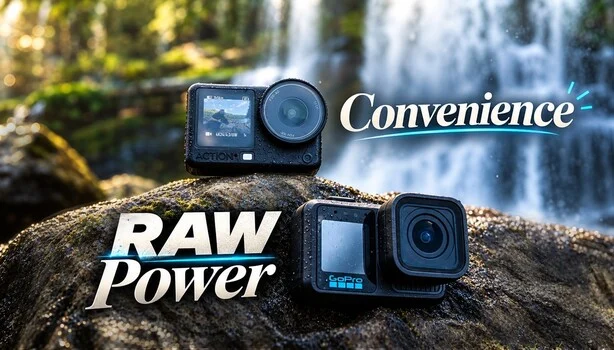
The competitive landscape of action cameras has long been defined by a relentless pursuit of higher specifications – larger sensors, greater resolutions, and faster frame rates. However, a recent in-depth comparison by videographer Connor McCaskill, pitting the high-specification GoPro Mission 1 Pro against the DJI Osmo Action 6, reveals a compelling narrative where practical utility and price often eclipse raw technical prowess. This detailed examination, heavily relying on side-by-side footage rather than theoretical talking points, underscores a critical shift in what truly defines a superior action camera for a diverse user base.
The Landscape of Action Cameras: A Historical Perspective
The action camera market, largely pioneered and dominated by GoPro for over a decade, has witnessed a significant evolution in both technology and competition. Initially, GoPro’s innovative approach democratized extreme sports videography, making rugged, compact cameras with wide-angle lenses accessible to enthusiasts and professionals alike. The early years were marked by incremental improvements in resolution, frame rates, and ruggedness, establishing GoPro as the undisputed leader.
However, the late 2010s saw the emergence of formidable challengers, most notably DJI, a company renowned for its drone technology. DJI’s entry into the action camera segment with its Osmo Action series brought fresh competition, emphasizing features like front-facing screens and robust stabilization from the outset. This increased rivalry has spurred innovation across the board, pushing manufacturers to not only enhance core imaging capabilities but also to consider user experience, accessory ecosystems, and overall value propositions.
The market has matured beyond simply chasing megapixels. Consumers now demand versatility, ease of use, and features tailored to specific use cases, whether it’s vlogging, documenting outdoor adventures, or capturing intricate close-up work. This evolving demand has led to a re-evaluation of what constitutes a "pro" feature versus a "practical" feature, a tension vividly illustrated in the matchup between the GoPro Mission 1 Pro and the DJI Osmo Action 6.
Technical Showdown: Core Specifications and Their Implications
At a glance, the GoPro Mission 1 Pro presents an impressive array of specifications designed to appeal to the most demanding videographers. It boasts a substantial 1-inch, 50-megapixel sensor, capable of recording 8K footage in a 4:3 open gate aspect ratio and achieving a high bit rate of 240 Mb/s. In contrast, the DJI Osmo Action 6 features a 1.1-inch (as per the source material, though more common action camera sensor sizes are typically 1/1.3-inch or 1/1.7-inch), 38-megapixel sensor with a maximum bit rate of 120 Mb/s. While the GoPro’s sensor size and resolution technically position it as the superior performer on paper, the practical implications of these numbers warrant a deeper dive.
Sensor and Resolution: More Than Just Numbers
The 1-inch sensor in the GoPro Mission 1 Pro is a significant technical advantage in the action camera segment. A larger sensor generally translates to better light-gathering capabilities, resulting in superior low-light performance, reduced noise, and a greater potential for dynamic range. The 50-megapixel count also offers substantial detail, particularly beneficial for cropping in post-production or for outputting to very large displays. Furthermore, its ability to capture 8K video in a 4:3 open gate format means it records a wider vertical field of view than standard 16:9, providing greater flexibility for reframing footage for different aspect ratios (e.g., social media vertical video) without significant loss of quality. This "open gate" approach is a professional feature, allowing creators maximum control over their final crop.
The DJI Osmo Action 6, with its 1.1-inch, 38-megapixel sensor, while seemingly smaller in terms of megapixels and potentially sensor surface area (depending on the actual diagonal measurement), still offers robust image quality. The lower megapixel count can sometimes lead to larger individual pixels, which can also contribute to better low-light performance and less noise, provided the sensor architecture is optimized. The crucial aspect here, often overlooked, is the lens design that accompanies these sensors. A larger sensor typically necessitates a larger, more complex lens assembly, which can introduce trade-offs in terms of overall camera size, weight, and, critically, minimum focus distance.
Bit Rate: The Backbone of Image Fidelity
The bit rate, measured in megabits per second (Mb/s), determines the amount of data recorded per second and is a direct indicator of video quality, especially important for fast-moving action and complex scenes. The GoPro Mission 1 Pro’s 240 Mb/s bit rate provides a significantly higher data stream compared to the DJI Osmo Action 6’s 120 Mb/s. This higher bit rate means less compression, preserving finer details, richer colors, and smoother gradients. For professional workflows, where extensive color grading and visual effects are applied, a higher bit rate offers greater latitude and prevents artifacts from appearing during post-production. While 120 Mb/s is perfectly adequate for many users, the 240 Mb/s of the GoPro offers a clear advantage for those seeking the utmost in image fidelity and flexibility in editing.
Dynamic Range and Color Profiles: Capturing the Full Spectrum
Dynamic range refers to the difference between the lightest and darkest areas of an image that a camera can capture. A higher dynamic range allows for more detail to be retained in both highlights and shadows, crucial for outdoor action shots where lighting conditions can be extreme. Both cameras offer log profiles – GP-Log 2 for GoPro and D-Log M for DJI – which are flattened color profiles designed to preserve maximum dynamic range for professional color grading. The GoPro’s GP-Log 2 claims approximately 14 stops of dynamic range, while DJI’s D-Log M offers around 13.5 stops. While technically the GoPro holds a slight edge, McCaskill notes that this difference is often negligible in real-world scenarios, making it difficult to declare a definitive winner in this category based solely on numbers. The ability of a skilled colorist to work with either profile often mitigates such minor numerical disparities.
Performance Under Scrutiny: Key Differentiators
Beyond the core specifications, action cameras are judged on their performance in specific, demanding scenarios. McCaskill’s comparison meticulously examined several key areas where the two cameras traded blows, revealing distinct advantages and disadvantages.
Slow Motion Prowess: True vs. Interpolated
One of the most significant performance distinctions lies in slow-motion capabilities. The GoPro Mission 1 Pro clearly pulls ahead, offering true internal 960 frames per second (fps) at 1080p, albeit in ten-second bursts, alongside impressive 4K recording at 120 and 240 fps. "True internal" slow motion means the camera is genuinely capturing 960 distinct frames per second, resulting in exceptionally smooth and detailed slow-motion playback. This capability is invaluable for dissecting fast-paced action, from extreme sports stunts to natural phenomena.
The DJI Osmo Action 6, while also claiming 960 fps, achieves this through interpolation from its 240 fps footage. Interpolation involves the camera’s processor generating intermediate frames between the actual captured frames to simulate a higher frame rate. While this can look acceptable in some contexts, it often results in a less fluid, less detailed, and sometimes artifact-ridden slow-motion effect compared to natively captured high frame rates. For critical slow-motion work, the GoPro’s hardware-backed capability provides a distinct and undeniable advantage.
Stabilization Excellence: The Modern Action Camera Standard
Effective image stabilization is perhaps the most critical feature in a modern action camera, transforming shaky, unwatchable footage into smooth, cinematic sequences. Both GoPro and DJI have invested heavily in this area, and McCaskill found both to be highly competent. GoPro’s HyperSmooth technology, complemented by Horizon Lock, consistently delivers stable footage, even in chaotic environments. Similarly, DJI’s HorizonSteady system performs admirably, keeping the horizon level and vibrations at bay. While both systems are highly effective, McCaskill noted that pushing stabilization to its absolute limits can result in a slight cropping of the frame, a common trade-off in electronic image stabilization (EIS) systems. For practical, everyday use, both cameras offer stabilization that meets professional standards.
Audio Fidelity: The Unseen Battleground
Audio quality is often an afterthought in action cameras, but for many creators, it’s as crucial as video. The GoPro Mission 1 Pro offers a significant technical advantage with 32-bit float audio recording. This professional-grade audio format provides an extremely wide dynamic range, virtually eliminating the risk of clipping (distortion from overly loud sounds) and allowing for extensive adjustment of audio levels in post-production without introducing noise. However, this feature comes with a practical caveat: to utilize external wired microphones for optimal audio, the GoPro requires its side door to be open, compromising its sealed, water-resistant design.
In contrast, the DJI Osmo Action 6 champions convenience with its integrated Bluetooth microphone ecosystem. This allows for seamless, wireless connection of external microphones, maintaining the camera’s sealed integrity and making it a true grab-and-go device. While DJI’s audio capabilities might not match the 32-bit float quality of the GoPro, its practical implementation for many users who prioritize waterproofing and quick setup could be a decisive factor.
Power and Storage: Endurance and Convenience
Battery life is a perpetual concern for action camera users. McCaskill’s extensive testing revealed that both cameras performed remarkably similarly, with their battery cells – GoPro’s 2,150 mAh and DJI’s 1,950 mAh – lasting within a mere percent of each other over a full day of diverse shooting. This near parity suggests that both manufacturers have optimized their power management systems effectively.
Where DJI gains a notable practical edge is in its inclusion of approximately 50 GB of internal storage. This feature allows the camera to record straight out of the box without the immediate need for a microSD card, offering immense convenience for spontaneous shooting and acting as a reliable backup. The GoPro, like many other action cameras, relies solely on external microSD cards, requiring users to purchase and manage these separately.
The Unsung Hero: Minimum Focus Distance – A Paradigm Shift
The most profound insight from McCaskill’s comparison, and arguably the detail that most effectively redefines the entire matchup, centers on minimum focus distance. This seemingly minor specification often goes unmentioned in headline features but proves to be critically important for a vast array of action camera users.
The GoPro Mission 1 Pro, a byproduct of its physically larger sensor and lens assembly, has a minimum focus distance of approximately 2 feet (around 60 centimeters). This means any subject closer than two feet will appear soft or out of focus. The DJI Osmo Action 6, conversely, can focus down to a mere 7.5 to 8 inches (around 19-20 centimeters).
This difference is not merely academic; it dictates whether a subject is sharp or a soft blur in typical action camera scenarios. Action cameras, by their very nature, are designed to be mounted close to the action: on a helmet, a chest strap, a bicycle handlebar, or a pole extending just inches from the subject. For a mechanic filming a brake job, a builder showcasing a bolt thread, or a cyclist with the camera on their bars capturing their hands and bike components, the ability to maintain sharp focus at arm’s length or nearer is paramount.
McCaskill’s off-road guest from the "Power Addicts" channel, who frequently builds custom Jeeps, emphasized that a short minimum focus distance is his single most important feature. He uses one camera for both wide trail footage and intricate close-up fabrication work. For such users, a camera that cannot focus effectively at close range, regardless of its larger sensor or 8K resolution, fundamentally fails to meet their primary need. This revelation challenges the conventional wisdom that bigger sensors are always better, highlighting that a larger sensor that cannot focus where you actually shoot buys you nothing but frustration. Prospective buyers are therefore advised to perform this critical self-assessment: measure the distance from the lens to your typical subjects, and let that practical number, rather than the megapixel count, guide your purchasing decision.
Price Point and Value Proposition
The price differential between the two cameras is substantial, with the GoPro Mission 1 Pro priced at approximately $700 and the DJI Osmo Action 6 at around $439. This $260 difference is not insignificant, representing a considerable investment for many consumers. The GoPro’s premium price tag reflects its technically superior specifications in areas like sensor size, 8K recording, true high frame rate slow motion, and 32-bit float audio. It positions itself as a tool for professional content creators who prioritize raw image quality and post-production flexibility, especially for scenarios where subjects are typically further away, such as drone footage or fixed rig setups.
The DJI Osmo Action 6, at its more accessible price point, offers a compelling value proposition by prioritizing practical features that cater to a broader user base. Its superior minimum focus distance, convenient internal storage, and integrated microphone ecosystem make it an incredibly versatile and user-friendly option for everyday action capture, vlogging, and close-up detail work. For many, the $260 saving, combined with these practical advantages, makes the DJI a more attractive and cost-effective choice. The question then shifts from "Is the GoPro better?" to "Is the GoPro $260 better for my specific needs?"
Broader Market Implications and Consumer Choice
This detailed comparison underscores a significant trend in the action camera market: the increasing importance of user-centric design and practical functionality over a pure numbers game. While high-end specifications continue to push the boundaries of what’s possible, manufacturers are increasingly challenged to balance these advancements with the real-world needs and budgets of their diverse customer base.
The competition between established players like GoPro and agile innovators like DJI ultimately benefits consumers. It drives both companies to innovate, refine their products, and offer more specialized solutions. This leads to a wider array of choices, allowing consumers to select a camera that precisely matches their unique shooting style, technical requirements, and financial constraints. The era of a single "best" action camera is giving way to a more nuanced understanding of "best for you."
Future trends in action camera design will likely continue this trajectory, exploring areas such as enhanced AI-driven stabilization and intelligent shooting modes, modular designs for greater adaptability, improved battery efficiencies, and even more seamless integration with smart device ecosystems. The focus will remain on making advanced capabilities more accessible and practical for everyday use.
Conclusion: Beyond the Spec Sheet – A Personalized Decision
In conclusion, the comprehensive analysis by Connor McCaskill reveals that while the GoPro Mission 1 Pro technically edges out the DJI Osmo Action 6 in several key specifications such as sensor size, 8K resolution, and true high-speed slow motion, these advantages are not universally applicable. For specialized applications like drone photography or mounted rigs where subjects remain at a distance, the GoPro’s higher bit rate and cleaner image quality make a strong case for its premium price.
However, for the vast majority of action camera users who engage in close-range filming – whether it’s documenting a hobby, creating instructional content, or capturing personal adventures from a POV perspective – the DJI Osmo Action 6’s superior minimum focus distance emerges as a decisive factor. Its practical advantages, including integrated storage and a convenient microphone ecosystem, combined with its significantly lower price point, present a compelling argument for its overall value.
Ultimately, the choice between the GoPro Mission 1 Pro and the DJI Osmo Action 6 is not about one camera being inherently "better" than the other. It is a personalized decision that hinges on individual use cases, priorities, and budget. Potential buyers are strongly encouraged to watch comparative footage, such as McCaskill’s downloadable clips, and critically evaluate their typical shooting scenarios. By focusing on how a camera’s features align with their practical needs, rather than being swayed solely by headline specifications, consumers can make an informed choice that delivers the best value and performance for their unique creative endeavors.
