
 By admin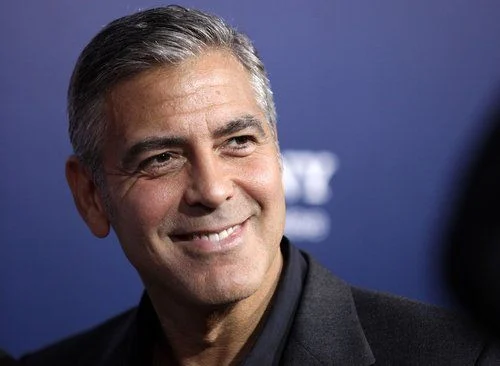
George Clooney, the acclaimed 65-year-old actor, filmmaker, and humanitarian, transformed the reception of one of cinema’s most distinguished accolades into a powerful advocacy for the enduring values of storytelling, free expression, and empathy. The 83rd Venice International Film Festival, a venerable institution in the global cinematic landscape, bestowed upon Clooney the prestigious Golden Lion for Lifetime Achievement during its opening ceremony on September 2, 2026. This honor recognized a multifaceted career spanning decades of indelible performances, directorial prowess, producing acumen, and dedicated humanitarian efforts.
Clooney’s acceptance speech masterfully blended his characteristic self-deprecating humor with profound emotional declarations, particularly towards his wife, Amal Clooney, and their twins, Ella and Alexander. Beyond these personal reflections, his address quickly broadened into a significant discourse on the responsibility of artists and journalists in an increasingly politically polarized world. He articulated a potent warning against the divisive tactics of fear-mongering and underscored the critical role that various creative professionals — journalists, filmmakers, writers, actors, and musicians — play in deconstructing simplistic narratives and fostering genuine human connection. His core assertion was that while storytelling might not directly resolve complex political or economic crises, its unique power lies in its capacity to cultivate empathy, allowing audiences to connect with and understand lives vastly different from their own.
The Golden Lion: A Mark of Cinematic Excellence
The Golden Lion for Lifetime Achievement stands as one of the Venice Film Festival’s most esteemed honors, a testament to an individual’s unparalleled contribution to the art of cinema. Established in 1932, the Venice Film Festival is the oldest film festival in the world, renowned for its rich history and its role as a launchpad for many of the industry’s most significant works and talents. The Golden Lion itself, first awarded in 1949, symbolizes artistic excellence and has been granted to an illustrious roster of cinematic giants throughout its history, including Orson Welles, Akira Kurosawa, Sophia Loren, Clint Eastwood, and Catherine Deneuve.
La Biennale di Venezia’s board of directors, acting upon the recommendation of the festival’s artistic director, Alberto Barbera, unanimously selected Clooney for this year’s lifetime achievement award. Barbera, a respected figure in international cinema, lauded Clooney’s consistent ability to captivate audiences and critics alike across his diverse roles as an actor, director, and producer. His recommendation highlighted Clooney’s commitment to projects that not only entertain but also provoke thought and engage with significant social and political themes.
Clooney, ever the showman, immediately approached the gravity of the award with his signature wit. He lightheartedly remarked that receiving a lifetime achievement award typically elicits two primary reactions: profound gratitude for the recognition and a nagging suspicion that the organizers might possess undisclosed, perhaps concerning, information about one’s health. This jest, delivered with his characteristic charm, perfectly encapsulated the self-effacing style that has become a hallmark of Clooney’s public persona throughout his extensive career. Despite the humor, the profound significance of the honor was undeniable, marking a pivotal moment in his distinguished trajectory.
A Career Defined by Depth and Diversity
George Clooney’s journey through Hollywood is a chronicle of strategic choices, artistic evolution, and unwavering commitment to quality. Born into a family steeped in entertainment, his early career saw him navigate numerous television roles before achieving widespread recognition as Dr. Doug Ross on the hit medical drama ER in 1994. His six-season tenure on the show catapulted him to international stardom, earning him two Emmy Award nominations and three Golden Globe nominations, transforming him from a promising actor into a household name.
The transition to film was swift and successful. His breakout movie role came in Quentin Tarantino and Robert Rodriguez’s From Dusk Till Dawn (1996), showcasing his ability to blend charm with intensity. However, it was his collaboration with director Steven Soderbergh on Out of Sight (1998) that cemented his status as a leading man with serious acting chops. This film marked his first appearance at the Venice Film Festival, establishing a relationship with the esteemed event that would span nearly three decades.
The early 2000s saw Clooney embrace both commercial blockbusters and critically acclaimed dramas. He reunited with Soderbergh for the highly successful Ocean’s Eleven (2001) and its sequels, which showcased his charismatic persona and impeccable comedic timing alongside an ensemble cast including Brad Pitt and Matt Damon. Simultaneously, he began to explore his passion for directing and producing. His directorial debut, Confessions of a Dangerous Mind (2002), was met with critical praise, signaling his ambition beyond acting.
His commitment to socially conscious filmmaking became increasingly evident. Good Night, and Good Luck (2005), which he directed, co-wrote, and starred in, was a powerful historical drama about journalist Edward R. Murrow’s confrontation with Senator Joseph McCarthy. The film premiered at Venice and garnered six Academy Award nominations, including Best Picture and Best Director for Clooney, solidifying his reputation as a filmmaker with a keen eye for relevant and impactful stories. This same year, he earned his first Academy Award for Best Supporting Actor for his role in Syriana, a complex geopolitical thriller, further underscoring his range.
Clooney continued to impress with diverse performances in films like Michael Clayton (2007), which earned him another Best Actor Oscar nomination, and the Coen Brothers’ Burn After Reading (2008). His work as a producer also flourished, notably with Argo (2012), which won the Academy Award for Best Picture, marking Clooney’s second Oscar, this time as a producer. He also delivered a career-defining performance in Alfonso Cuarón’s space epic Gravity (2013), which was a critical and commercial triumph, also premiering at Venice. His consistent output of quality work, both in front of and behind the camera, has earned him a total of eight Academy Award nominations and two wins, alongside numerous Golden Globes, BAFTAs, and Screen Actors Guild Awards, confirming his status as one of Hollywood’s most respected figures.
Venice: A Personal and Professional Nexus
Few major film festivals hold such a uniquely intertwined significance for George Clooney as the Venice International Film Festival. His professional relationship with the festival dates back to 1998 with the screening of Steven Soderbergh’s Out of Sight, a film that marked a turning point in his cinematic career. Over the subsequent decades, Venice has served as a recurring stage for many of his most significant projects, including the premieres of Good Night, and Good Luck, Michael Clayton, Burn After Reading, and the critically acclaimed space thriller Gravity. More recently, Noah Baumbach’s Jay Kelly, featuring Clooney and Laura Dern, also competed at Venice in 2025. This long-standing connection underscores not only the quality of his work but also his enduring appeal on the international festival circuit.
Beyond its professional relevance, the city of Venice itself holds a deeply personal resonance for Clooney. It was in this iconic, romantic city in 2014 that he married Amal Alamuddin, the distinguished international human rights lawyer. This momentous occasion transformed Venice from merely an important stop in his filmmaking journey into the setting for one of the most cherished and defining moments of his personal life. Prior to receiving the Golden Lion, Clooney affectionately described Venice as his favorite festival, articulating that the lifetime achievement recognition was a "tremendous honor" made even more special by its location. This unique blend of professional milestones and personal history makes Venice an exceptionally fitting backdrop for such a comprehensive celebration of his career.
A Powerful Call for Empathy and Free Expression
The tone of Clooney’s acceptance speech shifted perceptibly when he turned his focus to the crucial subject of free expression and the societal role of art. He issued a compelling caution against the dangers inherent when powerful individuals or entities actively encourage citizens to fear one another, a tactic that often preys on ignorance and difference. Clooney then specifically highlighted the indispensable contributions of journalists, filmmakers, writers, actors, and musicians, asserting that these artists and storytellers possess a unique ability to counteract fear and division. By crafting narratives that invite audiences to consider perspectives beyond their immediate experience, they challenge prejudice and foster understanding.
He warned that authentic stories, by their very nature, can become threatening to those who rely on fear to maintain control, precisely because stories encourage audiences to recognize the shared humanity in strangers. While his comments carried clear political undertones, the broader argument he presented centered on the fundamental role of culture and storytelling within democratic societies. Various reports from Venice further emphasized Clooney’s implicit criticism of authoritarian tendencies and his powerful advocacy for empathy as a cornerstone of artistic purpose.
Crucially, Clooney did not overstate the power of cinema, acknowledging its inherent limitations. He made it clear that movies alone cannot end wars, solve global economic disparities, or eradicate complex societal problems. Instead, he argued that cinema’s true strength and enduring relevance stem from a different, yet equally profound, capacity: its unparalleled ability to immerse audiences within another person’s experience, allowing them to walk in different shoes, if only for a few hours. This immersive quality, he contended, is where the transformative power of storytelling truly resides.
This philosophy has been a consistent thread throughout Clooney’s filmmaking career, particularly evident in his choices as a director and producer. He has frequently gravitated toward narratives that explore themes of journalism, political integrity, institutional power, and personal responsibility. Perhaps the most illustrative example of this commitment is his 2005 film Good Night, and Good Luck, which meticulously depicted journalist Edward R. Murrow’s courageous stand against Senator Joseph McCarthy during the Red Scare. The film’s critical success and its six Academy Award nominations underscored Clooney’s ability to translate his convictions into compelling cinematic art. His speech at Venice, therefore, was not merely a standalone declaration but a coherent articulation of the principles that have consistently guided his artistic endeavors.
Personal Reflections Amidst Public Acclaim
Amidst the weighty discussion of art’s societal role, Clooney interspersed his speech with heartfelt and personal reflections, reserving some of his most emotional comments for his family. He spoke with immense warmth and pride about Amal, the international human rights lawyer whom he married in Venice, conveying his deep love and admiration for her intellect, compassion, and strength. The couple are parents to twins, Ella and Alexander, and Clooney shared touching anecdotes about fatherhood.
He also injected his signature comedy into the family tribute, playfully joking that his children were "the only two people who thought he was good as Batman." This humorous reference to his role in the much-maligned 1997 film Batman & Robin is a running gag in his public appearances, showcasing his ability to laugh at himself and endear him further to audiences. This personal connection to Venice, not just as a professional venue but as the site of his wedding, undoubtedly imbued the lifetime achievement honor with an even deeper, more personal significance.
Tributes from Peers: Dern and Pitt
The ceremony was further enriched by the participation of longtime friends and esteemed colleagues, underscoring Clooney’s enduring relationships within the industry. Laura Dern, an Academy Award-winning actress and frequent collaborator, delivered the official laudatio and presented Clooney with the Golden Lion at Venice’s historic Sala Grande. Her involvement had been announced days prior, adding anticipation to the event. Dern praised Clooney’s remarkable career, highlighting not only his artistic achievements but also his profound character, his generosity, and his unwavering commitment to humanitarian causes. Their professional connection spans decades, predating their recent appearance in Noah Baumbach’s Jay Kelly (2025), and even stretching back to their early, less glamorous roles in the cult production Grizzly II: Revenge, a testament to their long-standing camaraderie.
Another Hollywood titan, Brad Pitt, though unable to attend in person, ensured his presence was felt through a prerecorded message. Dern read Pitt’s heartfelt and humorous tribute, which praised Clooney as an exceptional actor, a dedicated humanitarian, a notorious prankster, and a cherished friend. The message culminated in a playful jab, with Pitt describing Clooney as a "really bad dancer." This specific joke resonated particularly well with the audience, reflecting the iconic and often mischievous friendship that has played out on screen and in public between the two stars since their collaboration on Ocean’s Eleven (2001). Their shared filmography includes Ocean’s Twelve, Ocean’s Thirteen, Burn After Reading, and most recently, Wolfs, signaling a creative partnership that continues to thrive.
Looking Ahead: The Next Chapter for Clooney
Receiving a lifetime achievement award often suggests a career winding down, but for George Clooney, it appears to mark a new, more selective chapter rather than a conclusion. Far from resting on his laurels, Clooney remains actively engaged as both an actor and a producer. The announcement of Ocean’s 14, which is expected to reunite several original cast members including Brad Pitt, Matt Damon, and Don Cheadle, with production reportedly slated for October 2026, directly contradicts any notion of retirement. This timing lends a touch of irony to the lifetime achievement award; while Venice celebrates his past accomplishments, Clooney is clearly still very much focused on his future creative endeavors.
At the festival, Clooney provided insight into his evolving career priorities, indicating a potential shift towards more acting roles and a reduction in his directorial commitments. He openly discussed how fatherhood has profoundly impacted his approach to his professional schedule. Directing, he explained, typically demands extensive periods away from home for pre-production, filming, and post-production, a commitment he has suggested he is less willing to undertake at this stage of his life, prioritizing time with his young family. This strategic re-evaluation reflects a mature artist balancing his passion for cinema with his dedication to personal life.
The Enduring Relevance of Storytelling
For aspiring actors, filmmakers, and indeed, anyone interested in the power of narrative, the most salient aspect of Clooney’s speech was his eloquent argument for what storytelling can truly accomplish. He posited that an actor’s role extends far beyond merely delivering dialogue or providing entertainment. At its most profound, performance has the capacity to build bridges of understanding, enabling viewers to genuinely connect with characters whose backgrounds, beliefs, and experiences might be entirely alien to their own. This profound idea, he emphasized, is not exclusive to major Hollywood productions but is fundamental to every act of creation, from an initial audition to a grand cinematic spectacle.
Clooney’s message at Venice was a powerful reaffirmation that this process of making another person’s experience believable still matters immensely, particularly during periods of societal fragmentation. He reiterated that films, while not panaceas for the world’s most intractable problems, possess an undeniable influence on how people perceive and relate to one another. For an actor who has dedicated over four decades to the industry, culminating in one of cinema’s highest lifetime honors, this was a fitting and resonant articulation of why the work continues to hold such vital importance.
George Clooney Enters the Next Chapter of His Career
George Clooney’s acceptance of the Golden Lion for Lifetime Achievement at the 83rd Venice International Film Festival on September 2, 2026, was not a valedictory address but rather a thoughtful contemplation on the purpose and future of his craft. He remains a dynamic force in the entertainment industry, with new projects like Ocean’s 14 on the horizon and ongoing collaborations with leading filmmakers. His evolving approach to his career signifies a more deliberate selection of projects, prioritizing roles that align with his personal values and family commitments.
At Venice, Clooney adeptly used the platform to honor his loved ones while simultaneously delivering a compelling, broader defense of artistic freedom, the integrity of journalism, and the transformative power of storytelling. His concluding remarks resonated with themes of determination, love, and mutual respect, advocating for the enduring possibility of societal cohesion even amidst intense disagreement. On an evening designed to celebrate his past accomplishments, Clooney dedicated a significant portion of his speech to articulating why stories will continue to be indispensable in shaping the future.
FAQs
What Did George Clooney Say in His Venice Film Festival Speech?
George Clooney expressed profound love and pride for his wife, Amal, and their children, Ella and Alexander. He then dedicated a significant portion of his Golden Lion acceptance speech to a passionate defense of storytelling, free expression, and the importance of empathy, arguing that artists and journalists play a crucial role in challenging fear and division in society.
Why Did George Clooney Receive the Golden Lion?
Clooney received the Golden Lion for Lifetime Achievement in recognition of his extensive and impactful career as an actor, director, and producer. The award was presented during the opening ceremony of the 83rd Venice International Film Festival on September 2, 2026, acknowledging his significant contributions to cinema and his humanitarian work.
How Many Oscars Has George Clooney Won?
George Clooney has won two Academy Awards. He received Best Supporting Actor for his role in Syriana (2005) and later shared the Best Picture Oscar as a producer for Argo (2012). Throughout his illustrious career, he has garnered a total of eight Academy Award nominations across various categories.
