
 By admin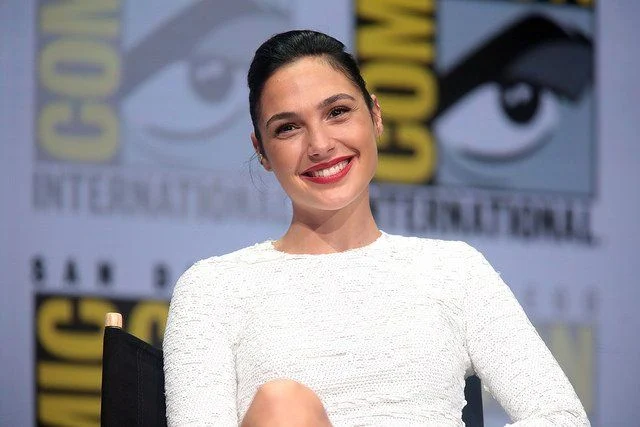
Hollywood powerhouse Gal Gadot, renowned globally for her iconic portrayal of Wonder Woman, recently offered a candid glimpse into the often-unseen struggles of even the most successful actors, revealing an arduous four-hour audition for George Miller’s critically acclaimed Mad Max: Fury Road. Speaking on the Happy Sad Confused podcast, Gadot detailed an intense London screen test where she was paired with fellow Marvel star Tom Hiddleston, a session that ultimately saw neither actor secure a role in the 2015 blockbuster. This revelation underscores the highly competitive and often unpredictable nature of the entertainment industry, even for those destined for international stardom.
The audition, which Gadot described as unusually intensive, took place in London on a cold winter day. She recalled arriving bundled in multiple layers of clothing, only to shed them progressively as the physical demands of the screen test escalated. By the end of the four-hour session, she found herself performing in just a tank top, a testament to the sheer stamina and commitment required by Miller’s vision. For many actors accustomed to brief casting calls or self-taped submissions, a four-hour in-person screen test is an anomaly, yet it highlights the meticulous and comprehensive approach often employed for major film productions, particularly those helmed by visionary directors like Miller. Such extended sessions are designed not just to assess an actor’s ability to deliver lines, but to evaluate their physical endurance, improvisational skills, on-screen chemistry with potential co-stars, and their capacity to respond to nuanced direction and repeated adjustments.
One of the most surprising elements of Gadot’s account was the identity of her audition partner: Tom Hiddleston, who would later achieve global recognition as Loki in the Marvel Cinematic Universe. The pairing of two future superhero franchise titans for a pivotal role in an entirely different universe offers a fascinating alternate history of modern cinema. While reporting has often linked Gadot’s audition to the role of Imperator Furiosa, the exact characters being tested during their joint session were not formally disclosed by the production at the time. Ultimately, the roles of Max Rockatansky and Imperator Furiosa went to Tom Hardy and Charlize Theron, respectively, performances that would become synonymous with the film’s groundbreaking success. This casting decision ultimately reshaped what audiences could have seen in one of the past decade’s most acclaimed action movies, illustrating the profound impact of casting choices on a film’s final identity.
George Miller’s Unwavering Vision for the Wasteland
The extensive and demanding audition process for Mad Max: Fury Road is deeply rooted in director George Miller’s long-standing and highly specific vision for the project. Miller had been developing the fourth installment of his post-apocalyptic saga for nearly two decades, facing numerous setbacks, including casting changes, budgetary issues, and logistical challenges. His unwavering commitment to the film meant that every aspect, particularly casting, was subject to an extraordinarily rigorous selection process. Miller sought not just talented actors, but individuals who could embody the raw, primal energy of the Mad Max universe and communicate complex emotions often without extensive dialogue, relying instead on physicality and visceral presence.
The resulting film, Mad Max: Fury Road, is a masterclass in visual storytelling and practical effects, renowned for its relentless action sequences and unique character designs. Charlize Theron’s portrayal of Imperator Furiosa, a formidable one-armed warrior, became an instant cinematic icon, lauded for its strength, vulnerability, and revolutionary spirit. Tom Hardy’s take on Max Rockatansky, a haunted, taciturn drifter, brought a distinct intensity to the character, following Mel Gibson’s original portrayal. Gadot herself acknowledged that Miller ultimately had a very specific picture in mind for the characters, a vision that simply diverged from what she and Hiddleston brought to the table. This distinction is crucial for actors to grasp: rejection often does not signify a lack of talent or a poor performance, but rather a misalignment with a director’s precise creative blueprint. In highly conceptual and auteur-driven projects like Fury Road, the search is for a unique and irreplaceable piece that fits perfectly into the director’s carefully constructed world.
A Critical and Commercial Juggernaut
When Mad Max: Fury Road finally premiered in 2015, it was met with near-universal critical acclaim, heralded as a masterpiece of the action genre and a landmark achievement in cinema. The film garnered a staggering 10 Academy Award nominations, ultimately winning six Oscars – more than any other film at that year’s ceremony. These awards included accolades for Film Editing, Costume Design, Production Design, Makeup and Hairstyling, Sound Editing, and Sound Mixing, all categories that underscore the film’s extraordinary craftsmanship and Miller’s meticulous attention to detail. Beyond the Oscars, Fury Road also collected numerous other prestigious awards, including four BAFTA Awards and nine Critics’ Choice Awards. It earned over $375 million worldwide on a production budget of approximately $150 million, cementing its status as both a critical darling and a commercial success.
Gadot’s story thus gains particular resonance in hindsight. She wasn’t merely auditioning for "another action film"; she was vying for a pivotal role in a movie that would etch its name into modern film history, redefining what was possible in the genre. Her near-miss with such a monumental project serves as a powerful reminder of the high stakes involved in major Hollywood casting and the fine line between being part of a phenomenon and moving on to other opportunities.
A Shared Experience: Kat Dennings and the Rigor of Miller’s Process
Gadot’s revelation is not an isolated incident concerning the intense audition process for Mad Max: Fury Road. Actress Kat Dennings, known for her roles in Thor and 2 Broke Girls, also recently disclosed her own grueling experience auditioning for the film. Dennings recounted spending approximately six hours opposite Tom Hardy, describing the session as physically and emotionally draining. She recalled being asked to perform unconventional exercises, including switching roles and communicating without relying on written dialogue, forcing her to improvise and react purely on instinct. Like Gadot and Hiddleston, Dennings ultimately did not get the part.
These two distinct accounts, from prominent actresses who are now household names, collectively paint a vivid picture of George Miller’s exhaustive and unconventional casting methodology. It was clear that Miller and his team were not simply looking for established stars or conventionally "good" performances. They were probing the depths of an actor’s resilience, adaptability, and ability to embody the unique, often non-verbal, essence required for the desolate and visceral world of Fury Road. The consistency of these stories highlights the extraordinary lengths to which Miller went to find the absolute perfect fit for his characters, irrespective of an actor’s prior fame or perceived suitability.
The Unpredictable Trajectory of Stardom: From Rejection to Icon Status
Missing out on Mad Max: Fury Road certainly did not derail Gal Gadot’s career. In fact, her professional trajectory took an even more momentous turn shortly thereafter. In 2013, she was cast as Diana Prince, better known as Wonder Woman, a role that would transform her into a global superstar and a symbol of female empowerment. Gadot first appeared as the Amazonian princess in 2016’s Batman v Superman: Dawn of Justice, before leading her critically and commercially successful solo film, Wonder Woman, in 2017. The film grossed over $820 million worldwide and was praised for its refreshing take on the superhero genre, cementing Gadot as the face of another enormous and beloved action franchise.
This sequence of events offers a profound lesson in the non-linear and often serendipitous nature of Hollywood careers. Had Gadot secured a role in Fury Road, her path might have diverged entirely, potentially precluding her from becoming Wonder Woman. Instead, one significant rejection paved the way for a career-defining opportunity that catapulted her to international fame. This narrative arc vividly illustrates that actors rarely know which audition will be the truly transformative one, or how a perceived setback can ultimately lead to an even greater triumph. The journey of an actor is a marathon, not a sprint, marked by countless auditions, callbacks, and rejections, each playing an unforeseen part in shaping their destiny.
Lessons from the Audition Floor: Navigating Rejection and Cultivating Resilience
Gadot’s and Dennings’ experiences with Mad Max: Fury Road offer invaluable insights for aspiring and working actors alike, providing a framework for understanding the complex dynamics of the casting process and the importance of resilience.
-
Reaching Advanced Stages is an Achievement: A four-hour screen test with a celebrated director like George Miller, or a six-hour session with a lead actor like Tom Hardy, signifies immense potential. It means casting professionals and filmmakers see something truly compelling in the actor. Even without a booking, making it to such advanced stages is a validation of talent and effort, indicating that an actor is seriously considered for significant roles. This recognition should be celebrated as progress, rather than solely focusing on the ultimate outcome.
-
Great Auditions Don’t Guarantee Roles: This is perhaps the most difficult but essential lesson. An actor can deliver a flawless, deeply felt, and creatively satisfying audition, and still not get the part. Casting is not an objective scoring system; it’s a highly subjective process driven by chemistry, specific physical types, character interpretations, studio preferences, and a director’s often deeply personal vision. Multiple actors can perform exceptionally well, yet only one can be chosen. Understanding this helps depersonalize rejection.
-
Adaptability is Key in Major Screen Tests: As evidenced by the physical demands Gadot described and the unconventional exercises Dennings recalled, major screen tests often involve far more than simply reading prepared scenes. Actors might be asked to improvise, switch roles, perform physically demanding actions, or respond to immediate, unexpected directions. The ability to adjust quickly, remain flexible, and embrace spontaneity is a significant advantage in these high-pressure situations.
-
Chemistry Matters: Auditions, especially for ensemble films, are rarely about an individual performance in isolation. Gadot and Hiddleston auditioned together, as did Dennings and Hardy. Filmmakers are constantly testing the dynamics and chemistry between potential cast members. An actor might be perfect for a role individually but might not create the specific, desired chemistry with another already-cast actor. This is often outside an actor’s control and highlights the collaborative nature of film.
-
Don’t Let One Audition Define Your Career: The stories of Gadot, Hiddleston, and Dennings are powerful reminders that careers are built over hundreds of auditions, rejections, and breakthroughs. Dwelling on a single loss, no matter how significant the project, can be detrimental. Gadot’s subsequent success with Wonder Woman perfectly illustrates that a closed door often leads to an open window, or in her case, an entire new universe. Persistence, faith in one’s craft, and the ability to move forward are paramount.
The Mindset of Perseverance: Booking the Room, Not Just the Role
For actors, cultivating a resilient mindset is crucial. A useful perspective is to shift the focus from "booking the role" — an outcome largely outside their control — to "booking the room." This means consistently showing up prepared, professional, flexible, creative, and easy to work with. A positive impression left on a casting director, even if it doesn’t lead to the immediate role, can open doors for future opportunities months or even years down the line. Hollywood careers are rarely linear; they are a mosaic of relationships, impressions, and sustained effort.
Gal Gadot’s journey from a grueling Mad Max audition to becoming one of Hollywood’s most recognizable action stars is a testament to this enduring truth. She didn’t become Furiosa, and Tom Hiddleston didn’t become Max, but both went on to forge immense careers elsewhere. Rejection can feel like a definitive ending, but for actors, it is often just a bend in a much longer, unpredictable road. The role desperately wanted today might not be the role a career actually needs, and the next audition could indeed change everything.
For actors seeking their own path through Hollywood’s competitive landscape, understanding these dynamics is not just about coping with rejection, but about empowering themselves to continue pursuing their passion with wisdom and resilience. The journey is fraught with challenges, but as Gadot’s story powerfully illustrates, perseverance in the face of setbacks can ultimately lead to extraordinary success.
