
 By admin
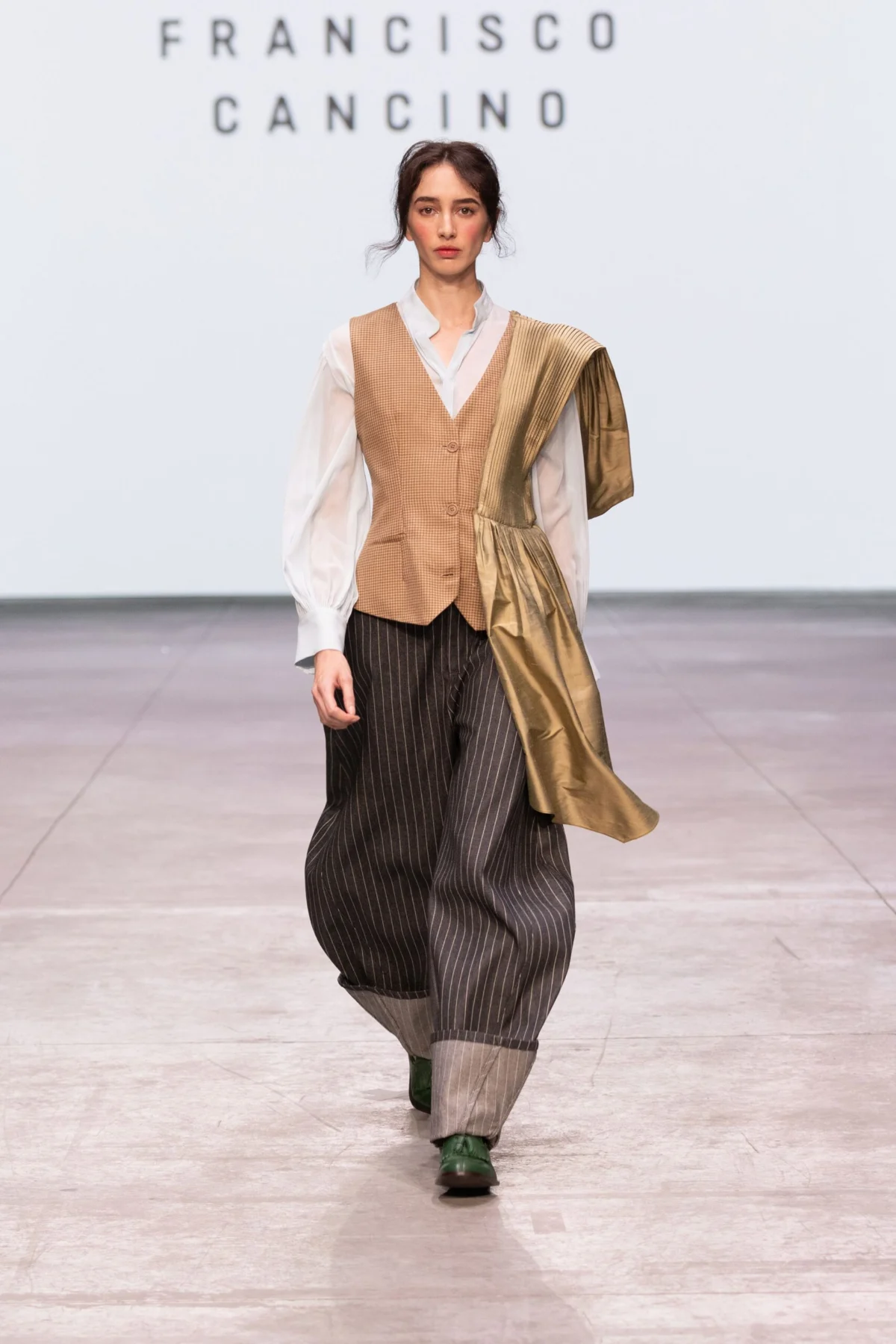
In a significant pivot from his deeply historical and introspective previous collections, Chiapas-born designer Francisco Cancino unveiled "El Abrazo del Amor del Universo" (The Embrace of the Universe’s Love) for Spring 2027, marking a pivotal moment in his artistic trajectory and a fresh perspective on contemporary Mexican identity. This collection, presented to an eager audience and industry professionals, sought to capture the multifaceted essence of Mexico as it exists today, while simultaneously imagining its boundless presence beyond national borders. The shift represents a matured vision from a designer who has consistently positioned Mexico at the heart of his creative endeavors, yet now approaches its representation with a vibrant, present-day lens.
Cancino’s Evolving Narrative: A Chronology of Mexican Identity
Francisco Cancino has long been celebrated for his profound engagement with Mexico’s rich cultural tapestry, often channeling its history, collective memory, and personal introspection into his designs. His journey has been a chronological exploration of the nation’s soul, each collection serving as a chapter in an ongoing dialogue with his homeland.
His Spring 2024 collection, Los primeros mexicanos, delved into the country’s foundational myths and indigenous origins, presenting a sartorial narrative that explored the ancient roots of Mexican identity. This was followed by La Última Ciudad for Fall 2025, a collection that turned its gaze to the historical significance of Tlatelolco, a site layered with pre-Hispanic grandeur, colonial conquest, and the tragic events of 1968. Through these works, Cancino established himself as a designer whose garments were not merely aesthetic expressions but profound cultural statements, meticulously researched and thoughtfully rendered.
The consistent thread through these collections has been Cancino’s unparalleled ability to translate complex historical and emotional narratives into wearable art. His methodology often involved a deep dive into archival research, traditional craftsmanship, and an understanding of socio-cultural contexts. However, with "El Abrazo del Amor del Universo," Cancino signaled a deliberate evolution, moving from the echoes of the past to the vibrant pulse of the present. This transition reflects not a abandonment of his roots, but rather an expansion of his creative scope, acknowledging that Mexico’s identity is a living, breathing entity, constantly evolving and reinterpreting itself in the contemporary world.
The Atlas as a Conceptual Compass: Mapping Modern Mexico
The genesis of "El Abrazo del Amor del Universo" lay in a deceptively simple yet profoundly ambitious concept: the atlas. As Cancino himself articulated backstage after the show, he envisioned these "universal books that describe the geography of places" not just as tools for cartography, but as frameworks for cultural mapping. Rejecting a literal, picturesque representation, Cancino and his design team embarked on creating their own subjective atlas of modern Mexico, one composed not of political boundaries or topographical features, but of the evocative words, emblematic names, archetypal characters, and everyday objects that collectively define the nation’s contemporary landscape.
This conceptual framework allowed for an exploration of Mexico that transcended stereotypes, embracing the mundane alongside the iconic. Cancino explained the process: "We imagined that if you looked at Mexico today, you’d have to include a prickly pear, a braid, a woman making gorditas, an apron, a hat from Papantla." These elements, deeply ingrained in the daily life and cultural fabric of Mexico, served as abstract muses rather than direct motifs. The prickly pear (nopal), a resilient symbol of Mexican identity and a staple in its cuisine and iconography, represented strength and adaptability. Braids, ubiquitous in indigenous and rural communities, spoke to heritage and craftsmanship. The image of a woman making gorditas evoked warmth, community, and the timeless tradition of Mexican gastronomy. The apron, a symbol of domesticity and labor, was elevated to a sartorial statement, while the distinctive hat from Papantla, a region renowned for its Totonac culture and the breathtaking Danza de los Voladores, brought in an element of regional specificity and artisanal beauty.
Crucially, Cancino emphasized that these rich references were "never literally" translated. Instead, their essence was distilled and reinterpreted through the sophisticated language of fashion: innovative tailoring, intricate pleats, sculptural headpieces, considered volumes, and a carefully curated palette of colors. This approach allowed the collection to resonate with deep cultural meaning without resorting to overt folklorism, presenting a vision of Mexico that is both authentic and forward-looking.
Design Language: Weaving Structure and Fluidity
The collection’s design language was a masterclass in balance, seamlessly integrating structure with fluidity, tradition with modernity. The opening look, a powerful statement of intent, featured a crisp white shirt, wide-leg striped trousers, classic loafers, and a tailored vest with asymmetrical draping—a signature Cancino touch that underscores his architectural approach to garment construction. This ensemble immediately invited multiple interpretations. On one level, it explored fashion’s eternal tension between the masculine and the feminine, presenting elements traditionally associated with menswear alongside more fluid, artistic drapery. On another, deeper level, it spoke to the collection’s overarching theme of balance: the equilibrium between different cultural forces, between the past and the present, and between commercial viability and artistic expression.
Throughout the collection, this duality manifested in compelling ways. A simple, minimalist T-shirt was often paired with an exquisitely crafted skirt, demonstrating how everyday items could be elevated through thoughtful juxtaposition and superior fabrication. The humble apron, re-imagined as a sophisticated design element, found its place within tailored ensembles, transforming a utilitarian garment into a focal point of high fashion. This creative appropriation not only paid homage to the unsung heroes of daily Mexican life but also challenged conventional notions of what constitutes luxury.
The aesthetic of "El Abrazo del Amor del Universo" carried a deeply earthy resonance, reflecting Mexico’s diverse landscapes and natural palette. Neutral tones—ranging from soft beiges and creams to rich charcoals and deep browns—formed the backbone of the collection, punctuated by strategic bursts of color. Checks, reminiscent of work uniforms and traditional textiles, were re-contextualized into elegant patterns, adding texture and a sense of grounding.
A highlight of the collection was the incorporation of handmade headpieces and intricate three-dimensional appliqués, created in a significant collaboration with Mexican textile artist Alejandro Rincón. Rincón’s expertise in traditional techniques and contemporary textile art brought an unparalleled depth and tactile quality to the garments. These artisanal embellishments, often abstract and organic in form, further cemented the collection’s connection to Mexican craftsmanship and its natural environment. An olive-green suit, for instance, adorned with an oversized, vibrant flower appliqué, seemed to carry a piece of nature directly on the body, blooming with life and color. The jewelry, which impeccably complemented the collection’s sculptural and artisanal aesthetic, was courtesy of Phoebe Stephens of Anndra Neen, a brand known for its distinctive, handcrafted metalwork. This collaboration held particular significance as Cancino recently joined Anndra Neen as co-creative director, signaling a powerful synergy between two design forces committed to celebrating Mexican artistry with a global perspective.
The Anndra Neen Partnership: Expanding Horizons
Francisco Cancino’s appointment as co-creative director at Anndra Neen, a brand renowned for its sculptural, artisanal jewelry and accessories, marks a significant strategic development for both entities. Founded by sisters Phoebe and Joyce Stephens, Anndra Neen has carved out a niche for itself with pieces that often blend ancient techniques with modern design, drawing inspiration from art, architecture, and cultural heritage. This alignment with Cancino’s own design philosophy, rooted in deep cultural exploration and meticulous craftsmanship, suggests a formidable partnership.
Cancino’s involvement with Anndra Neen is poised to inject a fresh narrative into the brand while providing him with an expanded platform to articulate his vision beyond apparel. The synergy between Cancino’s textile-based storytelling and Anndra Neen’s metal and stone artistry promises collections that are cohesive, multi-dimensional, and deeply resonant with a shared commitment to quality and cultural depth. This collaboration also highlights a growing trend within the fashion industry where designers cross-pollinate creative fields, fostering innovation and broadening brand appeal. For Cancino, it represents a natural extension of his exploration of Mexican identity, allowing him to infuse his aesthetic into a broader range of artistic expressions.
Broader Implications for Mexican Fashion
"El Abrazo del Amor del Universo" arrives at a time when the Mexican fashion industry is experiencing unprecedented growth and gaining significant international recognition. Historically, Mexican fashion has often been perceived through the lens of traditional craft or folkloric design. However, a new generation of designers, including Cancino, is challenging these perceptions, showcasing a sophisticated blend of heritage, innovation, and global appeal.
The industry contributes significantly to the national economy, supporting a vast network of artisans, manufacturers, and creative professionals. Events like Mexico City Fashion Week have become crucial platforms for designers to present their collections to a global audience, attracting international buyers, media, and collaborators. Designers like Cancino are not merely creating clothes; they are acting as cultural ambassadors, projecting a dynamic, contemporary image of Mexico on the global stage. Their work fosters cultural diplomacy, inviting a deeper appreciation for the country’s rich artistic traditions and its modern creative prowess.
Cancino’s pivot towards a contemporary interpretation of Mexico also reflects broader market trends favoring authenticity, sustainability, and narrative-driven design. Consumers are increasingly seeking brands with a clear identity and a commitment to ethical practices. While not explicitly framed as a sustainable collection, Cancino’s emphasis on artisanal collaboration and a non-literal interpretation of cultural elements aligns with principles of respectful cultural engagement and valuing skilled craftsmanship—aspects that resonate strongly with conscious consumers.
Critical Acclaim and Commercial Vision
The reception to "El Abrazo del Amor del Universo" has been overwhelmingly positive, with industry observers and fashion critics widely noting its exceptional quality and conceptual depth. Many have hailed it as Cancino’s most accomplished collection to date, underscoring his remarkable evolution as a designer. The collection’s ability to translate a deeply conceptual narrative—the abstract mapping of contemporary Mexico—into desirable, commercially appealing clothes is particularly noteworthy.
This success lies in Cancino’s astute navigation of the often-challenging intersection between artistic vision and market demands. Where some designers might struggle to maintain their conceptual integrity while aiming for commercial viability, Cancino demonstrated a refined understanding of both. His personal passion for tailoring, a hallmark of his work, was evident in the impeccable construction and sophisticated silhouettes, appealing to a clientele that values craftsmanship and timeless elegance. By finding this delicate balance between his commercial instincts and his artistic aspirations, Cancino has not only elevated his own design practice but also set a new benchmark for narrative-driven fashion.
Conclusion
"El Abrazo del Amor del Universo" is more than just a collection of garments; it is a meticulously crafted statement on the current state and future trajectory of Mexican identity as seen through the discerning eyes of Francisco Cancino. By embracing the atlas as a conceptual device, he has offered a rich, nuanced, and contemporary portrait of Mexico, moving beyond historical retrospection to a vibrant present. This collection, celebrated for its artistic integrity, commercial appeal, and profound cultural resonance, solidifies Cancino’s position as a leading voice in global fashion and a powerful ambassador for Mexico’s burgeoning creative landscape. His journey continues to unfold, each collection a testament to his unwavering dedication to telling the story of his homeland with elegance, insight, and unparalleled skill.
