
 By admin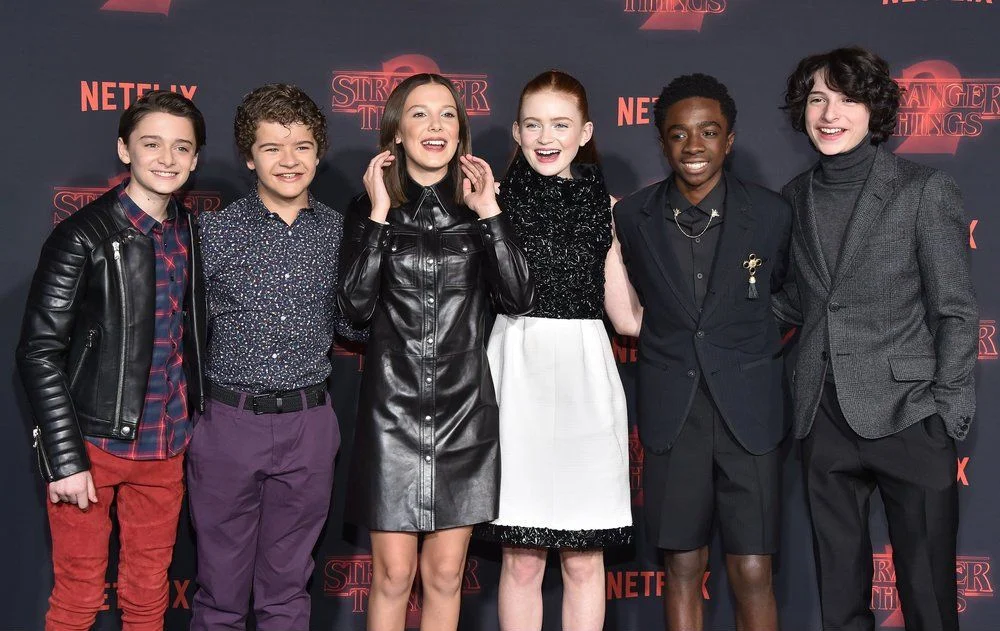
Finn Wolfhard, widely recognized for his breakthrough role as Mike Wheeler in Netflix’s global phenomenon Stranger Things, has emerged as one of the most prominent young actors of his generation. Since the series first captivated audiences in 2016, Wolfhard has meticulously built a diverse career encompassing blockbuster film franchises, critically acclaimed independent projects, and a foray into directing. His impressive filmography includes significant roles in the It horror saga, the revitalized Ghostbusters: Afterlife and Ghostbusters: Frozen Empire, and his recently unveiled feature directorial debut, Hell of a Summer. Despite this trajectory of remarkable success, Wolfhard has recently provided a surprisingly grounded and relatable insight into one of the most challenging, yet often unspoken, aspects of the acting profession: the relentless nature of competition and the omnipresence of rejection.
In a candid interview with Variety, Wolfhard articulated a personal philosophy that challenges conventional wisdom about thriving in a cutthroat industry. He revealed that he does not inherently consider himself a competitive individual, going so far as to suggest that acting initially appealed to him precisely because it felt, in some paradoxical way, "less competitive" than other fields. This perspective offers a valuable lens through which to examine the often-grueling reality faced by working actors at every stage of their careers, illuminating crucial strategies for mental resilience and professional longevity in an environment where being told "no" is an unavoidable, constant companion.
Finn Wolfhard’s Ascent: A Chronology of Success
Wolfhard’s journey to international stardom began almost a decade ago with Stranger Things. The Duffer Brothers’ nostalgic sci-fi horror series premiered in July 2016, catapulting its young ensemble cast, including Wolfhard, Millie Bobby Brown, Noah Schnapp, Caleb McLaughlin, and Gaten Matarazzo, into overnight fame. The show’s immediate and widespread popularity provided an unprecedented platform, allowing Wolfhard to transition rapidly into other high-profile projects.
His career timeline showcases a strategic diversification:
- 2017: Landed the pivotal role of Richie Tozier in Andy Muschietti’s It, a critical and commercial success that further cemented his presence in major film franchises.
- 2019: Reprised his role in It Chapter Two, demonstrating his continued appeal in genre cinema.
- 2020: Voiced a character in The Addams Family 2 and appeared in the independent film The Turning.
- 2021: Starred as Trevor Spengler in Ghostbusters: Afterlife, linking him to another beloved cinematic universe.
- 2023: Made his feature directorial debut with Hell of a Summer, a horror-comedy co-directed with Billy Bryk, which premiered to positive reception at the Toronto International Film Festival. This marked a significant expansion of his creative endeavors beyond acting.
- 2024: Returned as Trevor Spengler in Ghostbusters: Frozen Empire, reinforcing his established presence in major studio productions.
This rapid succession of roles underscores not only his talent but also the strategic decisions made in building a multifaceted career. Yet, even with such a remarkable track record, Wolfhard’s commentary on the industry’s competitive landscape remains remarkably grounded, suggesting that the challenges of auditioning and rejection are universal, irrespective of fame.
Deconstructing the "Less Competitive" Mindset
Wolfhard’s assertion that acting can feel "less competitive" might initially strike many as counterintuitive, particularly to those familiar with the brutal realities of Hollywood. Industry statistics paint a stark picture: for every role advertised, hundreds, if not thousands, of actors often submit their materials. For union actors (SAG-AFTRA members), a significant percentage are underemployed or unemployed at any given time, with only a fraction earning enough to qualify for health insurance through their acting work alone. This highly saturated market inherently screams "competition."
However, Wolfhard’s perspective delves deeper than surface-level numbers. He posits that while the process of casting is undeniably competitive – with productions often auditioning dozens for a single part – the actor’s approach to that process need not be. His philosophy centers on the idea that an actor cannot control external factors: who else auditions, what specific physical traits the director is secretly envisioning, or even last-minute script changes that alter character requirements. The sole element truly within an actor’s dominion is their own performance, their unique interpretation, and their professional preparation.
By shifting focus from "beating" other actors to "presenting my best self," the audition transforms from a direct contest into an individual artistic offering. This mindset encourages authenticity over mimicry, allowing an actor to bring their distinct voice to a character rather than attempting to second-guess or replicate what they imagine the casting team might want. Industry veterans and casting directors often echo this sentiment, emphasizing that they seek unique perspectives and genuine connection to the material, not carbon copies of a preconceived ideal.
The Personal Toll of Rejection: Beyond Qualifications
Wolfhard candidly acknowledged the profound difficulty in separating oneself emotionally from audition outcomes, stating, "It’s really hard not to take it personally because they’re literally not casting you because of you." This sentiment resonates deeply within the acting community because, unlike many other professions where job interviews primarily assess skills, qualifications, or experience, an acting audition scrutinizes the very essence of an individual.
Factors that influence casting decisions often extend far beyond demonstrable talent or a compelling performance. These can include:
- Physical Attributes: Height (e.g., needing to match a co-star), age (even if an actor can play younger/older, a specific age might be required), specific appearance (hair color, eye color, body type).
- Voice and Accent: A particular vocal quality or regional dialect might be essential for the character.
- Chemistry: The intangible spark between actors, particularly with a lead, which cannot be manufactured.
- Energy and Performance Style: A director might seek a subdued presence, while an actor naturally exudes high energy, or vice-versa.
- Physicality: The way an actor moves, their posture, or even their natural gait might not align with the character’s requirements.
- Scheduling Conflicts: Even if perfect for the role, an actor’s availability might clash with production timelines.
- Network/Studio Preferences: Executives might have a preferred actor for political or marketing reasons, overriding the director’s choice.
An actor can deliver an exemplary audition, technically flawless and emotionally resonant, yet still be passed over due to an unchangeable characteristic like being "too tall" or "not having the right look" for the ensemble. This makes the rejection inherently personal, as it often targets aspects of an actor’s physical being or intrinsic personality rather than a deficiency in a learned skill. This level of personal scrutiny can be psychologically taxing, leading to self-doubt and identity crises if not managed effectively.
Insights from the Casting Couch: The "Fit" Paradigm
Casting directors, the gatekeepers of opportunity, often articulate a similar philosophy to Wolfhard’s, albeit from the other side of the table. They routinely emphasize that their job is not to find the "best" actor in an objective sense, but to find the "right fit" for a specific role within a particular project. This "fit" is a complex tapestry woven from talent, appearance, chemistry, availability, budget, and even the often-ephemeral "vibe" a performer brings to the room.
A veteran casting director, speaking anonymously on the subjective nature of the craft, might explain: "We’re not just casting a character; we’re casting an ecosystem. An actor might be phenomenal, but if their height makes them tower over the lead who needs to project authority, or if their energy clashes with the established tone of the show, it simply won’t work. It’s rarely a judgment on their talent, but purely a logistical and creative puzzle piece." This perspective validates Wolfhard’s experience, underscoring that many casting decisions are indeed outside an actor’s control and have little to do with their inherent worth or skill.
Cultivating Resilience: The Power of Compartmentalization
Given the deeply personal nature of acting and the frequency of rejection, Wolfhard advocates for a crucial coping mechanism: compartmentalization. "The way to do it is to separate and compartmentalize," he advised. This psychological strategy involves consciously detaching emotional investment from the outcome of an audition once the performance is delivered. It means giving an audition your absolute best, pouring your creativity and preparation into it, and then, metaphorically, "leaving it in the room."
This is, by Wolfhard’s own admission, "easier said than done." However, acting coaches and mental health professionals specializing in creative industries consistently highlight compartmentalization as a vital skill for emotional self-preservation. Without it, the cumulative weight of rejections can lead to burnout, cynicism, and a profound erosion of self-confidence, making it increasingly difficult for actors to approach subsequent opportunities with enthusiasm and authenticity. Learning to release the outcome allows an actor to maintain a sense of self-worth independent of external validation and to approach each new audition as a fresh opportunity, rather than carrying the baggage of past disappointments.
The Enduring Challenge: Even for the Established
Perhaps one of the most reassuring aspects of Wolfhard’s commentary for emerging actors is his admission that, even with a successful and recognized career, he still finds auditioning a disagreeable process. "In the last few years, I’ve auditioned for stuff," he shared, adding, "I definitely don’t enjoy that part." This frankness demystifies the notion that success somehow eliminates the anxieties and discomfort associated with the audition room.
Established actors, even those with multiple blockbusters and awards nominations, continue to audition, continue to face scrutiny, and continue to experience rejection. Their names might open more doors, but the fundamental challenges of "fitting the vision" and navigating subjective preferences remain. This underscores a critical lesson: rejection is not a sign of failure unique to aspiring actors; it is an inherent, perpetual component of the acting profession at every single career level. The difference for successful actors often lies not in eliminating rejection, but in having developed robust coping mechanisms and a resilient mindset that allows them to move forward without allowing one "no" to derail their entire pursuit.
Practical Wisdom for Aspiring Artists
Wolfhard’s insights offer a powerful blueprint for actors navigating the industry:
- Compete With Yourself, Not Others: Focus on personal growth and improvement with each audition. Your goal is to be better than you were yesterday, not better than the person in the waiting room.
- Detach Identity from Outcomes: A rejection is a project’s decision, not a judgment on your inherent talent or worth. Many factors are beyond your control.
- Embrace Compartmentalization: Give your all, then let it go. Obsessing over past auditions only hinders future performance.
- Celebrate Your Individuality: What makes you "too something" for one role might be precisely what makes you perfect for another. Your unique qualities are your strengths.
- Rejection is Universal: Understand that even your idols face rejection. It’s a part of the job, not a sign you should quit.
Beyond Auditions: Leveraging Opportunity
Wolfhard’s career trajectory also serves as a potent reminder of the transformative power of a single role and the importance of strategic career development. Stranger Things was his "one role that changed everything," but his subsequent choices to diversify into directing, music, and a range of film genres illustrate how he actively leveraged that initial opportunity. It’s not just about booking the role; it’s about what an actor does with the platform and momentum that role creates. This involves continuous learning, exploring new creative avenues, and maintaining a proactive approach to one’s craft and business.
The Imperative of Persistence and Preparedness
In an industry defined by uncertainty, persistence becomes a non-negotiable trait. It is easy for actors to become discouraged after a string of unsuccessful auditions. However, as Wolfhard’s story implicitly suggests, every audition, even those that don’t result in a booking, represents a possibility. An actor who ceases to submit after repeated setbacks guarantees that the next, potentially life-changing, opportunity will never materialize. Casting careers are rarely linear; periods of drought often precede sudden surges of activity. The ultimate goal is not to eliminate rejection, which is impossible, but to cultivate the resilience and preparedness necessary to endure long enough for the right role to align.
Platforms like Project Casting play a vital role in this ecosystem by connecting actors, models, and other entertainment professionals with a constant stream of casting calls across film, television, commercials, and digital media. However, access to opportunities is only half the battle. Wolfhard’s emphasis on control over one’s own performance and preparation highlights the critical importance of maintaining a state of readiness. This means consistently updating professional materials:
- High-quality, current headshots that accurately reflect your look.
- A meticulously maintained acting resume detailing credits, training, and special skills.
- A strong, edited reel showcasing your best work.
- Accurate and complete profile information on casting platforms.
- Ongoing training through classes and workshops to sharpen skills.
- Professional-grade self-tape equipment and a reliable setup for remote auditions, which have become increasingly prevalent.
When the ideal casting call appears, being prepared allows the actor to focus entirely on delivering a compelling performance, rather than scrambling to assemble basic materials. This proactive approach embodies the "control what you can control" philosophy that Wolfhard advocates.
Final Thoughts
Finn Wolfhard’s candid reflections on acting, competition, and rejection provide a deeply valuable, counter-intuitive lesson for anyone aspiring to build a career in the entertainment industry. While the casting landscape is undeniably competitive, actors need not view their peers as adversaries. The more constructive and sustainable approach, as championed by Wolfhard, is to channel energy into personal preparation, authentic interpretation, and mastering the elements truly within one’s sphere of influence.
The reality is that no actor, regardless of their fame or talent, will book every role. What truly differentiates those who succeed over the long term is their ability to audition with commitment, accept the outcome without personalizing it excessively, extract lessons from each experience, and consistently move forward. As Finn Wolfhard’s inspiring career attests, the pivotal role that can irrevocably alter an actor’s trajectory might always be just one audition away, waiting for the prepared and resilient performer to seize it.
For those actively seeking their next acting opportunity, exploring the myriad casting calls, film jobs, television roles, and diverse entertainment opportunities available at ProjectCasting.com remains an essential step in navigating this challenging yet rewarding profession.
Frequently Asked Questions
How did Finn Wolfhard become famous?
Finn Wolfhard rose to international fame playing Mike Wheeler in the Netflix series Stranger Things, which premiered in 2016 and quickly became a global sensation.
What major movies has Finn Wolfhard appeared in?
His significant film credits include It (2017), It Chapter Two (2019), Ghostbusters: Afterlife (2021), and Ghostbusters: Frozen Empire (2024). He also made his feature directorial debut with Hell of a Summer (2023).
Does Finn Wolfhard still audition for roles despite his success?
Yes, Wolfhard has confirmed that he continues to audition for projects, indicating that even established actors actively participate in the casting process.
Does Finn Wolfhard enjoy the auditioning process?
No, he explicitly stated in an interview with Variety that auditioning is not a part of the acting process he particularly enjoys.
Why does Finn Wolfhard suggest acting can feel "less competitive"?
Wolfhard views acting less as a direct competition against other performers and more as a personal challenge to deliver his authentic interpretation of a character. He focuses on controlling his own performance rather than external factors.
What is Finn Wolfhard’s advice for dealing with audition rejection?
He recommends learning to "separate and compartmentalize" emotionally from the outcome. Actors should focus on preparation, performance, and professionalism, understanding that many casting decisions are based on factors outside their control.
Does rejection always mean an actor gave a bad audition?
Absolutely not. Actors can lose roles due to a multitude of factors unrelated to their talent, such as age, height, appearance, chemistry with other actors, scheduling conflicts, creative direction changes, or network preferences.
Do successful and famous actors still lose roles after auditioning?
Yes. Rejection is a universal experience in acting. Even highly successful and established actors frequently audition for and are passed over for various projects.
How can actors increase their chances of finding more auditions and opportunities?
Actors should consistently monitor legitimate casting platforms, maintain up-to-date professional materials (headshots, resume, reel), continue professional training, and submit their applications regularly and proactively.
Where can actors find reliable casting opportunities and industry jobs?
Actors can explore a wide range of casting calls, film jobs, television roles, and other entertainment opportunities by visiting ProjectCasting.com.
