
 By Nana Wu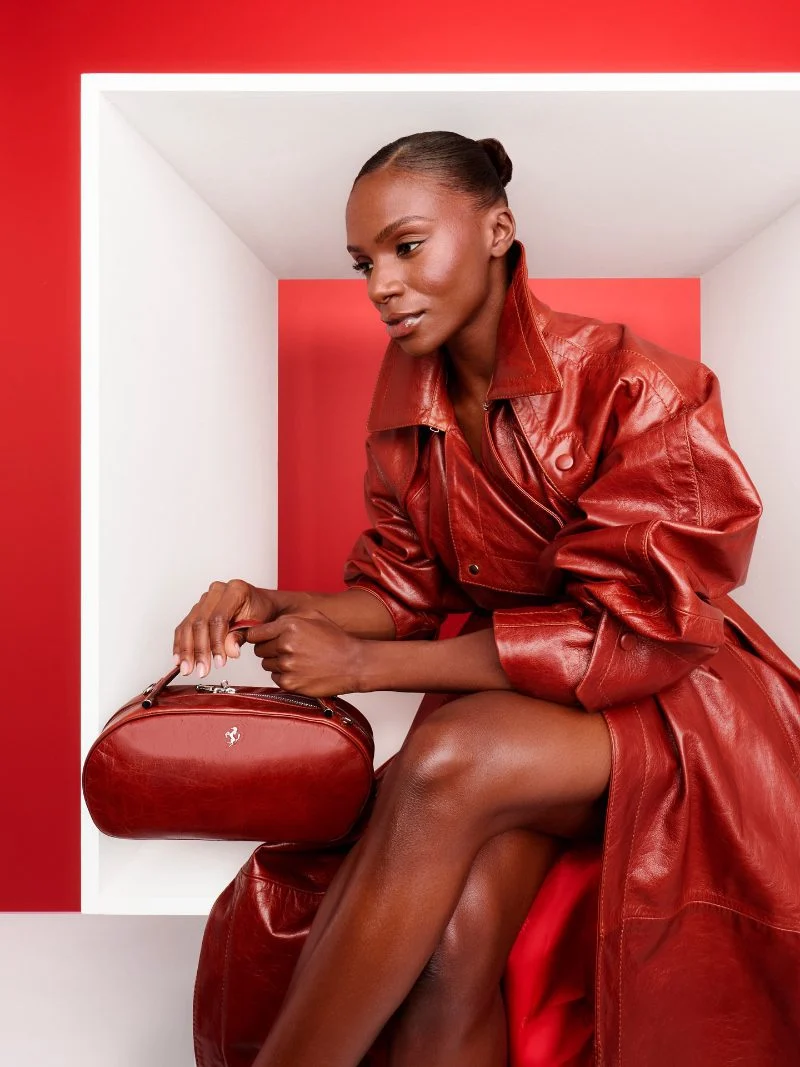
The Italian luxury marque Ferrari is accelerating its strategic pivot into the high-end fashion sector with the launch of its latest accessories campaign, centering on the versatile Dino Bag collection. This new initiative, captured by the acclaimed British photographer Rankin and featuring world-class sprinter Dina Asher-Smith, marks a significant milestone in Ferrari’s evolution from a legendary automotive manufacturer to a comprehensive luxury lifestyle brand. Since its formal entry into the fashion world in 2021, the house has consistently sought to bridge the gap between mechanical excellence and sartorial elegance, and the Dino Bag represents the most recent effort to solidify this identity through high-visibility creative partnerships and meticulously crafted leather goods.
The Aesthetic and Engineering of the Dino Bag Collection
The Dino Bag is not merely a lifestyle accessory but a calculated homage to Ferrari’s storied automotive heritage. Named after the iconic "Dino" series of sports cars—originally a tribute to Enzo Ferrari’s late son, Alfredo "Dino" Ferrari—the bag collection mirrors the aerodynamic curves and ergonomic precision of the vehicles produced in the late 1960s and 1970s. Under the creative direction of Rocco Iannone, the design team has translated the silhouette of the Dino 206 GT and 246 GT into a range of leather goods that emphasize fluid movement and structural integrity.
The collection features a diverse array of formats intended to cater to a global, mobile clientele. The "Mini" iteration is designed for transitionary use, moving seamlessly from daytime professional environments to evening social engagements. For more utilitarian needs, the collection includes a crossbody tote and a classic bowling style bag, the latter of which directly references the luggage sets often custom-fitted for the trunks of Ferrari grand tourers. Each piece is characterized by high-grade Italian leather, precision stitching, and hardware that subtly references the metallic components of a Ferrari engine. The color palette typically aligns with the brand’s signature racing hues—Giallo Modena (yellow) and Rosso Corsa (red)—alongside sophisticated neutrals that appeal to the broader luxury market.
Strategic Creative Collaborations: Rankin and Dina Asher-Smith
To elevate the Dino Bag’s market presence, Ferrari commissioned Rankin, a photographer renowned for his influence on fashion photography and portraiture. Rankin’s visual style, which often emphasizes bold lighting and high-contrast dynamism, was selected to reflect the "speed" and "power" inherent in the Ferrari DNA. The campaign avoids traditional static luxury tropes, instead opting for a sense of kinetic energy that aligns with the brand’s performance-driven history.
Starring in the campaign is Dina Asher-Smith, the fastest British woman in recorded history and an Olympic medalist. Her inclusion is a deliberate strategic choice; Asher-Smith embodies the intersection of peak physical performance and contemporary style. By choosing an athlete of her caliber, Ferrari reinforces the connection between the precision required in elite sprinting and the precision required in luxury manufacturing. This partnership also signals Ferrari’s intent to reach a younger, more diverse demographic that values both heritage and modern achievement. Asher-Smith’s presence serves as a bridge between the traditional automotive enthusiast and the modern fashion consumer who prioritizes brand narrative and athletic excellence.
A Chronology of Ferrari’s Sartorial Evolution
The current momentum of the Dino Bag campaign is the result of a multi-year strategy initiated by Ferrari N.V. to diversify its revenue streams and enhance its brand equity beyond the automotive sector.
- June 2021: The Maranello Debut. Ferrari officially launched its fashion division with a high-profile runway show held directly on the assembly line of its Maranello factory. Creative Director Rocco Iannone presented 52 looks that utilized high-tech fabrics and automotive-inspired silhouettes, signaling that Ferrari was entering the "ready-to-wear" space with serious intent.
- 2022: Global Retail Expansion. Following the initial launch, Ferrari began establishing a physical retail footprint in key fashion capitals. The opening of a flagship store in Milan, located near the Duomo, served as a statement of intent, followed by a significant presence in London’s Regent Street.
- 2023: Strengthening the Vision. Throughout 2023, the brand focused on refining its aesthetic, moving away from logo-heavy "merchandise" toward sophisticated, "quiet luxury" pieces that utilized the Ferrari name as a mark of craftsmanship rather than just a status symbol.
- 2024: The Dino Bag Campaign. The current year has seen a concentrated effort to dominate the accessories market. The Dino Bag campaign represents the brand’s most aggressive push into the leather goods segment, which is traditionally the most profitable category for luxury fashion houses.
Leadership and Creative Direction under Rocco Iannone
The transformation of Ferrari’s fashion identity is largely credited to Rocco Iannone. Before joining Ferrari, Iannone spent nearly a decade at Giorgio Armani and held a senior role at Pal Zileri. His expertise in Italian tailoring and his understanding of the "Made in Italy" ethos have been instrumental in ensuring that Ferrari’s clothing and accessories meet the standards of established luxury competitors like Hermès or Loro Piana.
Iannone’s philosophy revolves around the concept of "The Ferrari Dream." He has frequently stated in industry briefings that the fashion line is not a separate entity but a different expression of the same spirit that builds the SF90 Stradale. By utilizing materials such as carbon fiber-infused fabrics and leathers treated with the same processes used for car interiors, Iannone has created a unique design language that feels authentic to the brand’s roots while remaining relevant to the Parisian and Milanese runways.
Expanding the Global Footprint: Retail and Showrooms
Ferrari’s "fashion lane" is supported by a robust and growing retail infrastructure. The brand has moved beyond the traditional "Ferrari Store" model, which primarily sold model cars and team apparel, to sophisticated boutiques that rival those on Bond Street or Avenue Montaigne.
Currently, the brand maintains major flagship locations in Milan and London, providing a direct-to-consumer experience in Europe’s primary fashion hubs. In the United States, Ferrari has established a strategic showroom in SoHo, New York. This location serves as both a retail space and a cultural hub, hosting private events for high-net-worth individuals and fashion influencers. Plans are currently underway for further expansion, with an additional store slated for an undisclosed major metropolitan area, likely in the Asian market where demand for Italian luxury goods remains resilient.
The digital strategy is equally robust. The Dino Bag collection and the accompanying ready-to-wear lines are available through Ferrari’s redesigned online store, which offers a high-end e-commerce experience including concierge services and worldwide shipping, ensuring that the brand is accessible to its global fanbase regardless of physical proximity to a flagship.
Economic Implications and Market Analysis
The pivot into high fashion is a calculated financial move by Ferrari’s executive leadership. While Ferrari remains one of the most profitable car manufacturers in the world—with industry-leading margins—the fashion and lifestyle sector offers a way to scale the brand without diluting the exclusivity of its vehicles. Ferrari limits its car production to maintain high demand and resale value; however, the fashion line allows the company to engage a larger audience and increase "share of wallet" among existing owners.
Market analysts suggest that Ferrari’s goal is for its lifestyle category to contribute up to 10% of its earnings (EBIT) within the next decade. By focusing on leather goods like the Dino Bag, Ferrari is entering a high-margin sector. Accessories typically account for the largest portion of sales for luxury conglomerates like LVMH and Kering. For Ferrari, successful penetration into this market provides a buffer against the cyclical nature of the automotive industry and the capital-intensive transition to electric vehicles (EVs).
Furthermore, the "lifestyle" expansion helps protect the brand’s valuation. In the eyes of investors, Ferrari is increasingly viewed as a luxury goods company rather than a traditional automaker. This distinction is vital, as luxury brands often enjoy higher price-to-earnings ratios than industrial manufacturing firms.
Broader Impact and Future Outlook
The success of the Dino Bag and the broader fashion line indicates a shift in how heritage brands approach brand extension. Ferrari is demonstrating that a transition from heavy industry to haute couture is possible if the core values of craftsmanship and innovation are maintained. The campaign with Dina Asher-Smith and Rankin suggests that Ferrari is no longer looking back at its history with nostalgia alone, but is using that history to propel itself into a modern, lifestyle-oriented future.
As the brand prepares for its next seasonal collection, the industry will be watching closely to see if Ferrari can maintain its "speed" in the fashion lane. With the Dino Bag now available globally and the retail footprint expanding, the Prancing Horse is no longer just a fixture of the racetrack; it is becoming a formidable presence on the world’s most prestigious fashion avenues. The integration of automotive design principles into wearable luxury continues to redefine the boundaries of the brand, suggesting that for Ferrari, the road ahead is as much about the runway as it is about the circuit.
