
 By admin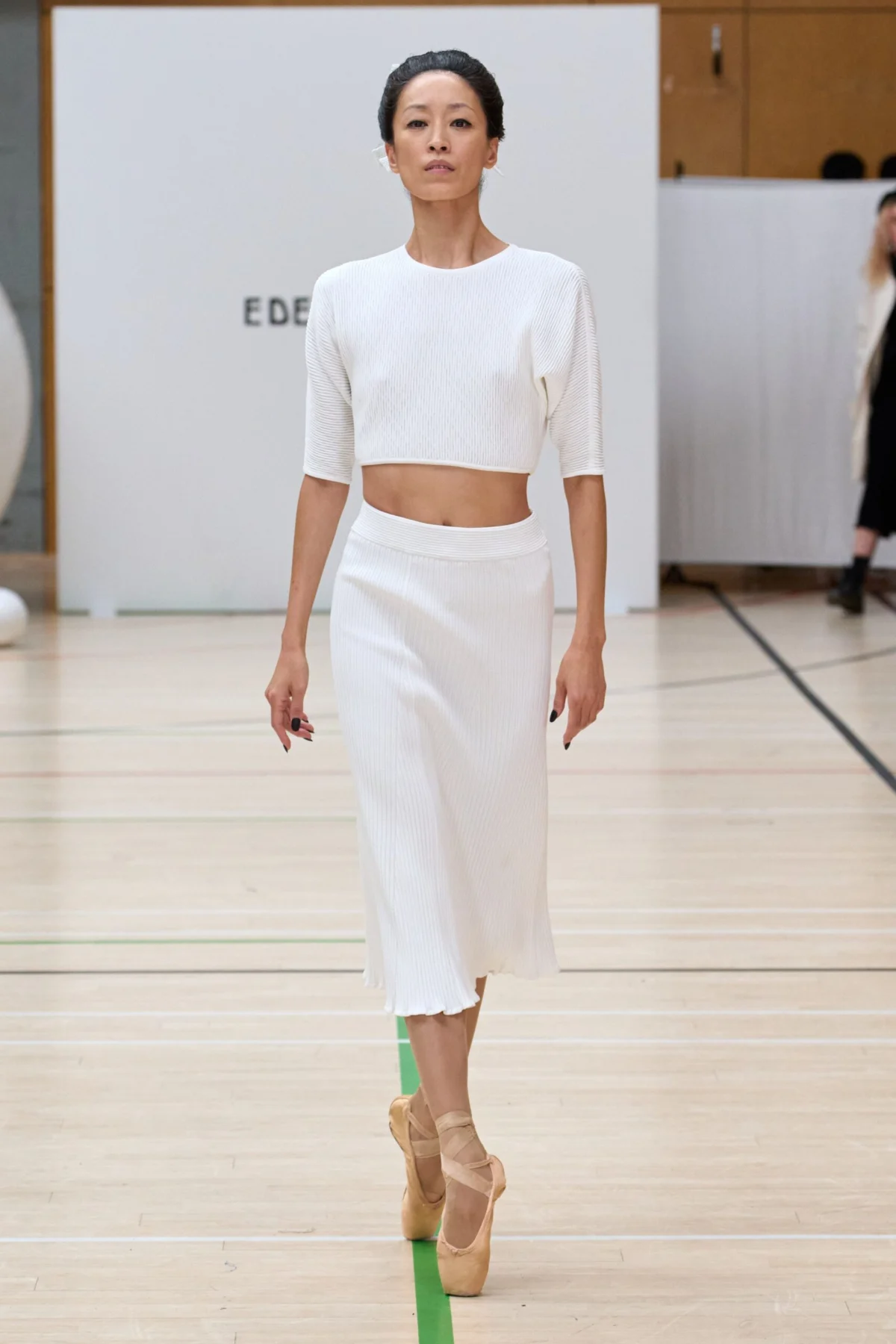
For her Spring 2027 collection, presented at Haverstock School’s sports hall, acclaimed designer Edeline Lee embarked on a profound exploration of the fashion industry’s cyclical nature, drawing a compelling parallel to the myth of Sisyphus. Lee articulated her vision, stating, “He is endlessly pushing the boulder up the hill, and every time he reaches the top, it comes back down again. I feel like we are in that cycle in fashion. That perfect image of the runway actually requires 150 people backstage. You work for months on that one moment, and then return to the studio to start again.” This candid reflection on the relentless creative process and the often-unseen labor behind the spectacle formed the philosophical bedrock of a collection that was as conceptually rich as it was aesthetically refined.
The Genesis of a Concept: Sisyphus in the Fashion Landscape
The Greek myth of Sisyphus, condemned by Zeus to eternally roll a boulder uphill only for it to fall back down each time it nears the summit, has long been a metaphor for futility and endless, unrewarding toil. However, Lee reinterprets this ancient narrative, transforming it into a testament to resilience, dedication, and the intermittent, yet profound, moments of joy found within a seemingly repetitive cycle. In an industry often criticized for its demanding pace, relentless seasonal schedules, and the ephemeral nature of trends, Lee’s Sisyphus metaphor resonates deeply. Fashion designers, like Sisyphus, undertake immense creative and logistical efforts to produce collections that culminate in a fleeting runway presentation, only to immediately commence the arduous process anew for the next season. This constant reinvention and production cycle, from initial sketches and fabric sourcing to garment construction, marketing, and the ultimate show, involves hundreds, if not thousands, of hours of skilled labor and intricate coordination. Industry analysts often highlight the immense financial and human capital invested in each fashion week, with a single major runway show estimated to cost anywhere from tens of thousands to over a million dollars, underscoring the scale of the "boulder" designers push.
Edeline Lee’s Distinctive Approach to Presentation
Edeline Lee has carved a niche for herself within the London fashion scene not just through her distinctive designs but also her consistently unconventional and thought-provoking show presentations. Known for eschewing traditional catwalk formats in favor of immersive and narrative-driven experiences, Lee’s past endeavors include a vibrant flash mob for Fall/Winter 2023 and an intricate sword fight choreographed for Fall/Winter 2025. These atypical performances serve to highlight the theatricality inherent in fashion while also subverting expectations, compelling audiences to engage with the collection beyond mere garment display. This established pattern of innovation provided the perfect precedent for her Spring 2027 unveiling, where the performance itself became a commentary on the creative process. Her consistent push against the conventional underscores her brand identity as one that values conceptual depth and an honest portrayal of artistry.
A Backstage Unveiled: The Haverstock School Experience
For Spring 2027, Lee took her signature theatricality to a new level by offering an open reconstruction of the backstage environment. The cavernous sports hall of Haverstock School was transformed into a living diorama of pre-show activity, deliberately exposing the intricate network of human effort typically hidden behind the glamour. Guests arriving at the venue were immediately immersed in a meticulously orchestrated scene: models received their final touches on hair and makeup, showcasing the precision and artistry involved in perfecting each look. Seamstresses, bent over their sewing machines, worked on last-minute adjustments, their focused movements a testament to the dedication required to ensure every garment was flawless. In a corner, a "press team" typed diligently on laptops, simulating the frenetic communication and media management essential to any high-profile event.
This innovative presentation served multiple purposes. Firstly, it demystified the runway, pulling back the curtain on the "perfect image" to reveal the collaborative and often intense labor that underpins it. Secondly, it acted as a direct manifestation of Lee’s Sisyphus metaphor, physically demonstrating the 150-plus individuals she referenced, all contributing to that singular, fleeting moment of public presentation. This transparent approach implicitly challenged the industry’s often-criticized opacity, inviting viewers to appreciate the craftsmanship and human endeavor typically overlooked in the pursuit of spectacle. The deliberate staging in a school sports hall, rather than a traditional opulent venue, further underscored this message, emphasizing the raw work over polished grandeur.
Ballet as a Parallel Muse: Grace and Grueling Dedication
Complementing the Sisyphean theme, the collection drew heavy inspiration from the world of ballet. Lee saw a profound parallel between the relentless, often painful, discipline required for a ballerina to achieve a moment of effortless grace on stage, and the arduous work behind the scenes of a fashion show. Both realms demand intense physical and mental fortitude, endless hours of practice, and a singular focus on perfection, all culminating in an ephemeral public performance that belies the struggle. To visually articulate this connection, a collection film, shot with ballerinas from some of the UK’s leading dance companies, played on a continuous loop on screens strategically placed throughout the show space. This visual narrative served as a poignant reminder of the shared ethos of dedication and pursuit of artistic excellence. The film not only showcased the garments in dynamic motion but also underscored the physical poetry and rigorous training that informed the collection’s very spirit.
The Collection: From Theatrical Tutus to Boardroom Elegance
The garments themselves were a masterful translation of these complex themes into wearable art, showcasing Lee’s ability to blend conceptual daring with practical sophistication.
-
Theatrical Showpieces: For the collection film and select display, Lee experimented boldly with the iconic ballet tutu. Pancake tutus, traditionally stiff and voluminous, were reimagined in white, black, or beige, intricately knotted into elegant ovals of macramé. These sculptural forms were layered over looser-fitting practice sweaters crafted from the designer’s signature Flou bubble jacquard, a fabric known for its unique texture and fluid drape. Classic tutus and bell tutus, typically layered with reams of tulle, were presented in vibrant yellow or understated beige. Strikingly, these were hooped and left hollow, devoid of their usual tulle petticoats, giving them an unexpected bounce and lightness while maintaining their structural integrity. These were often layered over high-neck leotards, echoing the quintessential ballerina silhouette. A particularly striking look featured a lavender dress, marrying a fitted leotard with a long, lightweight pleated chiffon skirt, embodying ethereal movement. The most visually arresting tableau involved three ballerinas, clad in scarlet leotards and extremely short, scalloped pancake tutus, dancing in perfect synchronicity on pointe by an indoor pool – a powerful image of synchronized effort and vibrant artistry.
-
Wearable Translations for the Modern Woman: While these theatrical showpieces were designed to capture attention and likely appeal to Lee’s private clients seeking a "mega dress" for unique occasions, the core of the collection, displayed on mannequins throughout the space, focused on highly wearable interpretations for her discerning clientele. Lee caters to "high-flying women" who demand elegance, comfort, and functionality in their professional and social lives. The conceptual cyan leotards and tutus were ingeniously transformed into long-sleeve midi dresses, featuring extended pleated skirts rendered in the elegant Flou bubble jacquard. Similarly, the beige practice sweater and black pancake tutus found new life as a sophisticated capped-sleeve blouse with a neck tie, perfectly paired with a mid-length black pleated skirt. These adaptations seamlessly bridge the gap between artistic inspiration and commercial viability. Lee emphasized the practical aspect: "Our client is functioning at a really high level, and they need to have clothes that move with them. But they’re not dancing on stage, so we have dresses you can wear to the boardroom, too." This statement encapsulates her design philosophy: creating garments that empower women, allowing them to navigate their demanding lives with grace and confidence, without sacrificing style.
The Business of Design: Balancing Artistry and Market Demands
Edeline Lee’s Spring 2027 collection exemplifies the intricate balance designers must strike between artistic expression and commercial viability. The creation of conceptually driven showpieces, while critical for brand identity and media impact, often represents a niche market. Lee’s acknowledgment that "there’s always someone that wants the mega dress" highlights the role of high-net-worth private clients in supporting avant-garde creations. However, the true strength and sustainability of a brand like Edeline Lee lie in its ability to translate these artistic visions into a broader, more accessible collection that resonates with a wider demographic of consumers. By offering wearable interpretations of her runway themes, Lee ensures that her brand remains relevant and commercially successful, reaching her established base of "high-flying women" who value sophisticated, functional, and distinctive apparel. This dual approach is a common strategy in the luxury fashion sector, allowing designers to push creative boundaries while maintaining a robust business model.
Industry Context: London Fashion Week and the Global Stage
London Fashion Week, where Edeline Lee regularly presents, is one of the "Big Four" global fashion events, alongside New York, Milan, and Paris. It serves as a vital platform for both established designers and emerging talent, contributing significantly to the UK’s creative economy. The fashion industry globally is a multi-trillion dollar enterprise, employing millions worldwide, from textile workers and manufacturers to marketing professionals and retail staff. The production cycle for a collection like Spring 2027 typically begins months in advance, involving extensive research, design, pattern-making, sampling, fabric sourcing, and ultimately, manufacturing. For a designer operating on Lee’s scale, managing a supply chain, often international, while adhering to increasingly stringent ethical and sustainable practices, adds layers of complexity to the "Sisyphean" task. The Spring 2027 show, therefore, is not just an artistic statement but a testament to sophisticated logistical management and a deep understanding of global production networks.
Reactions and Broader Implications: A Call for Industry Reflection
Edeline Lee’s Spring 2027 presentation is poised to spark significant discussion within the fashion industry. Critics are likely to commend her for her conceptual bravery and her willingness to peel back the layers of glamour to reveal the true labor involved. In an era where consumers are increasingly demanding transparency and ethical practices from brands, Lee’s "backstage unveiled" approach offers a refreshing departure from the curated façade. This could encourage other designers to consider more honest and less ostentatious forms of presentation, shifting the focus from pure spectacle to the celebration of craft and collaboration.
The show also contributes to the ongoing conversation about sustainability in fashion. While not explicitly a sustainability-focused collection, by highlighting the immense human effort and resources invested in each season, Lee implicitly encourages a greater appreciation for garments and a move away from fast fashion’s disposability. If the creation process is valued more, perhaps the end product will be too, fostering a more mindful consumption cycle. Furthermore, her focus on creating versatile, enduring pieces for high-achieving women aligns with a growing consumer preference for quality over quantity, and longevity over fleeting trends.
The Enduring Boulder: A Metaphor for Resilience and Joy
Upon exiting the Haverstock School venue, guests encountered a striking visual coda to Lee’s narrative: an enormous white papier-mâché ball, a tangible representation of Sisyphus’s boulder. This final installation served as a powerful reminder of the collection’s central theme. While the term "Sisyphean" can often connote futility, Lee’s perspective is one of acceptance and profound satisfaction. Reflecting on her journey, she stated, "I’ve been doing this now for 15 years with the same team. We wouldn’t be doing it if that one little moment of joy wasn’t worth it."
This sentiment underscores a crucial message: that even in cycles of seemingly endless effort, there are inherent rewards. For Edeline Lee and her dedicated team, the "little moment of joy" is the successful realization of a creative vision, the positive reception of a collection, and the enduring connection with their loyal clientele. It is a testament to the resilience of creative professionals, who continue to push their metaphorical boulders uphill, driven by passion, purpose, and the profound satisfaction derived from bringing beauty and meaning into the world, one collection at a time. Her Spring 2027 presentation stands not just as a collection of clothes, but as a philosophical statement on the very nature of creation and perseverance in the demanding world of high fashion.
