
 By admin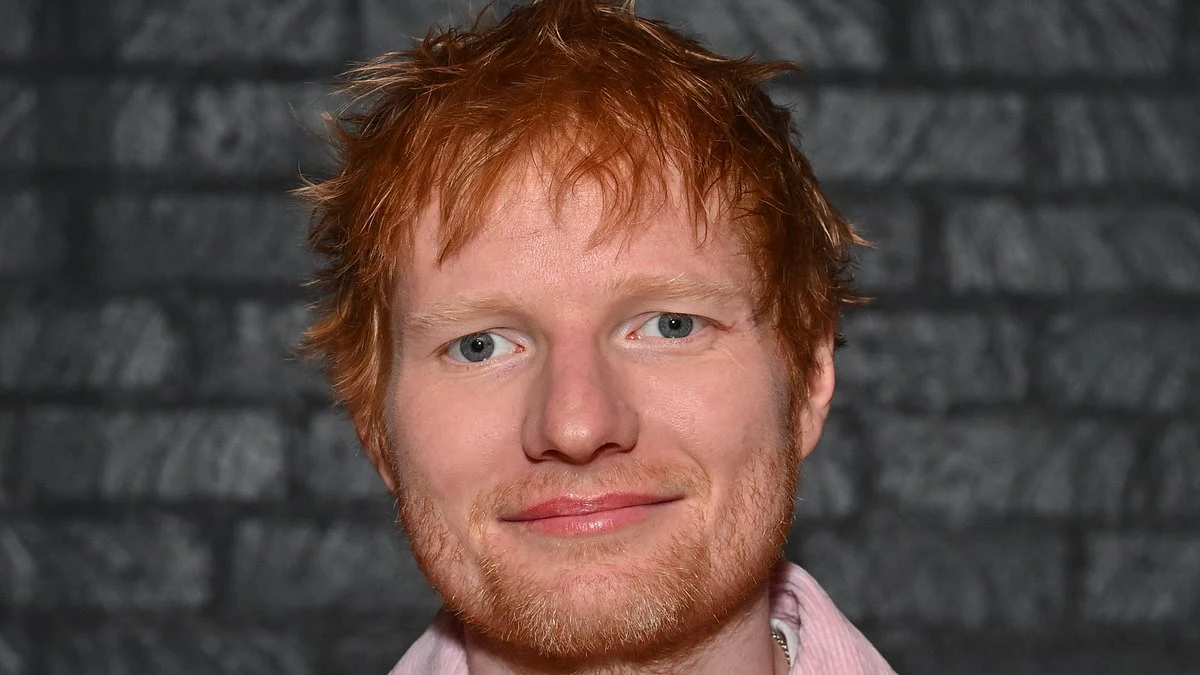
The atmosphere surrounding Lincoln Financial Field in Philadelphia took a volatile turn on Saturday night as British singer-songwriter Ed Sheeran prepared to take the stage for his latest tour stop. What was intended to be a high-profile stop on his current concert circuit became a focal point for political demonstration and civil unrest. Protestors gathered in significant numbers, targeting the event in response to the recent removal of American rapper Macklemore from Sheeran’s tour lineup. The demonstration, characterized by high-decibel chanting and visual displays of dissent, marks a significant escalation in the public backlash facing Sheeran and his tour management following a week of internal turmoil and high-profile departures by opening acts.
The demonstration began hours before the 35-year-old music star was scheduled to perform. Video footage captured by FreedomNews and subsequently circulated by major outlets such as TMZ showed a tense scene outside the stadium gates. One individual was recorded shouting, "F your concert, f your fans. Palestine is our demand," while dozens of other activists congregated at a nearby subway station to chant, "Free Palestine." The visual elements of the protest were equally striking; one demonstrator wore a red baseball cap styled after the "Make America Great Again" merchandise, but modified to read "Make Palestine Free Again." Other signs held by protestors specifically targeted political figures, with messages such as "Netanyahu has blood on his hands" and "Let Gaza live" prominently displayed.
The Catalyst: The Dismissal of Macklemore
The roots of Saturday’s unrest can be traced back to Monday, when it was officially announced that Macklemore had been axed from the remainder of the LOOP Tour. The decision followed a series of performances at MetLife Stadium in East Rutherford, New Jersey, on September 4 and 5, during which Macklemore utilized his platform to deliver impassioned remarks regarding the ongoing Israel-Palestine conflict. His "Free Palestine" statements reportedly triggered a swift and severe reaction from stadium owners and tour promoters.
According to a detailed post shared by Macklemore on Instagram, the decision to remove him was not purely an artistic one but was driven by significant external pressure from venue ownership. Macklemore revealed that Sheeran had informed him of a phone call from Robert Kraft, the owner of the Kraft Group and Gillette Stadium. According to the rapper’s account, Kraft allegedly rallied several other stadium owners to present Sheeran with an ultimatum: if Macklemore remained on the tour, Sheeran would be barred from performing at their respective venues. Macklemore expressed sympathy for Sheeran’s position, noting that his friend of 13 years was placed in a "f***** up position," yet the professional separation has clearly ignited a firestorm of controversy that Sheeran is now struggling to contain.
A Mass Exodus of Support Acts
The removal of Macklemore did not occur in a vacuum; it triggered a domino effect among the tour’s other scheduled performers. In an unprecedented move for a tour of this magnitude, several opening acts and collaborators announced their withdrawal from the tour in solidarity with the ousted rapper.
Finneas, the Oscar-winning producer and brother of Billie Eilish, was among the first to pull out of his scheduled appearances. In a public statement, Finneas emphasized the importance of artistic expression, stating that "artists must not be silenced when they speak up for the oppressed." This sentiment was echoed by other performers, including the Danish pop-rock band Lukas Graham and singer Aaron Rowe. Perhaps most significantly for Sheeran’s long-term fans, his frequent collaborators, the Irish folk band Beoga—who famously backed him on the hit "Galway Girl"—also withdrew their support from the tour.
The collective departure of these artists has transformed the LOOP Tour from a celebration of Sheeran’s discography into a symbol of industry-wide division. The vacancy left by these acts has forced promoters to scramble for replacements, though the political sensitivity of the situation has made finding high-caliber alternatives increasingly difficult.
Industry Reactions and the Melissa Barrera Precedent
The controversy has drawn commentary from various corners of the entertainment industry, including those who have faced similar repercussions for their political stances. Actress Melissa Barrera, 36, who was famously dismissed from the Scream horror franchise nearly three years ago following pro-Palestinian social media posts, spoke to the Associated Press regarding the situation.
Barrera described the wave of support for Macklemore as "beautiful" and admitted to becoming emotional while watching other entertainers risk their careers to take a stand. "I didn’t get that when it happened to me," Barrera noted, reflecting on her own experience in late 2023. "People were too scared. But it’s good to see that almost three years later, at least things have changed." Her comments highlight a perceived shift in the Hollywood and music industry landscape, where the fear of professional "blacklisting" is being challenged by a new wave of collective action among artists.
Conversely, Sheeran has faced sharp criticism from veteran musicians like Roger Waters. The Pink Floyd co-founder, long known for his outspoken political activism, took to social media to bash Sheeran for not taking a firmer stand against the stadium owners’ ultimatum. Waters argued that Sheeran’s failure to defend Macklemore’s right to free speech made him complicit in the "silencing" of political dissent.
Economic Consequences and Box Office Impact
While Ed Sheeran remains one of the highest-grossing touring artists in the world, the current controversy appears to be having a tangible impact on ticket sales. Data from secondary market platforms like StubHub indicated a surprising surplus of tickets for the Philadelphia show. On the day of the concert, hundreds of tickets remained available in the main seating levels, with prices ranging from $51 to $234.
Even more telling was the availability of tickets in the "pit" area—the premium standing section directly in front of the stage. Prices for these coveted spots were observed between $229 and $298, yet scores of tickets remained unpurchased just hours before showtime. For an artist who typically sells out stadium venues within minutes of tickets going on sale, the "humiliation" of vacant seats at Lincoln Financial Field serves as a stark metric of the public’s reaction to the tour’s recent headlines.
Industry analysts suggest that the "box office blow" is twofold: a segment of the fan base is boycotting the tour in support of Macklemore and the Palestinian cause, while another segment is deterred by the potential for protests and the general atmosphere of controversy surrounding the event.
Sheeran’s Official Response and the "Promoter" Defense
In an effort to mitigate the damage to his public image, Ed Sheeran released a statement via Instagram on Tuesday. In the post, the British singer sought to distance himself from the decision-making process that led to Macklemore’s departure. He asserted that the decision was made by the tour’s promoters rather than himself personally.
"I would never let down the fans who had made plans, nor would I abandon the touring crew and the other support acts and musicians who rely on me for work and to make a living," Sheeran wrote. His statement attempted to frame the continuation of the tour as an act of responsibility toward his employees and ticket-holders, rather than a political choice. However, this defense has done little to appease protestors or the artists who have already resigned, many of whom argue that a performer of Sheeran’s stature possesses enough leverage to override promoter demands if he chose to do so.
Timeline of Recent Events
The following chronology outlines the rapid escalation of the controversy:
- September 4–5: Macklemore performs at MetLife Stadium, New Jersey, making several "Free Palestine" remarks during his set.
- September 9: Reports emerge of stadium owners, led by Robert Kraft, pressuring tour management to remove Macklemore.
- September 11: Macklemore is officially "axed" from the LOOP Tour.
- September 12–14: Finneas, Lukas Graham, Aaron Rowe, and Beoga announce their withdrawal from the tour.
- September 15: Melissa Barrera and Roger Waters issue public statements on the matter.
- September 16: Ed Sheeran releases a statement blaming promoters for the lineup changes.
- September 19: Protests erupt outside Lincoln Financial Field in Philadelphia as ticket sales show a significant slump.
Broader Implications for the Music Industry
The situation at Ed Sheeran’s Philadelphia concert reflects a growing tension between the corporate interests of stadium-level touring and the political activism of modern artists. The involvement of stadium owners like Robert Kraft introduces a complex layer of "venue-level censorship" that could have long-term implications for how contracts are negotiated in the future.
As the Philly Palestine Coalition and the group Shut Down D&Z continue to mobilize, the remainder of Sheeran’s tour dates remain under a cloud of uncertainty. The groups have utilized online platforms to signal further actions, using slogans like "Billionaires, Zionists & Warmongers out of Philly." This suggests that the protests in Philadelphia may not be an isolated incident, but rather the beginning of a sustained campaign against the tour.
For Sheeran, the challenge remains one of brand management and moral positioning. While his statement focused on the livelihoods of his crew, the optics of a nearly empty "pit" and a stadium surrounded by protestors suggest that the "Mathematics" of this tour are becoming increasingly difficult to balance. As the music industry watches closely, the events in Philadelphia serve as a potent reminder that in the current social climate, the stage is rarely just a place for music—it is a platform where the world’s most divisive conflicts can take center stage.
