
 By Jia Lissa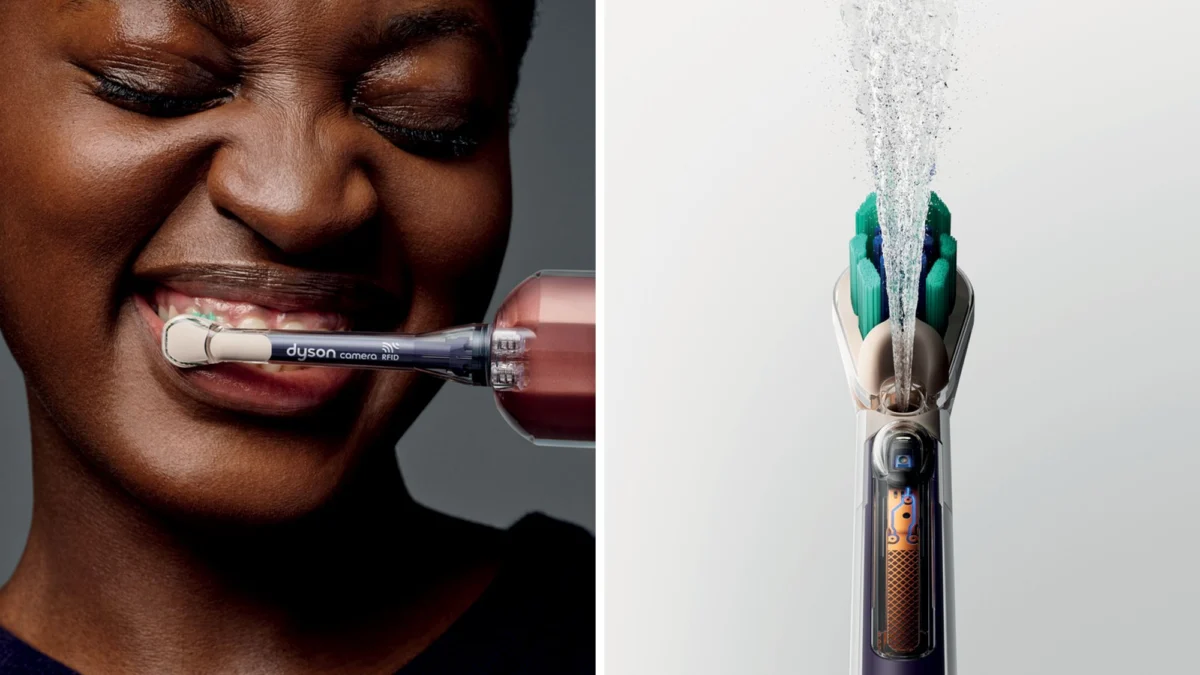
Dyson has unveiled its latest innovation, the CameraJet, a device poised to redefine the oral care landscape. Initially shrouded in secrecy and referred to internally by the codename "682," the CameraJet represents a significant departure from traditional electric toothbrushes, integrating advanced camera technology and a precision water jet system. This ambitious product, priced at $499, aims to address common shortcomings in daily oral hygiene practices by encouraging more thorough and effective cleaning.
The Genesis of an Oral Care Revolution
The journey of the CameraJet began nearly a decade ago, with Dyson engineers embarking on a six-year development cycle to overcome significant technological hurdles. The core concept was to create a device that not only cleans teeth but also provides users with unprecedented insight into their oral health. The inspiration reportedly stemmed from observing suboptimal brushing habits. Statistics reveal that the average American and Brit brush for approximately 45 seconds, falling significantly short of the recommended two minutes. Furthermore, only about one-third of the population flosses daily, with self-reported data often raising questions about accuracy.

This disparity between recommended practices and actual behavior fueled Dyson’s ambition to create a tool that could make superior oral hygiene more accessible and engaging. The company, renowned for its disruptive innovations in consumer electronics, saw an opportunity to apply its engineering prowess to the often-overlooked realm of dental care. The development process was marked by an intense focus on miniaturization, precision engineering, and the integration of complex technologies into a user-friendly device.
Technological Marvels Under the Hood
The Dyson CameraJet distinguishes itself through a combination of sophisticated features. At its heart lies a miniature camera, roughly the size of a pencil tip, equipped with a 100-millimeter pixel macro lens. This camera captures an astonishing 28 images per second, enabling it to meticulously map the contours of each tooth and identify the precise gaps between them. This visual data is then fed to an integrated water jet, nestled beneath the brush head.
Unlike conventional water flossers that often deliver a broad, high-pressure stream, the CameraJet’s jet is designed to emit a targeted, fan-like spray. This nuanced approach allows the fluid to effectively reach interdental spaces, rinsing away plaque and bacteria before they can calcify. The brand emphasizes that this method is designed to be more gentle than traditional water flossers, which can sometimes cause discomfort to gums. Sir James Dyson himself has commented on the perceived unpleasantness of some existing water flossing technologies, noting that many utilize a "needle jet" which can feel like "pressure-washing" teeth. Dyson’s design aims to sweep away debris rather than blast it, offering a more refined cleaning experience.

The device also incorporates sonic oscillation for the brush bristles, ensuring they remain in constant motion and do not stall against teeth, even when the user is not actively moving the brush. This dual-action approach—simultaneous brushing and targeted fluid propulsion—promises a more comprehensive clean.
The Camera’s Dual Role: Diagnostics and Data
Beyond its function in guiding the water jet, the integrated camera serves a crucial diagnostic purpose. The CameraJet is Wi-Fi and Bluetooth enabled, allowing users to connect to the Dyson app. Through the app, individuals can view a real-time feed of their oral cavity as they brush, or record videos for later review. This feature holds potential for enhanced communication with dental professionals, offering a visual record of one’s oral hygiene habits and any areas of concern. Dyson states that these videos are not stored on the app or in the cloud, addressing potential privacy concerns.
Furthermore, the camera can be utilized independently of the brushing and flossing functions, allowing users to simply observe the inside of their mouths. This could be invaluable for identifying issues such as ill-fitting crowns, canker sores, or other oral anomalies. Sir James Dyson has even hinted at the camera’s broader exploratory potential, humorously noting its effectiveness in capturing images of the ear, though he remains tight-lipped on further details regarding non-oral applications.

Engineering Prowess and Overcoming Obstacles
The development of the CameraJet was not without its significant challenges. One of the most formidable was engineering a camera capable of functioning reliably within a high-speed, dynamic environment. "The camera is on a brush head that’s moving about a thousand movements a second," explained Sir James Dyson. "So the camera’s moving and you’re taking a film. Never mind the fact there’s a lot of water in the way." The presence of foam from toothpaste, even a non-foaming variety, added another layer of complexity to capturing clear images. Solving this required an estimated six years of dedicated engineering effort.
Another critical hurdle involved the development and testing of the device’s effectiveness against plaque. Dyson engineers required a consistent and reliable method for simulating plaque buildup to rigorously test prototypes. While existing "proxy plaques" were available, Dyson deemed them insufficient approximations of real-world conditions. In partnership with Singapore University, Dyson spent five years developing its own advanced plaque simulation material. This breakthrough enabled the team to conduct hundreds of brush head iterations and optimize their design without the need for constant, time-consuming clinical trials on human subjects. This commitment to meticulous testing underscores Dyson’s philosophy of iterative development and relentless pursuit of performance.
A Glimpse into the Dysonplex: Innovation Hub
The development of the CameraJet took place at Dyson’s expansive 50-acre campus in Malmesbury, England. This state-of-the-art facility, often referred to as the "Dysonplex," is more than just a research and development center; it’s an ecosystem designed to foster innovation. The campus houses the Dyson Institute of Engineering and Technology (DIET), a unique educational institution that offers tuition-free undergraduate degrees in engineering. Students at DIET not only receive a rigorous education but also gain hands-on experience working on Dyson’s cutting-edge projects, earning a salary while they study. This program cultivates a pipeline of highly skilled engineers, many of whom contributed to the CameraJet’s development.

The Dysonplex features specialized laboratories for acoustic engineering, where the sound profiles of all Dyson products are meticulously fine-tuned, and facilities for 3D printing prototypes, allowing for rapid iteration and testing. The campus also boasts employee amenities such as a salon and a cafeteria, reflecting Dyson’s commitment to its workforce. Notably, Sir James Dyson is also one of the largest landowners in Britain through Dyson Farming, which supplies produce and meats for the company’s cafeterias, with some ingredients even finding their way into Dyson’s hair care products.
The secrecy surrounding new Dyson innovations is legendary. Employees involved in confidential projects are often bound by strict non-disclosure agreements, even with their spouses. This culture of discretion ensures that Dyson maintains a competitive edge, unveiling groundbreaking products that often redefine their respective markets.
Initial User Experience and Performance Data
Early testing of the CameraJet, conducted in controlled environments such as hotel suites, has yielded promising results. Beauty director Sarah Kinonen and the author experienced the device firsthand, noting its lightweight design (just over eight ounces) and quieter operation compared to existing electric toothbrushes and water flossers. The sensation of the water jet was described as pleasant, with minimal fluid overflow. The device’s ability to maintain fluid propulsion even when inverted was highlighted as a significant advantage over some competitors.

While the initial user experience has been overwhelmingly positive, questions remain about the CameraJet’s ultimate effectiveness compared to traditional methods. Dyson has provided preliminary clinical trial data from a four-week study involving 60 subjects. In this study, the CameraJet demonstrated superior results in reducing gum inflammation and bleeding compared to a manual toothbrush. Specifically, 17% of CameraJet users experienced reduced gum inflammation versus 9% of manual toothbrush users. Gum bleeding reduction was reported at 65% for CameraJet users compared to 37% for manual toothbrush users. A significant majority, 74%, of CameraJet users achieved "healthy gums," compared to 6% of manual toothbrush users.
However, the difference in plaque reduction was less dramatic, with CameraJet users showing 19% less buildup and manual toothbrush users showing 12% less. Dyson acknowledges that this comparison involved a manual toothbrush, and further studies comparing the CameraJet against leading electric toothbrushes and standalone water flossers are anticipated. The company states that internal and external lab testing has indicated superior plaque removal capabilities compared to market leaders, but detailed data has yet to be publicly released.
Market Implications and Future Outlook
The $499 price point positions the Dyson CameraJet as a premium product, placing it in direct competition with high-end electronics rather than typical oral care devices. This pricing strategy, however, echoes Dyson’s past launches, such as the Supersonic hairdryer and the Airwrap styler, which were met with initial skepticism but ultimately found significant market success due to their perceived value and performance.

The CameraJet’s success will likely depend on its ability to convincingly demonstrate its superior efficacy and unique value proposition to consumers. The integration of camera technology and guided water flossing represents a novel approach to oral hygiene, and its long-term impact on dental health remains to be fully assessed.
Dyson’s strategy of creating aspirational, technologically advanced products that encourage better user habits has proven effective across various categories. If the CameraJet can translate its engineering prowess into tangible improvements in oral health outcomes, it has the potential to not only conquer bathroom counters but also fundamentally change how people approach their daily dental routines.
The Dyson CameraJet officially launched on September 1, available in Ceramic Ultra Blue and Ceramic Pink. The package includes the docking station, two brush heads, a charging cable, and a travel case. Dyson also plans to release a proprietary non-foaming toothpaste and mouthwash to complement the device. As the product becomes available to the wider public, extensive testing and analysis by dental professionals will undoubtedly provide further insights into its efficacy and place in the evolving landscape of personal care technology.
