
 By admin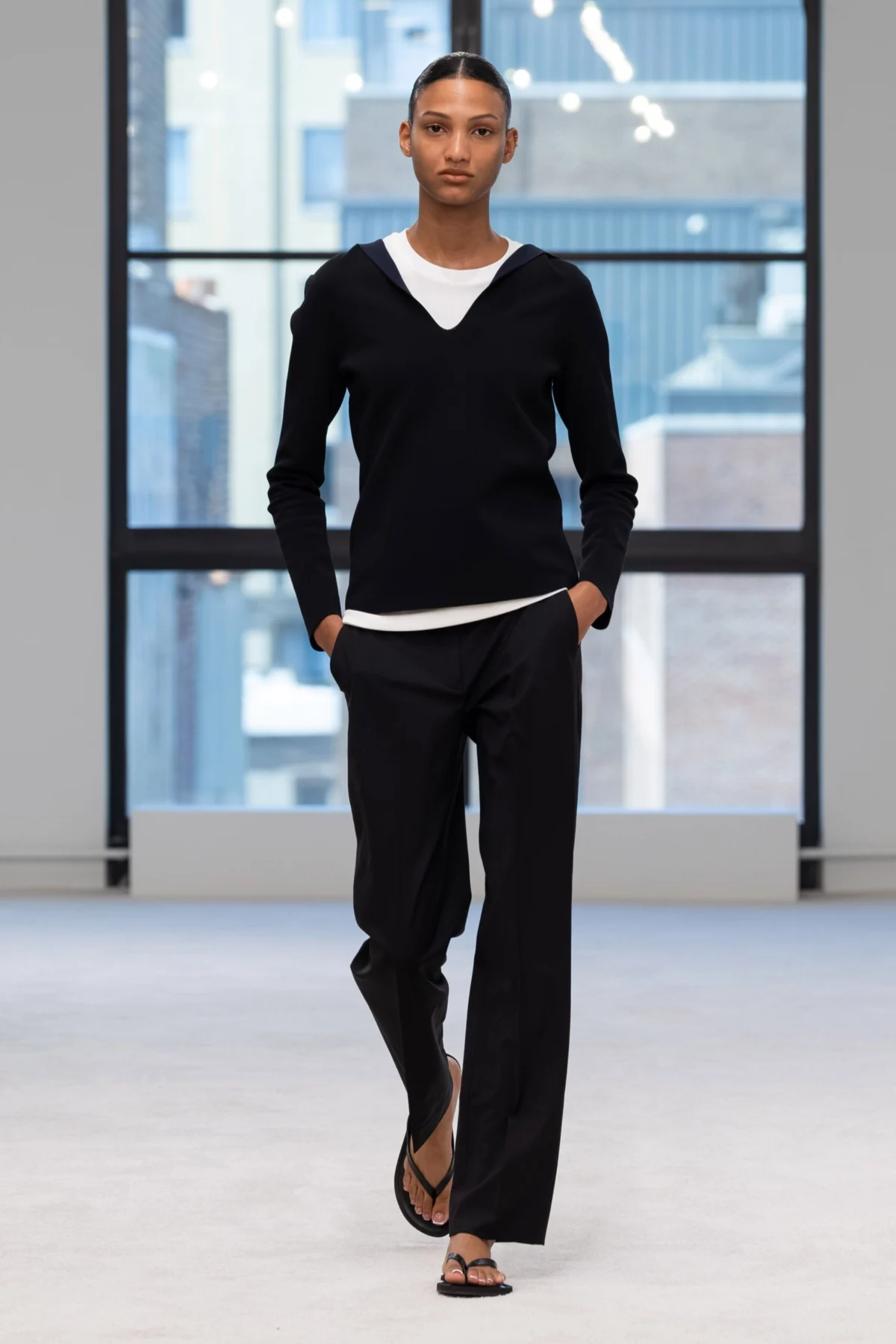
The Spring 2027 collection unveiled by Dushane Noble for Theory at the brand’s Meatpacking studio-turned-runway has ignited significant discussion within the fashion industry, positioning itself at the nexus of contemporary cultural discourse surrounding taste, status, and the evolving definition of glamour. Noble’s latest offering is not merely a display of garments but a meticulously curated exploration of how societal desires for social rank subtly shape aesthetic preferences, ultimately influencing what is deemed "cool" or "good taste." This intellectual underpinning, combined with a pragmatic approach to luxury, marks a pivotal moment for Theory as it continues to redefine modern professional dressing.
The Philosophical Core: Deconstructing Taste and Status
At the heart of Noble’s Spring 2027 collection lies a deep engagement with the ongoing debate about taste as a social signifier. In an era increasingly dominated by algorithmic recommendations and the rapid commodification of trends—often dubbed "tasteslop"—the very essence of genuine taste is under scrutiny. Noble, however, eschews direct participation in the "tasteslop" debate, opting instead to delve into the more fundamental question: What truly sparks desire?
His intellectual journey for this collection was significantly informed by W. David Marx’s seminal work, Status and Culture: How Our Desire For Social Rank Creates Taste, Identity, Art, Fashion And Constant Change. Marx’s thesis posits that the quiet engine behind much of what we perceive as good taste or cultural coolness is, in fact, an innate human drive for status-seeking. Noble articulated this insight during a pre-show press briefing, stating, "[Marx] talks about this idea of status-seeking being the quiet engine behind taste and culture—that what we see as cool or good taste is really status." This perspective offers a sophisticated lens through which to view fashion, moving beyond superficial aesthetics to consider its deeper psychological and sociological functions.
The choice of Marx’s work as a foundational text is particularly pertinent in the current socio-economic climate. As income disparities widen and social media platforms amplify the display of wealth and lifestyle, the acquisition of "good taste" has become a new frontier for status assertion. Noble’s collection implicitly interrogates whether taste can indeed be acquired, much like wealth or material commodities, a question that resonates deeply with contemporary anxieties and aspirations, particularly among the burgeoning tech elite often associated with rapid upward mobility and a desire for cultural legitimacy.
A Nod to the 1980s: The Genesis of Modern Glamour
Following his theoretical exploration, Noble’s research led him to a specific historical period that epitomized the overt expression of status and power through dress: the 1980s. This decade, characterized by its economic boom, the rise of corporate culture, and the emergence of the "yuppie" (Young Urban Professional), presented a rich tapestry of sartorial choices driven by ambition and aspiration. Noble identified this era as one marked by an "obsession with status, power dressing, and glamour as we’ve come to know it today."
The 1980s saw the widespread adoption of specific stylistic elements that communicated authority and success. Power shoulders, designed to broaden the wearer’s silhouette and project confidence, became ubiquitous. Skirt suits, often in sharp, structured forms, were the uniform of the ambitious working woman breaking into traditionally male-dominated corporate environments. This aesthetic was not merely about looking good; it was about embodying strength, competence, and a claim to power. Noble’s decision to revisit this era is strategic, providing a historical context for the modern woman’s desire for glamour that is both aspirational and functional.
His collection, therefore, reimagines these iconic silhouettes for the 21st century. The double-breasted skirt suit, a quintessential 80s staple, reappeared in two distinct interpretations. One, a more conservative knee-length option, was styled with a classic banker shirt and a sleek nylon car coat, appealing to a sense of timeless professionalism. The other, a decidedly "sexier miniskirt" version, offered a bolder, more contemporary take, acknowledging the evolving boundaries of corporate dress codes and individual expression within professional settings. This dual approach underscores Noble’s understanding that the modern working woman embodies multiple facets of identity and requires a wardrobe that can adapt to diverse professional and social contexts.
Theory’s Clientele: Glamour for the Metropolitan Working Woman
While the inspiration might be rooted in the grand statements of the 1980s, Noble remains acutely aware of Theory’s core customer: the working woman navigating the demands of a metropolitan city. This demographic requires clothing that marries sophistication with practicality, an ethos that has long defined Theory’s brand identity. Noble succinctly captured this challenge, noting, "Glamour only really works for our customer if they can survive their commute." This statement encapsulates the collection’s central tension and its innovative solutions: how to imbue everyday wear with a sense of elevated style without sacrificing comfort, durability, or ease of movement.
This practical consideration heavily influenced Noble’s fabric choices for the Spring 2027 collection. The star of the season was undoubtedly daytime taffeta. Traditionally reserved for eveningwear and couture due to its luxurious sheen, crispness, and structured drape, 100% silk taffeta is delicate and not typically associated with the rigors of daily life. Noble’s innovation lay in integrating this opulent material into a more versatile context. By weaving nylon into the taffeta, he achieved a hybrid fabric that retained the desirable aesthetic qualities—the lustrous sheen, the architectural crispness—while gaining the resilience and durability necessary for everyday wear. This technical textile development allowed Noble to "take it out of that sort of extravagant, fancy world and into something that feels more everyday," as he explained.
The practical application of this blended fabric was evident in several key pieces. Basketball shorts, traditionally a sportswear item, were rendered in the taffeta-nylon blend, instantly elevating them from casual to chic. Similarly, a slinky boatneck minidress, while glamorous, benefited from the fabric’s enhanced durability, making it suitable for a range of occasions beyond formal events. This deliberate juxtaposition of high-end materials with casual silhouettes is a hallmark of Noble’s vision, reflecting a contemporary shift towards a more fluid and less rigid approach to dressing.
Elevated Craftsmanship: Couture Touches for Everyday Life
Noble’s commitment to bringing glamour into ordinary life extends beyond fabric innovation to the very construction of the garments. While Theory is firmly rooted in ready-to-wear, Noble integrated couture-inspired tailoring practices, translating the precision and artistry of high fashion into accessible, everyday pieces. This approach elevates the collection, offering customers a taste of bespoke quality within a practical framework.
A standout example was the sculptural leather jacket, which featured minimal seams for a streamlined, almost monolithic finish. In couture, extensive hand-finishing and complex pattern-making often lead to garments with invisible seams or strategically placed ones that enhance the garment’s form. Noble adapted this principle, using expert cutting and construction techniques to create a leather jacket that felt both architectural and effortlessly refined, a testament to the idea that sophisticated design can be achieved through thoughtful simplification. The minimal seams not only contributed to a sleek aesthetic but also likely enhanced the garment’s durability and comfort.
Another compelling piece was the denim cocoon jacket, which paid homage to the revolutionary designs of Paul Poiret. Poiret, an early 20th-century French couturier, is celebrated for liberating women from corsets and introducing innovative, often voluminous silhouettes, such as the cocoon coat. By translating this historical, high-fashion silhouette into denim—a fabric synonymous with utilitarianism and casual wear—Noble created a piece that bridged historical elegance with contemporary accessibility. The denim cocoon jacket thus embodies the collection’s core philosophy: the desire for couture-level artistry can and should be integrated into the fabric of daily life. It is a powerful statement about democratizing luxury and making aspirational fashion tangible for the modern consumer.
Broader Implications and Industry Resonance
Dushane Noble’s Spring 2027 collection for Theory is more than just a seasonal offering; it is a thoughtful commentary on the evolving landscape of fashion and society. By anchoring his designs in sociological theory and historical context, Noble elevates the collection beyond mere trend-following. He invites consumers and industry observers alike to ponder the deeper motivations behind their sartorial choices.
Impact on Theory’s Brand Identity: This collection solidifies Theory’s position as a brand that understands the intellectual and practical needs of its discerning clientele. It demonstrates a sophisticated evolution, moving beyond its established minimalist aesthetic to embrace a nuanced form of "quiet glamour." By infusing everyday wear with couture-level craftsmanship and philosophical depth, Noble is likely to attract a new segment of consumers who seek investment pieces that are both stylish and intellectually engaging, while retaining Theory’s core base of professionals who value quality and versatility.
Industry Trends and Consumer Behavior: Noble’s approach resonates with several broader industry trends. The increasing demand for "post-luxury" or "stealth wealth" where overt branding is replaced by impeccable quality, subtle design, and intellectual gravitas, finds a strong voice in this collection. The emphasis on versatile fabrics that transition seamlessly from professional settings to social engagements also aligns with the ongoing blurring of traditional dress codes, a shift accelerated by hybrid work models and evolving lifestyles. Furthermore, by addressing the fundamental question of "what sparks desire," Noble taps into a universal human experience, making the collection relatable on a profound level.
Critical Reception and Future Outlook: Early reactions from fashion critics suggest a positive reception, praising Noble’s intellectual rigor and his ability to translate complex ideas into commercially viable and aesthetically pleasing garments. Industry analysts note the collection’s strategic positioning, suggesting it could strengthen Theory’s market share in the premium contemporary segment. The blend of historical reverence, contemporary relevance, and forward-thinking material innovation positions Theory as a thought leader in the realm of accessible luxury.
In essence, Dushane Noble’s Spring 2027 collection for Theory is a masterclass in balance: balancing intellectual curiosity with commercial viability, historical homage with modern innovation, and aspirational glamour with everyday practicality. It is a compelling argument that true style is not merely about outward appearance but about an intelligent engagement with culture, status, and the enduring human desire for both beauty and belonging. As the fashion industry continues to grapple with rapid changes and existential questions, Noble offers a vision that is both grounded and aspirational, proving that the pursuit of elegance can indeed survive the morning commute.
