
 By admin
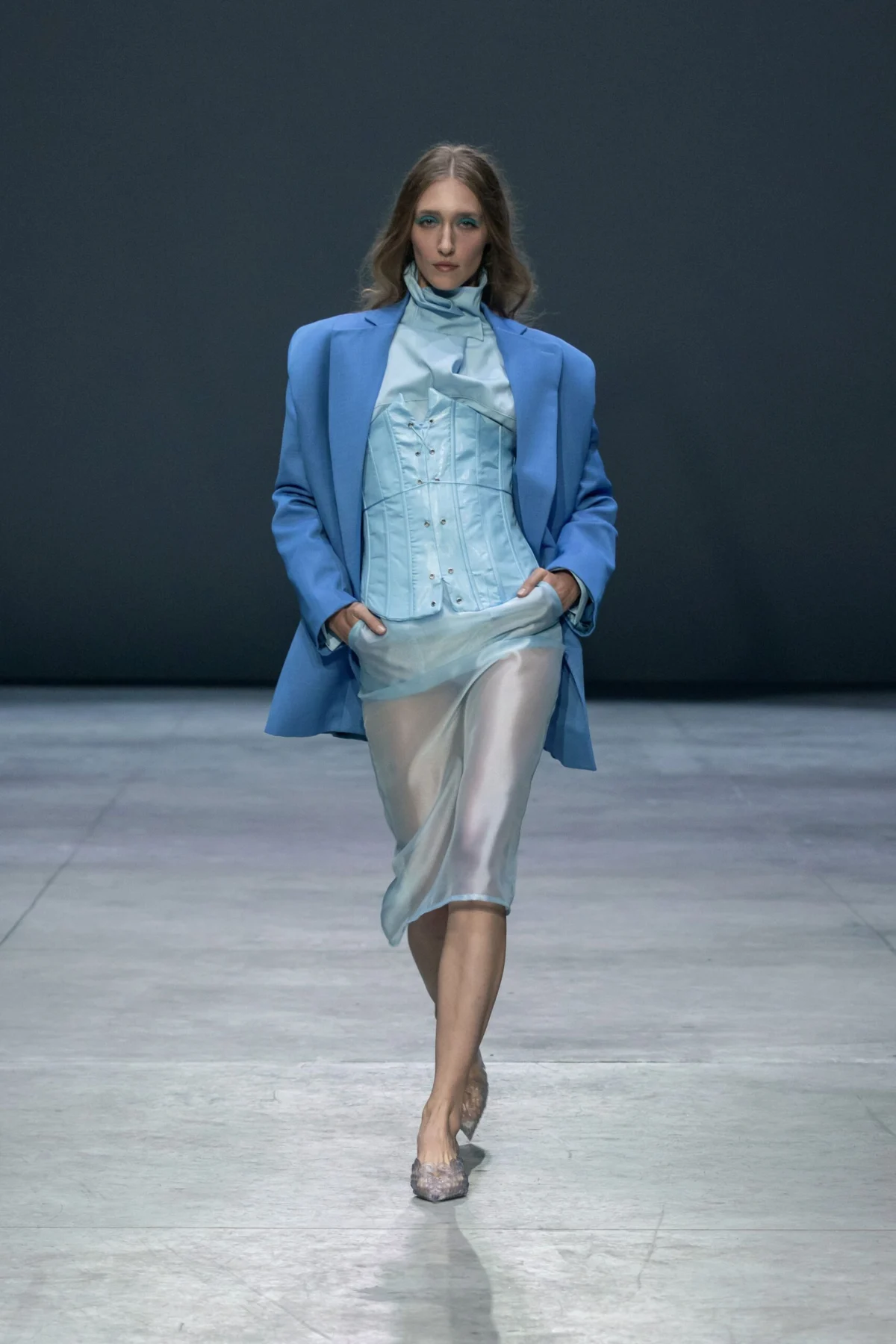
In the dynamic landscape of contemporary fashion, Daniel Herranz, the visionary behind Zurce, has carved a distinctive niche, transforming his brand over four pivotal years from a specialized knitwear house into a comprehensive wardrobe offering. His latest collection, "La Hora del Té," inspired by Lewis Carroll’s whimsical Alice’s Adventures in Wonderland, stands as a testament to this evolution, showcasing an unexpected fusion of textiles, silhouettes, and proportions that defy conventional categorization. Since his debut at Mexico Fashion Week with the "Sentimiento" collection, Herranz has consistently refined Zurce’s identity, anchoring it in a profound engagement with literary narratives and a resolute commitment to crafting garments that are both artful and eminently wearable, tailored specifically for the modern Mexican consumer.
The Genesis and Evolution of Zurce: A Four-Year Trajectory
Zurce’s journey began approximately four years ago with its inaugural collection, "Sentimiento," presented at the esteemed Mexico Fashion Week. At its inception, the brand was largely synonymous with sophisticated knitwear, a specialty that quickly garnered attention for its intricate craftsmanship and contemporary appeal. Mexico Fashion Week, a crucial platform for showcasing the nation’s burgeoning design talent, provided Herranz with the ideal stage to introduce his unique aesthetic. Over the past decade, Mexico Fashion Week has grown significantly, attracting both national and international buyers and media, solidifying its role in fostering a vibrant domestic fashion industry and projecting Mexican design onto the global stage. For emerging designers like Herranz, participation in such an event is instrumental in establishing credibility, securing early market penetration, and building a foundational brand narrative.
The intervening years have witnessed a deliberate and strategic expansion of Zurce’s creative scope. This evolution was not merely an incremental addition of new garment categories but a fundamental redefinition of the brand’s core offering. Herranz steered Zurce away from its initial niche, embracing a broader vision that encompasses a full spectrum of everyday pieces, each elevated by his distinctive design philosophy. This pivot reflects a growing trend in the fashion industry where designers are increasingly expected to offer versatile, seasonless collections that cater to diverse aspects of a consumer’s lifestyle, moving beyond single-category specialization.
Literary Canvas: Crafting Identity Through Narrative
A defining characteristic of Herranz’s creative process in recent years has been his recourse to literature as a wellspring of inspiration. This intellectual approach to design imbues each collection with a thematic depth that transcends mere aesthetic appeal. For his last three collections, Herranz has turned to seminal literary works that have left an indelible mark on his psyche, translating their narratives, characters, and emotional landscapes into tangible fashion statements.
The first of these literary-inspired collections drew from Prosper Mérimée’s classic novella, Carmen. This choice likely allowed Herranz to explore themes of passion, intensity, freedom, and the tragic allure of destiny through his designs. While specific details of that collection are not provided, one can infer that it might have featured bold colors, dramatic silhouettes, or perhaps elements reflecting the flamenco aesthetic or the rugged landscapes of Andalusia. The psychological complexity of Carmen, a character who embodies defiance and independence, would have offered a rich palette for sartorial interpretation.
Following Carmen, Herranz delved into the profound and haunting world of Juan Rulfo’s Pedro Páramo. This choice is particularly significant as Pedro Páramo is widely regarded as a masterpiece of Mexican literature, a foundational text of magical realism that explores themes of loss, memory, the afterlife, and the fractured legacy of the Mexican Revolution. Translating such a dense and evocative narrative into fashion would have presented a unique challenge, potentially leading to a collection characterized by ethereal textures, muted palettes reflecting the ghostly town of Comala, or silhouettes that evoke a sense of longing and melancholic beauty. This foray into a quintessentially Mexican literary work also foreshadowed Herranz’s later articulation of a brand identity deeply rooted in its national context.
For his latest offering, Herranz immersed himself in the whimsical and often surreal world of Lewis Carroll’s Alice’s Adventures in Wonderland. This choice, deeply personal to the designer, resonates with a sense of nostalgic wonder. "It was the first book my grandmother gave me when I was around seven," Herranz recounted. "Revisiting the text, interpreting it in a different way, and bringing it into what we do at the brand was incredible." This personal connection undoubtedly infused the collection with an authentic emotional layer, allowing for a playful yet sophisticated interpretation of Carroll’s iconic narrative. The act of re-interpreting a childhood memory through the lens of adult creativity offers a powerful commentary on the cyclical nature of inspiration and the enduring power of foundational experiences.
"La Hora del Té": A Collection of Dualities and Delights
The result of this journey into Wonderland is "La Hora del Té," a collection that masterfully balances extravagance with practicality, allowing for diverse styling possibilities. The collection’s title itself, "La Hora del Té" (The Tea Hour), directly references the iconic Mad Hatter’s Tea Party chapter, a scene synonymous with delightful absurdity, illogical charm, and a vibrant sense of fantasy. This inspiration is palpable in the garments, which often oscillate between dreamlike qualities and grounded wearability.
Key elements of "La Hora del Té" evoke the playful spirit of Carroll’s narrative. Sheer pastel skirts, for instance, capture the ethereal quality of Wonderland, suggesting lightness, innocence, and a touch of the fantastical. These pieces, while visually delicate, are designed to be integrated into everyday ensembles, offering a hint of whimsy without sacrificing sophistication. Shirts with ingeniously built-in fastenings that secure ties in place demonstrate Herranz’s commitment to thoughtful design and functional elegance, blending formal elements with unexpected details. Sequined pieces further amplify the collection’s playful spirit, reflecting the dazzling, often disorienting, brilliance of Alice’s journey. These garments are not merely decorative; they embody the lightheartedness and celebratory mood inherent in the "Tea Party" scene, allowing wearers to inject a sense of joy and sparkle into their wardrobes.
Beyond these more overtly whimsical elements, "La Hora del Té" introduces a structured yet equally creative dimension through its tailoring. Fluid pleated pants, paired with matching jackets, showcase Herranz’s nuanced understanding of proportion and silhouette. These tailored pieces are designed to sculpt the body while allowing for ease of movement, demonstrating a sophisticated approach to form that is both modern and timeless. The tailoring, while providing a necessary grounding force, never feels rigid or conventional; instead, it retains an imaginative quality, playing with expected lines and volumes to create compelling visual narratives. This interplay between the structured and the flowing, the elaborate and the practical, forms the core tension and ultimate success of the collection, mirroring the delightful paradoxes found within Carroll’s work.
The collection was thoughtfully conceived in "chapters," a structural approach that further underscores its literary origins. One particularly striking chapter eschewed color entirely, dedicating itself to an exploration of shape and proportion rendered solely through the stark contrast of black and white. This monochromatic segment allowed Herranz to highlight the architectural integrity of his designs, focusing on the interplay of light and shadow, volume and line, without the distraction of hue. It’s a bold statement that speaks to the timeless appeal of classic silhouettes and the enduring power of foundational design principles.
While crochet, a technique historically prominent in Zurce’s earlier knitwear-focused collections, has become less dominant in the brand’s broader wardrobe offerings, its presence in "La Hora del Té" was both charming and strategically placed. A few sweaters showcased the craft in its more traditional form, offering a nostalgic nod to the brand’s origins. More compelling, however, was its subtle reinterpretation: its discreet appearance as a design code beneath a trench coat. This unexpected integration elevates crochet from a mere craft technique to a sophisticated design element, revealing a hidden layer of detail and craftsmanship that adds depth and intrigue to an otherwise classic garment. It speaks to Herranz’s ability to evolve traditional elements into contemporary contexts, maintaining a connection to heritage while pushing boundaries.
The Vision: A Brand "Made for Mexico"
Central to Daniel Herranz’s evolving vision for Zurce is an unequivocal commitment to national identity. "We want to build a brand that feels Mexican, made for Mexico," Herranz articulated, underscoring a philosophy that transcends mere geographical origin. This statement is not just about production locale; it’s about imbuing the brand with a spirit and sensibility that resonates with the Mexican experience, catering to the specific needs and aesthetic preferences of the local consumer base, while simultaneously appealing to a broader, international audience through its distinct voice.
The emphasis on creating "clothes people actually wear" speaks to a pragmatic yet elegant approach to design. Herranz understands that true fashion utility lies in versatility. "Because at the end of the day, you can wear a jacket to work. That’s the versatility we’re looking for," he explained. This focus on adaptability ensures that Zurce’s garments are not merely runway spectacles but integrated components of a functional, stylish wardrobe. This ethos aligns with a global shift towards mindful consumption and investment in durable, versatile pieces rather than fleeting trends. For the Mexican market, where diverse climates and social contexts demand adaptable clothing, this versatility is particularly pertinent.
Herranz’s analogy, drawing a parallel between Lewis Carroll’s multifaceted work and the complexity of Mexico, is particularly insightful. He notes that "Like Lewis Carroll’s work, Mexico can be read from different perspectives, none of them uniform, all of them full of unexpected turns." This statement encapsulates the richness and diversity of Mexican culture, which cannot be reduced to a single narrative or aesthetic. Instead, it is a vibrant tapestry woven from indigenous traditions, colonial legacies, modern urbanism, and a dynamic creative spirit. By embracing this multiplicity, Zurce aims to create a brand that reflects the nuanced reality of contemporary Mexico – a country that is both deeply rooted in its past and vigorously forward-looking. This approach allows Herranz to avoid stereotypical representations of Mexican design, instead focusing on an authentic, evolving interpretation of national identity through modern fashion.
Implications for Mexican Fashion and Beyond
Zurce’s trajectory and the philosophy behind "La Hora del Té" carry significant implications for the broader Mexican fashion industry and its standing on the global stage. By consciously striving to build a brand that is "Mexican, made for Mexico," Daniel Herranz contributes to the strengthening of local manufacturing, talent, and creative ecosystems. This focus not only supports the national economy but also helps to cultivate a distinct Mexican fashion identity that can compete internationally. In an increasingly globalized market, consumers are often drawn to brands that offer a strong sense of place and authentic cultural narrative, and Zurce is strategically positioned to fulfill this demand.
The brand’s success in evolving from a niche knitwear specialist to a broader lifestyle offering demonstrates a sophisticated understanding of market dynamics and consumer desires. This strategic agility serves as a model for other emerging designers in Mexico, highlighting the importance of adaptability and a clear vision. Furthermore, Herranz’s consistent use of literary inspiration elevates the intellectual discourse surrounding Mexican fashion, positioning it as a realm where art, culture, and commerce intersect meaningfully. This approach adds a layer of depth that can attract a more discerning clientele and garner critical acclaim beyond purely aesthetic judgments.
The emphasis on versatility and wearability addresses a critical need in the modern fashion landscape. As sustainability becomes an increasingly urgent concern, brands that offer durable, multi-functional garments are gaining favor. While not explicitly stated as a sustainability initiative, Zurce’s focus on creating "clothes people actually wear" and "can wear…to work" inherently promotes a more considered approach to consumption, encouraging investment in quality pieces with longevity rather than disposable fashion. This aligns with broader industry trends towards conscious fashion, where value is placed on timeless design and enduring utility.
In conclusion, Daniel Herranz’s Zurce, with its latest collection "La Hora del Té," represents a compelling synthesis of artistic vision, literary depth, and pragmatic design. Over four years, the brand has matured into a significant voice in Mexican fashion, one that celebrates its cultural heritage through a modern lens. By translating the whimsical narratives of Alice’s Adventures in Wonderland into a collection that is both elaborate and practical, and by articulating a clear vision for a brand "made for Mexico," Herranz not only defines Zurce’s unique identity but also contributes meaningfully to the ongoing evolution of Mexican design, showcasing its capacity for innovation, cultural resonance, and global appeal. His work reminds us that fashion, at its most profound, is a reflection of identity – personal, cultural, and universal.
