
 By admin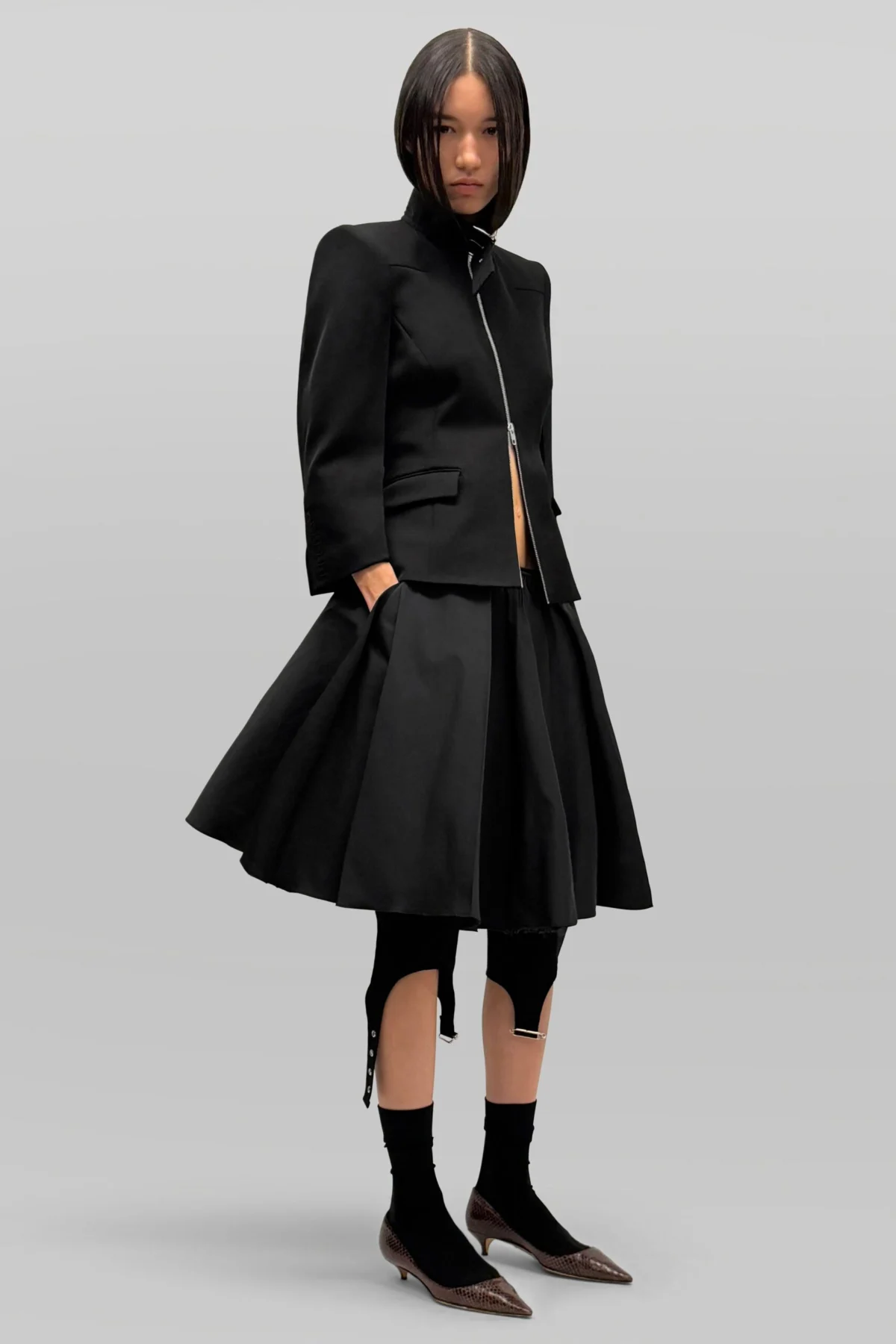
The New York fashion landscape, often characterized by its dynamic energy and relentless pursuit of innovation, recently witnessed a significant evolution from one of its most compelling labels: Commission. Designers Jin Kay and Dylan Cao, the creative forces behind the brand, have unveiled a Spring collection that marks a pivotal moment in their trajectory, signaling a sophisticated maturation while steadfastly retaining the subversive spirit that first catapulted them into prominence. Since its inception in 2018, Commission has carved a distinctive niche by adeptly twisting and recontextualizing American sportswear, earning a reputation as a go-to for edgy, thought-provoking designs that boldly challenge conventional beauty standards. However, for their latest offering, Kay and Cao embarked on a deeply introspective journey, questioning how to elevate and refine their aesthetic, aiming for a synthesis of conceptual depth and undeniable chic. As Cao articulated, "It was quite an introspective season. We started the brand in our mid-20s, and now that we’re in our 30s, this felt like a second coming-of-age for the brand."
This period of reflection did not, however, lead to a dilution of Commission’s signature off-kilter charm. On the contrary, the new collection amplified their renowned ability to create unexpected combinations—transforming casual fabrics into fanciful statements and repurposing garments to forge entirely novel expressions. The designers delved into the wellspring of their youth memories, drawing inspiration from the suburban malls and house parties of the 2000s. More profoundly, it was a youthful sense of "scrappiness" that informed the new assortment, translated with remarkable ingenuity into a collection that speaks to a grown-up wardrobe without sacrificing its rebellious undercurrent. Cao emphasized the desire for authenticity: "We started thinking about youth, without wanting it to feel like a constructed idea of youth. We wanted it to feel authentic and personal to who we are now." This nuanced approach resonates with a broader industry trend where designers are increasingly exploring personal narratives and the authenticity of lived experience as primary creative drivers, moving beyond superficial trend cycles to create collections with deeper emotional resonance.
The Genesis of Commission: A Brief Chronology and Design Philosophy
Commission was founded in 2018 by Jin Kay and Dylan Cao, quickly establishing itself as a formidable presence in the competitive New York fashion scene. Both designers brought a distinct vision rooted in challenging the status quo of contemporary fashion. Their initial collections were marked by a playful yet sharp deconstruction of familiar archetypes, particularly American sportswear, often infusing them with elements of Asian tailoring and a subtle fetishistic undertone. This unique blend allowed them to critique and celebrate sartorial conventions simultaneously, attracting a clientele drawn to their intelligent, boundary-pushing designs.
The brand’s rapid ascent can be attributed to several factors. Firstly, their clear aesthetic identity resonated with a growing segment of the market—discerning consumers seeking garments that offer more than just aesthetic appeal but also a conceptual narrative. Secondly, their focus on challenging traditional notions of beauty and gender fluidity, even if subtly, aligned with evolving societal conversations about identity and self-expression. Lastly, their ability to create pieces that were visually striking yet inherently wearable, bridging the gap between editorial fantasy and everyday reality, further solidified their appeal. This consistent output of thought-provoking yet commercially viable collections has positioned Commission not merely as a fashion label, but as a cultural commentator within the industry.
Inspiration and Introspection: Crafting a Mature Narrative
The Spring collection emerges from a period of profound introspection for Kay and Cao, reflecting not only their personal growth but also a strategic evolution for the brand. The concept of a "second coming-of-age" is particularly pertinent in an industry often obsessed with novelty and youth. Commission’s designers recognized that their initial audience, like themselves, has matured. This realization spurred them to explore how the rebellious spirit of youth could be translated into a sophisticated, yet still distinctive, adult wardrobe.
The designers’ dive into memories of their youth—suburban 2000s malls, house parties—serves as a rich tapestry of cultural reference points. The 2000s, a decade often revisited in fashion for its Y2K aesthetics, is approached by Commission not as a superficial trend, but as a source of raw, unpolished inspiration. The "scrappiness" they speak of refers to the DIY spirit, the improvisational styling, and the unpretentious nature of adolescent self-expression. This approach moves beyond mere nostalgia; it’s about extracting the essence of that era’s attitude and filtering it through a mature, refined lens. This aligns with broader fashion trends where brands are increasingly looking to specific cultural moments for authentic inspiration, reinterpreting them to create a dialogue between past and present. The challenge, as Cao highlighted, was to ensure this exploration of youth felt "authentic and personal to who we are now," avoiding any contrived or superficial representation.
Key Womenswear Offerings: Elegance Forged from Deconstruction
The women’s collection, a compelling narrative of empowered femininity, showcased Commission’s mastery in transforming familiar silhouettes with unexpected details. The opening look, a sharp black blazer, epitomized this philosophy. Far from being a conventional corporate staple, it featured a princess seam along the front and back, imparting a subtle flare that defied its traditional structure. A distinctive buckled neckline further subverted expectations, rendering the garment both professional and provocatively modern. This piece speaks to the contemporary professional woman who values structure but demands individuality, a growing demographic seeking power dressing that transcends conventional formality.
Their interpretation of the timeless little black dress (LBD) was equally innovative. Crafted from luxurious satin, it adopted a boxy silhouette, a departure from the body-con styles often associated with the LBD. Faux epaulettes on the back added a subtle militaristic edge, a playful nod to utility while maintaining an air of sophistication. These designs felt "familiar, yet fresh," a testament to the designers’ ability to subtly shift perceptions of classic garments.
However, the collection’s most statement-worthy frock was undoubtedly the plaid cotton dress. This piece expertly blended disparate influences, featuring a Western-style yoke that evoked Americana, paired with long "shirt sleeves" designed to tie and wrap around the waist, providing definition to the otherwise flowing form. The full skirt, achieved through a meticulously constructed horsehair underlay, added volume and theatricality. Cao’s commentary on this piece—"That flannel was our nod to the plaid shirts that little kids would wear in the suburbs—it’s not too precious"—underscores the collection’s core ethos: embracing the everyday and the unpretentious, elevating it through sophisticated design and craftsmanship. This blend of high-low aesthetics is a hallmark of contemporary luxury, appealing to a consumer base that values comfort and authenticity alongside sartorial excellence.
Commission has consistently excelled at crafting slightly "off" silhouettes, and this season saw these offerings become remarkably more wearable, expertly tattering the lines of nonconventional design without veering into full-blown eccentricity. A prime example was the white ruched halter top, ingeniously constructed from deconstructed T-shirts. This piece, surprisingly elegant when paired with sleek black pants, demonstrated Kay’s observation about "more feminine moments, with ruffles or hand-draping" entering their repertoire. Another highlight was a striking statement top fashioned from strategically arranged strips of several up-cycled band tees, ranging from iconic artists like Elvis Presley to Led Zeppelin. This ingenious use of repurposed materials not only spoke to a growing industry emphasis on sustainability but also injected a raw, rock-and-roll energy into the collection, proving that luxury can indeed be found in unexpected places. The integration of such artisanal techniques, like hand-draping and careful deconstruction, further elevates the perceived value and unique appeal of these garments, catering to a consumer who appreciates craft and individuality over mass production.
Menswear: Deconstructed Classics and Subversive Silhouettes
The menswear collection was equally compelling, showcasing Commission’s ability to inject fresh perspectives into traditional masculine archetypes. The leather moto vest for men was a standout piece, cropped in a contemporary fashion and featuring "sleeve" piping along the front—a now well-known detail that has become synonymous with Commission’s design language. The back of the vest, however, offered a surprise with Western fringing, an unexpected flourish that disrupted the moto aesthetic with a touch of Americana rebellion. This fusion of rugged biker culture with frontier sensibilities underscored the collection’s theme of blending diverse influences.
Perhaps the most conceptually intriguing piece was the Frankensteined tuxedo shirt. This garment was a masterful exercise in deconstruction and recombination, comprising two distinct styles spliced together into a single, cohesive unit. It featured two different sized stripes along the front and back, creating a visually dynamic asymmetry. Adding to this deliberate discord, the sleeves boasted different cuffs and lengths on each side of the arm, challenging the inherent symmetry of classic tailoring. As Kay succinctly put it, "We always want to play around with something that’s familiar, but when you actually take a look, it’s unexpected." This design philosophy allows Commission to offer garments that are instantly recognizable yet fundamentally altered, appealing to a consumer who seeks both familiarity and novelty. Such intricate garment construction and conceptual layering also speaks to the increasing demand for unique, artisanal menswear pieces that push beyond conventional boundaries.
The Nuance of Detail: Elevating the Everyday Through Thoughtful Design
Beyond these overt playful and deconstructive touches, the new collection distinguished itself through an exceptional attention to finer details, solidifying its position as one of Commission’s most accomplished to date. These subtle yet significant elements underscored the brand’s commitment to quality and thoughtful design, transcending mere surface-level aesthetics.
A prime example of this meticulousness was the integration of C-shaped belt loops on some of the jeans. While seemingly minor, these loops, subtly referencing the brand’s initial, "Commission," serve as a discreet branding element and a testament to the designers’ holistic approach. It’s an insider detail that speaks to a discerning wearer, adding an exclusive touch without resorting to overt logomania. This kind of nuanced branding resonates particularly well with the luxury market, where understated elegance and unique identifiers are highly valued.
Furthermore, the collection’s leather pants exemplified perfect balance—neither too wide nor too skinny—achieving an ideal modern silhouette. The addition of dark brown contrast back pockets on these pants introduced a subtle visual interest, breaking the monochrome while enhancing the garment’s texture and depth. This precise calibration of fit and subtle contrast demonstrates a sophisticated understanding of proportion and material, ensuring the pieces are not just conceptually strong but also impeccably executed and flattering.
The overall impression was a collection that struck a delicate balance: "a dash of weird, but a whole lot sleek." This equilibrium made the offerings "perfect dressing options for cool-teens-developing-a-frontal-lobe," a vivid metaphor suggesting a demographic that is maturing, evolving their identity, and seeking fashion that reflects this complex transition. Kay’s closing statement, "We’re trying to making sure it’s not just for photos or editorial, but something that you can live in," encapsulates the brand’s overarching ambition. It speaks to a commitment to wearability and functionality that goes beyond fleeting trends, aiming to create enduring pieces that seamlessly integrate into the wearer’s daily life, yet still carry the distinct Commission imprimatur of thoughtful disruption. This focus on practical luxury and longevity is increasingly important for consumers who are making more conscious purchasing decisions, moving away from fast fashion towards investments in quality and timeless design.
Broader Industry Context: Disruptors, Evolution, and the Modern Consumer
Commission’s journey from disruptive newcomers to a brand embracing sophisticated maturation mirrors a significant trend within the broader fashion industry. Many labels that emerged with a fiercely independent and often avant-garde spirit in the late 2010s are now grappling with the challenges and opportunities of growth. The question of how to evolve without sacrificing one’s core identity is paramount. Commission’s Spring collection offers a compelling blueprint for this transition, demonstrating that refinement need not equate to capitulation to commercial pressures, but rather a deepening of artistic vision.
The collection’s emphasis on authenticity, personal narrative, and the translation of youthful rebellion into adult wearability aligns with several key shifts in consumer behavior. Modern consumers, particularly younger generations, are increasingly seeking brands that offer a clear point of view, ethical considerations, and a sense of individuality. They are less swayed by overt luxury branding and more attracted to narratives of craftsmanship, unique design, and genuine connection. Commission’s use of upcycled materials, for example, speaks to a growing demand for sustainable practices and conscious consumption.
Furthermore, the fashion industry continues to witness a blurring of lines between formal and casual wear, driven by shifting work environments and lifestyle preferences. Commission’s ability to make "off-kilter" silhouettes more wearable, and to infuse everyday pieces with a sense of elevated design, positions them perfectly within this evolving landscape. Their garments are designed to be versatile, moving seamlessly from creative professional settings to social engagements, catering to a dynamic, multifaceted lifestyle. This adaptability is a crucial factor for brands aiming for sustained relevance in a market that prioritizes practicality and personal expression.
The influence of nostalgia, particularly for the 2000s, is another pervasive trend that Commission addresses with nuance. Unlike brands that merely replicate past styles, Kay and Cao extract the spirit of an era – its scrappiness, its nascent rebellion – and reinterpret it through a contemporary, mature lens. This approach resonates deeply with a generation that is now reflecting on their formative years, seeking pieces that evoke memory without being costume-like.
In conclusion, Commission’s latest collection represents a sophisticated and successful navigation of brand evolution. By embracing an introspective "second coming-of-age," Jin Kay and Dylan Cao have managed to elevate their disruptive aesthetic with a new layer of refinement and wearability. They have demonstrated that maturity in fashion does not necessitate a loss of edge, but rather a more considered, authentic, and impactful expression of their creative vision. This collection not only solidifies Commission’s standing as a leading voice in contemporary fashion but also sets a precedent for how independent labels can grow, adapt, and continue to challenge norms while captivating an evolving audience.
