
 By admin
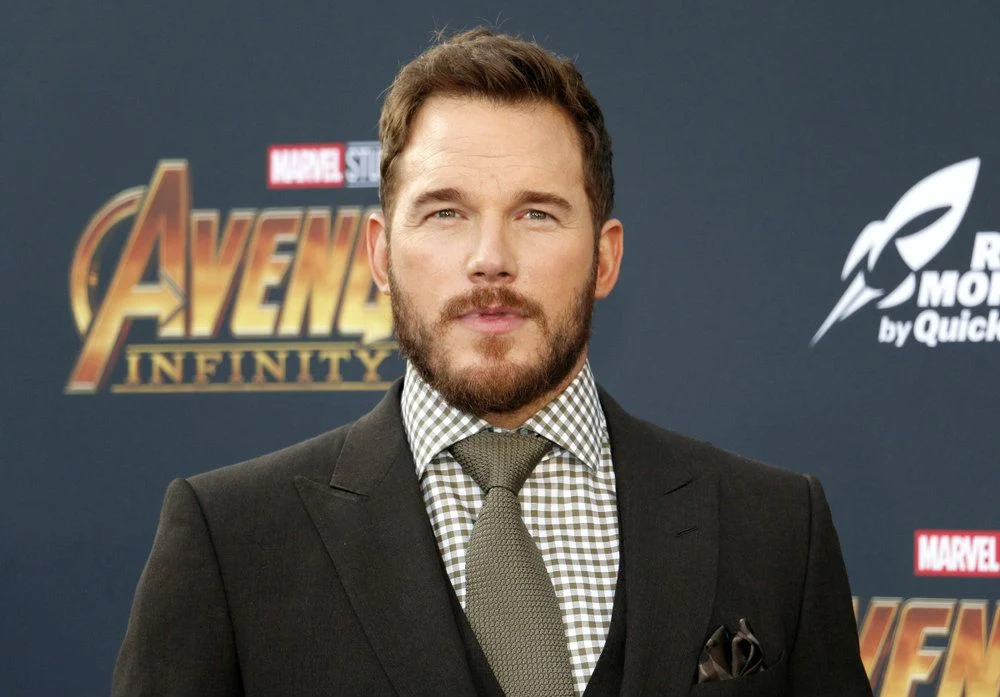
Chris Pratt, a prominent figure in contemporary Hollywood, recently offered a profound retrospective on the pivotal Marvel casting decision that irrevocably reshaped his career, extending heartfelt gratitude to Marvel Studios President Kevin Feige. Pratt specifically acknowledged Feige’s extraordinary foresight in recognizing a potential within him that, at the time, remained largely unseen by others, including himself. This tribute was delivered during the prestigious Will Rogers Motion Picture Pioneers Foundation event, where Feige was honored as the revered Pioneer of the Year, a recognition that underscores his unparalleled influence and innovative spirit within the entertainment industry. During his compelling speech, Pratt delved into his protracted and often discouraging journey of repeatedly attempting to secure a role within the burgeoning Marvel Cinematic Universe (MCU) before ultimately landing the career-defining part of Peter Quill, famously known as Star-Lord, in the critically and commercially acclaimed 2014 film, Guardians of the Galaxy.
Pratt’s narrative resonates deeply within the aspiring acting community, serving as a powerful testament to persistence and the often circuitous path to success. His story is particularly salient because it debunks the myth of instant gratification, illustrating that he did not secure the first, or even the second, Marvel role he auditioned for. Instead, a series of unsuccessful auditions, each a seeming setback, cumulatively paved the way for one of Hollywood’s most significant and transformative casting breakthroughs, ultimately launching him into global superstardom.
The Will Rogers Motion Picture Pioneers Foundation: A Legacy of Industry Stewardship
The Will Rogers Motion Picture Pioneers Foundation event is an annual cornerstone of the entertainment industry calendar, dedicated to honoring individuals who have demonstrated exceptional leadership, innovation, and philanthropic commitment. The "Pioneer of the Year" award is bestowed upon a distinguished leader whose work has profoundly impacted the motion picture industry. Kevin Feige’s selection for this prestigious honor is a direct reflection of his monumental achievements in building the Marvel Cinematic Universe into the most successful film franchise in history. Under his stewardship, Marvel Studios has not only redefined blockbuster filmmaking but also cultivated an unprecedented level of interconnected storytelling, setting new benchmarks for creative and commercial success. The foundation itself, established in 1939, provides charitable assistance to individuals in the motion picture industry facing illness, injury, or other hardships, making the annual gala a significant fundraising and networking event for industry titans and emerging talents alike. Pratt’s presence and heartfelt speech underscored the deep respect and personal connection many in the industry, particularly those whose careers Feige has directly influenced, feel for the Marvel chief.
A Star in the Making: Chris Pratt’s Pre-Marvel Trajectory
Long before assuming the mantle of the galaxy’s most charismatic outlaw, Peter Quill, Chris Pratt had already cultivated a respectable career across television and film, albeit primarily within the realm of comedy. His most recognizable role prior to his Marvel transformation was as Andy Dwyer on NBC’s beloved sitcom Parks and Recreation. From 2009 to 2015, Pratt masterfully portrayed Dwyer, a lovable, albeit often dim-witted, musician and shoe-shiner whose journey from an accidental government employee to a local television personality endeared him to millions. This role firmly established Pratt as a comedic talent, celebrated for his impeccable timing, improvisational skills, and charming everyman appeal. His portrayal of Dwyer, characterized by a fluctuating physique and a perpetually optimistic, slightly naive demeanor, cemented an image that, at the time, seemed antithetical to that of a leading action hero in a major science-fiction franchise.
However, Pratt’s resume also included glimpses of his dramatic potential. He appeared in critically acclaimed films such as Bennett Miller’s Moneyball (2011), Kathryn Bigelow’s Zero Dark Thirty (2012), and Spike Jonze’s Her (2013). In Moneyball, he played Scott Hatteberg, a former catcher forced to reinvent himself as a first baseman, showcasing a nuanced dramatic performance. In Zero Dark Thirty, he took on a supporting role as a Navy SEAL, indicating an untapped capacity for more physically demanding parts. These roles, while demonstrating his versatility, did not position him as an obvious contender for a physically demanding, blockbuster-leading man. The industry largely viewed him through the lens of his comedic success, making his eventual casting as Star-Lord all the more remarkable.
The Marvel Audition Gauntlet: Persistence Against Overwhelming Odds
During his tribute to Feige, Pratt lightheartedly recounted his numerous attempts to join the Marvel Cinematic Universe, joking that he had auditioned for the executive "probably 7 or 8,000 times," as reported by The Hollywood Reporter. While an exaggeration, the anecdote underscored the sheer volume and competitive nature of MCU casting calls. These unsuccessful auditions reportedly included a serious bid for the iconic role of Captain America, ultimately portrayed by Chris Evans, and consideration for a supporting role in Thor, a part that also eluded him.
The competitive landscape of the MCU, which was already a burgeoning cinematic behemoth by the early 2010s, meant that thousands of actors vied for every available role. For Pratt, who was known for his comedic, often heavier, physique, fitting the mold of a chiseled superhero was a significant hurdle. At the time, casting directors often sought actors who either already possessed the physical attributes or were easily imagined transforming into them. Pratt’s "Andy Dwyer" persona, while beloved, did not immediately scream "intergalactic adventurer." The repeated rejections, despite his evident talent, began to take their toll. Pratt openly admitted reaching a point where he felt discouraged and was on the verge of abandoning his pursuit of Marvel projects altogether, a sentiment common among actors facing repeated setbacks in a highly competitive industry.
The Guardians’ Gamble: Feige, Gunn, and the Radical Vision for Star-Lord
The opportunity for Guardians of the Galaxy presented itself at a critical juncture in Pratt’s career and his relationship with Marvel. Despite his past disappointments, this particular project felt different. The film, envisioned by director James Gunn as a quirky, irreverent space opera, required a lead who could balance humor, heart, and heroism in equal measure. Initially, even Gunn himself was skeptical about Pratt, having primarily seen him in his comedic roles. However, it was the collective vision of Kevin Feige, James Gunn, and the Marvel Studios casting team that ultimately saw beyond Pratt’s established comedic persona.
Pratt credited Feige, Gunn, and the team with recognizing unique qualities in him that were perfectly suited for Peter Quill. "It took someone with real vision to look at me and say, ‘Yeah, that’s a guy who could guard the galaxy,’" Pratt remarked, encapsulating the profound leap of faith taken by the studio. This vision was not merely about physical transformation, though Pratt famously underwent an intensive regimen of diet and exercise to sculpt his physique for the role, losing over 60 pounds in six months. It was about seeing the underlying charisma, vulnerability, and comedic timing that could bring a relatively obscure comic book character to life in a fresh, compelling way.
The decision to cast Pratt was a significant departure from conventional superhero casting. It signaled a willingness by Marvel to prioritize an actor’s inherent charm and dramatic range over a pre-existing action-hero image. This move not only transformed Pratt’s career but also solidified Marvel’s reputation for taking calculated risks that often paid off handsomely, ushering in a new era of character-driven blockbusters.
The Unprecedented Success of Guardians of the Galaxy

Released in 2014, Guardians of the Galaxy was an audacious gamble for Marvel Studios. Unlike the Avengers, Captain America, or Iron Man, the Guardians were relatively unknown to mainstream audiences. The film’s unique blend of humor, retro soundtrack, vibrant visuals, and heartfelt storytelling resonated powerfully with critics and moviegoers alike. It defied initial skepticism, becoming a massive critical and commercial success. The film garnered widespread acclaim for its originality, sharp writing, stunning visual effects, and the palpable chemistry of its ensemble cast. It holds an impressive 92% approval rating on Rotten Tomatoes, with critics praising its ability to carve out a distinct niche within the superhero genre.
Commercially, Guardians of the Galaxy grossed over $772 million worldwide against a budget of approximately $170 million, making it the third-highest-grossing film of 2014 in North America and the eighth-highest worldwide. This triumph solidified Chris Pratt’s status as a bona fide leading man, proving that his comedic charm could seamlessly translate into blockbuster appeal. The film introduced audiences to Pratt’s iconic portrayal of Star-Lord, alongside Zoe Saldaña as Gamora, Dave Bautista as Drax the Destroyer, Bradley Cooper as the voice of Rocket Raccoon, and Vin Diesel as Groot. The film’s success not only launched a new beloved franchise within the MCU but also demonstrated the power of unconventional casting choices and visionary storytelling.
From Star-Lord to Global Icon: Pratt’s Post-Marvel Ascension
The success of Guardians of the Galaxy served as a springboard for Chris Pratt’s rapid ascent to global superstardom. He reprised his role as Star-Lord in two highly successful sequels, Guardians of the Galaxy Vol. 2 (2017) and Guardians of the Galaxy Vol. 3 (2023), further cementing the character’s place as a fan favorite. Beyond his standalone films, Pratt’s Star-Lord became an integral part of the broader MCU narrative, playing crucial roles in the crossover mega-events Avengers: Infinity War (2018) and Avengers: Endgame (2019). These appearances brought him to an even wider global audience, establishing him as a central figure in the most successful film franchise in cinematic history.
Concurrently with his Marvel commitments, Pratt secured another major tentpole franchise, becoming the face of the resurrected Jurassic Park series. In 2015, he starred as Owen Grady, a velociraptor trainer, in Jurassic World. The film was a monumental success, grossing over $1.67 billion worldwide and becoming the highest-grossing film of 2015 and the third-highest-grossing film of all time at its release. Pratt reprised his role in Jurassic World: Fallen Kingdom (2018) and Jurassic World Dominion (2022), solidifying his position as a bankable action star capable of leading multi-billion-dollar franchises. His filmography also expanded to include voice roles in animated hits like The Lego Movie (2014) and The Super Mario Bros. Movie (2023), further demonstrating his versatility and broad appeal. This remarkable trajectory from a comedic television actor to a global action star and voice actor is a testament to the transformative power of the right role at the right time, coupled with an underlying talent finally given the platform it deserved.
Lessons from the Audition Room: A Paradigm for Aspiring Actors
Chris Pratt’s experience offers invaluable insights for working and aspiring actors, particularly regarding the often opaque and challenging world of professional casting. His story powerfully illustrates that a "failed" audition is not necessarily a wasted effort; rather, it can be a vital step in a longer career arc. Casting professionals possess keen memories and often track performers, even when an actor isn’t the perfect fit for a particular character in a specific moment.
The intricacies of casting mean that an actor can deliver a compelling and technically strong audition and still lose the role. This outcome often stems from factors beyond the actor’s control, such as another performer better matching the director’s nuanced interpretation, specific physical requirements for the role, the intricate chemistry needed within an ensemble, or the overall creative vision for the project. For instance, a director might envision a character with a specific height or vocal quality, or perhaps an unexpected dynamic emerges when different actors read together. These elements are highly subjective and often lead to decisions that are not a reflection of an actor’s talent or the quality of their audition.
Pratt’s journey underscores several crucial realities about professional casting:
- Networking and Visibility: Each audition is an opportunity to be seen and remembered by casting directors, producers, and directors, expanding an actor’s professional network.
- Building a Reputation: Consistent professionalism, preparation, and a positive attitude in the audition room can build a strong reputation within the industry, leading to future considerations.
- The Right Fit: Casting is a complex puzzle, and sometimes an actor is simply not the "right piece" for a particular role, even if they are incredibly talented.
- Timing is Everything: Opportunities arise when projects align with an actor’s evolving skill set, availability, and the creative team’s specific needs.
- Breaking Typecasting: Successfully auditioning for roles outside an actor’s established persona can demonstrate range and open doors to new types of projects, as Pratt did by transitioning from comedy to action.
For actors diligently submitting to casting calls, this distinction is paramount. Not booking a job does not automatically signify that the casting director disliked the audition or the actor’s performance. Often, it merely means the right opportunity, the one that perfectly aligns with their unique strengths, simply hasn’t arrived yet. Persistence, combined with continuous self-improvement and a resilient mindset, is often the most critical asset in an actor’s toolkit.
Kevin Feige: The Architect of Modern Blockbusters and Talent Scout
Kevin Feige’s recognition as Pioneer of the Year is a well-deserved honor for a man who has fundamentally reshaped the landscape of modern cinema. As President of Marvel Studios, Feige has been the principal architect of the Marvel Cinematic Universe, a sprawling, interconnected narrative universe that has grossed over $30 billion worldwide across dozens of films and television series. His leadership has been characterized by an unwavering commitment to long-term storytelling, a deep understanding of source material, and a keen eye for talent—both behind and in front of the camera.
Feige’s ability to identify and cultivate talent, often taking calculated risks on unconventional choices like Chris Pratt, is a hallmark of his success. He has consistently championed directors with unique voices, like James Gunn, and actors who might not fit traditional molds, transforming them into global stars. His influence extends beyond individual films; he has fostered a collaborative creative environment that empowers filmmakers while maintaining a cohesive overarching vision for the MCU. His reputation within the entertainment industry is one of integrity, strategic brilliance, and an unparalleled understanding of popular culture. The presence of numerous Marvel stars, including Chris Evans, Brie Larson, Simu Liu, Kathryn Hahn, Sebastian Stan, Ke Huy Quan, and David Harbour, at his Hollywood Walk of Fame ceremony in July 2024 further underscored the profound impact he has had on countless careers and the industry as a whole.
The Enduring Legacy: Vision, Persistence, and the Power of a Chance
Chris Pratt’s journey from the lovable goofball Andy Dwyer to the swashbuckling Star-Lord stands as one of the clearest and most inspiring examples of how unexpected casting can fundamentally transform an actor’s career. It highlights the indispensable role that visionary producers, directors, and casting teams play in looking beyond an actor’s established screen persona to discern untapped potential. This willingness to take a chance on a performer who might not fit the conventional mold is a testament to the artistic courage that often underpins groundbreaking cinematic achievements.
For entertainment professionals striving to break into the highly competitive film and television industries, there is a profound, practical lesson embedded within Pratt’s story. While actors cannot ultimately control whether they are selected for a specific role, they possess absolute control over their preparation, professionalism, and the quality of what they bring into the audition room. Every audition, successful or not, is an opportunity to hone their craft, make a memorable impression, and expand their professional network. A role that an actor doesn’t book today could very well serve as an introduction, leaving an indelible mark on someone who remembers their work when a truly fitting opportunity materializes tomorrow. For Chris Pratt, a series of ostensibly unsuccessful Marvel auditions ultimately coalesced into the role of Star-Lord—a character that not only redefined his professional trajectory but also cemented his legacy as a global cinematic icon. It is a powerful narrative of resilience, foresight, and the unpredictable, yet ultimately rewarding, nature of a career in Hollywood.
