
 By Nila Kartika Wati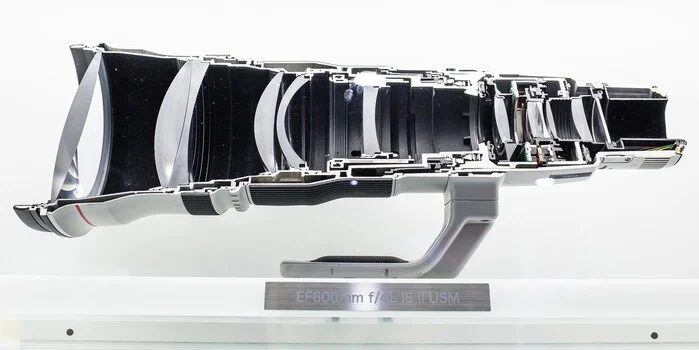
In March 1967, Canon researchers achieved a significant milestone, successfully pulling the company’s first synthetic fluorite crystals from an electric furnace, a breakthrough that would fundamentally alter the landscape of high-performance optical design. This pivotal development culminated two years later in the release of the FL-F300mm f/5.6 lens in May 1969, featuring two elements of this meticulously grown calcium fluoride where traditional optical glass would normally reside. Canon’s commitment to this advanced material has remained unwavering for over five decades, driven by its unique ability to correct a specific and persistent color error inherent in long focal length lenses, an aberration that conventional optical glass struggles to overcome.
The Persistent Challenge of Chromatic Aberration
The genesis of this optical challenge lies in the fundamental properties of light and glass. As early as the 17th century, Isaac Newton observed that white light, when passed through a prism, separates into its constituent colors, demonstrating that different wavelengths of light refract at varying angles. This phenomenon, known as dispersion, means that a single positive lens element will bend shorter wavelengths (blue light) more sharply than longer wavelengths (red light), causing them to focus at different points along the optical axis. The resulting discrepancy manifests as colored fringing or "chromatic aberration" around high-contrast edges in an image, particularly noticeable in early telescopes and camera lenses.
For centuries, optical designers grappled with this limitation. The first significant solution emerged in the mid-18th century with the invention of the achromatic doublet by Chester Moore Hall and later popularized by John Dollond. This ingenious design involves cementing a positive element made of "crown" glass (low dispersion) to a negative element made of "flint" glass (high dispersion). By carefully selecting glasses with opposing dispersive characteristics, designers can bring two distinct wavelengths—typically red and blue—to a common focal point. This achievement, bringing "achromatic" correction, became a cornerstone of optical design and is found in nearly every camera lens produced since.
The Secondary Spectrum: An Unresolved Residue
While achromatic doublets were a monumental leap, they offered a partial solution. An achromat corrects for two specific wavelengths, but everything between and outside those two corrected points still deviates. In a typical red-and-blue-corrected doublet, for instance, green light often converges at a different point, usually closer to the lens. This remaining error is what Canon and other optical manufacturers term the "secondary spectrum" or "secondary chromatic aberration." It is the subtle, yet optically significant, residue that persists after conventional achromatic correction has been applied.
On a camera sensor, the secondary spectrum manifests as a soft violet or green halo around bright edges, a mild veiling haze that subtly reduces contrast, or the distinct purple ring that can encircle bright stars in astrophotography, particularly evident when pushing lens performance to its limits. The magnitude of this residual aberration is intrinsically linked to the chosen optical glasses and, critically, to the lens’s focal length. For a cemented doublet, the longitudinal secondary spectrum scales directly with the focal length. Doubling the focal length with the same glass combination effectively doubles the amount of residual defocus. Furthermore, the blur caused by the secondary spectrum scales with the diameter of the entrance pupil. This means a 600mm f/4 lens, with its substantial 150mm entrance pupil, will spread secondary spectrum over a blur roughly four times wider than a 50mm f/1.4 lens. As Nikon’s own materials technology pages corroborate, the longer the focal length, the more formidable the challenge of correcting chromatic aberration becomes. This inherent scaling explains why the secondary spectrum is predominantly a concern for telephoto lenses; while negligible at 35mm, it becomes the decisive factor in image sharpness for lenses at 400mm or 600mm. Although stopping down the aperture can mitigate the blur, it compromises light-gathering capability, a trade-off that defeats the purpose of investing in a fast supertelephoto lens designed for wide-open performance.
Fluorite’s Unique Optical Signature: The Key to Apochromatic Correction
The fundamental limitation of conventional optical glass in addressing the secondary spectrum lies in a property known as relative partial dispersion. When plotting relative partial dispersion against Abbe number for most optical glasses, they tend to fall along a nearly linear relationship. This linearity implies that while glasses vary in their overall dispersive power (Abbe number), the way they distribute that dispersion across the visible spectrum is remarkably similar. Consequently, combining two glasses from this linear relationship can nullify two wavelengths, but the third wavelength inevitably remains off-target because the spectral distribution of dispersion is too uniform across the available glass types.
This is precisely where fluorite emerges as a revolutionary material. Optical-grade calcium fluoride (CaF₂) deviates significantly from this linear relationship. It boasts a remarkably low refractive index (approximately 1.4338 at the d line) and an exceptionally high Abbe number (near 95), indicating very weak overall dispersion. While these properties are beneficial, the true power of fluorite lies in its "extraordinary partial dispersion." From the red to the green part of the spectrum, fluorite disperses light in a manner somewhat similar to glass. However, from green to blue, its behavior diverges dramatically. This unique spectral dispersion provides optical designers with the critical "free parameter" needed to achieve a more advanced level of correction. By pairing a positive fluorite element with a high-dispersion negative glass element, a third wavelength can be precisely brought into focus alongside the first two. A lens capable of correcting for three wavelengths is classified as an "apochromat," representing the ultimate goal of this complex optical exercise.
A Historical Precedent and Canon’s Pioneering Synthetic Approach
While Canon pioneered the use of synthetic fluorite in consumer camera lenses, fluorite itself was not new to optics. The concept of apochromatic correction, leveraging materials with unusual dispersion, dates back to Ernst Abbe and Carl Zeiss. In 1886, Zeiss shipped the first apochromatic microscope objective, calculated by Abbe, which was corrected for three wavelengths. Natural fluorite crystals were an essential component in the construction of these early, highly sophisticated objectives. Microscopists continue to use the term "fluorites" to denote a specific tier of high-performance objectives, a testament to the material’s enduring significance in precision optics.
However, natural fluorite posed significant limitations for larger-scale applications like camera lenses. Canon’s own historical accounts acknowledge that naturally occurring fluorite crystals suitable for optical use are typically small, only viable for components a few millimeters across. Moreover, the very impurities that give natural fluorite its characteristic green and purple hues—while aesthetically pleasing—render them optically unusable for high-precision elements. For a camera lens element large enough to cover a 35mm frame, such as those required for a 300mm lens, natural fluorite was simply inadequate due to issues of size, purity, and optical homogeneity.
The "F Plan" and the Birth of Synthetic Fluorite
Recognizing the immense potential of fluorite but constrained by the limitations of natural crystals, Canon embarked on a groundbreaking initiative known as the "F Plan" in August 1966. This ambitious research program aimed to synthesize optical-grade fluorite crystals large enough and pure enough for camera lens applications. The endeavor was a testament to Canon’s foresight and commitment to pushing the boundaries of optical engineering.
The culmination of this intense research effort arrived in March 1967 when Canon researchers successfully grew their first synthetic fluorite crystals from an electric furnace. This marked a crucial step from laboratory experimentation to industrial viability. The challenge then shifted to establishing robust production technology, a process perfected by February 1968, paving the way for mass production. The manufacturing process is intricate and demanding: natural fluorite ore is meticulously crushed and refined to remove all impurities, then poured into a graphite crucible. This crucible is placed within a specialized crystal-growing apparatus equipped with a heater, where it is subjected to extreme temperatures of 1,400 degrees Celsius in a vacuum environment. The crucible is then slowly lowered, allowing the molten material to crystallize gradually from the bottom upwards as it exits the hot zone. The resulting crystal then undergoes a multi-week annealing process, where it is held at a high temperature just below its melting point and then cooled very slowly to room temperature. This painstaking annealing is critical to prevent internal strain that could otherwise crack the brittle crystal.
The fruits of the F Plan were unveiled to the public in May 1969 with the release of the FL-F300mm f/5.6. This groundbreaking lens, comprising seven elements in six groups (two of which were fluorite), featured an eight-blade aperture, a minimum focus distance of 3.5m, a 58mm filter thread, and dimensions of 75 x 168mm, weighing 850g. It retailed for 100,000 yen, including its case. Canon strategically incorporated a distinctive green ring on the lens barrel, a visual cue to signify the revolutionary material within and a homage to fluorite’s Japanese name, hotaru ishi, or "firefly stone," evoking its unique glow. The FL-F500mm f/5.6, featuring a single fluorite element, followed shortly in June 1969, priced at 192,000 yen, with Canon claiming an impressive resolution of 100 lines per millimeter even at the edge of the frame. In a move reflecting the success and specialized nature of this operation, Canon spun off its crystal-growing division as Optron Inc. in December 1974, now known as Canon Optron, which continues to produce this critical material to this day. Canon’s claim to the "world’s first lens for interchangeable-lens cameras aimed at ordinary consumers to employ synthetic fluorite" accurately defines its pioneering role in bringing this advanced material to the broader photographic market.
The Intrinsic Costs and Challenges of Fluorite
Despite its unparalleled optical advantages, fluorite presents significant practical challenges that contribute to the high cost and specialized nature of lenses employing it. Foremost among these is its physical fragility. Fluorite registers a 4 on the Mohs hardness scale, making it considerably softer than common optical glasses like N-BK7, which is closer to 6. In Knoop hardness terms, calcium fluoride is approximately 158 kg/mm², whereas N-BK7 is around 610 kg/mm². This makes fluorite highly susceptible to scratching and prone to brittle fracture. Being a cubic crystal, it cleaves cleanly along its (111) planes, meaning a knock that might merely chip a glass element could cause a fluorite element to split along a crystalline plane.
A more complex engineering challenge is fluorite’s thermal sensitivity. Calcium fluoride exhibits a linear thermal expansion coefficient of approximately 18.9 x 10⁻⁶ per Kelvin, more than double that of N-BK7 (around 7.1 x 10⁻⁶ per Kelvin) over comparable temperature ranges. This means a fluorite element changes size significantly faster than the surrounding glass elements as the lens’s temperature fluctuates. Furthermore, its refractive index also shifts with temperature, and crucially, it moves in a negative direction, unlike most optical glasses. The practical consequence of these combined effects is "focus shift": a supertelephoto lens that has been exposed to direct sunlight on a sports sideline will not focus at precisely the same plane as it would in the shade. Lenses incorporating large fluorite elements must be meticulously engineered to keep this focus shift within acceptable tolerances. The material’s intolerance for rapid temperature changes also dictates careful handling; moving a large, sophisticated lens from an air-conditioned environment into high summer humidity requires a slow acclimatization process to prevent thermal shock and potential damage. This thermal consideration is a primary reason why Canon paints its large telephoto lenses white—to reflect sunlight and maintain the internal optics at a more stable temperature.
Beyond its material properties, the manufacturing process for fluorite elements is inherently more arduous and costly. Fluorite cannot be ground and polished using standard glass-processing techniques. Canon explicitly states that it had to develop specialized methods that can take up to four times longer than polishing ordinary optical glass. When factoring in the crucible growth process, the multi-week annealing, the yield losses due to internal strain and inclusions, and the stringent interferometer inspection required for optical quality, the supply chain for fluorite elements operates at a fundamentally different rate and cost structure than that for glass. This complex and expensive production methodology is a significant contributor to the premium price tag of lenses like the Canon RF 1200mm f/8L IS USM, which launched in May 2022, combining large-diameter fluorite elements with Super UD and UD glass.
Parallel Paths: Alternative Materials and Technologies
While fluorite remains a pinnacle of optical correction, its high cost and manufacturing complexities spurred Canon to develop alternative solutions to achieve similar apochromatic performance more broadly. This led to the creation of ultra-low dispersion (UD) glass and later Super UD glass, designed to offer fluorite-like correction without the same production constraints.
Canon’s Super UD glass made its debut as early as May 1993 in the EF 400mm f/5.6L USM. The lens’s museum entry credits its single Super UD element with an "optical effect similar to fluorite" and notes that, in conjunction with a UD element, it "comprehensively eliminat[ed] the secondary spectrum." Canon’s technology pages further elaborate, stating that UD glass can achieve performance "similar to fluorite when multiple lens elements are combined," and that "Super UD lenses have nearly the same characteristics as fluorite and are functionally equivalent to using two standard UD lenses." The common thread between these proprietary glasses and synthetic fluorite is their position on the plot of partial dispersion against Abbe number—both sit significantly off the conventional linear relationship, providing the crucial deviation needed for advanced chromatic correction. Unlike fluorite, these glasses are melted rather than grown, making them considerably easier and more cost-effective to produce at scale.
Nikon, a primary competitor, initially pursued a different but equally effective path. It developed its PC102 ED (Extra-low Dispersion) glass in December 1971. This material was subsequently adopted across its 300mm and longer telephoto and zoom lenses throughout the decade. Nikon’s account of its NIKKOR-H 300mm f/2.8, released in January 1972 for press use, is notably transparent: early units utilized Schott glass due to Nikon’s ED material not being ready, and the lens didn’t even bear the ED badge initially. Nikon later added a protective front filter specifically to shield the ED element, highlighting its unique properties. Nikon’s description of ED glass mirrors Canon’s rationale, explaining that while achromats correct two wavelengths, ED glass, combined with other elements, significantly reduces the residual secondary spectrum. Super ED glass further refines this concept.
Ultimately, Nikon also embraced fluorite. The "FL" designation in lenses like the AF-S NIKKOR 800mm f/5.6E FL ED VR and AF-S NIKKOR 400mm f/2.8E FL ED VR explicitly denotes the presence of fluorite elements, a material that remains in their current top-tier offerings, such as the NIKKOR Z 400mm f/2.8 TC VR S. Nikon’s stated reasons for using fluorite align with Canon’s—superior chromatic aberration correction—but also include an additional benefit: fluorite’s lower specific gravity compared to optical glass of equivalent optical properties. In massive supertelephoto lenses, even a marginal weight reduction can be significant. The two optical giants, therefore, arrived at the same advanced material, albeit from different developmental directions and timelines.
Diffractive Optics: A Different Paradigm
Canon also explored an entirely distinct physical principle to combat chromatic aberration: diffractive optics (DO). A DO element features concentric, saw-tooth rings that bend light through diffraction rather than refraction. Crucially, its dispersion characteristics are "backwards" compared to conventional refractive elements. Where a traditional convex element focuses blue, then green, then red light, a diffractive element reverses this order. By combining refractive and diffractive elements, their opposing chromatic aberrations can effectively cancel each other out. This innovative approach allows designers to maintain high levels of correction while simultaneously achieving substantial reductions in lens length and weight.
The EF400mm f/4 DO IS USM, launched in December 2001, exemplified this technology. Comprising 17 elements in 13 groups and weighing 1,940g, Canon claimed a remarkable 26% reduction in length and a 36% reduction in weight compared to a comparable all-refractive design. Interestingly, this lens also incorporated a fluorite element, demonstrating that Canon viewed DO as another powerful lever in the fight against chromatic aberration, capable of being deployed alongside, rather than instead of, fluorite. This technology persists in Canon’s current lineup, notably in the compact and more affordable RF 800mm f/11 IS STM and its 600mm sibling. These lenses utilize dual-layer diffractive optics to achieve impressive reach (800mm at 1,260g; 600mm at 930g) at a fraction of the cost of L-series professional glass.
Fluorite’s Enduring Legacy in Modern Optics
As of May 2021, Canon’s published tally indicated 40 lenses utilizing fluorite elements, including the pioneering FL-F300mm and 39 subsequent models. This list continues to expand with several of Canon’s current supertelephoto offerings. However, the diverse approaches taken by Canon also illustrate the nuanced decision-making in optical design. The f/11 DO lenses, for example, achieve supertelephoto classification through diffractive optics alone. Similarly, the RF 100-500mm f/4.5-7.1L IS USM, a premium L-series supertelephoto zoom, relies on one Super UD element and six UD elements for its correction, without any fluorite.
Conversely, flagship professional lenses continue to integrate fluorite where uncompromised performance is paramount. The RF 400mm f/2.8L IS USM and RF 600mm f/4L IS USM each feature two fluorite elements within their complex 17-element, 13-group designs, alongside a Super UD element. The even more extreme RF 800mm f/5.6L IS USM and RF 1200mm f/8L IS USM push boundaries further, packing 26 elements in 18 groups, with a combination of fluorite, Super UD, and UD elements. Even the professional-grade RF 100-300mm f/2.8L IS USM zoom lens incorporates one fluorite element and four UD elements across its 23 elements in 18 groups.
Nearly six decades after the launch of the "F Plan," the process of growing a crystal in a crucible, cooling it for weeks, and spending up to four times longer polishing it than ordinary glass remains a premium, albeit expensive, answer to the secondary spectrum in long lenses. The development of UD and Super UD glass was a direct response to fluorite’s high production cost, which Canon explicitly states makes it unsuitable for widespread use. These advanced glasses can effectively correct many long lenses without the need for fluorite. Diffractive optics, while addressing chromatic aberration, also offered the distinct advantages of reduced length and weight, which is why Canon’s first DO lens still benefited from a fluorite element. Yet, for the absolute pinnacle of optical performance, where every fraction of an aberration must be eradicated, Canon consistently reaches for the synthetic crystal. The calcium fluoride found within a cutting-edge supertelephoto lens released in 2026 is, fundamentally, the same material that first emerged from an electric furnace in Japan in March 1967, a testament to its enduring and irreplaceable value in the relentless pursuit of optical perfection.
