
 By admin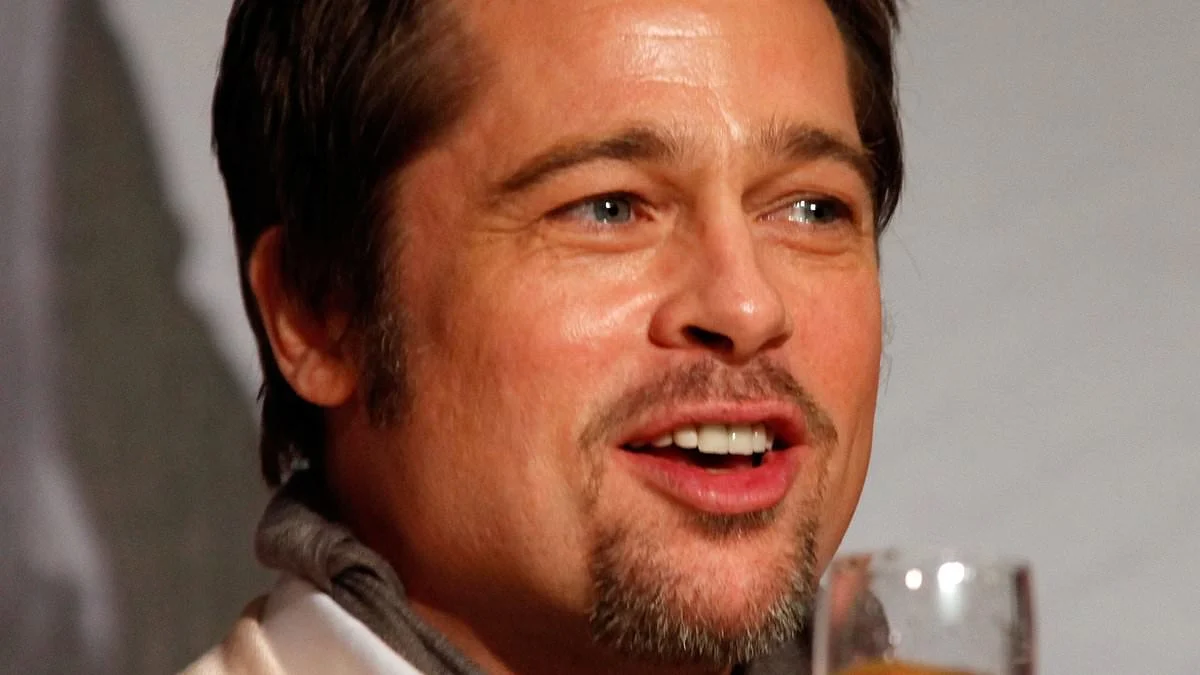
Brad Pitt, the Academy Award-winning actor and producer now aged 62, has disclosed a significant shift in his personal life, revealing that he has returned to alcohol consumption following a seven-year period of total sobriety. In a comprehensive and candid interview with Esquire, Pitt detailed his transition from strict abstinence to a more "restrained" and "professional" approach to drinking, a revelation that comes amidst a backdrop of ongoing legal disputes with his former spouse, Angelina Jolie, and an increasingly public estrangement from several of his children.
The actor’s journey with alcohol has been a central narrative in his public persona since his 2016 split from Jolie. Following an incident on a private jet that led to an FBI investigation and the dissolution of his marriage, Pitt committed to a life of sobriety, famously spending a year and a half attending Alcoholics Anonymous meetings. However, his recent comments suggest a move toward what some wellness experts categorize as mindful consumption or harm reduction, rather than the total abstinence he maintained for the better part of a decade.
The Shift in Sobriety: From Abstinence to Moderation
During the interview, the subject of Pitt’s sobriety arose when he offered the interviewer a glass of wine. When asked if the beverage was solely for guests, Pitt clarified his current stance. "I was sober for seven years. And then I got back off the wagon," he stated, adding that he now approaches alcohol in a "more restrained manner."
Pitt admitted that the transition was not without its challenges, noting that he had to check himself after becoming "overconfident" on a few occasions. He emphasized that he no longer consumes alcohol in large quantities, stating, "I can have a few. But I can’t have a lot. I have to be professional about it." This terminology—referring to drinking as something that requires "professionalism"—harkens back to his 2017 interview with GQ Style, where he described himself as having been a "professional" drinker who could "drink a Russian under the table with his own vodka."
The actor also highlighted a newfound appreciation for mornings, which serves as a primary motivator for his current moderation. He noted that overindulgence leads to missing the "lovely" and "interesting" aspects of the early hours, a sentiment that reflects a broader lifestyle shift toward mindfulness as he enters his sixties.
A Chronology of Conflict: The 2016 Incident and its Aftermath
To understand the weight of Pitt’s recent admission, one must look back at the events of September 2016, which served as the catalyst for his initial sobriety. During a flight from France to Los Angeles, an altercation occurred between Pitt, Jolie, and their children. While the specific details remained shielded from the public for years, subsequent court filings in 2022 provided a more harrowing account of the events.
According to documents filed by Jolie’s legal team, Pitt was accused of being physically and verbally abusive while under the influence of alcohol. The filings alleged that he "choked one of the children and struck another in the face" and "poured beer on Jolie; at another, he poured beer and red wine on the children." Pitt has consistently denied these allegations. Following an investigation by the FBI and the Los Angeles County Department of Children and Family Services, no criminal charges were filed against the actor.
In the wake of the incident, Pitt sought help. He spent eighteen months in Alcoholics Anonymous, a move he later described to the New York Times as "freeing." He praised the environment for being a "safe space where there was little judgment," allowing him to confront the "ugly sides" of his personality. This period marked a significant turning point in his public image, transitioning from a Hollywood heartthrob to a man focused on introspection and recovery.
The Fracturing of the Pitt-Jolie Family Unit
Despite Pitt’s personal efforts toward rehabilitation, his relationship with his six children—Maddox, Pax, Zahara, Shiloh, Vivienne, and Knox—appears to have remained strained. The depth of this estrangement has become increasingly evident through legal filings and public name changes.
In mid-2024, Vivienne, 18, filed a petition in Los Angeles County Superior Court to legally drop "Pitt" from her surname, requesting to be known simply as Vivienne Jolie. The petition cited "personal" reasons for the change. This move followed similar actions by her older siblings. Zahara has publicly introduced herself as "Zahara Marley Jolie," and Maddox has reportedly long eschewed the use of his father’s surname in non-legal settings.
Perhaps most notably, Shiloh, upon turning 18, also legally applied to change her name to Shiloh Jolie. As of late 2024, only Pax and Knox have not formally or publicly moved to drop the "Pitt" surname, though Pax’s relationship with his father was cast into a harsh light after a 2020 Father’s Day post surfaced in which he reportedly called Pitt a "world-class a**hole" and a "terrible human being."
Legal analysts suggest that these name changes are significant indicators of the internal family dynamics. While name changes are not uncommon in high-profile divorces, the systematic nature of these filings by multiple children as they reach the age of majority suggests a coordinated or deeply felt distancing from the paternal figure.
The Business of Wine: The Chateau Miraval Dispute
The irony of Pitt’s return to moderate wine consumption is not lost on observers of his ongoing legal battle over Chateau Miraval, the French winery and estate the couple purchased in 2008. The property, valued at over $500 million, has become the center of a "War of the Roses" style litigation.
The conflict began when Jolie sold her stake in the winery to Tenute del Mondo, a subsidiary of the Stoli Group, owned by Russian billionaire Yuri Shefler. Pitt sued Jolie, claiming they had a "mutual understanding" that neither would sell their interest without the other’s consent. Jolie countered, stating that she sold her stake in part because of Pitt’s "acknowledged problem of alcohol abuse," which made her uncomfortable remaining in a business associated with "painful and traumatic memories."
The legal battle has expanded to include allegations of "asset stripping" and "mismanagement." Pitt’s legal team argues that he built the business into a global success, while Jolie’s side maintains that his behavior during the marriage and the subsequent litigation has been an attempt to exert "control and financial pressure" over her.
Mental Health and the "Oppressive" Weight of Pain
In his latest interview, Pitt also touched upon the mental health struggles he faced during the height of the family turmoil. He admitted to experiencing a period where the emotional pain felt "oppressive," leading to fleeting thoughts about the nature of relief and suicide.
"I wasn’t going to act on this," Pitt clarified, "but I could feel the cold steel of the bullet in my head, and it felt like relief." He explained that while he is a "congenital optimist," the depth of the "family stuff" forced him to understand the mindset of those who seek an end to their suffering. He credited his "survival instincts" for kicking in and helping him navigate through the darkest periods of his estrangement.
This level of vulnerability is rare for an actor of Pitt’s stature and highlights the psychological toll of high-conflict divorces and public family collapses. It also provides context for his decision to reintroduce alcohol in a controlled manner, suggesting a move toward a life that prioritizes personal autonomy and "relief" over the rigid structures of his earlier recovery phase.
Career Outlook and the Aging Process
Despite the personal upheaval, Pitt’s professional trajectory remains robust. He is currently preparing for the release of several high-profile projects, including Heart of the Beast, a drama directed by David Ayer, and a collaboration with Quentin Tarantino titled The Adventures of Cliff Booth. He also recently wrapped production on the thriller The Riders.
Reflecting on his age, Pitt expressed a paradoxical view of the passing years. While he remains active and in high demand, he admitted to a nostalgia for his fifties, urging others to "attack" their goals during that decade. "God, I want my fifties back," he remarked. "Your fifties are just—man, anything that’s on your mind, go. Go attack it now."
Analysis of Implications
Pitt’s admission regarding his drinking habits may spark a broader conversation about the nature of recovery. While the traditional 12-step model emphasizes total abstinence, many modern therapeutic approaches allow for "moderation management" for individuals who do not meet the clinical criteria for severe alcohol use disorder, or for those who have undergone significant psychological healing.
However, from a public relations standpoint, the revelation is a calculated risk. For a man whose primary legal and personal conflicts stem from alleged alcohol-fueled volatility, any return to drinking—no matter how "restrained"—will be viewed through a skeptical lens by his detractors and legal opponents.
As the court hearing for Vivienne’s name change approaches in November 2024, and the Chateau Miraval litigation continues to wind through international courts, Brad Pitt remains a figure of intense public fascination. His transition from the "professional drinker" of his youth to the "sober seeker" of his late fifties, and now to the "mindful consumer" of his sixties, mirrors the complexities of a life lived under the relentless glare of the global spotlight. Whether this new chapter brings the "relief" he seeks or further complicates his path to family reconciliation remains to be seen.
