
 By admin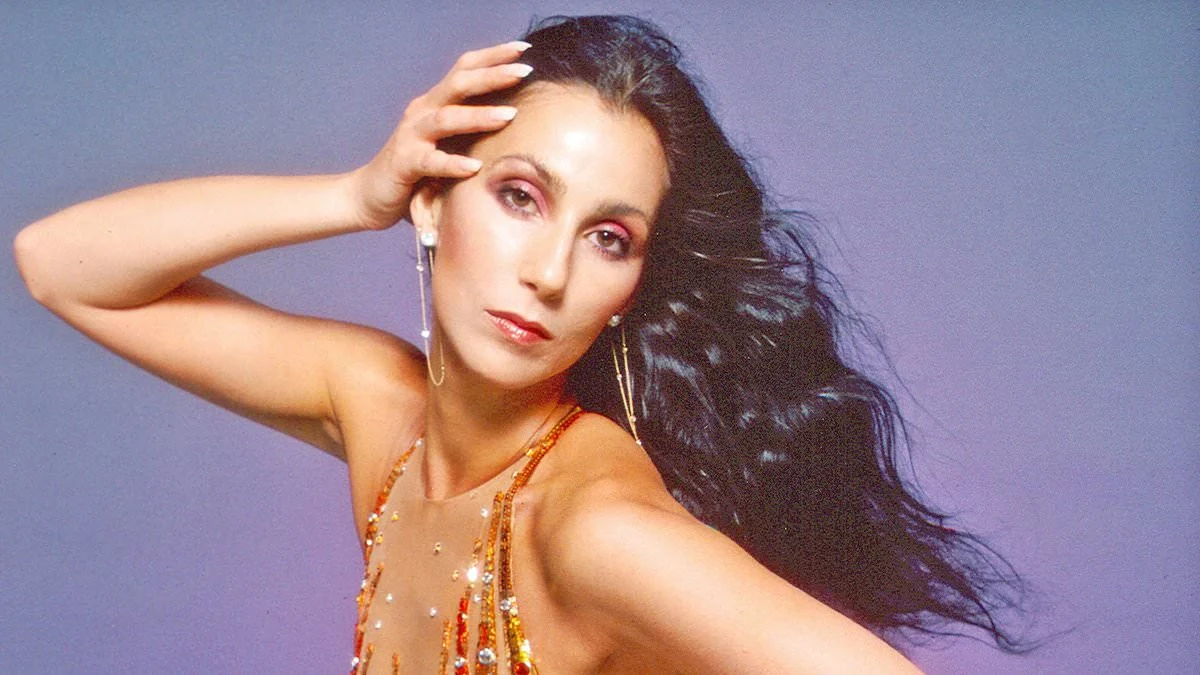
The global fashion and entertainment industries are in mourning following the announcement that Bob Mackie, the visionary costume designer whose shimmering, audacious, and often gravity-defying creations defined the aesthetics of American variety television and concert stages for over six decades, has passed away at the age of 87. His team confirmed the news on Monday morning via an official statement on Instagram, noting that the designer died peacefully, having spent his long life fulfilling a childhood dream of dressing the world’s most luminous stars. Mackie’s career was not merely a collection of garments but a chronological map of pop culture’s evolution from the Golden Age of Hollywood to the modern era of the red-carpet spectacle.
Born Robert Gordon Mackie on March 24, 1939, in Monterey Park, California, the Los Angeles native rose from a young sketch artist to become a household name synonymous with "camp," "glamour," and "extravagance." His passing marks the end of an era for a specific brand of Hollywood magic that prioritized showmanship and visual storytelling above the constraints of traditional fashion. Known affectionately as the "Sultan of Sequins," Mackie’s influence remains visible today in the wardrobes of contemporary pop icons like Lady Gaga, Beyoncé, and Katy Perry, all of whom have drawn inspiration from his penchant for the theatrical.
The Formative Years and the Marilyn Monroe Connection
Mackie’s journey into the pantheon of great designers began at the Chouinard Art Institute in Los Angeles. His innate talent for illustration quickly caught the attention of established industry titans. In the early 1960s, he began working as a sketch artist for Jean Louis and Edith Head, two of the most celebrated costume designers in cinema history. It was during this period that Mackie played a pivotal, albeit initially uncredited, role in one of the most famous moments in 20th-century history.
In 1962, Jean Louis was commissioned to create a gown for Marilyn Monroe to wear at President John F. Kennedy’s 45th birthday celebration at Madison Square Garden. Monroe requested a dress that was "skin-tight" and "naked," a concept that was revolutionary and scandalous for the time. Louis turned to the young Mackie to illustrate the preliminary design. The resulting sketch featured a sheer, flesh-colored marquisette fabric adorned with thousands of hand-sewn crystals. This "Happy Birthday, Mr. President" dress remains one of the most expensive and culturally significant garments ever created, a testament to Mackie’s early mastery of the "illusion" aesthetic.
Decades later, Mackie would voice his professional disapproval when the original gown was loaned to Kim Kardashian for the 2022 Met Gala, arguing that the piece was a historical artifact designed specifically for Monroe’s body and should not have been risked for a modern red-carpet appearance. This stance highlighted Mackie’s deep respect for the integrity of costume design as a form of permanent art.
The Variety Show Era: Carol Burnett and the Birth of a Legend
While his early work in film was prestigious, it was the medium of television that allowed Mackie’s creativity to truly flourish. In 1967, he was hired as the costume designer for The Carol Burnett Show, a position he held for the entirety of the program’s 11-season run. It was here that Mackie demonstrated his unique ability to use clothing as a comedic tool.
His most famous creation for the show was the "curtain rod" dress, worn by Carol Burnett in the 1976 sketch "Went with the Wind!", a parody of Gone with the Wind. In the sketch, Burnett’s character, Starlett O’Hara, fashions a gown out of green velvet curtains—including the brass rod across her shoulders. The outfit became an instant piece of television history and is now housed in the Smithsonian Institution’s National Museum of American History. Burnett frequently credited Mackie with helping her find her characters, noting that the costume often dictated the performance.
During this period, Mackie also began his long-standing collaboration with Ray Aghayan, his professional and romantic partner for nearly 50 years until Aghayan’s death in 2011. Together, they designed costumes for various television specials and films, earning Mackie his first of 32 Emmy nominations.
The Cher Collaboration: Defining the Sultan of Sequins
No discussion of Bob Mackie is complete without the mention of Cher. The two met on the set of The Carol Burnett Show and forged a creative partnership that would span half a century. Mackie was the primary architect of Cher’s visual identity during her rise as a solo superstar, particularly on The Sonny & Cher Comedy Hour, which debuted in 1971.
Mackie’s designs for Cher were characterized by daring cutouts, intricate beadwork, and massive feathered headdresses. He pushed the boundaries of what was permissible on network television, frequently testing the limits of the "Standards and Practices" censors with his "naked" dresses. One of the most iconic moments in this partnership occurred at the 1986 Academy Awards. After being snubbed for a nomination for her role in Mask, Cher arrived to present an award wearing a Mackie-designed ensemble featuring a black bejeweled loincloth, a chain-link top, and a two-foot-tall feathered Mohawk headdress.
"Critics said, ‘Well, that’s not fashion,’" Mackie later recalled. "Well, it wasn’t meant to be fashion. She wanted to do it just because it was fun."
Two years later, when Cher won the Oscar for Best Actress for Moonstruck, she wore another Mackie creation—a sheer, hand-beaded black gown that solidified her status as a fashion icon. Mackie’s ability to transform Cher into a "living work of art" earned him the nickname "Sultan of Sequins" and established a template for the modern celebrity brand.
Accolades and Industry Impact
Throughout his career, Mackie’s excellence was recognized by his peers across multiple disciplines. His trophy cabinet included nine Emmy Awards and a Tony Award, the latter won in 2019 for his work on The Cher Show on Broadway. He was also a three-time Academy Award nominee for his costume designs in Lady Sings the Blues (1972), Funny Lady (1975), and Pennies from Heaven (1981).
Beyond film and television, Mackie was a prolific designer for the stage. He created costumes for theatrical legends such as Carol Channing in Lorelei, Bernadette Peters in On the Town, and Mitzi Gaynor’s legendary Las Vegas revues. His client list was a "Who’s Who" of 20th-century entertainment, including Diana Ross, Tina Turner, Liza Minnelli, Barbra Streisand, Bette Midler, and Ann-Margret.
In 2002, Mackie was inducted into the Television Academy Hall of Fame, a rare honor for a costume designer. He was also honored by the Council of Fashion Designers of America (CFDA) with the Geoffrey Beene Lifetime Achievement Award in 2019, acknowledging his crossover appeal from the world of costume to high fashion.
A Philosophy of Visibility
Mackie’s design philosophy was rooted in the idea that performance is a visual experience as much as an auditory or emotional one. He often stated that if a woman was going to occupy a stage for 90 minutes, she needed to provide the audience with something spectacular to look at.
"A woman who wears my clothes is not afraid to be noticed," he famously said. This mantra resonated with a generation of women who were breaking barriers in entertainment. Mackie’s clothes were more than just garments; they were armor for the stage, designed to project power, confidence, and unapologetic femininity. His work celebrated the female form, using strategic beadwork and sheer fabrics to create illusions that were both elegant and provocative.
Tributes and Reactions
The news of Mackie’s death prompted an outpouring of grief and gratitude from the entertainment community. Pop star Pink, a long-time client, shared a poignant tribute, describing him as a "wickedly funny" genius and a "legend."
"I was so lucky to be dressed by him for so long," Pink wrote. "He was one of one. He will be dearly missed… There are going to be some fabulously dressed angels."
Industry analysts point out that Mackie’s legacy is not just in the dresses he made, but in the path he cleared for future designers. By bringing high-concept costume design into the mainstream through television, he expanded the public’s understanding of what fashion could be. He proved that clothes could be funny, narrative, and revolutionary all at once.
Legacy and Final Years
In his later years, Mackie remained active, overseeing his brand and participating in retrospectives of his work. He continued to be a sought-after voice in the industry, offering commentary on the state of modern fashion and the loss of "mystery" in Hollywood glamour. He often lamented that the contemporary red carpet had become too safe or too commercial, missing the spontaneous joy and risk-taking of the era he helped define.
Bob Mackie is survived by his family and his long-time business associates. While the "Sultan of Sequins" has left the stage, his work remains preserved in museums, film archives, and the memories of millions of viewers who were dazzled by his brilliance. From the shimmering "naked" dress of Marilyn Monroe to the feathered headdresses of Cher and the comedic brilliance of Carol Burnett’s curtain rod, Mackie’s designs will continue to serve as the gold standard for glamour, ensuring that his genius will, as his team stated, "live on forever, continuing to bring beauty into this world."
