
 By Nila Kartika Wati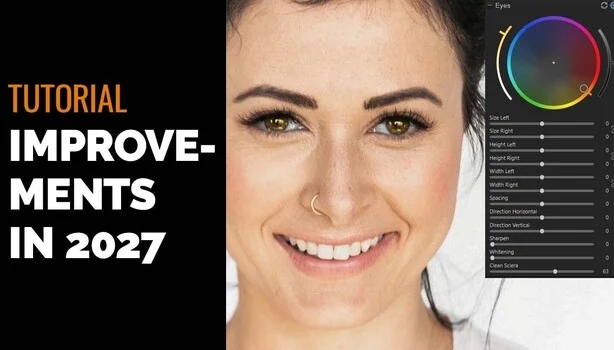
ACD Systems has officially released ACDSee Photo Studio Ultimate 2027, marking a significant strategic pivot in the integration of artificial intelligence within professional photo editing and management software. The latest iteration distinguishes itself not merely by the breadth of its AI capabilities but, crucially, by its architectural approach to data privacy. In a landscape increasingly dominated by cloud-dependent AI, ACDSee Photo Studio Ultimate 2027 champions on-device processing for a core suite of AI functionalities, ensuring sensitive user data remains entirely within the user’s control.
The software’s core AI features, including face detection, intelligent keywording, sophisticated masking, super-resolution upscaling, and image similarity analysis, are all executed locally on the user’s computer. This design choice means that no images or facial data associated with these processes ever leave the user’s machine, directly addressing growing concerns about data privacy and intellectual property in the digital age. This commitment to local processing sets ACDSee Photo Studio Ultimate 2027 apart from many competitors who often rely on cloud infrastructure for even fundamental AI tasks, thereby necessitating the transmission of user data to external servers.
However, recognizing the transformative power of generative AI, ACD Systems has adopted a hybrid model for its four new generative tools. These advanced features, which include AI Image Generation, Generative Fill, Generative Edit, and AI Remove, do require a connection to the cloud due to their intensive computational demands and the vast datasets required for their operation. To mitigate privacy concerns even in this cloud-dependent segment, the company asserts that all requests for these generative tools are routed through servers it directly controls. Furthermore, ACD Systems states that all associated prompt and image data are encrypted during transit and are purged from their servers within a week of processing, establishing a clear policy for data retention and security.
A Strategic Response to Evolving User Demands
This dual-architecture approach represents a direct response to a burgeoning tension within the photography community: the desire for cutting-edge AI tools juxtaposed with an unwavering demand for data control and privacy. Frank Lin, CTO of ACD Systems, articulated this strategic imperative in the official announcement, stating, "Photographers want the creative freedom generative AI offers without giving up control of their images. That’s why every other AI feature in ACDSee Photo Studio runs locally, on-device—from face detection to image similarity." Lin further elaborated on the generative side, affirming that "the software encrypts each prompt and image, sends it through infrastructure the company runs itself, and discards it a week later," underscoring the company’s commitment to security even for cloud-based operations.
The release of ACDSee Photo Studio Ultimate 2027 comes at a time when the broader photographic software industry is undergoing a profound transformation driven by advancements in artificial intelligence. Major players like Adobe with Photoshop and Lightroom, Skylum with Luminar Neo, and ON1 Photo RAW have all heavily integrated AI into their workflows, offering features ranging from automated object selection to AI-powered sky replacement and content-aware fills. The distinction ACDSee aims to carve out is one rooted in user trust and data sovereignty, a value proposition that resonates strongly with professional photographers, photojournalists, and privacy-conscious enthusiasts who handle sensitive or proprietary imagery.
Generative AI: The Headline Additions
While privacy forms the underlying philosophy, the new generative AI tools are undoubtedly the headline features driving creative expansion. These cloud-powered capabilities offer unprecedented avenues for image manipulation and creation:
- AI Image Generation: This tool empowers users to conjure entirely new imagery from textual prompts, select from a range of preset visual effects, or utilize reference images to guide the AI’s output. This opens possibilities for creating backgrounds, adding fantastical elements, or generating placeholder visuals without leaving the editing environment.
- Generative Fill: Expanding beyond traditional content-aware fill, Generative Fill intelligently extends the frame of an image into empty space, seamlessly filling it with contextually relevant content. This is invaluable for recomposing shots, adapting images to different aspect ratios, or subtly broadening a scene.
- Generative Edit: Users can now issue natural-language instructions to modify specific elements within an image. This could range from altering lighting conditions, changing the color of an object, or even subtly adjusting expressions, all through intuitive text commands rather than complex manual adjustments.
- AI Remove: This advanced object removal tool goes beyond simple cloning, intelligently erasing unwanted elements from a photograph and filling the void with content that seamlessly blends with the surrounding pixels, making distracting elements vanish with remarkable precision.
These generative features require a connection to ACD Systems’ controlled infrastructure, and the $179.99 perpetual license price includes 20,000 AI credits specifically for running these tools. Additionally, purchasers receive 200 GB of cloud storage free for the first year, providing ample space for project files or backups, though this storage is separate from the processing of generative AI data.
Elevating Organizational Prowess and Workflow Efficiency
Beyond the headline-grabbing generative AI, ACDSee Photo Studio Ultimate 2027 introduces a suite of quieter yet profoundly impactful organizational enhancements that promise to revolutionize how photographers manage vast digital libraries. For individuals with tens of thousands, or even hundreds of thousands, of images, efficient asset management is paramount.
- Auto-Stack: This intelligent feature groups photos automatically based on configurable criteria such as GPS location, capture time, visual similarity, or a combination of all three. Users can fine-tune thresholds for each criterion and save custom presets, allowing for highly personalized and efficient batch organization. Imagine grouping all shots from a specific location taken within a short timeframe, or automatically identifying sequences of burst shots.
- Custom Stacking: For situations requiring granular control, the software now allows users to manually group frames, providing flexibility for specific project needs or artistic selections that automated systems might miss.
- Reject Tag: A new ‘Reject Tag’ has been introduced, streamlining the crucial culling process. This allows photographers to quickly mark images for removal during initial review, enhancing workflow efficiency and helping to manage storage space more effectively by identifying unwanted shots early on.
- AI Reverse Image Search: A standout organizational feature, AI Reverse Image Search leverages a new, powerful image similarity engine that indexes the entire library in the background. Users can take any photo and instruct the software to find every visually related shot within their collection, regardless of metadata or file name. This is invaluable for finding duplicates, similar compositions, or variations of a particular subject across different shoots or folders.
- Enhanced Group By: This feature has been further refined to cluster near-duplicates across various folders or search results, making it easier to identify and manage redundant images, a common challenge in large, long-standing photo libraries.
These organizational tools, powered by local AI processing, underscore ACDSee’s long-standing strength in digital asset management (DAM). Since its inception as a fast image viewer in the 1990s, ACDSee has evolved into a comprehensive solution that prioritizes robust cataloging and search capabilities, and these new additions significantly enhance that core competency.
Refined Editing and Retouching Capabilities
The 2027 release also brings a host of improvements to the editing and retouching modules, catering to the nuanced demands of image post-production. Portrait retouching, a critical area for many photographers, gains finer control over key facial features:
- Eyes, Brows, Skin, Shadows, and Lips: Enhanced sliders and tools offer precise adjustments, allowing for subtle yet impactful refinements that maintain a natural look.
- One-Click Hair Edit: A new streamlined tool simplifies the often-complex task of editing hair, providing a quick solution for common adjustments and enhancements.
Beyond portraiture, the software sees updates across its general editing ecosystem. The Activity Manager has been refined, offering better oversight of ongoing processes. Develop presets have been updated, providing new creative starting points for image adjustments. Auto-migration features ensure a smoother transition for users upgrading from previous versions, preserving settings and catalogs. Exporting options have been expanded and optimized for various platforms and uses, and crucially, support for newer raw camera formats has been added, ensuring compatibility with the latest hardware from major camera manufacturers. All these enhancements are built upon the solid foundation of ACDSee’s existing cataloging, raw processing, and layer-based editing capabilities, which remain central to the software’s appeal.
Pricing, Availability, and Market Positioning
ACDSee Photo Studio Ultimate 2027 is available immediately. The perpetual license is priced at $179.99, a notable offering in a market increasingly shifting towards subscription-only models. While perpetual licenses provide long-term ownership without recurring fees, ACD Systems also offers subscription options for those who prefer that model, along with loyalty pricing for existing owners of earlier Ultimate versions, ensuring a path for continued upgrades. The inclusion of 20,000 AI credits for generative tools provides a substantial initial allowance, and the 200 GB of free cloud storage for the first year adds further value, particularly for users managing large files or needing off-site backups.
This release positions ACDSee Photo Studio Ultimate 2027 as a formidable contender in the competitive photo editing software market. By deliberately emphasizing local AI processing for privacy-sensitive tasks, ACD Systems is directly addressing a major concern that has emerged alongside the rapid proliferation of AI in creative tools. This hybrid approach—combining robust on-device AI for core functionalities with carefully managed cloud-based generative AI—offers a compelling narrative of innovation tempered with responsibility. It suggests a future where users can harness the full power of artificial intelligence without necessarily sacrificing control over their personal or proprietary data, potentially setting a new standard for data governance in creative software. The full details, along with a comprehensive video walkthrough of the new features, are available on the ACDSee product page.
