
 By admin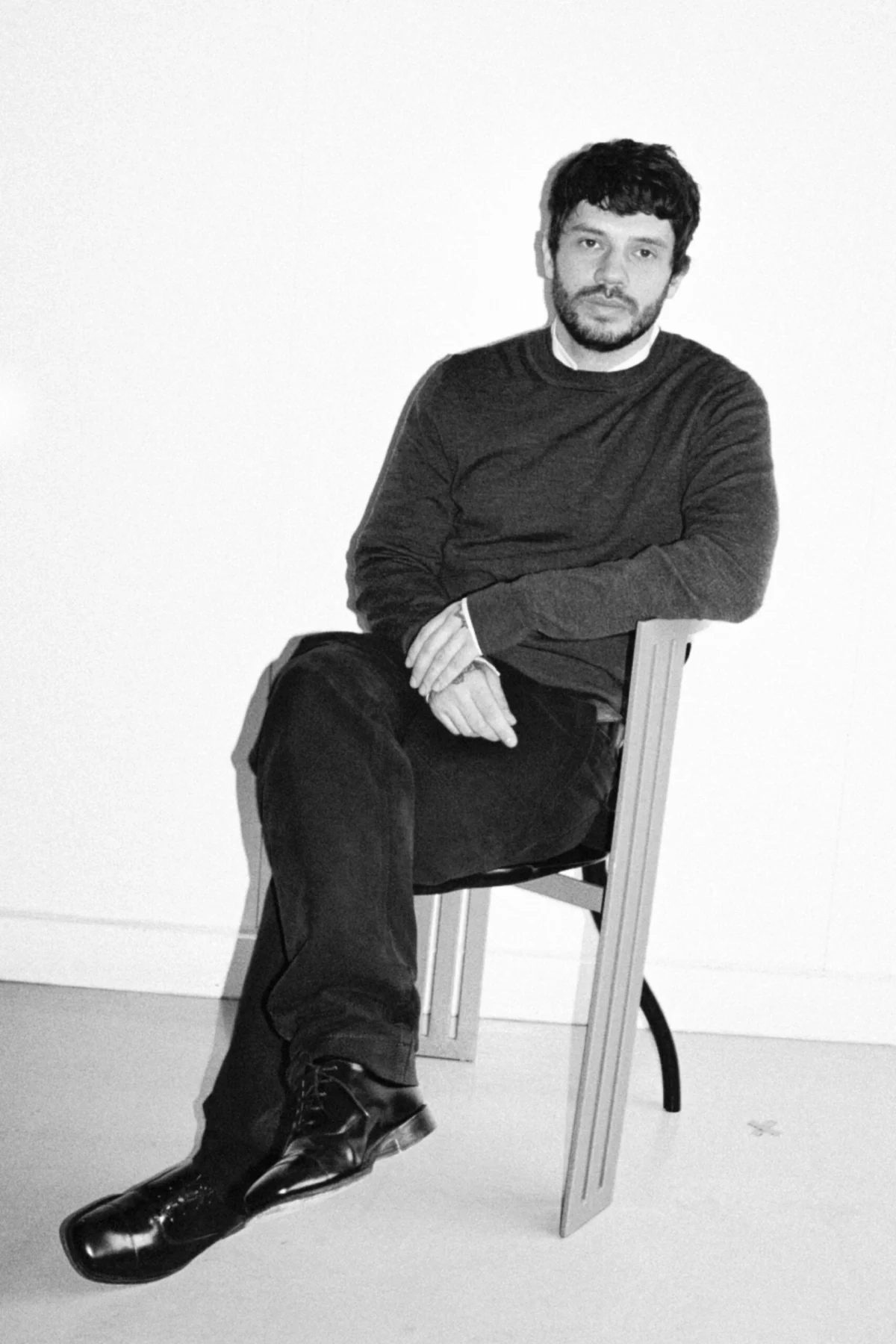
The industrial hum of AllSaints HQ, a sprawling former warehouse in London’s East End, now resonates with the anticipation of a major creative reset. It is midday on a Wednesday, and Aaron Esh, the city-native designer celebrated for his eponymous buzzy label, is meticulously finessing nearly a year’s worth of strategic design work. The culmination of his efforts as AllSaints’ Chief Creative Officer is slated for a grand reveal on September 1, a date poised to mark a pivotal moment for the British premium brand. The central question permeating the fashion industry is clear: can Esh successfully re-inject the coveted ‘cool factor’ into AllSaints?
The Creative Vision and the Architect of Change
Esh’s arrival at AllSaints signals a decisive move to overhaul the brand’s image and offering. His tenure began with a dramatic gesture: in August, the brand’s entire Instagram account was wiped clean, a symbolic erasure preceding a careful drip-feed of his new vision. This curated reintroduction has featured a series of striking black and white photographs, spotlighting Esh himself alongside a formidable team of collaborators. Among them are art director Jamie Reid, celebrated stylist Katy England, and Matthew Whitehouse, Farfetch’s head of editorial content and creative, who notably served as editor for the free zine The Ram. This publication, timed to coincide with London Fashion Week, is an integral part of the relaunch, designed to disseminate the brand’s revitalized aesthetic and narrative.
Beyond the visible marketing, Esh has been busy fortifying the internal structures of the AllSaints atelier. Strategic new hires from prestigious fashion houses such as McQueen, Marni, and Burberry have significantly bolstered the design team’s capabilities, signaling a serious commitment to elevating product quality and design sophistication. The tangible outcome, as observed during an exclusive showroom tour, is a collection of highly finished, enduring "forever pieces." These garments are crafted with a versatility that allows them to seamlessly integrate into both a directional fashion insider’s wardrobe and a more pragmatic consumer’s daily attire. This renewed focus on quality and timeless design is underpinned by a broader brand image deeply rooted in its London origins, aiming to project an authentic and elevated British sensibility globally.
A Brand in Transition: Historical Context and Market Challenges

AllSaints, founded in 1994 by Stuart Trevor and Kait Bolongaro, built its initial reputation on a distinctive rock ‘n’ roll aesthetic. Its early years were characterized by a gritty, edgy appeal that resonated strongly with a burgeoning youth culture. However, the brand’s trajectory has been marked by significant shifts. In 2005, Trevor sold the company to fashion entrepreneur Kevin Stanford, initiating a period of major expansion. By the late 2000s and early 2010s, AllSaints had cemented its place in British youth culture, heavily associated with the "indie sleaze" style – a trend defined by elements like studded belts, military boots, distressed denim, and a rebellious, nonchalant attitude. This era was amplified by its frequent appearance in popular youth culture TV series such as Skins, solidifying its image as a go-to for a specific, trend-driven demographic in the UK.
While this period marked a high point for AllSaints in its domestic market, brand sentiment has since become geographically nuanced. A company representative noted that while AllSaints maintains a stronger, high-end positioning in Asian markets, many British consumers perceive the brand as having peaked during its "indie sleaze" heyday. This divergence in perception underscored the urgent need for a comprehensive brand reset rather than mere superficial marketing adjustments. The brand image had become an issue demanding fundamental change, including an update to its iconic ramskull logo, to appeal to a contemporary global audience.
Prior to Esh’s appointment, Will Beedle, who joined AllSaints in 2006 as menswear director and was promoted to chief creative director in 2012, stepped down in 2021. His departure left a vacuum that highlighted the necessity for a fresh creative direction to steer the brand through a rapidly evolving retail landscape.
Navigating Economic Headwinds: CEO Peter Wood’s Leadership
The task of overseeing this transformative period falls to CEO Peter Wood, who is celebrating his eight-year anniversary as chief executive on September 1. Wood initially joined AllSaints in 2010 as CFO, assuming the CEO role eight years later. His tenure has seen the brand navigate both remarkable highs and formidable lows. In 2011, AllSaints teetered on the brink of collapse before being rescued by a majority stake investment from Lion Capital. Following this, former CEO William Kim orchestrated a significant return to growth by aggressively scaling the brand’s digital channels and expanding its footprint across Asia and North America.
Under Wood’s direct leadership, AllSaints achieved its best financial results to date in the fiscal year ending February 1, 2020, recording revenues of £364.1 million. However, the onset of the COVID-19 pandemic abruptly shifted Wood’s strategic focus from growth to sheer survival. The subsequent years presented a cascade of global challenges, from severe shipping disruptions, notably the "nightmares" in the Suez Canal, to the economic fallout of the ongoing war in Ukraine and the persistent burden of tariffs. These external pressures profoundly impacted the business, particularly tariffs, given AllSaints’ significant international presence.

According to the latest figures for AllSaints Retail Limited, which now also encompasses the rock-inspired menswear label John Varvatos (acquired in October 2021), the US market accounts for a dominant 53.5% of its business. The UK follows at 31.4%, with Asia contributing 8% and Europe 7.1%. For the core AllSaints brand, Wood estimates an even 50-50 split between men’s and women’s sales. Market analysis by Similar Web further indicates that the largest shopper demographic for AllSaints is between 25-34 years old (31.1%), followed by 35-44 year olds (16.6%), underscoring a need to appeal to a mature, yet fashion-conscious, consumer base.
Despite these global headwinds, the business is now in a respectable financial position. For the year ended February 1, 2025, the group’s revenue reached £441.3 million, a modest 4% decrease from £459.5 million in 2024. Crucially, 84.4% of total revenue in 2025 was generated by the AllSaints brand itself. Year-on-year, the gross margin improved from 63% to 65.2%. This positive shift is attributed to strategic adjustments such as shortened promotional periods and the earlier release of seasonal products, both designed to enhance full-price sell-through and optimize inventory management.
The Reinvention Strategy: Elevating Quality and Image
Esh himself admits that the creative team’s previous structure and systems were "really bad," but he views this as an unparalleled "opportunity to build it" anew. This holistic approach encompasses reshaping not only the design output but also the brand’s social media presence and digital storefront. At AllSaints, Esh commands a substantial 2,000-strong workforce and enjoys the full backing of CEO Peter Wood – a stark contrast to the lean team supporting his eponymous label, which he launched in 2022. "It’s a different proposition than a traditional fashion house, but it’s also my first [corporate] job. I’m 35, so in the context of creative directors, I’m a baby. I’m learning on the job," Esh candidly shares.
Wood’s trust in Esh’s vision is unwavering. "As a CEO, you have to make changes with the team, and you have to be comfortable with that. This brand’s had amazing people work for it. Now, this is where we are. We’ve got Aaron," Wood states, emphasizing his primary objective: "The first thing I wanted to do was signal that we’re starting with creativity."
Esh’s core strategy revolves around a significant elevation in both the quality and aesthetic appeal of the brand’s products. This involves a rigorous refitting exercise and a commitment to improving the value proposition of each garment. The focus is on superior fabrics, refined finishes, and robust hardware choices, creating "the kind of jeans and T-shirts that can live for decades, weathering trends." Esh believes this is the true path to brand elevation: "not by trying to pretend or [just] paying a big photographer to make it look expensive. When someone comes in and tries a jacket on or tries on a pair of pants, they’ll feel it when they put it on their body."

Visually, the collection features elements recognizable from Esh’s namesake brand, such as cropped leather jackets and skinny pants, alongside sinuous silk gowns. It also draws inspiration from his North East London community of muses, evident in heavily ripped denim twinsets, suede boot combinations, and faux fur jackets, creating a distinctive blend of premium streetwear and refined casualwear.
London to the World: A Rooted Global Identity
Moving forward, AllSaints intends to lead with a distinctly British sensibility, explicitly leveraging its London heritage. "I think what we like is that idea of London-ness, as much as Britishness. There’s a very specific way that people dress, and part of that is high-low," Esh explains. He draws a parallel to successful global branding: "I think it’s about how you package that and sell it to the world in the same way that Ralph Lauren packages Americana and sells it to the world."
Wood wholeheartedly endorses this approach, citing compelling evidence from international markets. Taiwan, for instance, stands as AllSaints’ third-largest revenue market by territory. "I go there twice a year, and have the privilege to drive around Taipei, and you almost believe that the brand was born there," Wood remarks, highlighting the universal appeal of the brand’s aesthetic when effectively presented.
Closer to home, there is significant room for growth in continental Europe, where AllSaints currently operates a relatively small number of physical stores. Rather than investing heavily in new brick-and-mortar locations to build awareness, Wood’s strategy is more agile. AllSaints has forged a partnership with Zalando, the European e-commerce giant, which already boasts a vast customer network. "They’ve already done that heavy lifting," Wood notes, referring to Zalando’s active consumer base of 62.5 million in Q2 of the current year. Reinforcing this strategic direction, AllSaints appointed Nichole Strydom, formerly a commercial director for Zalando, as its chief merchant in May, signaling a clear intent to capitalize on digital distribution channels in Europe.
Omnichannel Approach and Consumer Engagement

AllSaints’ current business model is split 70% direct-to-consumer (DTC) and 30% wholesale. Wood emphasizes that DTC remains a core pillar, essential for maintaining brand momentum and energy. Recognizing that Allsaints.com garners more traffic than any of its physical stores, Wood has greenlit a comprehensive redesign of the website, with Esh leading the creative direction. "At the beginning of this year, Aaron and I sat together with other leadership teams in the business, [asking] ‘Where should we start?’" Wood recounts. "The first place we can signal is allsaints.com."
For the physical DTC experience, an equally meticulous level of detail has been applied to the revamp. Esh went as far as commissioning Davy Reed, former music director of The Face, to curate the in-store playlists. This initiative harks back to an era when high street retail spaces fostered a sense of self-discovery and cultural expression, moving beyond mere transactional exchanges. This curated sensory experience is designed to deepen customer connection and reinforce the brand’s authentic London identity.
The Go-to-Market Offensive: Campaign and Messaging
The marketing collateral for the relaunch is decidedly premium. The new campaign, masterfully shot by photographer Alasdair McLellan, features 17 portraits of individuals from diverse backgrounds and professions. This eclectic cast, including cult artist Dick Jewell, model Kiki Willems, fashion student and "It-kid" Lux Gillespie, alongside a carpenter, a chef, and a retail assistant, is deliberately chosen to embody AllSaints’ unique yet accessible "London-isms." This approach aims to strike a delicate balance between cultural authority and broad appeal. While AllSaints declined to comment on whether the talent received their usual commercial rates or collaborated for less due to their relationships with Esh, the caliber of individuals involved underscores the ambition of the campaign.
"It’s important that it has a sense of identity in terms of direction, but making that democratic is the trick," Esh explains. "I think at this level of the market, it’s important." He is acutely aware that an overly directional aesthetic could alienate segments of the brand’s audience, noting a specific sensitivity towards anything "too Parisian" for the US menswear market. This nuanced understanding of global market preferences informs the brand’s messaging.
Beyond the core campaign, the launch includes a lookbook and a series of editorial images commissioned from young stylists and photographers. Esh elaborates on this multi-pronged approach: "All of them have a different purpose and speak to different people." This strategy allows for a balance between upper-funnel brand building and lower-funnel conversion marketing. "Jamie [Reid] has come in and really worked with me on how we create images for different buckets," Esh adds, highlighting the effort to crystalize a consistent tone of voice while effectively segmenting the audience for targeted communication.

Strategic Investment and Future Outlook
This extensive internal overhaul and external launch represent a significant financial commitment for AllSaints. Peter Wood asserts that if the inputs—product quality, talent, and marketing—are correctly calibrated, the outputs, specifically revenues, will naturally follow. "I stood up at the start of this year and said to our global team, ‘We’re going to spend more on product, talent, and marketing than ever before in our history,’" Wood declares. "I think with all the challenges of the world, a very natural response is almost to retreat, retrench. But I’m a big believer that you’ve got to be in the game if you want to win the game."
The brand’s bold move to invest heavily during a period of ongoing inflation and geopolitical instability is a calculated risk. However, it aligns with a broader industry trend where high fashion is increasingly merging with more democratic brands – a phenomenon exemplified by collaborations such as John Galliano at Zara, Christopher Kane at Mulberry and M&S, and the runway presence of H&M and Topshop. This strategic shift towards high-low collaborations suggests a desire to bridge the gap between aspirational luxury and accessible premium, a space AllSaints aims to dominate.
The hope is that Aaron Esh’s intuitive creative direction, coupled with Peter Wood’s strategic business leadership and substantial investment, will not only reinvigorate AllSaints but also firmly re-establish its position as a globally relevant premium brand. By anchoring its identity in a distinctive "London-ness" and delivering elevated, enduring products, AllSaints seeks to transcend its past perceptions and capture a new generation of consumers worldwide, proving that a brand’s heyday can indeed be reclaimed and redefined.
