
 By Nila Kartika Wati
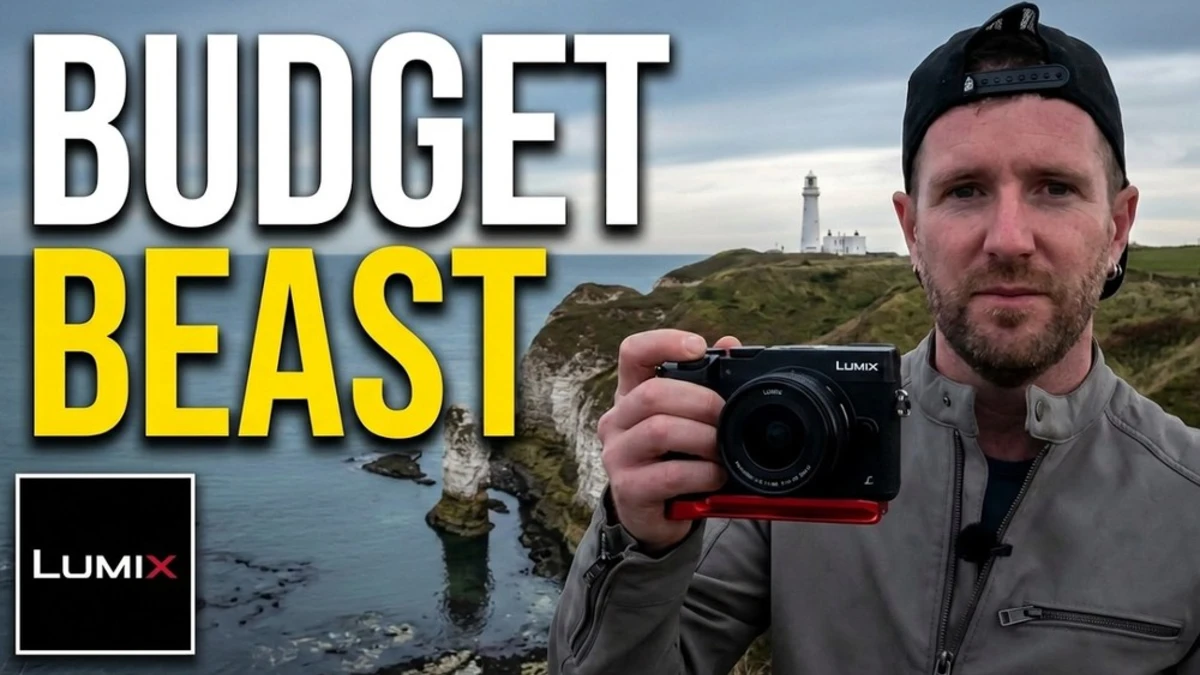
The prevailing narrative in photography often suggests that the quality of one’s recent images is intrinsically linked to the modernity and cost of the equipment used. While advancements in camera technology are undeniable, the notion that older cameras are inherently inferior for professional-grade results is a widely held assumption that warrants scrutiny. A budget-friendly Micro Four Thirds (M43) setup offers an accessible and effective means to rigorously test this hypothesis, particularly given that pre-owned camera bodies and standard kit zoom lenses can be acquired for a mere fraction of the price of contemporary professional-grade equipment. This experiment delves into the capabilities of older gear, focusing on a recent outing by professional photographer Chris Baitson, who deliberately opted for a mid-2010s M43 system to capture the dramatic coastal landscapes of Flamborough Head.
The Genesis of an Experiment: Challenging Perceptions
The discourse surrounding photographic gear frequently borders on the obsessive, with photographers often succumbing to what is colloquially known as "Gear Acquisition Syndrome" (GAS). This phenomenon is fueled by relentless marketing campaigns highlighting incremental technological improvements, leading many to believe that upgrading to the latest model is a prerequisite for producing superior imagery. However, a significant portion of the image-making process — encompassing composition, understanding light, and post-processing — remains firmly rooted in the photographer’s skill and artistic vision, rather than solely on sensor size or processing power.
Chris Baitson, a photographer known for his insightful visual work, embarked on an expedition to Flamborough Head, a prominent chalk headland on England’s Yorkshire coast, with a specific objective: to evaluate whether a decade-old camera could still deliver professional-level results in challenging real-world conditions. Leaving his state-of-the-art professional full-frame bodies and high-end lenses at home, Baitson armed himself with a modest kit: a Panasonic Lumix GX8, a mirrorless camera first released in 2015, paired with an Olympus M.Zuiko Digital ED 9-18mm f/4-5.6 wide-angle zoom lens. The GX8, at the time of this article, commands a used market price of approximately $470, while the accompanying wide-angle zoom can be found for around $335. This combined setup, totaling roughly $805, stands in stark contrast to the cost of a single professional-grade zoom lens, which can easily exceed $1,500, or a modern professional camera body often priced upwards of $3,000.
Flamborough Head: A Backdrop for Evaluation
Flamborough Head provides an ideal testing ground for photographic equipment. Designated as a Special Area of Conservation (SAC) and a Site of Special Scientific Interest (SSSI), its majestic white cliffs, intricate sea caves, and diverse wildlife, including a significant population of seabirds, offer a rich tapestry of photographic opportunities. Beyond its natural beauty, the headland also bears historical significance, dotted with numerous World War II pillboxes – concrete defensive structures built along the U.K.’s east coast to guard against potential invasion. These elements collectively present varied lighting conditions, demanding dynamic range, and opportunities for both sweeping landscapes and intricate details.
Baitson’s day began atop one of these weathered WWII pillboxes, a testament to the region’s enduring history. The choice of a light, compact, and relatively inexpensive kit proved advantageous for this type of casual yet demanding outing. With his children accompanying him, the emphasis was on capturing moments as they unfolded, rather than meticulous, time-consuming setups. The ability to shoot spontaneously, without the encumbrance of heavy gear or the need to constantly adjust a tripod, underscored one of the inherent benefits of the M43 system – portability and responsiveness. His children’s natural curiosity led to spontaneous discoveries, including a faint line on the distant horizon that, upon closer inspection, revealed itself to be an oil rig in the North Sea, presenting an unexpected photographic subject.
In-Field Performance: Dynamic Range and Exposure Handling
The technical evaluation commenced with Baitson shooting primarily in aperture priority mode, allowing the camera’s internal metering system to determine the optimal exposure settings. This approach, a departure from his usual manual long exposure techniques, allowed for a direct assessment of the GX8’s automated capabilities. A critical test emerged early on: a high-contrast scene featuring a dark foreground, a brilliantly lit sky, and the lighthouse buildings nestled in the mid-tones, framed at approximately 60mm. This scenario is a classic challenge for any camera sensor, particularly older ones, in terms of dynamic range – the ability to capture detail across the brightest and darkest areas of a scene simultaneously.
Baitson noted that the Panasonic GX8 exhibited a tendency to prioritize and protect highlight detail, a characteristic that aligned with his preferred exposure methodology. This meant that while the bright sky and illuminated parts of the lighthouse would likely retain detail, the open question was how much recoverable information remained within the shadow areas. The photographer candidly admitted that his recent experience with cameras featuring backside-illuminated (BSI) stacked sensors, such as the OM System OM-1 Mark II, had "spoiled" him. These newer sensors offer significantly enhanced dynamic range and low-light performance, leaving him uncertain of what to expect from the GX8’s 20-megapixel, front-illuminated sensor, which represents an older generation of sensor technology.
Despite initial reservations about the sensor’s potential limitations, the GX8’s ergonomic design and handling quickly won Baitson over. He expressed appreciation for its rangefinder-style body, which offers a compact form factor while retaining a substantial grip. The tilting electronic viewfinder (EVF) also received specific commendation, providing flexibility for shooting from various angles and contributing to a more comfortable user experience during extended periods of shooting.
The Micro Four Thirds Ecosystem: A Decade of Iteration, Not Revolution, in Resolution
The Micro Four Thirds system, jointly developed by Olympus (now OM Digital Solutions) and Panasonic, debuted in 2008 with the Panasonic Lumix DMC-G1. It was revolutionary for its time, introducing the first mirrorless interchangeable-lens camera. A key aspect of the M43 system’s evolution, particularly concerning resolution, is its remarkable consistency over the past decade. The 20-megapixel sensor found in the Lumix GX8 upon its release in 2015 has remained a benchmark for many subsequent M43 cameras. For instance, the Olympus OM-D E-M1 Mark II, released in 2016, the original OM-1 (2022), and its successor, the OM-1 Mark II (2024), all utilize 20-megapixel sensors. Panasonic’s more recent flagship models have seen a modest increase, typically stepping up to around 25 megapixels.
This relative stagnation in raw megapixel count across the M43 system, especially when compared to the escalating pixel counts in larger full-frame and medium format sensors, highlights a strategic focus on other areas of technological advancement. Over the past ten years, the most significant gains in camera performance have not been in sensor resolution but in processing speed, autofocus capabilities, and computational photography features. These advancements include faster sensor readout speeds, leading to improved burst shooting and reduced rolling shutter; more sophisticated autofocus tracking systems, often incorporating AI-driven subject detection for animals, vehicles, and humans; cleaner high-ISO files, allowing for greater flexibility in low-light conditions; and innovative computational tricks such as Live ND (in-camera neutral density simulation) and handheld high-resolution shooting modes.
For photographers primarily engaged in genres like landscapes, family outings, or any static subjects shot at base ISO, the performance gap between an older M43 body like the GX8 and a contemporary flagship M43 camera is often less pronounced than a mere comparison of spec sheets might suggest. The fundamental image quality, particularly at lower ISOs, remains remarkably robust. However, in scenarios demanding extreme speed and precision, such as capturing birds in flight, fast-paced sports, or navigating dimly lit interiors, modern cameras with their stacked sensors and advanced subject detection algorithms demonstrably pull ahead. Consequently, a used GX8 represents a highly viable option as a reliable second body for an existing M43 user or as an exceptionally cost-effective entry point into the system. The substantial savings realized by opting for older gear can then be strategically reallocated towards higher-quality optics, where differences in focal length, aperture, and rendering characteristics often exert a more tangible impact on the final image.
A Continued Exploration: Versatility and Limitations
Later in the day, Baitson transitioned to another lens from his budget arsenal: the Olympus M.Zuiko 14-42mm f/3.5-5.6 kit lens. This particular lens, which he typically reserves for video work, had developed a small patch of fungus over the years—a common ailment for older, less-sealed optics, but one that reflects its low replacement cost (used copies retail for around $100). This again underscored the "disposable" nature of some budget gear, where replacement is a minor financial consideration.
With this lens, Baitson captured an image of a seal near the base of the cliffs. The shot was taken at f/5.6, ISO 400, and a shutter speed of approximately 1/80 second. Once again, the exposure settings, whether dictated by the camera or subtly influenced by Baitson’s preference, favored the highlights, necessitating a "lift" in the shadow areas during post-processing. A minor point of operational uncertainty arose regarding the camera’s image stabilization: Baitson was unsure if the GX8 engaged its in-body image stabilization (IBIS) upon a half-press of the shutter button, as is characteristic of OM System bodies, which allow the photographer to visually confirm the stabilization’s effect in the viewfinder before capturing the image. This small ergonomic detail highlights how subtle improvements in user feedback and computational features can enhance the shooting experience in newer models.
As dramatic light began to build over the water, offering new compositional opportunities, Baitson experimented with both tighter and wider compositions of the same scene, striving to balance the foreground elements with the expansive sky. The final lens deployed from his bag was the Olympus M.Zuiko 40-150mm f/4-5.6, a compact and lightweight telephoto zoom. This lens was utilized for a quick series of portraits, with Baitson lining up his children on the pillbox one at a time, in age order, capturing candid moments against the historic backdrop.
Broader Implications: Skill, Sustainability, and the Photographic Journey
Chris Baitson’s expedition to Flamborough Head with a decade-old Micro Four Thirds camera serves as a compelling practical demonstration that the pursuit of photographic excellence does not inherently require the latest, most expensive equipment. His results, visible in his accompanying video, showcase that a skilled photographer can produce high-quality images with older technology, effectively challenging the pervasive "gear myth."
Supporting Data and Market Context:
The used camera market has experienced significant growth, reflecting a broader trend towards sustainability and value. Websites specializing in pre-owned gear report consistent demand for models like the Panasonic GX8. The average lifespan of a modern digital camera, if well-maintained, can easily exceed 5-7 years, often outlasting the period of peak technological relevance. This experiment reinforces the economic argument that investing in older, yet still highly capable, bodies frees up budget for premium lenses, which generally hold their value better and contribute more significantly to image rendering and creative possibilities.
From a sustainability perspective, extending the useful life of electronic devices like cameras is crucial in reducing electronic waste. The camera industry, while driven by innovation, faces increasing pressure to address environmental concerns. Promoting the continued use of older, functional gear aligns with these efforts.
Analysis of Implications:
- For Aspiring Photographers: The findings provide immense encouragement for beginners and hobbyists who may feel intimidated by the high cost of entry into serious photography. It underscores that mastering fundamentals of light, composition, and post-processing with accessible equipment is a more fruitful path than constantly chasing technological upgrades.
- For Experienced Professionals: While cutting-edge gear offers undeniable advantages in specialized niches (e.g., wildlife, sports, advanced videography), older cameras can serve as excellent backup bodies, dedicated tools for specific projects where size and weight are critical, or simply as a reminder that the photographer’s eye remains paramount.
- Industry Perspective: The continued viability of older cameras challenges manufacturers to innovate beyond mere megapixel counts and focus on truly transformative features, such as advanced computational photography, enhanced user interfaces, and robust build quality that ensures longevity.
In conclusion, Baitson’s journey with the Panasonic Lumix GX8 at Flamborough Head is a powerful reminder that while technology advances at a rapid pace, the core principles of photography endure. The camera, ultimately, remains a tool in the hands of the artist. The quality of the final image, including the dynamic range in those shadow-heavy lighthouse frames and the evocative portraits of his children on the pillbox, speaks volumes about the enduring capabilities of a decade-old system and, more importantly, the skill of the photographer wielding it. His experiment effectively demonstrates that for many photographic endeavors, the "main reason your recent photos look the way they do" is far more about creative vision and technical proficiency than the age or price tag of your gear.
