
 By Nila Kartika Wati
In early 1972, a proposal submitted by Kansas State University professor Nasir Ahmed to the National Science Foundation (NSF) sought funding to explore a cosine transform derived from Chebyshev polynomials. The NSF rejected the application, with Ahmed later recalling a reviewer’s dismissive assessment that the entire concept appeared "too simple." This ostensibly "simple" idea, the Discrete Cosine Transform (DCT), now forms the fundamental arithmetic underpinning virtually every JPEG image in existence, a testament to overlooked innovation.
The Genesis of a Digital Revolution: Image Coding in the Early 1970s
Nasir Ahmed’s arrival at Kansas State University in 1968 coincided with a fervent and often chaotic period in the nascent field of image coding. Researchers globally were racing to introduce novel orthogonal transforms, each promising greater efficiency in representing and compressing digital images. The sheer volume of these new transforms often outstripped the capacity for rigorous quantitative evaluation, leading to comparisons that were frequently qualitative, relying on visual inspection of standard test images that had undergone various compression and reconstruction cycles.
This era was characterized by a push from institutions like the University of Southern California’s Image Processing Institute and UCLA to establish more objective, measurable standards for image quality and compression efficiency. The Karhunen-Loeve Transform (KLT) emerged as the theoretical benchmark. Under a first-order Markov model of an image, the KLT was mathematically proven to be optimal for minimizing mean-square error, offering the best possible compression performance for a given image. However, the KLT suffered from a critical practical drawback: its dependence on the specific statistical properties of the input data. This meant there was no single, fast, fixed algorithm to compute it efficiently across varying images, rendering it impractical for real-time applications or widespread adoption. The quest was on for a signal-independent transform that could emulate KLT’s performance while being computationally tractable.
An Unfunded Breakthrough: The Birth of the Discrete Cosine Transform
Ahmed, driven by the need for a practical alternative to the KLT, embarked on his own research. His pivotal insight came from a 1968 Prentice-Hall textbook focusing on the computational evaluation of mathematical functions, specifically two sections detailing Chebyshev interpolation. He discovered that cosine functions within this family exhibited a striking resemblance to the Karhunen-Loeve basis functions across precisely the range of pixel-to-pixel correlation typically found in real-world photographs. This observation formed the core of his NSF proposal in 1972.
The rejection of his proposal left Ahmed disappointed but undeterred. "I had a strong intuition that I could find an efficient way to compress digital signal data," Ahmed recounted to IEEE Spectrum years later. "But to my surprise, the reviewers said the idea was too simple, so they rejected the proposal." Despite the lack of external funding, Ahmed pressed forward. His 1991 recollection, published in the journal Digital Signal Processing, offers a candid account of his resolve. He enlisted the help of his doctoral student, T. Natarajan, and his friend K. R. Rao, from the University of Texas at Arlington. Ahmed dedicated the entire summer of 1973 to developing and refining the transform.
The initial results of their work were unexpectedly strong, leading Ahmed to question their veracity. "The results that we got appeared too good to be true," he wrote. Seeking external validation, he presented his findings to Harry Andrews of the USC group at a conference in New Orleans, where both were presenting on Walsh functions. Andrews, a key figure in image processing, provided Ahmed with a program to rigorously test the new transform against the rate-distortion criterion—a far more demanding quantitative assessment of the time. The DCT not only held up under this scrutiny but also demonstrated performance remarkably close to the Karhunen-Loeve ceiling, significantly outperforming all other competing transforms then available. Andrews’ unequivocal advice was to publish.
Ahmed, Natarajan, and Rao promptly submitted their paper to IEEE Transactions on Computers. It was published in the January 1974 issue, spanning four concise pages (90-93). They deliberately chose to file it as a "correspondence item" rather than a full paper, a pragmatic decision motivated by the faster publication turnaround time for such entries. This strategic move ensured their work entered the public technical literature swiftly, making it accessible for immediate implementation and further research.
The Inner Workings: How the DCT Transforms Digital Images
The elegance and efficiency of the Discrete Cosine Transform are best understood by examining its application within a ubiquitous standard like JPEG. When a typical color JPEG image is encoded, the initial steps involve converting the image data into a luminance channel (representing brightness) and two chrominance channels (representing color information). This separation is crucial because the human visual system is more sensitive to changes in brightness than in color, allowing for greater compression in the chrominance channels without significant perceived quality loss. Each channel is then segmented into 8×8 pixel tiles. For grayscale images, there is one channel; for CMYK, four. Regardless, the subsequent tiling and processing steps remain consistent.
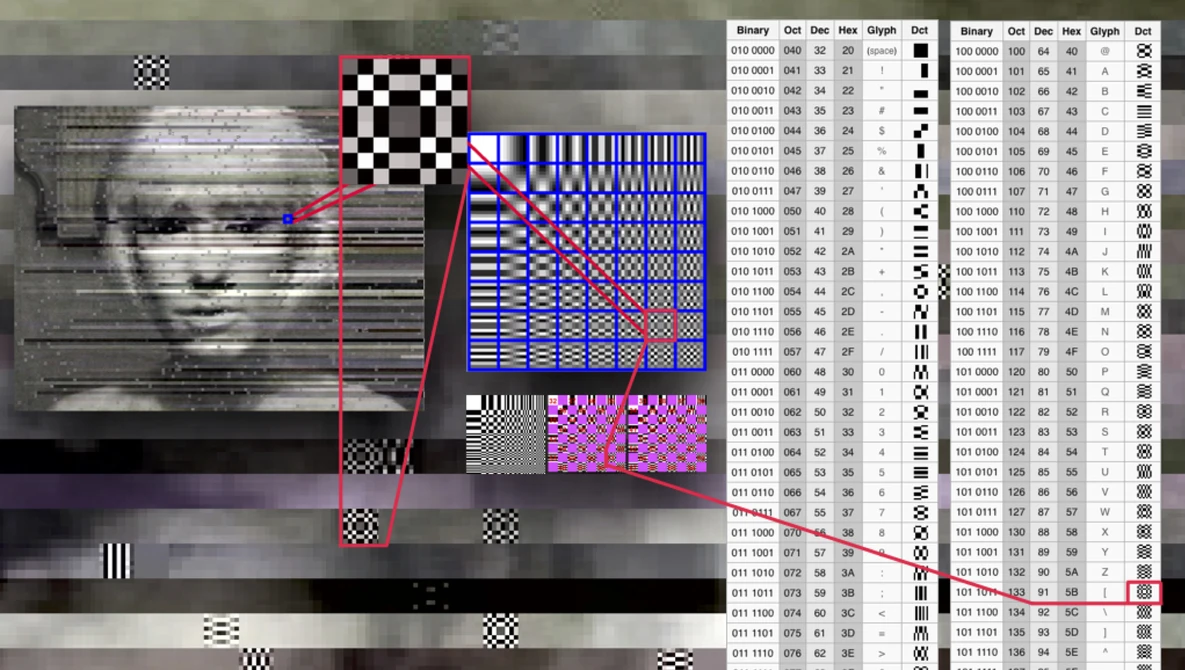
Each 8×8 tile, comprising 64 individual pixel values, undergoes a preliminary "level shift." For 8-bit samples (ranging 0-255), 128 is subtracted from each value, centering the data between -128 and 127. This normalization simplifies the transform calculations. The two-dimensional DCT is then applied to these 64 numbers. The output is not a set of pixels but rather 64 "coefficients," each representing the weight of a specific, fixed spatial frequency pattern (or "basis function").
These 64 basis patterns range from a flat, uniform gray pattern (the lowest frequency) to increasingly intricate patterns. The first pattern, corresponding to the top-left coefficient, is completely uniform, representing the average brightness of the block. Subsequent patterns introduce gentle gradients, gradually increasing in complexity towards the bottom-right corner, culminating in fine checkerboard-like patterns (the highest frequencies). The beauty of the DCT lies in its ability to concentrate image information. When these 64 basis patterns are multiplied by their respective coefficients and summed, the original 8×8 pixel tile is perfectly reconstructed (barring minor rounding errors).
The top-left coefficient, known as the DC coefficient, is particularly significant. It represents exactly eight times the average value of the level-shifted tile, essentially capturing the overall brightness of the block. All other 63 coefficients are AC coefficients, each describing the presence and intensity of a specific detail, fineness, and direction within the tile. A key property of real-world photographs at this scale is their inherent smoothness. Areas like skin tones, clear skies, or defocused backgrounds tend to have most of their visual energy concentrated in the lower-frequency components (the top-left coefficients), leaving the higher-frequency patterns with values close to zero. This "energy compaction" is the fundamental principle that Ahmed’s rate-distortion tests were designed to measure and exploit for compression.
From Research to Standard: JPEG and H.261 Adoption
The 8×8 tile size, though not intrinsic to Ahmed’s original paper which defined the DCT for sequences of any length, became a critical standard-era decision. Two parallel efforts, both seeking efficient compression standards, independently converged on this block size. The Joint Photographic Experts Group (JPEG) committee officially selected the 8×8 adaptive DCT proposal at a meeting in Copenhagen in January 1988. Later that same year, in November, the H.261 video coding standard also adopted the 8×8 block. This choice was a pragmatic balance: 8×8 was small enough to be computationally feasible on the hardware capabilities of the 1980s, yet large enough to provide meaningful compression benefits by capturing local image redundancies.
The widespread adoption of the DCT by these influential standards cemented its place as a cornerstone of digital media. Ahmed’s decision to route his paper into a journal as a correspondence item, prioritizing speed of publication, was prescient. It placed the transform into the open technical literature, making it freely available for anyone to implement without licensing encumbrances. This open nature was a significant factor in its rapid and broad integration into diverse technologies.
The Art of Compression: Quantization and Its Effects
The lossy nature of JPEG compression, and indeed its power, arises in the step immediately following the DCT: quantization. Each of the 64 DCT coefficients is divided by a corresponding number from an 8×8 quantization table, and the result is rounded to the nearest whole number. This rounding process is where information is irreversibly discarded, especially for coefficients that become zero after division.
The JPEG specification’s Annex K provides example quantization tables, derived from extensive psychovisual experiments. These tables are designed to exploit the characteristics of human vision. For instance, the luminance table typically starts with a lower divisor (e.g., 16) in the top-left corner (for low frequencies) and ends with a much higher divisor (e.g., 99) in the bottom-right (for high frequencies). This reflects the fact that the human eye tolerates far more error and detail loss in fine textures and high-frequency components than in overall brightness or smooth gradients.
The "quality slider" in image editing software directly controls the scaling of these quantization tables. For example, in the widely used libjpeg implementation, a quality setting of 50 uses the tables as printed. Above 50, a scaling percentage (200 minus twice the quality) reduces the divisors, leading to less aggressive quantization and higher quality. Below 50, a different formula (5,000 divided by the quality) increases the divisors, resulting in more aggressive quantization and smaller file sizes. At quality 90, the top-left coefficient might be divided by 3 and the bottom-right by 20. At quality 10, these divisors could jump to 80 and 495, or even 255 if the encoder enforces baseline-compatible tables.
Consider a high-frequency coefficient with a value of 40. If divided by 99 (a common value for high frequencies at moderate quality settings), it rounds down to zero. In a smooth tile, most high-frequency coefficients will round to zero. The encoder then reads these quantized coefficients in a zigzag pattern, moving from lowest to highest frequencies. This zigzag order clusters the numerous zeros at the end of the data stream for each block, making them highly compressible by run-length encoding and Huffman coding. The file shrinks precisely because the "checkerboard" details, largely imperceptible to the eye, have been effectively deleted.
The characteristic failure modes of JPEG compression directly stem from this quantization process. When divisors become very large (low quality settings), adjacent 8×8 tiles may reconstruct with slightly different average values, making the eight-pixel grid visible as "blocking artifacts" – a phenomenon particularly noticeable in smooth areas like skies. Sharp edges can develop faint halos because the fine patterns necessary for their precise reproduction have been aggressively quantized or zeroed out. Furthermore, fine red lettering might smear more noticeably than fine black lettering because color channels often receive harsher quantization tables and, in many default configurations, are subsampled (reduced in resolution) horizontally and vertically before the DCT is even applied.
A Legacy Unveiled: Delayed Recognition and Enduring Impact
For many years, the Discrete Cosine Transform was often discussed as an almost anonymous mathematical entity, akin to weather phenomena – a natural fact of mathematics awaiting discovery, unowned and unauthored. While Fourier analysis and Chebyshev polynomials are indeed ancient mathematical concepts, what Ahmed proposed in 1972 was a very specific discrete transform, explicitly offered as a computationally efficient substitute for the Karhunen-Loeve transform in image coding. He then rigorously demonstrated its efficacy using two distinct quantitative criteria. The DCT, therefore, has a clear authorship, a documented rejection, named collaborators, and a precise publication date.
Recognition for Nasir Ahmed’s profound contribution arrived slowly. After leaving Kansas State, he moved to the University of New Mexico in 1983, where he spent the remainder of his distinguished career. He was appointed one of the university’s twelve Presidential Professorships in 1985, chaired the electrical and computer engineering department, and served as interim dean of engineering. Yet, outside of specialized engineering circles, his name remained largely unknown to the broader public for decades.
This began to change dramatically in 2021 when the popular NBC television series "This Is Us" featured an episode dramatizing his work, bringing his story to a vast audience living in an era dominated by video calls and digital media. Further, in 2023, the National Academy of Engineering elected him as a member, one of the highest professional distinctions for engineers. In 2024, IEEE bestowed upon him its prestigious Fourier Award for Signal Processing, citing his "contributions to the digital revolution through developing the discrete cosine transform." This significant recognition arrived 54 years after his groundbreaking proposal was deemed "too simple" to merit funding. It is, as Ahmed himself noted in 1991, "indeed gratifying" to witness one’s work become an essential standard.
Optimizing Digital Media: Practical Export Considerations
Understanding the underlying mechanics of the DCT and quantization offers valuable insights for practical digital media workflows. A common misconception is that "Quality 100" in JPEG compression is lossless. This is inaccurate. Even at the highest quality settings in libjpeg (where the scaling factor for quantization tables hits zero, making all divisors 1), the transform itself still involves rounding, which introduces minimal data loss. Furthermore, chroma subsampling – a separate setting from the quality slider – may still be active, discarding up to three-quarters of the color resolution. For genuinely lossless intermediates, JPEG’s own lossless mode is a distinct algorithm that does not use the DCT and is rarely supported. Alternatives like PSD, TIFF, or DNG files with lossless compression are far more appropriate.
It is also crucial to recognize that "quality numbers" are not universally transferable between different software applications. Photoshop’s 0-to-12 scale uses its own proprietary quantization tables, camera manufacturers employ theirs, and libjpeg-derived exporters adhere to the Annex K tables scaled by specific formulas. Consequently, a file saved at "80" in one application will not be identical to a file saved at "80" in another. Prudent practice dictates evaluating exports by visually inspecting the output at 100 percent rather than relying solely on matching numerical settings across different programs.
Every time a JPEG is opened, modified, and saved, it undergoes a fresh cycle of divide-and-round quantization. Coefficients that were already quantized are re-quantized, potentially on a slightly misaligned grid if the image has been cropped or transformed. This iterative degradation can quickly compound artifacts. The best workflow involves maintaining a raw file or a lossless master for editing, performing all necessary adjustments there, and then exporting a JPEG once, at the final desired size and quality. For example, exporting a 45-megapixel image at quality 95 for a website is often less effective than first downsizing the image to the target display resolution and then exporting it at quality 80. The latter approach typically yields a smaller file that appears visually superior, as resampling effectively removes the fine detail that would otherwise have been aggressively quantized into noticeable blocking artifacts.
The enduring power of Ahmed’s "simple" idea is further underscored by its continued relevance in subsequent generations of image and video codecs. Newer formats, rather than abandoning the DCT, have largely built upon its principles. HEVC (High Efficiency Video Coding), the standard behind your iPhone’s HEIC files, employs integer approximations of the DCT at variable block sizes ranging from 4×4 up to 32×32 pixels, even incorporating a sine-based variant for specific intra-predicted luma blocks. JPEG XL’s VarDCT mode leverages variable-size DCT blocks from 2×2 to a substantial 256×256. While wavelet-based formats like JPEG 2000 explored alternative approaches, they never achieved the widespread displacement of the original JPEG for general use. Fifty-four years after its initial rejection, the fundamental question in cutting-edge image and video compression often remains: how large should the DCT block be? The Discrete Cosine Transform, born from a dismissed proposal, continues to shape the digital visual world.
