
 By Nila Kartika Wati
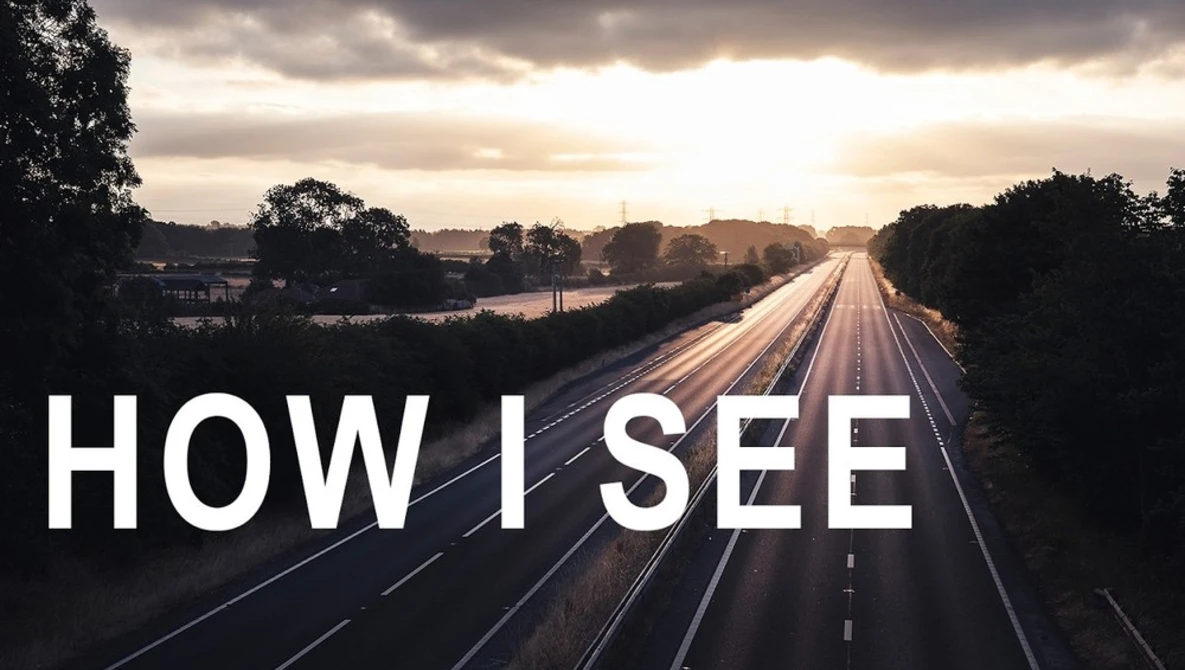
Finding a compelling photograph amidst the chaos of a crowded street or the expansive grandeur of a landscape represents the pinnacle of photographic craft, often determining the success of an outing. While camera settings and technical gear can be mastered relatively quickly, the intuitive ability to discern and frame a powerful image – often referred to as "seeing" – is a skill honed over years, yet rarely taught with practical methodology. In an era saturated with digital imagery, the challenge for photographers is not merely to operate a camera, but to cultivate a discerning eye that elevates snapshots into meaningful compositions.
The Visionary’s Blueprint: Craig Roberts’ Philosophy
Craig Roberts, known through his popular YouTube channel e6 Vlogs, has garnered a significant following by demystifying the elusive art of "seeing." Roberts addresses a perennial question from his viewers: how does he consistently identify and capture his compelling subjects? His insights offer a refreshing counter-narrative to the prevailing gear-centric discourse in photography, emphasizing mental preparation and observational discipline over technical prowess. Roberts posits that the distinction between a handful of impactful images and a memory card full of "near misses" lies squarely in a photographer’s cultivated vision, a skill he meticulously breaks down into actionable practices.
Roberts’ methodology fundamentally divides photographic outings into two distinct categories: those undertaken with a clear objective and those approached with an open mind. For the purpose of his initial guidance, he focuses on the former, illustrating how a predetermined vision can transform a potentially overwhelming environment into a canvas for targeted capture. This structured approach, deeply rooted in pre-visualization, allows photographers to arrive at a scene with a mental blueprint of their desired outcome, significantly increasing the likelihood of success.
Navigating the Visual Labyrinth: Pre-visualization vs. Immersion
Roberts’ approach to photography is nuanced, recognizing that different creative challenges demand different mental frameworks. He outlines two primary modes of operation, each tailored to specific photographic intentions.
-
The Art of Intent: Knowing Your Shot
When Roberts embarks on a photographic expedition with a specific idea in mind, his preparation is remarkably pragmatic. This pre-visualization process extends beyond merely imagining the final image; it involves tangible research. He consults maps to understand the topography and potential vantage points, checks tide tables for coastal or riverside scenes, and meticulously monitors weather forecasts to anticipate lighting conditions. This level of preparation, akin to a journalist researching a story before arriving on location, ensures that when he steps into a bustling urban center, he is not overwhelmed by the myriad distractions.In such chaotic environments, Roberts employs what he terms "virtual blinkers." This mental discipline involves consciously filtering out anything that does not align with his preconceived idea. This is not to say he becomes oblivious to his surroundings; rather, he sharpens his focus on elements that contribute to his intended narrative. Interestingly, despite this visual filtering, he consciously avoids headphones. He asserts that the ambient sounds of a place – the murmur of conversations, the rumble of traffic, the distant chiming of a clock tower – provide as much crucial information and atmosphere as the visual cues, enriching his understanding and connection to the scene. This multi-sensory engagement, even when operating with a specific visual target, underscores a holistic approach to environmental awareness.
-
Embracing Serendipity: The Observational Approach
Conversely, Roberts acknowledges that many photographers, perhaps habitually, tend to fixate on a single idea, inadvertently overlooking the rich tapestry of opportunities surrounding them. For those prone to this "tunnel vision," he advocates for an inverse strategy: a complete immersion in the scene before attempting to compose. This involves actively absorbing every sensory input – the cacophony of city noise, the kinetic energy of movement, the architectural details overhead, and the intricate textures underfoot. The premise here is fundamental: one cannot effectively decide what to exclude from a frame until one has comprehensively understood what is present within it.This immersive technique extends seamlessly to landscape photography. Roberts encourages photographers to engage with the natural environment not just visually, but through sound and smell. The rustle of leaves, the scent of pine needles, the distant call of a bird – these elements contribute to the overall mood and character of a place, offering deeper insights that can inform and elevate a photographic composition. By delaying the act of framing, photographers can develop a more profound appreciation for the scene, allowing compositions to emerge organically from a place of genuine understanding rather than hurried selection. This method cultivates a more mindful and responsive approach, fostering an appreciation for the subtle nuances that might otherwise be missed.
Cultivating the Photographic Eye: Exercises in Seeing
Perhaps Roberts’ most revolutionary and accessible suggestion is to temporarily set the camera aside. The very act of carrying a camera can impose an unconscious pressure to capture images, a pressure that paradoxically hinders the development of true visual acuity if the skill of "spotting" photographs has not yet been refined.
-
The Mind’s Lens: Framing Without a Camera
Roberts proposes a simple yet profoundly effective exercise: during daily routines, such as a walk to work or a trip to the grocery store, consciously frame the world within one’s mind. This involves mentally selecting horizontal and vertical compositions, identifying scenes that demand a wide-angle perspective versus those that would benefit from a longer lens, and paying keen attention to those fleeting moments that evoke a strong desire to have a camera at hand. This practice, performed consistently over time, trains the brain to actively seek out and organize visual information into compelling compositions, transforming mundane observations into potential photographs. It decoups the act of seeing from the immediate pressure of capturing, allowing for pure observational learning. -
Sensory Engagement: Beyond the Visual
This exercise is not just about visual framing; it reinforces the holistic sensory engagement Roberts advocates. By being present and observant in everyday life, one learns to appreciate the interplay of light, shadow, form, and emotion that defines a photographic moment. The "moments when you badly wish you had a camera" become powerful indicators of a developing photographic instinct, highlighting personal preferences for subject matter, lighting, and narrative. This constant mental rehearsal strengthens the connection between observation and photographic intent, making the actual act of photography more instinctive and less effortful when the camera is eventually picked up again.
Mastering the Focal Length: The Prime Advantage
Upon returning to the camera, Roberts pinpoints a common source of creative paralysis: the zoom lens. While undeniably versatile, a zoom lens offering multiple fields of view (e.g., 28mm, 50mm, 100mm, 200mm) can overwhelm a photographer who is already struggling to find a single strong composition. The sheer breadth of options, Roberts argues, multiplies the problem, leading to indecision and a lack of visual consistency.
-
The Paradox of Choice: Zooms and Creative Block
The availability of multiple focal lengths within a single lens can lead to an endless cycle of zooming in and out, searching for the "perfect" crop rather than actively engaging with the scene to find the best perspective for a given focal length. This constant adjustment can detract from the focused observation required to make strong compositional choices. Roberts’ solution is elegantly simple: either "park" the zoom lens at a single, chosen focal length or, more decisively, switch to a prime (fixed-focal-length) lens. -
Embracing Constraint: The Power of Primes
The rationale behind this constraint is profound. By committing to a single focal length, photographers are compelled to learn to "see" the world through that specific perspective. For instance, consistently shooting with a 35mm equivalent forces the photographer to move their feet, to get closer or further away, to find angles that suit that particular field of view. This restriction, far from being limiting, fosters creativity by narrowing the variables and sharpening the focus on composition, subject interaction, and light. Over time, this practice cultivates a natural pre-visualization ability, where the photographer begins to instinctively frame scenes within their chosen focal length before even raising the camera to their eye. This aligns with historical photographic practices where prime lenses were the norm, forcing photographers to develop a deep understanding of how specific focal lengths render the world.
Industry Endorsement: Fixed-Lens Cameras and Market Trends
Roberts’ advice on embracing focal length constraint is not a niche philosophy; it resonates deeply with a significant segment of the photography market and is actively championed by leading camera manufacturers. The popularity of fixed-lens cameras in recent years serves as a powerful testament to the efficacy of this approach.
-
A Resurgent Trend: The Appeal of Simplicity
Fujifilm’s X100 series, particularly the latest X100VI, exemplifies this trend. Launched in 2024, the X100VI features a fixed 23mm lens (approximately 35mm equivalent on a full-frame sensor) paired with an APS-C sensor. Its launch was met with unprecedented demand, making it notoriously difficult to find in stores for months. This scarcity underscores a broader consumer desire for simplicity and focused creative tools. Similarly, Ricoh’s GR III and GR IIIx cameras offer fixed lenses with roughly 28mm and 40mm equivalents, respectively, on APS-C sensors. These cameras are perennial favorites among street photographers, who frequently cite the deliberate lack of choice as a key reason for their enduring appeal. By removing the distraction of zoom, these cameras encourage photographers to concentrate solely on composition, timing, and interaction.At the higher end, the Leica Q3 embodies this philosophy with a full-frame sensor and a fixed 28mm lens. Leica, a brand synonymous with minimalist design and optical excellence, has long championed prime lenses, and the Q series extends this heritage into the digital age. The success of these cameras is not merely due to their technical specifications but to their design philosophy, which actively encourages a more deliberate and intuitive photographic process—precisely what Roberts advocates. Market analysis suggests that while interchangeable lens cameras still dominate in terms of sheer volume, the growing demand for premium fixed-lens compacts indicates a maturing market where photographers are increasingly prioritizing specialized tools that enhance their creative workflow over all-encompassing versatility.
-
DIY Solutions for Focused Practice
For those not ready to invest in a dedicated fixed-lens camera, Roberts offers practical, cost-effective alternatives. A simple strip of gaffer tape applied across the zoom ring of an existing lens can effectively lock it into a single focal length, simulating a prime lens experience. Similarly, locking a smartphone camera to a specific lens (e.g., its wide-angle or standard lens, if multiple are available) can achieve the same pedagogical goal.The choice of focal length for this exercise is personal and should align with one’s preferred working distance and style. A wider angle, such as a 28mm equivalent, encourages photographers to immerse themselves in the scene, getting closer to their subjects to capture a broader context. Conversely, a 50mm equivalent allows for a slightly more detached perspective, ideal for isolating individuals or specific shapes within a scene. Roberts advises sticking with a chosen focal length for several weeks. This sustained practice is crucial; it allows the brain to fully internalize that particular field of view, eventually leading to the instinctive pre-visualization of frames even before the camera is brought to the eye—a skill Roberts himself relies upon. This consistent constraint helps to build muscle memory for the eye, transforming conscious effort into intuitive perception.
The Deliberate Shutter: Valuing Each Frame
The final component of Roberts’ holistic approach shifts focus from the eyes to the shutter finger, addressing the often-overlooked psychological impact of digital photography. In the era of film, every press of the shutter button incurred a tangible cost, fostering a natural deliberateness in image capture. The advent of digital photography, with its "free" and virtually limitless frames, has inadvertently eroded this sense of value, making it easier to fire off multiple shots without sufficient consideration.
-
Beyond the Click: The Mental Checklist
Roberts challenges photographers to re-evaluate the moment of capture. He prompts a series of critical self-inquiries: What thoughts are genuinely going through your mind as your finger hovers over the shutter button? How far down your mental checklist – concerning composition, light, subject, and narrative – have you progressed? Are you truly confident that every element within the frame is precisely as it should be, contributing purposefully to the image? These questions are designed to reintroduce intentionality and mindfulness into the act of shooting, moving beyond a reactive "point and shoot" mentality towards a more thoughtful, artistic engagement. This echoes the "decisive moment" philosophy of legendary street photographers like Henri Cartier-Bresson, who emphasized anticipating and capturing the peak of action or emotion with precision. -
Quality Over Quantity: A Digital Conundrum
This line of questioning culminates in a more profound and challenging query: Does one meticulously considered, perfectly executed photograph outweigh five hastily captured, less impactful ones? While the digital medium allows for experimentation and iteration, Roberts suggests that the pursuit of quantity can often detract from the quality and depth of individual images. By re-instilling a sense of "cost" – not monetary, but in terms of effort, thought, and artistic intent – photographers can elevate their craft, treating each shutter release as a significant artistic decision rather than a casual action. This emphasis on deliberation encourages photographers to slow down, observe more deeply, and refine their vision before committing to the shot, ultimately leading to a more curated and impactful body of work.
Broader Implications for Modern Photography
Craig Roberts’ insights carry significant implications for both aspiring and seasoned photographers in the contemporary landscape of digital imaging.
-
Redefining Photographic Education
His emphasis on "seeing" over gear challenges the traditional pedagogical approach in photography, which often prioritizes technical settings and equipment mastery. Roberts’ framework suggests a paradigm shift, advocating for a curriculum that places visual literacy, observational skills, and mindful practice at its core. This could lead to more effective training methodologies that prepare photographers not just to operate a camera, but to truly create compelling images. -
The Pursuit of Meaningful Imagery
In an age inundated with billions of photographs shared daily across social media platforms, Roberts’ philosophy encourages a return to the foundational principles of photography as an art form. By fostering deliberation and intentionality, his methods guide photographers towards creating images that possess greater depth, narrative power, and emotional resonance. This pursuit of quality over sheer volume becomes increasingly crucial in distinguishing impactful visual storytelling from the ephemeral noise of casual capture.
Ultimately, Craig Roberts’ comprehensive process, from meticulous pre-visualization to the thoughtful press of the shutter, serves as a powerful reminder that photography is less about the tools one wields and more about the vision one cultivates. His insights underscore the enduring truth that the most powerful photographic instrument remains the human eye, trained and refined through diligent practice and profound presence.
