
 By Nila Kartika Wati
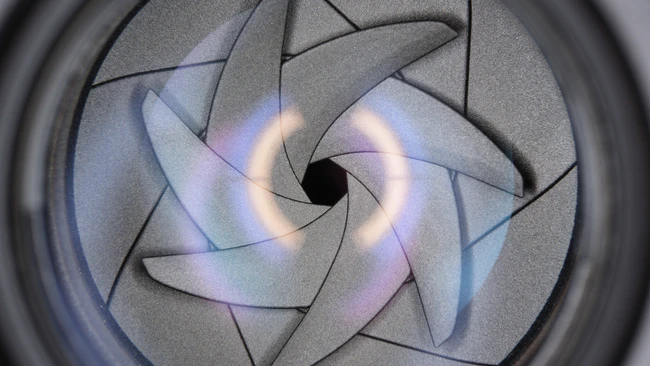
A 24mm lens at f/8 has an opening 3.00 mm across. A 600mm lens at f/8 has one 75 mm across, 25 times wider, yet both land a blur spot on your sensor exactly 10.7 microns wide. This counter-intuitive reality lies at the heart of diffraction, a fundamental physical phenomenon that imposes an immutable limit on photographic sharpness, distinct from all other optical imperfections. While lens aberrations can be corrected with superior glass, noise mitigated by larger sensors, and flare subdued by advanced coatings, diffraction is a constant companion in image formation, yielding to neither design ingenuity nor technological advancement. It is not a property of the lens material or design, but rather an inherent characteristic of light waves interacting with a finite aperture, a boundary condition that dictates the ultimate resolution ceiling for any optical system.
The Universal Blur: Understanding the Airy Disc
The observation that a 24mm lens and a 600mm lens, both set to f/8, produce an identical 10.7-micron blur spot on the sensor underscores a critical principle in photographic optics. Despite the 600mm lens possessing an aperture 25 times wider than its 24mm counterpart (75mm versus 3.00mm), and drawing a diffraction pattern on the sky 25 times finer in angular terms, the resulting blur on the image plane remains constant. This consistent blur spot is known as the Airy disc,
