
 By Nila Kartika Wati
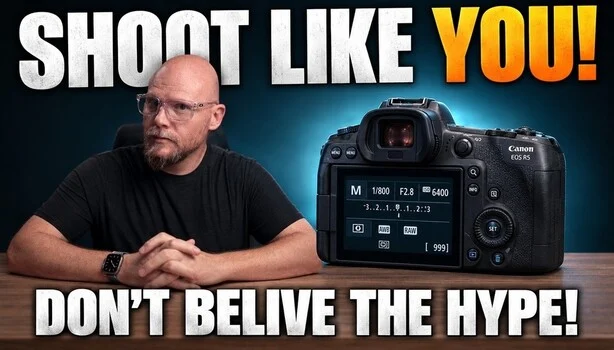
Many professional portrait photographers, despite years of experience and a consistent track record of delivering high-quality work, often harbor a lingering sense of unease when their camera’s mode dial deviates from "M" for Manual. This self-imposed pressure, often stemming from an unspoken code within certain photography circles, suggests that relying on aperture priority, shutter priority, or even auto ISO settings is akin to admitting a lack of skill. However, for high-volume professionals like Joseph Blake, who juggles 100 to 150 portrait and family sessions annually alongside weddings, events, maternity shoots, and headshots, such dogma is not only impractical but detrimental to efficiency and creative freedom. Blake’s pragmatic approach, outlined in recent discussions, challenges these entrenched "rules," advocating for an intelligent use of modern camera technology to optimize workflow, ensure consistent results, and allow photographers to focus on the human elements of their craft.
The Evolving Landscape of Professional Photography
The photography industry has undergone a transformative evolution, particularly with the advent of digital imaging and, more recently, advanced mirrorless camera systems. Historically, the "manual-only" mantra gained traction during the film era, where precise exposure control was paramount and immediate feedback was absent. Learning to meter and set exposure manually was a foundational skill, fostering a deep understanding of light and aperture-shutter-ISO relationships. With the transition to digital, especially full-frame mirrorless cameras such as the Canon EOS R5 and Canon EOS R6 Mark II, which Blake utilizes, cameras have become incredibly sophisticated. Features like advanced autofocus, in-body image stabilization (IBIS), and highly customizable auto ISO settings have redefined what is considered "professional" operation.
Industry data underscores this shift. A 2023 survey by the Professional Photographers of America (PPA) indicated that over 60% of its members frequently utilize aperture priority mode for portrait and event photography, highlighting a widespread adoption of semi-automatic modes among seasoned professionals. This reflects a recognition that modern camera intelligence can often manage technical parameters with accuracy, freeing the photographer to concentrate on composition, subject interaction, and timing—critical elements for capturing authentic moments.
Deconstructing the "M-Mode Purism"
The notion that shooting exclusively in Manual mode is the gold standard often overlooks the dynamic and unpredictable nature of real-world photography, particularly in portraiture with moving subjects or rapidly changing light conditions. Blake draws a clear distinction: while full auto and program modes lack the necessary control for paid work, aperture priority (Av), shutter priority (Tv), and manual (M) each possess legitimate applications. Criticizing a photographer for operating outside of M mode, Blake argues, fundamentally misunderstands the purpose of these tools.
The exposure triangle—aperture, shutter speed, and ISO—represents the three pillars of exposure. Each camera mode essentially locks one or more of these variables while allowing others to float or be automatically adjusted. Manual mode requires the photographer to set all three. Aperture priority allows the photographer to control depth of field (aperture) while the camera selects the appropriate shutter speed and ISO. Shutter priority, conversely, prioritizes motion control (shutter speed) with the camera adjusting aperture and ISO. This adaptability is crucial when working with clients, especially children or large families, who are unlikely to remain perfectly still in perfectly consistent lighting. Attempting to manually adjust ISO, aperture, and shutter speed between frames while a large family walks through patches of sun and shade is not only inefficient but highly prone to missed moments and inconsistent exposures.
File Format: The Non-Negotiable Foundation of Post-Production
Perhaps Blake’s firmest stance is on file format, an area where he observes surprising misconceptions at industry conferences. He notes that a significant number of photographers still opt for JPEG, primarily to conserve card space. For Blake, however, shooting in RAW is non-negotiable due to the unparalleled latitude it provides in post-production.
RAW vs. JPEG: A Technical Overview
The difference between RAW and JPEG files is fundamental. A JPEG is a compressed, processed image file, much like a final print, where the camera applies sharpening, contrast, color saturation, and white balance settings, and then discards much of the original image data. It typically records 8 bits of data per color channel, totaling 16.7 million colors. In contrast, a RAW file is an unprocessed, uncompressed data file directly from the camera’s sensor, a digital "negative." It retains all the information captured by the sensor, typically 12-14 bits per color channel, translating to billions of potential colors and significantly greater dynamic range. This massive difference in data density is the key to its flexibility.
The Power of RAW in Post-Production
The practical implications of shooting RAW are profound. In highlights, RAW files offer substantially more recovery potential than JPEGs, meaning blown-out areas can often be salvaged. Similarly, in shadows, RAW provides greater detail recovery and allows for pushing exposure without introducing excessive noise or color shifts. Correcting white balance is also far more forgiving in RAW, as the original color data is preserved, allowing for precise adjustments without degradation. For professional work, where subtle corrections are often necessary to perfect an image, RAW’s flexibility is indispensable.
Blake specifically uses C-RAW (Compressed RAW) on his Canon bodies. This format offers the same 14-bit data depth and post-processing latitude as uncompressed RAW but utilizes lossless compression to create smaller file sizes. This reduces storage requirements on memory cards and allows for longer burst shooting by filling the camera’s buffer more slowly, without any perceptible loss in image quality compared to uncompressed RAW. This intelligent compromise exemplifies the professional’s need for both quality and efficiency.
Industry trends reflect this emphasis on RAW. Storage solutions have become increasingly affordable, and modern computers are powerful enough to handle large RAW files with ease. Software like Adobe Lightroom and Capture One have also optimized RAW processing, making it an integral part of nearly every professional photographer’s workflow.
Mastering Exposure: Beyond the Manual Mystique
While acknowledging the validity of Manual mode in controlled settings, Blake champions Aperture Priority (Av) as his default, especially when coupled with intelligent "guardrails." His approach underlines that the optimal mode is context-dependent.
Aperture Priority (Av): The Default for Control
For portrait and family photography, where controlling depth of field is often paramount for artistic effect (e.g., separating the subject from the background), Aperture Priority is a logical choice. Blake utilizes Av with specific safeguards:
- Minimum Shutter Speed: A minimum shutter speed of 1/250 second is critical, particularly when photographing children, who are inherently fast-moving. This proactive measure ensures sharp images even with unpredictable motion.
- ISO Range: An ISO range typically capped between 100 and 1,600 helps manage noise levels, ensuring image clarity without sacrificing necessary shutter speeds.
This strategy allows the photographer to set the desired aperture and then rely on the camera to select the appropriate shutter speed and ISO within the defined parameters. This frees the photographer to focus on composition, directing subjects, and capturing fleeting expressions, rather than constantly fiddling with dials.
Shutter Priority (Tv) and Manual (M)
Shutter Priority is invaluable when the primary creative concern is controlling motion blur, such as freezing action in sports or intentionally blurring movement for artistic effect. Manual mode, while not Blake’s default, shines in highly controlled environments like a studio with consistent artificial lighting, or when shooting landscapes where every parameter can be meticulously set and revisited. However, for dynamic scenarios—imagine a large family moving through varied natural light—the continuous adjustments required in Manual mode can be cumbersome and lead to missed shots.
Setting the Guardrails: A Deep Dive into Auto ISO
The concept of "guardrails" for ISO is a cornerstone of Blake’s adaptive exposure strategy. Modern camera systems from Canon, Nikon, and Sony have integrated sophisticated auto ISO menus that allow photographers to set these critical parameters.
Minimum Shutter Speed: Subject Speed Dictates the Floor
The traditional "one over the focal length" rule for handheld shutter speed (e.g., 1/50s for a 50mm lens) primarily accounts for camera shake. However, this rule falls short when subjects are in motion. A child sprinting across a lawn moves at the same speed regardless of whether the photographer is using a 35mm or an 85mm lens. Therefore, Blake emphasizes:
- For moving subjects: Let subject speed dictate the minimum shutter speed. His 1/250s for children is a prime example.
- For still subjects: The "one over focal length" rule (or its modern equivalent, factoring in in-body stabilization) is applicable.
The highest expected speed of any element in the frame should set the overall minimum shutter speed floor for a session. Canon’s recent R-series bodies, along with comparable Nikon and Sony models, offer advanced auto ISO settings that include an automatic minimum shutter speed option which intelligently scales with the focal length being used, providing an excellent balance between motion blur and camera shake prevention. Even with the aid of in-body image stabilization (IBIS), which helps mitigate handheld shake, it cannot compensate for subject motion.
Maximum ISO: Balancing Noise and Usability
The upper limit for ISO is determined by a photographer’s tolerance for noise in their particular camera sensor. While modern sensors are remarkably good at high ISOs, every sensor has a point where noise becomes distracting. Setting a maximum ISO (e.g., 1600, 3200, or even higher depending on the camera and intended output) ensures that the camera will not push the sensitivity beyond acceptable limits, preserving image quality. This balance allows the camera to achieve the necessary shutter speed while keeping noise in check, a workflow that wedding and event photographers have relied upon for years to maintain focus on timing and expression.
Lens Selection and Aperture: Creative Choices, Not Dogma
Blake also addresses the often-contradictory advice surrounding lens choice and aperture: the simultaneous insistence on owning "fast" lenses (e.g., f/1.4, f/1.8) and the critique that "shooting wide open" is a cliché.
Aperture as a Creative Tool
Blake embraces the entire range of apertures as creative choices. He carries a lightweight, inexpensive Canon RF 50mm f/1.8 STM lens for its portability and versatility. While comfortable shooting wide open at f/1.8, he acknowledges the inherent shallow depth of field, accepting that one eye or one person in a couple might fall slightly out of focus—a conscious artistic decision. Conversely, he defends shooting at f/8 or f/11 when more depth of field is desired, perhaps to ensure an entire group is sharp or to include more environmental context. This nuanced view emphasizes that aperture is a tool for artistic expression, not a benchmark of skill.
Gear Agnosticism and Flare Management
Blake is quick to state that camera brand is a non-issue. Any current system from Canon, Nikon, or Sony is highly capable, and switching brands rarely makes financial sense. The focus should be on understanding and mastering the tools one possesses.
On the subject of lens flare, Blake notes that modern lens coatings have made some lenses remarkably resistant to flare, while older lenses with large front elements might flare more easily. For backlit subjects, he advises photographers to observe the flare through the viewfinder and make small positional adjustments. A slight shift in camera angle or subject position can dramatically alter the appearance and placement of flare within the frame, allowing it to be either mitigated or incorporated creatively.
Broader Implications for Professional Photographers
Joseph Blake’s philosophy on adaptive photography modes and a RAW-centric workflow carries significant implications for professional photographers striving for both artistic excellence and business efficiency.
Efficiency and Client Experience
By leveraging camera automation intelligently, photographers can significantly streamline their workflow during a session. Less time spent adjusting settings means more time engaging with clients, eliciting genuine emotions, and refining compositions. This not only leads to a more enjoyable experience for the client but also results in a higher percentage of usable, well-exposed images, reducing post-production time and improving client satisfaction with faster delivery. In a competitive market, efficiency translates directly into profitability and the ability to handle a greater volume of work without compromising quality.
Artistic Freedom and Focus
Counter-intuitively, embracing smart automation can actually enhance artistic freedom. When the technical burden of constant exposure calculation is alleviated, the photographer’s mental bandwidth is freed to focus on the more subjective, artistic aspects of photography: light quality, composition, posing, expression, and storytelling. This allows for a deeper connection with the subject and a more intuitive, creative flow during the shoot.
Business Viability
Ultimately, the decisions about camera modes, file formats, and technical guardrails directly impact a photography business’s viability. Consistent, high-quality results, delivered efficiently, build a strong reputation, foster client loyalty, and attract new business. Blake’s approach is not about simplifying photography to the point of mediocrity, but about strategically utilizing technology to achieve superior outcomes consistently, making the craft more sustainable and enjoyable for the professional.
In an industry constantly evolving with technological advancements, the ability to adapt, question dogma, and leverage tools intelligently, as championed by Joseph Blake, remains paramount for success and continued creative growth. Understanding why certain settings or modes are chosen, rather than simply following rigid rules, empowers photographers to make informed decisions that serve their artistic vision and business objectives.
