
 By Nila Kartika Wati
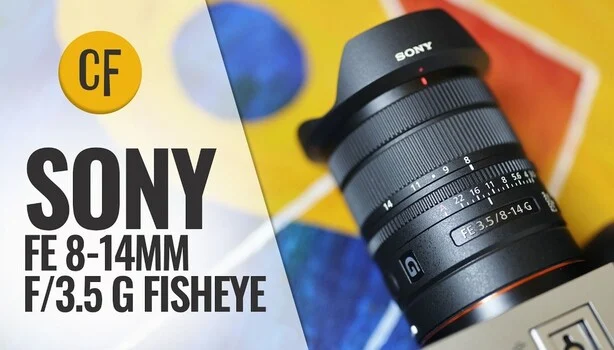
The introduction of the Sony FE 8-14mm f/3.5 G fisheye lens marks a significant moment for photographers and videographers operating within the Sony E-mount ecosystem, presenting a dual-purpose optical instrument that adeptly navigates the historical trade-off between achieving a distinctive circular image and a fully frame-filling ultra-wide perspective. Priced at approximately $1,600, this lens is positioned as a sophisticated solution for professionals and enthusiasts who frequently engage with specialized ultra-wide-angle capture scenarios, consolidating what previously often required multiple lenses or adapted optics into a single, native zoom. Its design philosophy underscores a growing trend in the photographic industry: delivering highly specialized capabilities in more compact and integrated packages, directly catering to the evolving demands of modern content creation.
A New Standard for Fisheye Versatility
Traditionally, fisheye lenses have presented a clear dichotomy: either they render a dramatic, hemispherical circular image, or they stretch to fill the entire frame with an extreme, curvilinear wide-angle view. Sony’s latest G-series offering elegantly bridges this gap. At its widest focal length of 8mm on a full-frame sensor, the lens projects a complete 180-degree circular image, offering an immersive, almost portal-like aesthetic. As the zoom ring progresses to 14mm, the lens seamlessly transitions to cover the entire full-frame sensor, delivering a more conventional, albeit still highly distorted, frame-filling fisheye perspective. This unique capability positions the FE 8-14mm f/3.5 G as a highly adaptable tool, eliminating the need for photographers to choose between these two distinct looks or to carry separate prime lenses to achieve them. The integration of this dual functionality into a single, relatively small zoom lens speaks volumes about Sony’s optical engineering prowess and its commitment to expanding the native E-mount lens lineup with innovative solutions.
Expert Insights and Performance Benchmarks
Renowned photography reviewer Christopher Frost recently put the Sony FE 8-14mm f/3.5 G Fisheye through a comprehensive series of tests, pairing it with the high-resolution Sony a7CR body. Frost’s detailed examination sheds light on both the practical user experience and the optical performance of this specialized lens.
From a physical standpoint, the lens defies expectations for a fisheye zoom, particularly given its robust feature set. Constructed primarily from heavy-duty plastic, it tips the scales at a mere 314 grams, making it exceptionally lightweight for its class. Despite its diminutive size, the lens integrates a surprising array of controls, signaling Sony’s intention to provide a professional-grade user experience. These include a dedicated switch for transitioning between autofocus (AF) and manual focus (MF), a focus hold button that can be customized to perform various functions, and an aperture ring. The aperture ring itself offers versatility for both stills and video shooters, capable of clicking in third-stop increments for tactile feedback or switching to a smooth, clickless operation for silent aperture adjustments during video recording. Furthermore, the inclusion of a weather-sealed mount ensures enhanced durability and reliability in challenging environmental conditions, a crucial consideration for a lens likely to be used in outdoor and action-oriented settings.
A standout feature highlighted by Frost is the intelligent design of the zoom ring. It incorporates tactile detents at three critical focal lengths: 8mm, 10mm, and 14mm. These stops are not merely convenience features; they serve a practical purpose, particularly in fast-paced shooting environments. The 8mm and 14mm detents correspond to the circular and frame-filling modes on a full-frame sensor, respectively. The 10mm detent is particularly beneficial for users of APS-C sensor cameras, as it provides full frame coverage from the start of the APS-C crop, preventing the common frustration of black corners creeping into the frame when adjusting the zoom. This thoughtful design minimizes the need for constant visual checks, allowing photographers to focus more on composition and subject matter.
Considerations for Video Production
While the Sony FE 8-14mm f/3.5 G is a versatile tool for both stills and video, Frost’s review also highlighted specific considerations for videographers. A primary point of note concerns the interaction with in-body image stabilization (IBIS) systems prevalent in most Sony Alpha cameras. Leaving IBIS enabled while recording video with this lens can, counter-intuitively, introduce an undesirable "wobble" effect into the footage. This phenomenon necessitates a manual disabling of IBIS prior to video capture, a crucial operational detail for videographers to internalize. This behavior is not uncommon with extreme wide-angle and fisheye lenses, where the pronounced barrel distortion can conflict with the corrective algorithms of sensor-shift stabilization, leading to unnatural visual artifacts.
Another aspect relevant to video shooters, particularly those aiming for the most expansive capture, is the common limitation of "open gate" recording on most Alpha bodies. Open gate recording utilizes the camera’s full sensor area, typically wider than the standard 16:9 video aspect ratio. Without open gate capability, the standard 16:9 crop inherently trims the top and bottom portions of the 8mm circular image, meaning videographers cannot capture the complete 180-degree circle as stills photographers can. While this is a camera body limitation rather than a lens fault, it’s an important factor for videographers seeking to leverage the full circular aesthetic.
On the positive side for video, the lens features two linear motors for autofocus, which deliver rapid and remarkably quiet focusing performance in both single-shot (AF-S) and continuous (AF-C) modes. This silent operation is critical for video recording, preventing audible motor noise from being picked up by onboard microphones. Frost did observe some degree of focus breathing at both ends of the zoom range, a common optical artifact where the focal length slightly changes during focus adjustments, causing a subtle ‘pulsing’ effect in the image. While present, the extent of focus breathing is a factor to consider for professional video productions where absolute consistency is paramount. Finally, a practical tip for maximizing the circular image at 8mm is the removal of the small, included lens hood, which otherwise becomes visible within the circular frame.
Historical Context and Market Positioning
The advent of a native E-mount fisheye zoom from Sony carries significant historical context. For many years, Sony E-mount users seeking a fisheye zoom solution were largely reliant on adapting lenses from other manufacturers, a practice that often involved compromises in terms of autofocus performance, electronic communication, and overall handling. Canon’s EF 8-15mm f/4L Fisheye USM, introduced in 2011, and Nikon’s AF-S Fisheye Nikkor 8-15mm f/3.5-4.5E ED, released in 2017, have long been the benchmarks in this specialized category. These lenses became indispensable tools across a diverse range of applications, from the dynamic capture of action sports like skateboarding and surfing to the rigorous demands of underwater photography housings, the challenges of documenting tight architectural interiors, and the intricate requirements of 360-degree virtual reality (VR) work. In VR applications, the inherent distortion of a circular fisheye image paradoxically simplifies the process of stitching multiple images together to create seamless panoramas.
Sony’s entry into this segment with a native lens that is notably smaller and lighter than its DSLR-era counterparts represents a strategic move. The compact form factor is a distinct advantage for the typical environments where fisheye lenses are deployed: mounted on poles for elevated perspectives, integrated into gimbals for stabilized motion, enclosed within water housings for aquatic exploration, or maneuvered within cramped spaces where every gram of weight and millimeter of size can impact usability and fatigue. This design philosophy aligns perfectly with the core tenets of mirrorless camera systems, which prioritize portability and reduced footprint without sacrificing performance. By offering a native solution, Sony not only enhances the performance and integration for its users but also solidifies its position as a comprehensive system provider, addressing niche professional needs alongside mainstream photographic demands.
Optical Performance and Image Quality Analysis
Frost’s review rigorously evaluated the optical performance of the Sony FE 8-14mm f/3.5 G on the 61-megapixel Sony a7CR, a camera body that places extreme demands on lens resolution. The results were largely commendable for a fisheye lens. At the widest 8mm setting and maximum aperture of f/3.5, the lens exhibited exceptional sharpness in the center of the frame, with corners closely matching this high level of detail. Throughout the image, strong contrast was maintained, contributing to a sense of clarity and depth. Diffraction, the optical phenomenon that causes a loss of sharpness at very small apertures, only began to noticeably impact image quality beyond f/11, indicating excellent performance across its usable aperture range.
Moving to the 14mm end of the zoom, stopping down the aperture to f/4 or f/5.6 yielded only a marginal, almost imperceptible gain in center sharpness, a testament to its strong performance even wide open. Chromatic aberration, specifically purple fringing on high-contrast edges, was observed to be remarkably low for a fisheye lens. Fisheye designs, by their very nature, often struggle with controlling these aberrations due to the extreme angles of light entering the lens, making Sony’s achievement in this regard noteworthy.
A key feature for creative photography is the lens’s minimum focus distance of 15 cm. This allows photographers to position the front element incredibly close to their subject, enabling dramatic, exaggerated perspectives where foreground elements loom large and background elements recede rapidly. While excellent for creative expression, this extremely close focusing distance also presents a practical challenge: adequately lighting the subject without the lens casting a shadow or obstructing the light source itself.
Frost’s additional tests, including shooting against bright light sources to assess flare resistance, examining coma at night, observing sunstar rendition from f/8 onwards, and evaluating bokeh at close distances, yielded more varied results, indicating that performance in these specific areas is robust but can be subject to contextual variables.
Competitive Landscape: Sony vs. Laowa
The review also included a direct comparison of the Sony FE 8-14mm f/3.5 G against the Laowa 8-15mm f/2.8 fisheye zoom for E-mount. This comparison is particularly pertinent as Laowa has carved out a reputation for producing optically excellent, often manual-focus, specialized lenses at competitive price points. The Laowa lens offers a brighter maximum aperture of f/2.8, which translates to superior light-gathering capabilities, a significant advantage in low-light conditions or when striving for shallower depth of field. Crucially, the Laowa also comes at a considerably lower price point.
This comparison underscores a fundamental decision point for prospective buyers: whether the native integration, autofocus performance, lighter weight, and specific ergonomic advantages (like the zoom detents and aperture ring versatility) of the Sony lens justify its higher cost, or if the superior light-gathering and more budget-friendly nature of the Laowa are more appealing. For professionals relying on seamless autofocus and system integration, the Sony often holds an edge, while budget-conscious enthusiasts or those prioritizing maximum light input might lean towards the Laowa.
Broader Implications and The Future of Fisheye Photography
The decision to invest in a specialized lens like the Sony FE 8-14mm f/3.5 G ultimately hinges on the frequency and nature of its intended use. For photographers and videographers who regularly engage in action sports, capture immersive concert footage from the front row, or produce dynamic, wide-angle video content, a fisheye lens can be an invaluable tool that genuinely enhances their creative output and differentiates their work. Its ability to create unique perspectives and convey a sense of extreme space makes it a powerful storytelling instrument. However, for those who anticipate only occasional use, the novelty of the fisheye effect might wear off quickly, making the investment less justifiable.
Furthermore, the evolving landscape of computational photography and post-processing software significantly alters the value proposition of fisheye lenses. Advanced tools like Adobe Lightroom’s lens profile corrections offer sophisticated "defishing" capabilities. This means that a frame-filling fisheye shot, initially characterized by its pronounced barrel distortion, can be algorithmically corrected into a remarkably wide rectilinear image in post-production. This capability extends the utility of a fisheye lens beyond mere effect shots, transforming it into a versatile ultra-wide-angle capture device that can yield both distorted and corrected perspectives, thereby stretching its value proposition significantly. This computational flexibility suggests that specialized lenses, once confined to niche aesthetic applications, are increasingly becoming foundational tools for capturing data that can be manipulated and transformed into various visual outcomes.
In conclusion, the Sony FE 8-14mm f/3.5 G fisheye zoom is a testament to Sony’s continued innovation in its E-mount system. By offering a compact, versatile, and optically robust solution that addresses both circular and frame-filling fisheye needs, Sony has provided its users with a powerful new creative tool. Its blend of thoughtful ergonomics, reliable performance, and native integration makes it a compelling option for those whose creative vision demands extreme wide-angle perspectives, further cementing the E-mount’s reputation as a comprehensive and adaptable photographic platform.
