
 By Jia Lissa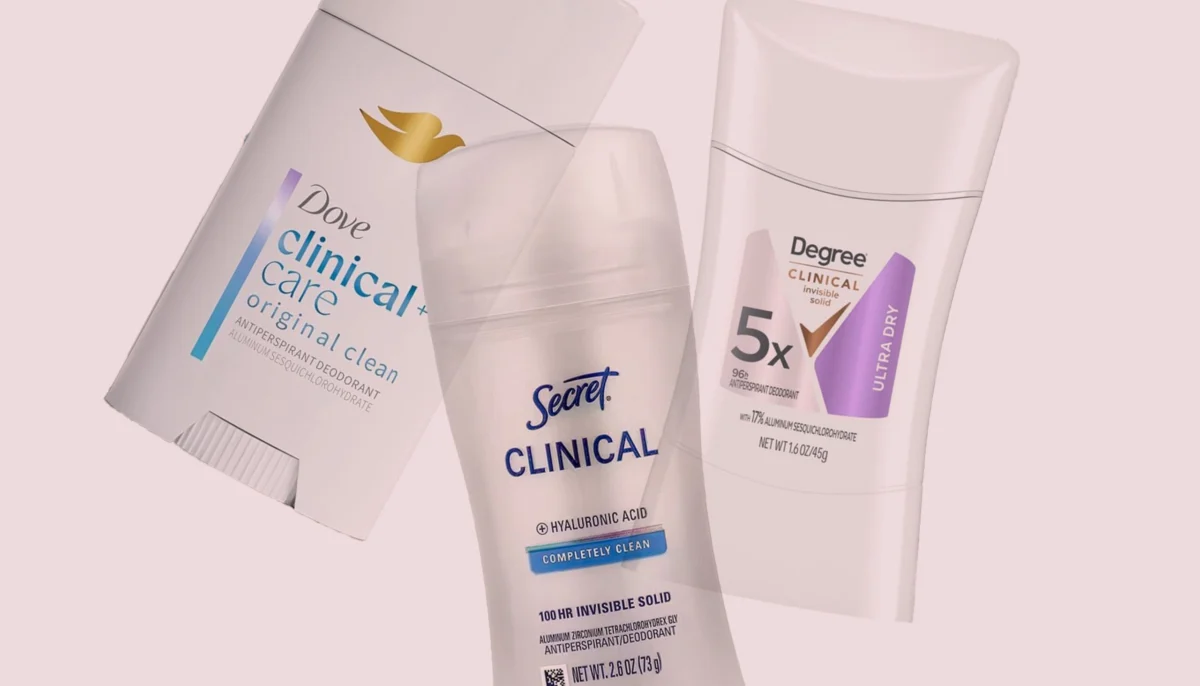
The ubiquitous presence of "clinical-strength" on deodorant packaging often sparks curiosity and questions about its true efficacy and who might benefit most from its enhanced formulation. While the term itself leans towards marketing rather than a strict medical classification, products bearing this label demonstrably differ from their standard over-the-counter counterparts, primarily due to their increased potency in combating perspiration. Dermatologists explain that these advanced formulations typically feature higher concentrations of active ingredients designed to reduce sweat.
Understanding the Active Ingredients: The Power of Aluminum Salts
At the core of clinical-strength antiperspirants lies their advanced ingredient profile, specifically engineered for greater sweat reduction. Vidya Shivakumar, MD, a board-certified dermatologist based in Chicago, elaborates on the mechanism: "Clinical deodorants usually contain higher concentrations of active sweat-reducing ingredients, such as aluminum salts, which temporarily block sweat ducts to decrease perspiration." These aluminum salts are the workhorses, forming temporary plugs within the sweat glands to limit the amount of moisture that reaches the skin’s surface.
Aluminum chloride is frequently cited as a particularly effective active ingredient, with optimal concentrations typically ranging between 12% and 15%. This specific compound has demonstrated significant efficacy in reducing sweat production. However, other aluminum compounds also play a crucial role. Aluminum zirconium compounds and aluminum sesquichlorohydrate are also recognized for their antiperspirant capabilities. While perhaps slightly less potent than aluminum chloride in some instances, they offer a distinct advantage: a reduced likelihood of skin irritation. Dr. Shivakumar notes that for products incorporating aluminum zirconium compounds, a concentration range of 15% to 20% is often recommended by experts like Dr. Oska to achieve optimal results without compromising skin comfort. The subtle differences in efficacy and potential for irritation underscore the importance of ingredient selection based on individual needs and sensitivities.
Who Benefits from Clinical-Strength Deodorant? Beyond Basic Odor Control
While sweating is a fundamental biological process essential for thermoregulation and detoxification, its intensity can significantly impact an individual’s daily life and confidence. The decision to opt for clinical-strength deodorant often arises when standard products fall short. "Sweating is an important bodily function, but if the state of your armpits interferes with your life—say, you have to reapply regular deodorant throughout the day, change into fresh clothes frequently, or just feel uncomfortably sweaty—you may benefit from trying a clinical-strength deodorant," advises Dr. Oska. This suggests that for individuals experiencing persistent dampness, the need for frequent reapplication, or a general sense of discomfort due to sweat, a clinical-strength option presents a viable solution.
Beyond managing excessive moisture, clinical-strength antiperspirants can also address persistent body odor issues, even in individuals who maintain rigorous hygiene practices. Dr. Spearman highlights this aspect: "Leveling up to clinical deodorant can also be helpful for individuals who experience persistent body odor, despite good hygiene practices." Body odor, often caused by bacteria on the skin breaking down sweat, can be exacerbated by high moisture levels. By reducing perspiration, clinical-strength antiperspirants can create a less hospitable environment for odor-causing bacteria. Dr. Spearman further articulates the psychological and social implications: "When sweating begins to impact confidence, clothing choices, or social comfort, that is often a sign that a clinical-strength option may be appropriate." This points to the broader impact of sweat management on an individual’s quality of life, influencing self-esteem and social interactions.
For those who continue to struggle with excessive sweating or persistent body odor even after transitioning to clinical-strength products, seeking professional medical advice is paramount. "If you’re still dealing with excessive sweating or persistent body odor after switching products, consider speaking with a board-certified dermatologist," recommends Dr. Shivakumar. Such persistent issues could indicate underlying medical conditions, such as hyperhidrosis, which may require diagnosis and more potent, prescription-strength treatments. Dermatologists can accurately assess the situation, identify any root causes, and offer tailored solutions, including prescription antiperspirants or other therapeutic interventions.
Decoding the Ingredient List: Key Components for Enhanced Efficacy
When navigating the options for clinical-strength deodorants, understanding the key ingredients to look for can empower consumers to make informed choices. Dr. Spearman emphasizes the primary role of aluminum-based compounds: "Dr. Spearman recommends aluminum-based active ingredients—aluminum chloride or aluminum zirconium—especially if sweat or hyperhidrosis is your biggest concern." These ingredients are the most effective at directly reducing sweat volume. However, their function is often complemented by other components that target odor. "These ingredients help significantly reduce sweating, while deodorizing ingredients like sodium bicarbonate help with odor caused by bacteria on the skin," she adds. Sodium bicarbonate, commonly known as baking soda, can help neutralize acidic compounds produced by bacteria, thus mitigating odor.
It is also crucial to acknowledge that the increased potency of clinical-strength formulas can, for some individuals, lead to skin sensitivity. "Along with fragrance, sensitive skin might want to avoid these stronger actives to prevent irritation because ‘they create a more substantial blockage within the sweat ducts,’" explains Dr. Michael Tassavor, a board-certified dermatologist in New York and New Jersey. This is a vital consideration for individuals prone to redness, itching, or discomfort. While the goal is to block sweat ducts, the mechanism can sometimes lead to a buildup of material that irritates the skin. Therefore, individuals with sensitive skin might need to exercise caution, opt for fragrance-free formulations, or explore products specifically designed for sensitive skin that still offer enhanced sweat control. The choice between aluminum chloride and aluminum zirconium compounds can also be guided by this factor, as aluminum zirconium is often considered gentler.
Allure’s Rigorous Testing and Expert-Driven Reviews
The selection and endorsement of beauty products, particularly those with specific functional claims like clinical-strength deodorants, are underpinned by a commitment to thorough evaluation. Allure‘s editorial process for reviewing such products is multi-faceted and designed to provide consumers with reliable recommendations. "When Allure tests a product, our editors look at it from every angle in an effort to best serve you," states the publication’s methodology. This comprehensive approach involves a deep dive into the product’s composition and performance.
The review process begins with a meticulous examination of ingredients, scrutinizing brand claims for scientific plausibility and efficacy. When necessary, Allure consults peer-reviewed scientific and medical studies to validate product performance and ingredient benefits. This scientific due diligence ensures that recommendations are grounded in evidence. Beyond laboratory analysis, the practical application of each product is rigorously tested by Allure‘s editorial team, which comprises in-house writers and editors, as well as external contributors. This hands-on testing allows for an evaluation of the product’s performance in real-world conditions.
Crucially, Allure collaborates with leading experts in relevant fields to further validate their findings. "In addition to testing each and every product that’s included in each and every review, we rely on experts who shape their fields, including dermatology, cosmetic chemistry, and medicine, to help us vet the ingredients and formulas," the publication explains. This expert consultation adds a layer of scientific credibility, ensuring that the recommended products not only perform well but are also formulated with sound scientific principles.
For the specific compilation of best clinical-strength deodorants, Allure‘s editorial team evaluated each product across five key performance indicators: product ingredients and efficacy, packaging, fragrance, texture, and product wear. Each product was assessed to determine its excellence in all these categories. The insights and expertise of board-certified dermatologists were particularly emphasized during this evaluation, providing a crucial medical perspective. This holistic testing methodology, combining editorial review, expert consultation, and consumer-focused performance assessment, aims to deliver a definitive guide to the most effective and well-formulated clinical-strength deodorants available.
Ensuring Inclusivity in Product Evaluation
Allure‘s commitment to providing comprehensive and trustworthy product recommendations extends to its testing and review methodology, which emphasizes diversity and inclusivity. The publication recognizes that beauty products are deeply personal purchases, and their effectiveness can vary significantly based on individual characteristics. "A beauty product is a personal purchase," Allure states, underscoring the need for a broad perspective.
To ensure that their recommendations cater to a wide range of consumers, Allure actively seeks input from a diverse team of writers, editors, and external testers. This team spans a broad spectrum of ages, skin tones, hair textures, genders, and backgrounds. This intentional diversity is crucial for a fair and accurate assessment of any beauty product. "We believe that having a diverse team of writers and editors—in addition to the wide range of outside testers and industry experts we regularly call upon—is essential to reaching that goal," the publication explains.
The rationale behind this inclusive approach is straightforward: a product cannot be deemed "best" for a broad demographic if it has only been tested on a narrow segment of the population. For instance, a skincare product claiming benefits for mature skin would be inadequately evaluated if tested solely by individuals in their twenties. Similarly, a hair product’s efficacy for textured hair could not be accurately judged without input from testers with those specific hair types. Allure proudly states, "We’re proud that our staff spans a wide range of ages, skin tones, hair textures, genders, and backgrounds, which means that we are able to fairly assess any beauty product that comes into the beauty closet." This dedication to representing a broad user base ensures that Allure‘s reviews and recommendations for products like clinical-strength deodorants are as comprehensive and reliable as possible, reflecting the varied needs and experiences of their readership.
