
 By admin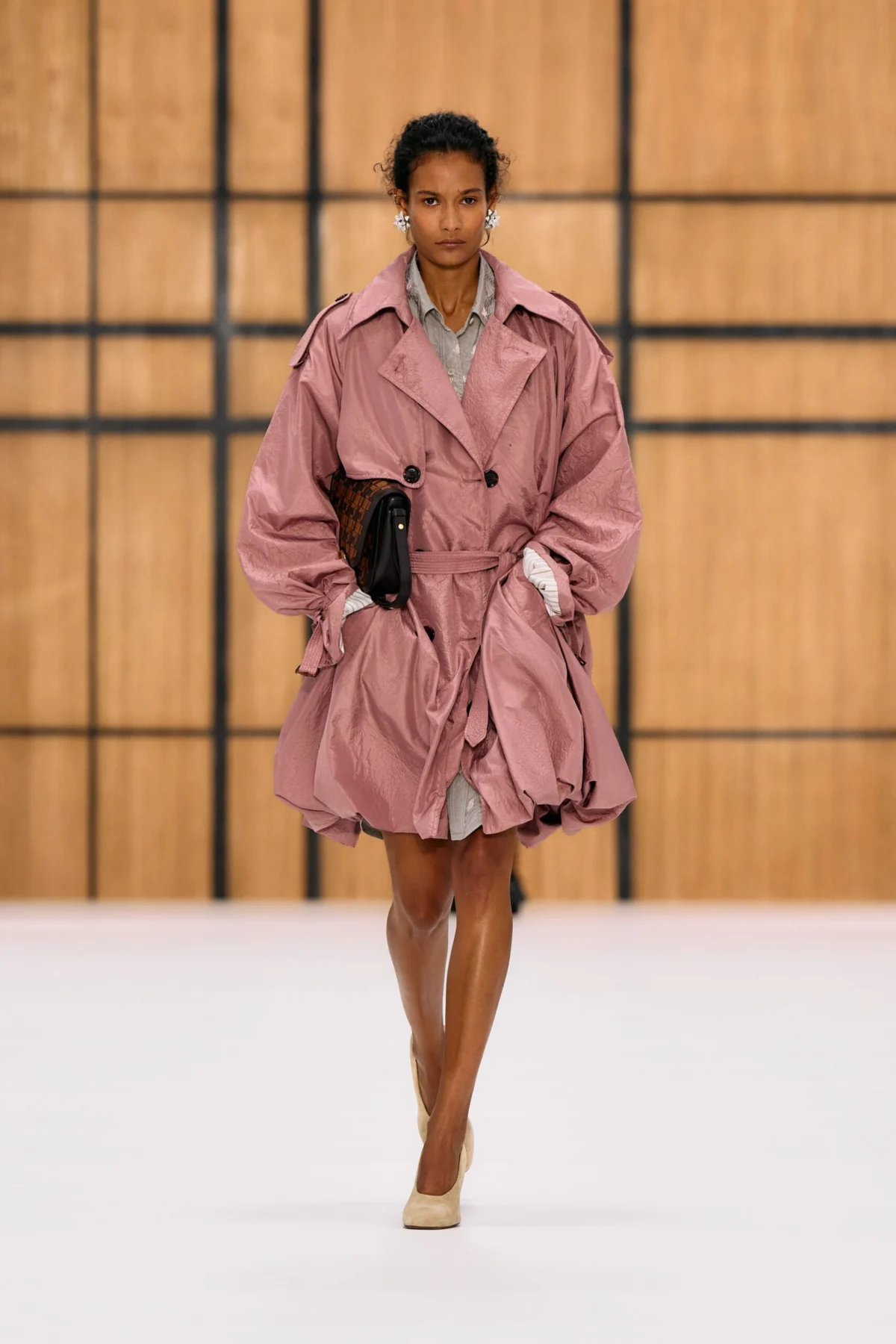
Daniel Lee, Burberry’s Chief Creative Officer, presented a collection that deliberately veered from the pristine polish traditionally associated with the esteemed British luxury house, embracing instead a "cool, youthful" aesthetic marked by subtle material tarnish, rumple, and smudge. This deliberate subversion was a cornerstone of his latest runway show, held at the Chelsea College of Arts, a venue steeped in the history of British design. The collection notably featured a groundbreaking collaboration with 85-year-old British textile icon Celia Birtwell, an artist whose influence on fashion and art has spanned decades and whose presence in the front row underscored the collection’s profound connection to heritage.
Daniel Lee’s Creative Direction and the Pursuit of Authentic Imperfection
Lee’s philosophy for this collection, articulated backstage, centered on a desire for authenticity and a departure from unattainable perfection. "I like when things don’t feel perfect. I like things to feel cool, youthful," he stated, signaling a strategic pivot for Burberry. This approach manifested in various elements across the collection, from the slightly roughened textures of taffeta and denim to the subtly smudged white edging of vulcanized sneaker soles. It represented an evolution from his previous seasons, which, while critically acclaimed for re-establishing Burberry’s core identity, had maintained a more controlled and pristine aesthetic, heavily leaning into the brand’s iconic trench coat. This collection, by contrast, sought to infuse a human, lived-in quality into luxury, connecting with consumers on an emotional level.
The runway itself offered a stark visual metaphor for this shift. The inclusion of grime artist Central Cee, known for his raw, Shepherd’s Bush style, walking the show, further emphasized Lee’s commitment to a youthful, street-informed sensibility. However, it was the unexpected yet profoundly resonant collaboration with Celia Birtwell that truly encapsulated the collection’s spirit of subversion and reinvention, bridging generations and design philosophies. Lee’s explicit desire to move beyond the purely functional or necessary aspects of luxury into the realm of emotional attachment was clear: "For me, the ruffles and the imperfections, they ultimately make things feel human." This statement reflects a growing trend in luxury fashion towards craftsmanship that celebrates individuality and the handmade, rather than mass-produced uniformity.
The Enduring Legacy of Celia Birtwell: A British Icon
Celia Birtwell’s contribution to British fashion and textile design is monumental, making her collaboration with Burberry a significant moment. Lee himself described her as "the epitome of British fashion," a testament to her indelible impact. Born in 1941, Birtwell rose to prominence in the late 1960s and early 1970s, forming a pivotal creative partnership with her then-husband, fashion designer Ossie Clark. While Clark was the public face, often referred to as the "Paul," Birtwell was the "John," the visionary textile designer whose distinctive, often whimsical, and romantic prints adorned Clark’s flowing, sensuous garments. Their collaborations became synonymous with the bohemian chic of Swinging London, dressing rock stars, artists, and socialites alike.
Birtwell’s designs were characterized by their dreamlike quality, often featuring natural motifs like flowers, leaves, and mythical creatures rendered in vibrant, painterly styles. Her ability to translate artistic vision into wearable textiles made her a pioneer. Beyond her work with Clark, she also taught at the very institution where Burberry’s show was held, the Chelsea College of Arts, further cementing her historical ties to the British creative landscape. Her artistic journey extended beyond fashion, notably through her long-standing friendship and muse relationship with the renowned artist David Hockney. Hockney famously immortalized Birtwell in several of his iconic paintings, including "Mr and Mrs Clark and Percy" (1970-71) and "Celia, Kiki and Teddy" (1980), as well as "Painted Lady" (1985), which graced the cover of Vogue France in December of that year. These portraits solidified her image as a cultural icon, demonstrating the enduring appeal and recognition of her unique aesthetic. The timelessness of her prints, as Lee noted, allows them to transcend decades, remaining "amazing" whether worn in the 1970s or today.
A Symbiotic Collaboration: Crafting the Collection
The collaboration between Daniel Lee and Celia Birtwell, a first for Lee in a comprehensive collection, began in May of the preceding year. Lee’s enthusiasm for Birtwell’s work was palpable, emphasizing the "incredible" and "timeless" quality of her prints. This partnership was not merely a superficial appropriation but a deep integration of Birtwell’s artistic language into Burberry’s contemporary vision. It echoed a precedent set by Lee’s predecessor, Christopher Bailey, who similarly drew inspiration from David Hockney’s personal style and color sense for his acclaimed Burberry shows, demonstrating the brand’s recurring affinity for profound artistic dialogues.
The collection saw a complete reimagining of the iconic Burberry check, transforming it from a rigid pattern into a "trellis" across which Birtwell’s vibrant florals flourished. These richly colored botanical arrangements were not confined to two dimensions; they were later given 3D form as badges and beaded embellishments, adding tactile depth and a playful dimension to the garments. Beyond the florals, Birtwell’s distinctive "doodled faces" – a signature element reminiscent of her flattened facial illustrations seen in "Painted Lady" – made a significant appearance. These punchy facial prints, particularly prominent on a blonde-mopped, big-glasses-wearing male model in look 31, were described by Lee as having "informed the collection much more broadly," influencing the overall color palette and artistic direction.
The interplay of Lee’s modern sensibility with Birtwell’s historical archive resulted in "wonderfully satisfying moments of color." The swimming-pool blue of look 31’s parka and the sunset orange of look 47’s blueberry-embellished trench exemplify this vibrant new palette. This broader approach to reference extended to footwear, with 1970s-reminiscent strapped clogs worn alongside technical wear, and modern climbing moccasins paired with flowing chiffon gowns, creating a dynamic tension between eras and functionalities. This fusion of heritage and modernity, of natural motifs and contemporary silhouettes, served to loosen the "hyper-controlled gabardine grip" that had defined some of Lee’s earlier collections, allowing for a more expansive and confident aesthetic expression.
The Runway Presentation: Setting and Atmosphere
The choice of Chelsea College of Arts as the show’s venue was a deliberate and fitting tribute to Celia Birtwell’s legacy, where she once taught. This institutional setting provided a stark, "glaring white fashion-space blank canvas," allowing the vibrant colors and intricate patterns of the collection to truly pop. The minimalist backdrop underscored the collection’s focus on textile and print, ensuring that Birtwell’s artistic contributions were foregrounded.
The atmosphere of the show balanced a sense of historical reverence with contemporary edge. The presence of Central Cee, a figure embodying modern British youth culture, contrasted sharply yet harmoniously with the venerated presence of Birtwell in the front row. This juxtaposition highlighted Lee’s overarching goal: to bridge the gap between Burberry’s storied past and its aspiration to remain relevant and exciting for a new generation. The "rumple noted at the top" – the subtle imperfections in shirting, shorts, and trench coats crafted from taffeta embroidered with Birtwell florals, washed pink denim, and trench taupe – was not an oversight but a meticulously planned detail, contributing to a "roughened and touched texture to the eye" that felt both luxurious and approachable.
Deconstructing the Collection: Key Looks and Motifs
While undoubtedly "remorselessly merchandised" – a necessity for any global luxury brand – this collection transcended a singular focus on the trench coat, which had dominated previous seasons. The expansion of silhouettes and textures was notable. Taffeta, a fabric traditionally associated with formalwear, was recontextualized into everyday items like shirts and shorts, imbued with Birtwell’s floral motifs. Taffeta trenches, rather than being stiff and structured, featured puffed hems, adding a soft, sculptural quality. Denim appeared in unexpected washes of pink, trench taupe, and black, all treated to achieve that desired "roughened and touched texture."
The collaboration’s depth was evident in the way Birtwell’s prints were integrated beyond mere surface application. The transformation of the Burberry check into a "trellis" for her florals was a masterful stroke, subtly blending two distinct design languages into a cohesive whole. The "doodled faces" from her archive, particularly the one featured in Look 31 worn by a model with a distinct "blonde-mopped, big-glasses-wearing" aesthetic, brought a playful, artistic dimension that felt both nostalgic and fresh. This specific look, featuring a swimming-pool blue parka, stood out for its vibrant color and graphic impact. Similarly, Look 47’s sunset orange, blueberry-embellished trench coat showcased a rich, autumnal palette, demonstrating the versatility of the collaborative prints.
The footwear, often a highlight of Lee’s shows, continued to impress. The inclusion of "70s-reminiscent strapped clogs" beneath technical wear, and "modern climbing moccasins" paired with chiffon gowns, underscored the collection’s eclectic approach to styling and its willingness to mix high and low, formal and casual, historical and contemporary. This breadth of reference signifies a confidence in expanding Burberry’s design vocabulary beyond its established codes.
Burberry’s Evolution and Market Strategy
Daniel Lee’s tenure at Burberry, which began in September 2022, has been closely watched by the industry. His mandate was to inject new energy into the brand and elevate its luxury positioning, following a period of strong commercial performance under Bailey but some questions about its contemporary relevance. This collaboration with Celia Birtwell marks a significant step in that direction, demonstrating Lee’s ability to draw upon deep British artistic heritage while simultaneously pushing the brand into more expressive and emotionally resonant territory.
The strategic importance of such collaborations for luxury brands cannot be overstated. In an increasingly competitive market, unique partnerships and authentic storytelling are crucial for captivating consumer attention and fostering brand loyalty. By collaborating with Birtwell, Burberry not only pays homage to a vital figure in British design but also taps into a rich artistic narrative that resonates with sophistication and cultural depth. This move also signals Burberry’s ambition to broaden its appeal beyond its traditional customer base, attracting younger, more art-conscious consumers who value individuality and artistic expression.
Commercially, the collection’s expansion beyond the trench coat, while still featuring it prominently, suggests a diversification strategy. Offering a wider range of distinct garments and accessories imbued with unique artistic prints can drive incremental sales and expand the brand’s footprint in various product categories. The "remorselessly merchandised" nature, as noted, indicates a clear commercial intent behind the creative vision, ensuring that artistic expression translates into tangible market success.
Broader Implications for British Luxury Fashion
This Burberry collection, with its emphasis on "imperfection" and its profound collaboration with Celia Birtwell, holds broader implications for the landscape of British luxury fashion. It signals a potential shift towards a more characterful, less overtly polished aesthetic, celebrating the eccentricities and artistic depth that are often hallmarks of British creativity. In an era dominated by global luxury conglomerates, such an authentic embrace of national heritage and artistic collaboration can differentiate a brand and strengthen its cultural resonance.
The collection reaffirms the enduring power of British artistic talent and its capacity to continually inspire contemporary design. By bringing an 85-year-old textile icon into the spotlight, Lee highlights the value of experience and the timelessness of genuine artistry. This approach could encourage other British brands to explore similar deep dives into their own creative archives and forge partnerships that celebrate the rich tapestry of the nation’s design history.
Ultimately, Daniel Lee’s latest offering for Burberry demonstrates a confident and expansive vision. By channeling his creative energy through the "lightning rod" of Celia Birtwell’s art, he has managed to infuse Burberry with a new sense of humanity, emotional depth, and youthful vibrancy, charting a fruitful new direction for one of Britain’s most iconic luxury houses. The collection not only pays homage to a storied past but also boldly steps into a future where luxury is defined not just by perfection, but by personality, artistry, and an authentic connection to the human spirit.
